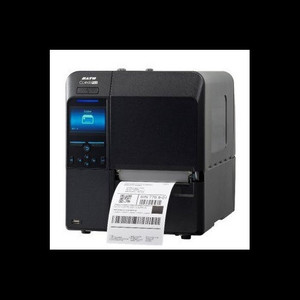
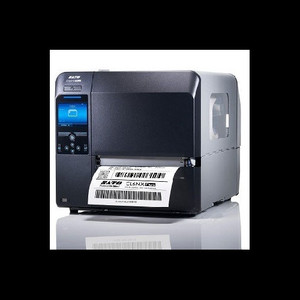
Sato WWCLP2201-NAR 305dpi Industrial Thermal Printer
The Sato WWCLP2201-NAR is a mid-range industrial thermal printer built for high-volume warehouse and supply-chain labeling. With 305 dpi resolution and 14 inches-per-second print speed, it strikes a practical balance between output sharpness and throughput—fast enough to avoid bottlenecks during peak operations, sharp enough for barcodes, QR codes, and compliance text. Dual-mode printing (direct thermal and thermal transfer) means you run both temporary and durable labels on one platform, eliminating the capital and training cost of maintaining separate devices.
Key Features
- 305 dpi Resolution at 14 ips Print Speed: The 305 dpi standard produces legible barcodes and small-font regulatory text suitable for retail, healthcare, and logistics labeling. Print speed directly impacts labor cost—faster throughput reduces printer-induced delays in label-on-demand workflows. At 14 ips, the WWCLP2201-NAR won't starve conveyor lines or create queues during shift peaks.
- Dual Print Modes (Direct Thermal and Thermal Transfer): Direct thermal eliminates ribbon cost for temporary labels (shipping tags, parcel labels). Thermal transfer adds durability for product labels, outdoor tags, or compliance stickers that must withstand moisture or abrasion. Running both modes on one device reduces capital spend, simplifies operator training, and eliminates the need to maintain separate printer SKUs for different label types.
- 4.09" Maximum Print Width; Media Range 0.87" to 5.04": Handles small roll labels (pharmacy, jewelry), standard 4x6 shipping labels, and wider warehouse routing sheets without configuration changes. Broad media-width support reduces label-stock SKUs and cuts setup complexity across multi-shift operations.
- 2 GB Flash Memory, 256 MB SDRAM, 100 MB User-Accessible Storage: On-device storage holds complex graphics, custom fonts, and barcode templates without network dependency. This reduces print latency during peak operations and keeps the printer functional if your network segment experiences congestion or temporary outages—a meaningful advantage in warehouse environments where network reliability can be inconsistent.
- 3.5" Full-Color LCD Display with Real-Time Status: Operators see print job progress, media supply levels, and error codes directly on the device. No need to walk to a management console to diagnose ribbon jams or media run-out—faster troubleshooting means shorter downtime windows in high-velocity operations.
- Tool-Free Printhead and Platen Roller Replacement: In high-volume settings, scheduled maintenance happens frequently. Quick-change components eliminate the need for service tools and reduce the time between discovering a worn printhead and resuming production—a genuine efficiency lever in 24/7 environments.
- Comprehensive Connectivity (USB 2.0, Ethernet, Wi-Fi, RS-232C, Parallel, Bluetooth 3.0, NFC): Modern warehouse management systems integrate via Ethernet or Wi-Fi; legacy infrastructure connects via RS-232C or parallel port. NFC support lets operators pair mobile devices for commissioning or supply reordering without touching the printer's network settings. Backward compatibility means the WWCLP2201-NAR fits into existing label-print infrastructure without forcing simultaneous upgrades elsewhere.
- Ribbon Roll Capacity up to 1,968 ft (600 m); Media Roll up to 10" Outer Diameter: Extended run times between supply changes lower manual reloading frequency and associated labor cost, especially important in multi-shift or 24/7 operations where changeover windows are tight.
- Rigid Cast Aluminum Frame with Corrosion-Resistant Materials: Withstands vibration from conveyor proximity and temperature swings between climate-controlled receiving areas and refrigerated shipping zones. Aluminum construction resists rust and extends service life in mixed-environment deployments.
Integration and Compatibility
The WWCLP2201-NAR integrates with any warehouse management system (WMS) or label-design software that supports USB, Ethernet, or Wi-Fi printing. Parallel and RS-232C ports ensure compatibility with legacy systems still in use at many distribution centers. Bluetooth and NFC support modern mobile-first workflows, allowing handheld devices to trigger label jobs without hardwiring to a network printer.
When to Choose a Different Model
If you need higher resolution (600 dpi or above) for extremely small barcode fonts or micro-QR codes, consider a higher-resolution variant in the Sato thermal printer line. If print width must exceed 4.09 inches, or if you require integrated applicators or peel-and-present functions, evaluate wider-format or specialty models in the same family. For low-volume, occasional printing, a desktop-class printer may be more cost-effective; the WWCLP2201-NAR is optimized for continuous, high-throughput label production.
Frequently Asked Questions
Q: What is the difference between direct thermal and thermal transfer printing?
A: Direct thermal uses heat-sensitive media and requires no ribbon—ideal for temporary labels like shipping tags that don't need to last months. Thermal transfer uses a ribbon to fuse ink onto standard label stock, producing more durable labels resistant to moisture, abrasion, and fading. The WWCLP2201-NAR supports both modes, so you can switch between them on the same device.
Q: Can the WWCLP2201-NAR connect to my legacy WMS over a serial port?
A: Yes. The printer includes RS-232C and parallel ports in addition to Ethernet and Wi-Fi, so it integrates with older warehouse systems without requiring network infrastructure upgrades.
Q: How often do I need to replace the printhead?
A: Printhead life depends on volume and media type. Tool-free replacement means you can swap a worn head in minutes without technician support, minimizing downtime. Check the manufacturer documentation for expected head life under your specific usage patterns.
Q: Does the WWCLP2201-NAR store label templates on the device?
A: Yes. The printer has 2 GB Flash and 100 MB user-accessible storage, so you can load custom fonts, graphics, and barcode templates directly onto the printer. This reduces network dependency and print latency during peak operations.
Q: Can I print QR codes at 305 dpi?
A: Yes. 305 dpi is sharp enough for standard QR codes and small-font compliance text. The resolution suits most retail, healthcare, and logistics labeling requirements. If you need to print micro-QR or extremely small barcodes, a higher-resolution model may be necessary.
Q: What media widths can the WWCLP2201-NAR handle?
A: Media width ranges from 0.87 inches (small pharmacy labels) to 5.04 inches (oversized routing tags). Maximum print width is 4.09 inches, so it covers small roll labels through standard 4x6 shipping labels on a single platform.
Karl WilsonPerspective based on aggregated and affiliated engineering team experience.
The Sato WWCLP2201-NAR (often searched as WWCLP2201 NAR) is a workhorse choice for mid-volume label production in distribution centers and food-service warehouses. At 14 ips with 305 dpi, it avoids the common trap of choosing between speed and sharpness—you get both. The dual-mode thermal capability is the real differentiator here: it means you don't need a separate ribbon-based printer sitting idle while you run temporary direct-thermal labels on peak shipping days.
Technical Highlights:
- 14 ips at 305 dpi: Fast enough to keep up with conveyor-driven label-on-demand workflows without sacrificing barcode clarity. For a high-velocity fulfillment center printing 500+ labels per hour, this speed-to-resolution ratio eliminates printer-queue complaints.
- 2 GB Flash + 256 MB SDRAM + 100 MB user storage: Means you can preload 50+ custom label templates, fonts, and graphics directly onto the printer. Network outages won't stall your label production—the printer handles its own buffer and queuing.
- Ribbon roll up to 1,968 ft (600 m): In thermal-transfer mode, a single ribbon roll handles roughly 8,000–12,000 4x6 labels (depending on coverage). That translates to fewer ribbon-change events, less labor overhead, and reduced material waste from partial-roll disposal.
- Tool-free printhead replacement: If your head wears out after 1–2 million impressions, you're not calling a technician. Grab the replacement, flip a latch, slide it in. That's 5 minutes of downtime instead of a 2-hour service call.
Deployment Considerations:
- The 4.09" print width is a hard ceiling. If your distribution center labels are 5 inches wide, you'll need to step up to a wider-format model. Measure your longest label before committing.
- In thermal-transfer mode, print quality depends on label-stock quality and ribbon tension. Cheap label stock and aggressive ribbon settings will produce smudged or faded output—not the printer's fault, but a common gotcha in cost-cutting deployments.
- USB, Ethernet, and Wi-Fi are all present, but Wi-Fi reliability in RF-noisy warehouse environments (especially around metal shelving or RF scanners) can be spotty. Hardwired Ethernet is the move for mission-critical high-volume sites.
The WWCLP2201-NAR is built for 24/7 fulfillment and food-service logistics—environments where label supply, throughput predictability, and quick maintenance matter more than cutting-edge features. If you're printing 10,000+ labels per week, this printer pays for itself through uptime and labor savings.