
Middle Atlantic RLNK-1500R-8 vs Middle Atlantic OL1500R: Specification Comparison
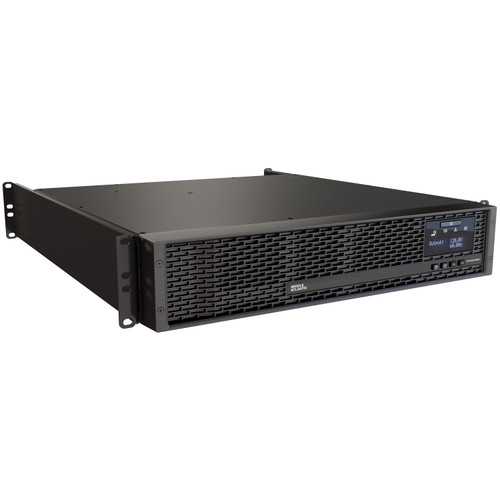
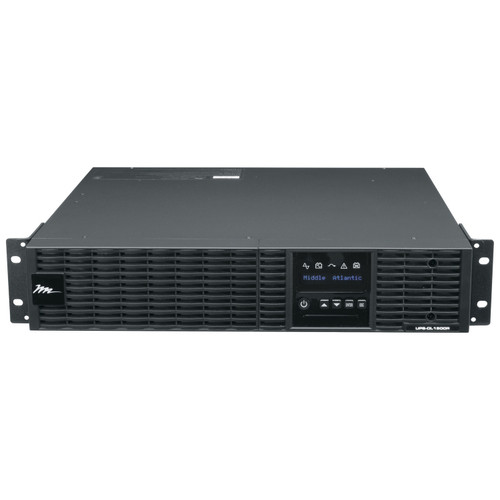
Both the Middle Atlantic UPX-RLNK-1500R-8 and UPS-OL1500R are 2RU, 1500VA rack-mount UPS units designed for AV and security system enclosures. They share identical form factors (19 in W × 3.46 in H), the same NEMA 5-15 plug/receptacle type, and the same 1500VA capacity class, making them direct cross-shop candidates for integrators speccing backup power in rack systems. The key differentiators are UPS topology, outlet-level remote control capability, power cord length, and output characteristics.
In This Guide
- Which unit delivers higher-quality power conditioning and what does each topology mean for connected loads?
- Which unit offers smarter outlet and load management for complex rack installations?
- How do the two units compare on physical footprint, installation depth, cable reach, and rack compatibility?
- Which should you choose: the RLNK-1500R-8 or the OL1500R?
- Side-by-Side Specs
- FAQ
Which unit delivers higher-quality power conditioning and what does each topology mean for connected loads?
The UPS-OL1500R is spec'd as Online Double Conversion with a 1350 W (1500VA) output at 120 VAC / 15 A. In double-conversion topology, incoming AC is continuously rectified to DC and then re-inverted to clean AC, so connected loads are fully isolated from all input power anomalies — voltage sags, surges, frequency variation, and harmonics — at all times, with zero transfer time on mains failure.
The UPX-RLNK-1500R-8 is identified in its specs as a NEXSYS UPS. The provided specs do not state its topology (line-interactive, standby, or double-conversion), its true wattage output, or its output AC voltage — only that its output is listed as 36 VDC, which is an unusual value for a UPS and may reflect a spec data inconsistency or a secondary DC bus. Buyers should verify actual AC output topology directly from the UPX-RLNK-1500R-8 datasheet (/content/product-datasheets/UPX-RLNK-1500R-8.pdf) before speccing for sensitive loads.
Which unit offers smarter outlet and load management for complex rack installations?
The UPX-RLNK-1500R-8 explicitly includes RLNK outlet control — per-outlet remote switching capability that lets operators sequence power-up/down, shed non-critical loads during a battery event, or reboot locked devices without physical access to the rack. The product name and SKU both reference RLNK, which is Middle Atlantic's IP-based per-outlet control platform. This is a meaningful differentiator in distributed AV/security deployments where remote management reduces truck rolls.
The UPS-OL1500R specs document 8 NEMA 5-15R receptacles and 15 A total output, but do not mention per-outlet switching, remote control, or any network management interface. Buyers requiring outlet-level control should confirm this capability — or its absence — via the product datasheet before purchase.
How do the two units compare on physical footprint, installation depth, cable reach, and rack compatibility?
Both units occupy 2RU in a 19-inch rack and share the same height (3.46 in / 8.8 cm), width (19 in / 48.3 cm), 4-point mounting, NEMA 5-15P input plug, and operating temperature range (32°–104°F / 0°–40°C). The UPX-RLNK-1500R-8 is slightly shallower at 16 in (40.6 cm) vs 15.57 in (39.6 cm) for the OL1500R — a negligible 0.43 in delta. The OL1500R is spec'd with a mounting depth range of 20.7–36.2 in (92 cm max), accommodating deep enclosures.
Cord length differs: the OL1500R ships with a 10 ft (3.1 m) power cord versus 6 ft (1.8 m) on the UPX-RLNK-1500R-8 — a practical consideration for installations where the rack is far from a wall outlet. The OL1500R weighs 47.7 lbs (21.6 kg) vs 44.1 lbs (20 kg) for the UPX-RLNK-1500R-8. Notably, the UPX-RLNK-1500R-8 lists a shipping weight of 527 lbs (239 kg), which appears to be a data error and should be verified before freight planning.
Which should you choose: the RLNK-1500R-8 or the OL1500R?
Our take: The UPS-OL1500R is the stronger choice when power quality is the primary concern: its Online Double Conversion topology continuously re-generates clean 120 VAC at 1350 W with zero transfer time, making it the correct choice for sensitive NVRs, servers, or networked AV gear that cannot tolerate even brief sags. The UPX-RLNK-1500R-8 is the stronger choice when remote load management is required — its RLNK per-outlet control enables IP-based outlet sequencing and reboot, which the OL1500R specs do not document. The OL1500R also ships with a longer 10 ft cord vs 6 ft, and its mounting depth range (20.7–36.2 in) is explicitly spec'd for deep enclosures. Note that the UPX-RLNK-1500R-8 specs list a 36 VDC output voltage and an apparently erroneous 527 lb shipping weight — both require datasheet verification before procurement.
Side-by-Side Comparison
Spec-for-spec, from manufacturer data.
| Specification | Middle Atlantic RLNK-1500R-8 | Middle Atlantic OL1500R |
|---|---|---|
| VA Rating | 1500VA (per product name/SKU) | 1500VA |
| Wattage Output | Not specified in provided specs | 1350 W |
| Topology | Not specified (NEXSYS UPS noted) | Online Double Conversion |
| AC Output Voltage | Not specified (36 VDC listed — verify) | 120 VAC |
| Output Amps | Not specified in provided specs | 15 A |
| Outlet Count | 8 (per SKU suffix) | 8 |
| Receptacle Type | NEMA 5-15R | NEMA 5-15R |
| Plug Type | NEMA 5-15P | NEMA 5-15P |
| Cord Length | 6 ft (1.8 m) | 10 ft (3.1 m) |
| Rack Units | 2 RU | 2 RU (per spec) |
| Width | 19 in (48.3 cm) | 19 in (48.3 cm) |
| Height | 3.46 in (8.8 cm) | 3.46 in (8.8 cm) |
| Depth | 16 in (40.6 cm) | 15.57 in (39.6 cm) |
| Unit Weight | 44.1 lbs (20 kg) | 47.7 lbs (21.6 kg) |
| Mounting Depth Range | Not specified in provided specs | 20.7 in – 36.2 in (92 cm max) |
| Per-Outlet Remote Control | Yes (RLNK) | Not specified in provided specs |
| Operating Temp | 32°–104°F (0°–40°C) | 32°–104°F (0°–40°C) |
| TAA Compliant | No | No |
| Country of Origin | China | Not specified in provided specs |
| RoHS / FCC | Not specified in provided specs | RoHS |
Frequently Asked Questions
Which should you choose: the RLNK-1500R-8 or the OL1500R?
The UPS-OL1500R is the stronger choice when power quality is the primary concern: its Online Double Conversion topology continuously re-generates clean 120 VAC at 1350 W with zero transfer time, making it the correct choice for sensitive NVRs, servers, or networked AV gear that cannot tolerate even brief sags. The UPX-RLNK-1500R-8 is the stronger choice when remote load management is required — its RLNK per-outlet control enables IP-based outlet sequencing and reboot, which the OL1500R specs do not document. The OL1500R also ships with a longer 10 ft cord vs 6 ft, and its mounting depth range (20.7–36.2 in) is explicitly spec'd for deep enclosures. Note that the UPX-RLNK-1500R-8 specs list a 36 VDC output voltage and an apparently erroneous 527 lb shipping weight — both require datasheet verification before procurement.
Does the UPX-RLNK-1500R-8 or the UPS-OL1500R provide better protection for sensitive network and AV equipment?
Based on the provided specs, the UPS-OL1500R specifies Online Double Conversion topology, which continuously regenerates clean AC output and provides zero transfer time on mains failure — the highest standard of power conditioning. The UPX-RLNK-1500R-8 does not state its topology in the provided specs, so a direct topology comparison cannot be made from spec data alone. Buyers should consult the UPX-RLNK-1500R-8 datasheet for topology confirmation.
Which unit lets me remotely reboot a locked device or cut power to a specific outlet without being on-site?
The UPX-RLNK-1500R-8 includes RLNK outlet control per its specs, enabling per-outlet remote switching — useful for rebooting locked devices or shedding loads remotely. The UPS-OL1500R specs do not document per-outlet control or a network management interface. If remote outlet management is a requirement, the UPX-RLNK-1500R-8 is the spec-supported option.
Are these two UPS units physically interchangeable in an existing rack?
Nearly. Both are 2RU, 19 in wide, 3.46 in tall, use 4-point mounting, and share the same NEMA 5-15P input plug and NEMA 5-15R receptacles. The depth differs marginally (16 in vs 15.57 in). The OL1500R has a longer 10 ft input cord vs 6 ft. Weight is close (44.1 lbs vs 47.7 lbs). The UPX-RLNK-1500R-8 lists a 527 lb shipping weight that appears erroneous and should be verified with the manufacturer before freight planning.
More UPS Comparisons
- APC by Schneider Electric SMX1500RMI2U vs CyberPower PRL1500RT2UC
- APC by Schneider Electric SMX1500RMI2U vs CyberPower BRG1500AVRLCD2
- APC by Schneider Electric SMX1500RMI2U vs CyberPower PR1500LCD
- APC by Schneider Electric SMX1500RMI2U vs APC by Schneider Electric BR1500MS2
- APC by Schneider Electric SMX1500RMI2U vs APC by Schneider Electric SMTL1500RM3UCUS
- CyberPower PRL1500RT2UC vs APC by Schneider Electric BR1500MS2
UPS Buying Guides
Get a Second Opinion on Your Camera Choice
Share your site layout, coverage goals, and budget. Our team will validate the camera selection, flag anything we would change, and recommend products that match the use case.