
Hanwha TID-600R vs Axis A8207-VE: Specification Comparison
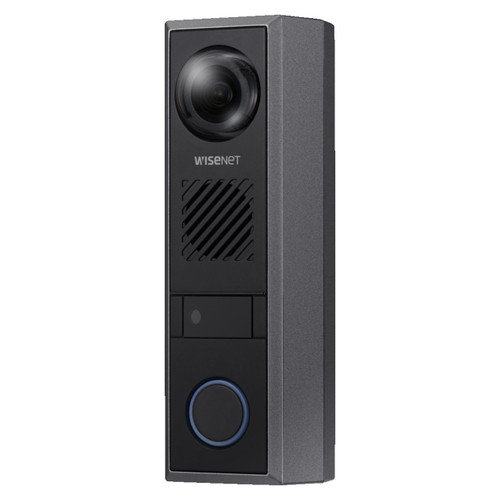
Both the Hanwha TID-600R and the Axis A8207-VE Mk II are wired, PoE-powered network video door stations rated IK08 for vandal resistance and designed for outdoor access-control entry points. A buyer cross-shopping these units is typically evaluating a single-gang door station that provides two-way audio, IP video streaming, and SIP/VoIP integration for visitor management. The comparison covers imaging performance and field of view, environmental and physical durability, and communication/integration capabilities — the three axes most relevant to a security integrator specifying a front-door or lobby intercom.
In This Guide
- Which unit delivers better image quality and low-light performance at the door?
- Which unit is better suited to harsh outdoor and high-abuse installations?
- Which unit offers broader communication protocol and access-control integration?
- Which should you choose: the TID-600R or the A8207-VE?
- Side-by-Side Specs
- FAQ
Which unit delivers better image quality and low-light performance at the door?
The Hanwha TID-600R uses a 1/2.8" CMOS sensor producing 2MP (1080p) resolution at up to 60 fps, with a minimum illumination of 0.018 lux in color mode and 0 lux via integrated IR (5 m IR range). Its WDR is rated at 150 dB (SSDR/WDR combined), supplemented by BLC, HLC, and digital noise reduction (SSNRV). It also provides digital image stabilization and defog support.
The Axis A8207-VE Mk II is specified at 3MP resolution and 30 fps, with Forensic WDR. Axis does not publish a lux sensitivity figure or IR capability in the provided specifications, so direct low-light comparison cannot be made from available data. The A8207-VE Mk II does not list a built-in IR illuminator in the provided specs.
On resolution the Axis A8207-VE Mk II has the edge (3MP vs 2MP). On frame rate the TID-600R leads at 60 fps vs 30 fps. The TID-600R provides a quantified WDR rating (150 dB) and documented IR night vision to 0 lux; the A8207-VE Mk II's Forensic WDR is Axis's branded processing pipeline but no dB figure or illumination floor is present in the provided specifications.
Which unit is better suited to harsh outdoor and high-abuse installations?
The Hanwha TID-600R carries IP65 ingress protection (dust-tight, water jet resistant), IK08 impact rating, and NEMA4X certification. Its operating temperature range is -30 °C to +55 °C and storage is rated to -50 °C. The enclosure is dark-gray aluminum (RAL7022), and it weighs 490 g at 49 × 165 × 48 mm. Certifications include UL (Safety), FCC and CE (EMC).
The Axis A8207-VE Mk II is rated IP66 (dust-tight, high-pressure water jet resistant — one step above IP65) and IK08. Its operating temperature range is -40 °C to +55 °C, extending 10 °C lower than the TID-600R at the cold end. No weight or exact enclosure dimensions are present in the provided Axis specifications.
For installations subject to pressure washing (loading docks, parking structures) or extreme cold (northern climates, unheated vestibules), the A8207-VE Mk II's IP66 and -40 °C floor are meaningful advantages over the TID-600R's IP65 and -30 °C floor. Both share IK08. The TID-600R adds NEMA4X certification, relevant for U.S. industrial/outdoor enclosure compliance requirements.
Which unit offers broader communication protocol and access-control integration?
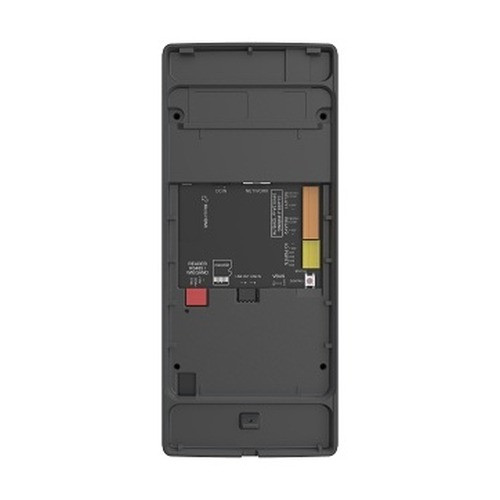
The Hanwha TID-600R implements SIP 2.0 (RFC 3261) with documented PBX compatibility for Cisco, Grandstream, Yealink, and Asterisk. It supports ONVIF Profile S, Wisenet SUNAPI (HTTP API), and the Wisenet open platform. Networking protocols include IPv4/IPv6, RTSP, SRTP, SNMPv1/v2c/v3, 802.1X (EAP-TLS, EAP-LEAP), and HTTPS/SSL. Alarm I/O is 2 inputs / 1 relay output. Edge storage is microSD/SDHC/SDXC up to 256 GB. RAM is specified at 2 GB.
The Axis A8207-VE Mk II provides 4 alarm inputs and 2 relays — double the I/O of the TID-600R — and lists video output support. Video compression in the provided specs is listed as H.264 only. Specific protocol listings (SIP, ONVIF profile, SDK) are not detailed in the provided specifications for the A8207-VE Mk II, though Axis products typically support ONVIF and VAPIX; however, those claims cannot be made from the provided spec data alone.
From the data provided, the TID-600R has the more fully documented integration stack: explicit SIP/PBX compatibility list, ONVIF Profile S, SRTP, and a detailed security protocol suite. The A8207-VE Mk II's superior alarm I/O (4 inputs / 2 relays vs 2 inputs / 1 relay) makes it preferable where multiple door contacts, REX sensors, or electric strike outputs must wire directly to the door station without an external controller. The TID-600R also adds H.265 and MJPEG compression options; the A8207-VE Mk II spec lists only H.264.
Which should you choose: the TID-600R or the A8207-VE?
Our take: The TID-600R is the stronger choice when SIP/VoIP PBX integration, low-light IR performance, and a fully documented protocol stack are the primary requirements. It supports H.265/H.264/MJPEG (vs H.264 only on the A8207-VE Mk II per provided specs), delivers 60 fps vs 30 fps, and includes IR illumination rated to 0 lux — no equivalent IR spec exists in the A8207-VE Mk II's provided data. The A8207-VE Mk II is the stronger choice for installations demanding higher ingress protection (IP66 vs IP65), a wider cold-temperature operating floor (-40 °C vs -30 °C), higher alarm I/O density (4 inputs / 2 relays vs 2 inputs / 1 relay), and higher resolution (3MP vs 2MP). Platform matters: the TID-600R is native to the Wisenet/Hanwha VMS ecosystem; the A8207-VE Mk II fits Axis Camera Station and VAPIX-based access-control environments. Integrators running mixed-platform or Axis-centric access control should favor the A8207-VE Mk II; those standardizing on Wisenet or a SIP PBX deployment will find the TID-600R the better-documented fit.
Side-by-Side Comparison
Spec-for-spec, from manufacturer data.
| Specification | Hanwha TID-600R | Axis A8207-VE |
|---|---|---|
| Product Type | Video Door Station / Intercom | Video Door Station / Intercom |
| Resolution | 2MP (1080p) | 3MP |
| Max Frame Rate | 60 fps | 30 fps |
| Sensor Size | 1/2.8" CMOS | — |
| Min. Illumination (Color) | 0.018 lux | — |
| Min. Illumination (IR) | 0 lux | — |
| IR Illuminator Range | 5 m | — |
| Wide Dynamic Range | WDR 150 dB (SSDR) | Forensic WDR |
| Video Compression | H.265 / H.264 / MJPEG | H.264 |
| IP Rating | IP65 | IP66 |
| Impact Rating | IK08 | IK08 |
| Operating Temperature | -30 °C to +55 °C | -40 °C to +55 °C |
| Alarm Inputs / Relays | 2 inputs / 1 relay | 4 inputs / 2 relays |
| SIP / VoIP | SIP 2.0 (RFC 3261); Cisco, Grandstream, Yealink, Asterisk | — |
| ONVIF | ONVIF Profile S | — |
| Edge Storage | microSD/SDHC/SDXC up to 256 GB | microSD |
| Power | PoE (802.3af) / 12 VDC | PoE+ (802.3at) |
| Max Power Consumption | 12.95 W | — |
| Audio | Two-way; built-in mic; 85 dB speaker at 0.5 m | Microphone supported |
| Certifications | IP65, IK08, NEMA4X, UL, FCC, CE | IP66, IK08 |
| Warranty | 3 years | 3 years |
Frequently Asked Questions
Which should you choose: the TID-600R or the A8207-VE?
The TID-600R is the stronger choice when SIP/VoIP PBX integration, low-light IR performance, and a fully documented protocol stack are the primary requirements. It supports H.265/H.264/MJPEG (vs H.264 only on the A8207-VE Mk II per provided specs), delivers 60 fps vs 30 fps, and includes IR illumination rated to 0 lux — no equivalent IR spec exists in the A8207-VE Mk II's provided data. The A8207-VE Mk II is the stronger choice for installations demanding higher ingress protection (IP66 vs IP65), a wider cold-temperature operating floor (-40 °C vs -30 °C), higher alarm I/O density (4 inputs / 2 relays vs 2 inputs / 1 relay), and higher resolution (3MP vs 2MP). Platform matters: the TID-600R is native to the Wisenet/Hanwha VMS ecosystem; the A8207-VE Mk II fits Axis Camera Station and VAPIX-based access-control environments. Integrators running mixed-platform or Axis-centric access control should favor the A8207-VE Mk II; those standardizing on Wisenet or a SIP PBX deployment will find the TID-600R the better-documented fit.
Does the TID-600R or the A8207-VE Mk II work better in freezing outdoor climates?
Based on the provided specifications, the Axis A8207-VE Mk II is rated to -40 °C at the low end, while the Hanwha TID-600R is rated to -30 °C. For installations in climates where temperatures regularly drop below -30 °C — such as northern Canada, Alaska, or northern European exteriors — the A8207-VE Mk II has a 10 °C cold-temperature advantage per the available spec data.
Can either door station connect directly to our existing SIP phone system or Asterisk PBX?
The Hanwha TID-600R explicitly lists SIP 2.0 (RFC 3261) compatibility with Cisco, Grandstream, Yealink, and Asterisk in its provided specifications, along with SRTP for encrypted audio. The Axis A8207-VE Mk II's provided specifications do not detail SIP or PBX compatibility. Integrators whose primary requirement is SIP/PBX integration should verify A8207-VE Mk II SIP support against Axis documentation before specifying it, as that information is not present in the specs provided here.
Which unit handles more door contacts and electric strikes without extra hardware?
The Axis A8207-VE Mk II provides 4 alarm inputs and 2 relay outputs per its provided specifications, making it capable of handling more door contacts, REX buttons, or electric strike/maglocks natively. The Hanwha TID-600R provides 2 alarm inputs and 1 relay output. If your entry point requires wiring multiple sensors or dual-door strike control directly to the intercom, the A8207-VE Mk II eliminates the need for an additional I/O expander in that wiring closet.
More Intercom Comparisons
- Hanwha TID-600R vs Aiphone IX-EA
- Hanwha TID-600R vs Aiphone IX-DVF-6
- Hanwha TID-600R vs Aiphone JOS-1FW
- Aiphone IX-EA vs Axis A8207-VE
- Aiphone IX-EA vs 2N 01273-001
- Aiphone IX-EA vs 2N 01274-001
Intercom Buying Guides
Get a Second Opinion on Your Camera Choice
Share your site layout, coverage goals, and budget. Our team will validate the camera selection, flag anything we would change, and recommend products that match the use case.