
Aiphone IX-EA vs 2N 01273-001: Specification Comparison
Both the Aiphone IX-EA and the 2N 01273-001 (IP Verso Nickel) are wired, PoE-powered IP video door stations designed for outdoor access control at a single entry point. A buyer evaluating either unit is selecting a front-end intercom device that delivers live video, two-way audio, and network integration to an access control or VMS platform. The comparison covers three axes most relevant to this device class: imaging and night-vision capability, standards compliance and platform integration, and physical installation and environmental resilience.
In This Guide
- How do the imaging and night-vision capabilities compare between the IX-EA and the 01273-001?
- Which unit offers broader standards compliance and VMS or access-control platform integration?
- How do the two units compare on physical installation, environmental rating, and power requirements?
- Which should you choose: the IX-EA or the 01273-001?
- Side-by-Side Specs
- FAQ
How do the imaging and night-vision capabilities compare between the IX-EA and the 01273-001?
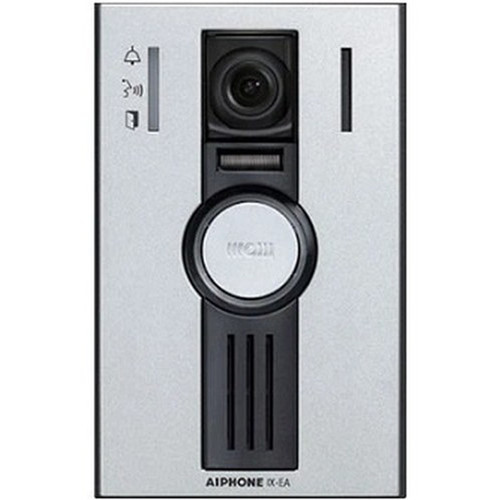
The Aiphone IX-EA uses a ⅓-inch CMOS sensor rated at 1.23 megapixels with a stated minimum illumination of 5 lux. It supports both H.264/AVC and Motion JPEG compression. No night-vision mechanism (IR LED or thermal) is listed in the provided specifications; the 5 lux floor means it relies on available ambient light for usable imagery in low-light conditions.
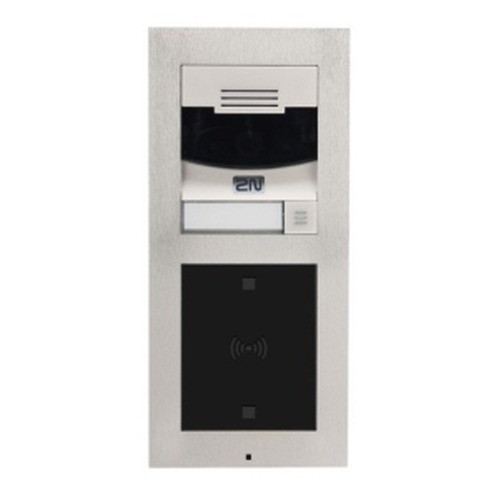
The 2N 01273-001 specifies thermal infrared night-vision imaging and lists its camera as '(optional),' indicating the main unit ships with a thermal imaging sensor rather than a conventional CMOS module as its primary low-light solution. H.264 and MJPEG are listed for compression. Sensor resolution and minimum lux are not provided in the available specifications for this unit.
For sites requiring reliable 24/7 visitor identification without supplemental lighting, the 01273-001's thermal capability is a meaningful differentiator. The IX-EA's 1.23 MP CMOS sensor provides a known resolution figure that the 2N spec set does not match for direct comparison.
Which unit offers broader standards compliance and VMS or access-control platform integration?
The Aiphone IX-EA explicitly lists ONVIF Profile S and RTSP stream output, enabling integration with any ONVIF-S compliant VMS. It also specifies IEEE 802.1X port-based network access control as a cybersecurity feature, which is relevant on enterprise and government networks with 802.1X-enforced switch ports.
The 2N 01273-001 lists ONVIF as Yes and includes Bluetooth Smart technology — a feature absent from the IX-EA spec set — which supports mobile credential or smartphone-based unlock workflows depending on the 2N system configuration. The 2N spec does not list IEEE 802.1X or a specific RTSP notation in the provided data.
Both units claim ONVIF compliance. The IX-EA adds a documented RTSP path and 802.1X cybersecurity credential, which matters for IT-managed deployments. The 01273-001 adds Bluetooth Smart, which can support mobile access scenarios the IX-EA does not address.
How do the two units compare on physical installation, environmental rating, and power requirements?
The Aiphone IX-EA is a surface-mount unit measuring 6-5/16" H × 3-15/16" W × 1-3/4" D. It is rated for outdoor use and operates between 14°F and 140°F (−10°C to 60°C). PoE power draw is specified at 5.18 W maximum under IEEE 802.3af Class 0. No IP ingress or IK impact rating is listed in the provided specifications.
The 2N 01273-001 carries an IP54 ingress protection rating (dust-partial / splash-resistant) and an IK08 impact resistance rating (capable of withstanding approximately 5 J of impact). Its frame is a 2-position modular design with one slot reserved for optional expansion modules. PoE 802.3af is the stated power source; maximum wattage draw is not provided in the available specifications.
The 01273-001 provides documented IP54 and IK08 ratings, which give installers a defined baseline for vandal and weather resistance. The IX-EA specifies precise physical dimensions and a tested operating temperature range, but its ingress and impact ratings are not present in the provided spec data.
Which should you choose: the IX-EA or the 01273-001?
Our take: The IX-EA is the stronger choice when the deployment demands a known sensor resolution, documented operating temperature range, IEEE 802.1X network authentication, and explicit RTSP stream access within an ONVIF Profile S VMS environment. Concrete differentiators: the IX-EA publishes a 1.23 MP sensor figure and 5 lux minimum illumination where the 01273-001 provides neither; the IX-EA specifies a 5.18 W max PoE draw enabling precise switch-port budgeting; and the IX-EA includes 802.1X cybersecurity support not listed for the 01273-001. Conversely, the 01273-001 is the stronger choice for sites requiring 24/7 thermal night-vision without supplemental lighting, documented IP54/IK08 environmental hardening, or Bluetooth Smart mobile credential support — none of which appear in the IX-EA specification set. Platform and module-expansion requirements should drive final selection.
Side-by-Side Comparison
Spec-for-spec, from manufacturer data.
| Specification | Aiphone IX-EA | 2N 01273-001 |
|---|---|---|
| Product Type | IP Video Door Station | IP Intercom Main Unit with Camera |
| Power | PoE IEEE 802.3af Class 0 | PoE (802.3af) |
| Max Power Draw | 5.18 W | — |
| Video Compression | H.264/AVC, Motion JPEG | H.264, MJPEG |
| Camera Sensor | ⅓" CMOS, 1.23 MP | — |
| Minimum Illumination | 5 lux | — |
| Night Vision | — | Thermal infrared |
| ONVIF | Profile S | Yes (profile not specified) |
| RTSP | Yes | — |
| IEEE 802.1X | Yes | — |
| Bluetooth | — | Smart technology |
| IP Rating | — | IP54 |
| Impact Rating | — | IK08 |
| Mount Type | Surface-mount | Modular frame (2-position, 1 expandable) |
| Dimensions | 6-5/16" H × 3-15/16" W × 1-3/4" D | — |
| Operating Temperature | 14°F to 140°F (−10°C to 60°C) | — |
| Audio | Two-way | Built-in mic |
| Warranty | 2-Year | 3-Year |
Frequently Asked Questions
Which should you choose: the IX-EA or the 01273-001?
The IX-EA is the stronger choice when the deployment demands a known sensor resolution, documented operating temperature range, IEEE 802.1X network authentication, and explicit RTSP stream access within an ONVIF Profile S VMS environment. Concrete differentiators: the IX-EA publishes a 1.23 MP sensor figure and 5 lux minimum illumination where the 01273-001 provides neither; the IX-EA specifies a 5.18 W max PoE draw enabling precise switch-port budgeting; and the IX-EA includes 802.1X cybersecurity support not listed for the 01273-001. Conversely, the 01273-001 is the stronger choice for sites requiring 24/7 thermal night-vision without supplemental lighting, documented IP54/IK08 environmental hardening, or Bluetooth Smart mobile credential support — none of which appear in the IX-EA specification set. Platform and module-expansion requirements should drive final selection.
Can either unit work without a dedicated controller or head-end server?
Both units connect over standard IP/PoE infrastructure. The IX-EA outputs an RTSP stream and is ONVIF Profile S compliant, so it can feed any compatible NVR or VMS without a proprietary server. The 01273-001 is also ONVIF-listed; however, full feature access (Bluetooth unlock, module coordination) typically requires a 2N or compatible management platform. Verify head-end requirements with each manufacturer before assuming serverless operation.
Is the IX-EA or the 01273-001 better suited for a high-vandalism exterior location?
The 2N 01273-001 specifies an IK08 impact rating and IP54 ingress protection, providing a documented baseline for vandal-prone and wet outdoor environments. The Aiphone IX-EA's provided specifications do not include an IP or IK rating, so its resistance to impact and water ingress cannot be confirmed from the available data. For a high-vandalism site, the 01273-001 has the documented edge.
Which unit is easier to integrate into an existing enterprise network with 802.1X port security?
The Aiphone IX-EA explicitly lists IEEE 802.1X port-based network access control as a supported cybersecurity feature, meaning it can authenticate to a RADIUS-controlled switch port without a bypass VLAN workaround. The 2N 01273-001's provided specifications do not mention 802.1X support. If your network enforces 802.1X on all wired ports, confirm 2N compatibility with the manufacturer before deploying the 01273-001.
More Intercom Comparisons
- Hanwha TID-600R vs Aiphone IX-EA
- Hanwha TID-600R vs Axis A8207-VE
- Hanwha TID-600R vs Aiphone IX-DVF-6
- Hanwha TID-600R vs Aiphone JOS-1FW
- Aiphone IX-EA vs Axis A8207-VE
- Aiphone IX-EA vs 2N 01274-001
Intercom Buying Guides
Get a Second Opinion on Your Camera Choice
Share your site layout, coverage goals, and budget. Our team will validate the camera selection, flag anything we would change, and recommend products that match the use case.