
Aiphone IX-EA vs Axis A8207-VE: Specification Comparison
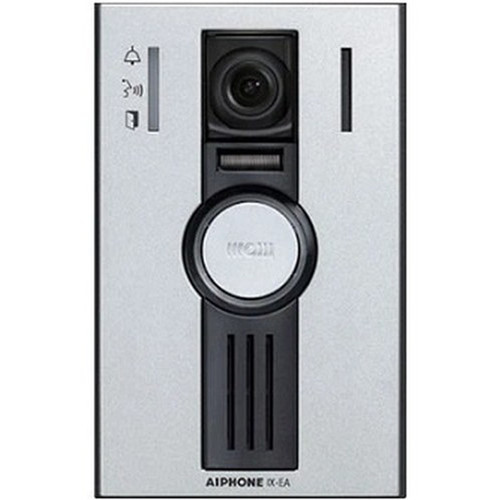
Both the Aiphone IX-EA and the Axis A8207-VE Mk II are PoE-powered, outdoor-rated IP video door stations designed for access control entry points. Buyers evaluating either unit are selecting a network intercom device that delivers live video, two-way audio, and door-release integration over an IP infrastructure. This comparison examines image resolution and optics, physical and environmental durability, and I/O integration plus platform compatibility — the three dimensions that most directly drive a purchasing decision for a video door station.
In This Guide
- Which door station delivers better image quality and field of view at the entry point?
- Which unit is better suited for harsh or high-abuse outdoor installations?
- Which door station offers more flexible relay, alarm, and platform integration for access control systems?
- Which should you choose: the IX-EA or the A8207-VE?
- Side-by-Side Specs
- FAQ
Which door station delivers better image quality and field of view at the entry point?
The Aiphone IX-EA uses a ⅓-inch CMOS sensor rated at 1.23 megapixels with a minimum illumination of 5 lux. It supports H.264/AVC and Motion JPEG compression. No field-of-view angle is listed in the provided specifications.
The Axis A8207-VE Mk II is rated at 3 megapixels at 30 fps and specifies a 180-degree horizontal field of view. It supports H.264 compression and includes Forensic WDR for handling high-contrast or backlit scenes such as doorways with bright ambient light behind a visitor. No minimum illumination value is provided in the supplied specifications.
On resolution alone, the Axis unit delivers roughly 2.4× the pixel count of the Aiphone. The 180-degree horizontal coverage is a specified differentiator for vestibule or wide-entry deployments where a standard lens would leave blind spots. The Forensic WDR designation addresses a common challenge at exterior entry points where strong backlighting can wash out facial detail. The IX-EA's 5 lux minimum illumination is a stated figure; no equivalent value is provided for the A8207-VE Mk II.
Which unit is better suited for harsh or high-abuse outdoor installations?
The Aiphone IX-EA carries an outdoor environment rating and is surface-mount in form factor. Its operating temperature range is specified as 14°F to 140°F (−10°C to 60°C). No IP ingress protection rating and no impact resistance (IK) rating are listed in the provided specifications.
The Axis A8207-VE Mk II is rated IP66 for dust-tight and high-pressure water jet resistance, and IK08 for impact resistance (equivalent to 5 joules). Its operating temperature range is specified as −40°C to 55°C (−40°F to 131°F).
The Axis unit has a substantially wider cold-temperature operating range, extending to −40°C versus the IX-EA's −10°C floor — a meaningful difference for unheated exterior enclosures in cold climates. The IP66 and IK08 ratings on the Axis provide documented protection against water ingress and physical impact; no equivalent ratings are present in the IX-EA specifications, so a direct comparison on those dimensions cannot be made.
Which door station offers more flexible relay, alarm, and platform integration for access control systems?
The Aiphone IX-EA declares ONVIF Profile S and RTSP compatibility, IEEE 802.1X port security for network authentication, and PoE 802.3af (Class 0) power at 5.18 W maximum. No alarm input count, relay count, or onboard storage are listed in the provided specifications.
The Axis A8207-VE Mk II specifies 4 alarm inputs, 2 relays, and onboard microSD storage. It is powered by PoE+ (802.3at) rather than 802.3af. No ONVIF profile or RTSP declaration appears in the supplied specifications.
The Axis unit's 4 alarm inputs and 2 relays make it directly wirable to third-party electric strikes, request-to-exit sensors, or external alarm devices without an intermediate controller. The IX-EA does not list equivalent dry-contact I/O in the provided data. The IX-EA explicitly declares ONVIF Profile S and RTSP, which eases VMS integration with platforms that use those protocols. The Axis A8207-VE Mk II draws up to PoE+ (802.3at), so the switch port or midspan injector must support 802.3at; the IX-EA's 5.18 W draw is compatible with standard 802.3af ports.
Which should you choose: the IX-EA or the A8207-VE?
Our take: The IX-EA is the stronger choice when the deployment runs an ONVIF Profile S VMS, requires standard 802.3af switch infrastructure, and operates in moderate climates where the −10°C cold limit is not a factor. The A8207-VE Mk II is the stronger choice when image detail, wide-entry coverage, and direct dry-contact I/O are priorities: it provides 3MP versus 1.23MP, a specified 180-degree horizontal field of view versus no stated angle, 4 alarm inputs and 2 relays versus none listed for the IX-EA, IP66/IK08 environmental ratings versus unspecified equivalents on the IX-EA, and a cold-temperature floor of −40°C versus −10°C. The IX-EA's explicit ONVIF Profile S declaration and lower PoE draw are practical advantages on platforms and switch plants where 802.3at is not provisioned. Buyers integrating into an Aiphone IX Series system should verify native interoperability; buyers on an open-platform VMS or Axis ecosystem gain more documented hardware capability from the A8207-VE Mk II.
Side-by-Side Comparison
Spec-for-spec, from manufacturer data.
| Specification | Aiphone IX-EA | Axis A8207-VE |
|---|---|---|
| Product Type | IP Video Door Station | IP Video Door Station (Intercom) |
| Resolution | 1.23 MP | 3 MP |
| Sensor | ⅓" CMOS | — |
| Field of View (H) | — | 180° |
| Wide Dynamic Range | — | Forensic WDR |
| Min. Illumination | 5 lux | — |
| Video Compression | H.264/AVC, MJPEG | H.264 |
| Audio | Two-way | Microphone supported |
| PoE Standard | 802.3af (Class 0) | 802.3at (PoE+) |
| Max Power Draw | 5.18 W | — |
| Alarm Inputs | — | 4 |
| Relays | — | 2 |
| Onboard Storage | — | microSD |
| IP Rating | — | IP66 |
| Impact Rating | — | IK08 |
| Operating Temp | −10°C to 60°C | −40°C to 55°C |
| ONVIF | Profile S | — |
| Cybersecurity | IEEE 802.1X | — |
| Warranty | 2 years | 3 years |
| Mount Type | Surface-mount | — |
Frequently Asked Questions
Which should you choose: the IX-EA or the A8207-VE?
The IX-EA is the stronger choice when the deployment runs an ONVIF Profile S VMS, requires standard 802.3af switch infrastructure, and operates in moderate climates where the −10°C cold limit is not a factor. The A8207-VE Mk II is the stronger choice when image detail, wide-entry coverage, and direct dry-contact I/O are priorities: it provides 3MP versus 1.23MP, a specified 180-degree horizontal field of view versus no stated angle, 4 alarm inputs and 2 relays versus none listed for the IX-EA, IP66/IK08 environmental ratings versus unspecified equivalents on the IX-EA, and a cold-temperature floor of −40°C versus −10°C. The IX-EA's explicit ONVIF Profile S declaration and lower PoE draw are practical advantages on platforms and switch plants where 802.3at is not provisioned. Buyers integrating into an Aiphone IX Series system should verify native interoperability; buyers on an open-platform VMS or Axis ecosystem gain more documented hardware capability from the A8207-VE Mk II.
Can I integrate either door station with a third-party VMS like Milestone or Genetec?
The Aiphone IX-EA explicitly lists ONVIF Profile S and RTSP in its specifications, which are the standard protocols those platforms use for video ingestion. The Axis A8207-VE Mk II does not list an ONVIF profile or RTSP in the provided specifications; buyers should verify VMS driver availability with Axis or the VMS vendor before specifying it for an open-platform deployment.
Do I need a PoE+ switch to power either of these units?
The Aiphone IX-EA is specified as IEEE 802.3af Class 0 at 5.18 W maximum, so a standard 802.3af port is sufficient. The Axis A8207-VE Mk II is specified as PoE+ (802.3at), which requires a switch port or midspan injector rated for 802.3at. Verify port budgets before installation.
Which unit is better for an outdoor installation in a cold climate such as northern Canada or Scandinavia?
The Axis A8207-VE Mk II specifies an operating temperature floor of −40°C and carries an IP66 ingress protection rating and IK08 impact resistance rating. The Aiphone IX-EA specifies a −10°C lower operating limit; no IP or IK rating is provided in its published specifications. For installations where temperatures regularly drop below −10°C, the A8207-VE Mk II's specified operating range covers that environment while the IX-EA's does not.
More Intercom Comparisons
- Hanwha TID-600R vs Aiphone IX-EA
- Hanwha TID-600R vs Axis A8207-VE
- Hanwha TID-600R vs Aiphone IX-DVF-6
- Hanwha TID-600R vs Aiphone JOS-1FW
- Aiphone IX-EA vs 2N 01273-001
- Aiphone IX-EA vs 2N 01274-001
Intercom Buying Guides
Get a Second Opinion on Your Camera Choice
Share your site layout, coverage goals, and budget. Our team will validate the camera selection, flag anything we would change, and recommend products that match the use case.