
Aiphone IX-EA vs 2N 01274-001: Specification Comparison
Both the Aiphone IX-EA and the 2N IP Verso Black (01274-001) are wired, PoE-powered IP video door stations designed for outdoor access control — the same product class a security integrator would evaluate side by side for a commercial entrance application. The IX-EA is a fixed-function surface-mount unit from Aiphone's IX Series, while the 01274-001 is the main unit of 2N's modular Verso platform. This comparison covers video and codec capability, physical installation and environmental resilience, and integration breadth — the three axes that most often determine which unit wins a bid.
In This Guide
Which unit delivers better video quality and bandwidth efficiency?
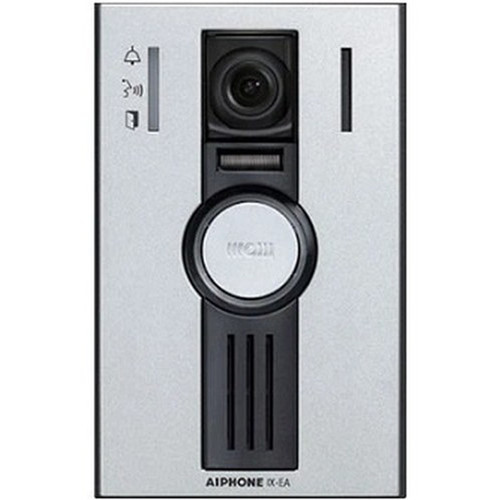
The Aiphone IX-EA uses H.264/AVC and Motion JPEG compression from a ⅓-inch CMOS sensor rated at 1.23 megapixels, with a specified minimum illumination of 5 lux. These figures give installers a concrete low-light threshold and a known resolution for door-station identification use cases.
The 2N 01274-001 specifies H.265 compression, which the product data describes as reducing bandwidth approximately 40–60% versus H.264 — directly relevant on constrained LAN segments or cellular-backhaul sites. However, the 2N's datasheet marks the camera as '(optional),' meaning resolution, sensor size, and minimum illumination figures are not listed in the provided specifications for this SKU. Buyers should confirm camera module inclusion before assuming video parity with the IX-EA.
How do the two units compare on mounting, power draw, and environmental protection?
The Aiphone IX-EA is a surface-mount unit measuring 6-5⁄16" H × 3-15⁄16" W × 1-3⁄4" D. It draws a maximum of 5.18 W under IEEE 802.3af Class 0 — well within any 802.3af-capable switch port. Its rated operating temperature is 14°F to 140°F (−10°C to 60°C), and it carries an outdoor environment rating.
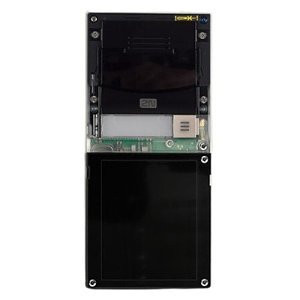
The 2N 01274-001 also specifies PoE (802.3af) power and wall-mount installation, and adds an IK08 impact rating — a measurable mechanical-vandal resistance figure absent from the IX-EA's listed specs. The 2N's operating temperature range, exact power consumption, and physical dimensions are not provided in the available specification data. The modular 2-position frame allows one additional module (reader, relay, keypad, etc.) to be added without replacing the base unit.
For harsh-environment or vandal-prone sites, the 2N's IK08 rating is a concrete differentiator. For installations where exact power budgeting is critical, the IX-EA's 5.18 W maximum is the only confirmed draw figure available.
Which unit offers broader platform integration and cybersecurity support?
The Aiphone IX-EA declares ONVIF Profile S and RTSP support, enabling compatibility with a wide range of third-party VMS platforms that consume standard ONVIF streams. It also specifies IEEE 802.1X port security, providing network-level authentication at the Ethernet edge — a meaningful cybersecurity control for enterprise and government deployments.
The 2N 01274-001 lists ONVIF compliance and Bluetooth Smart technology in its specifications, but the provided data does not include a VMS compatibility list, an IEEE 802.1X statement, or other cybersecurity certifications. The Bluetooth capability could support mobile credential or commissioning workflows, though no further detail is given in the available specs.
For deployments that mandate 802.1X network authentication or require confirmed ONVIF Profile S VMS integration, the IX-EA's documented claims are more complete. The 2N's Bluetooth addition opens mobile-access workflows that the IX-EA does not address, but the scope of that feature cannot be fully evaluated from the provided data.
Which should you choose: the IX-EA or the 01274-001?
Our take: The IX-EA is the stronger choice when confirmed sensor resolution, low-light performance, IEEE 802.1X network security, and a documented PoE power budget are required at bid time. Its 1.23 MP sensor, 5 lux minimum illumination, 5.18 W maximum draw, and ONVIF Profile S declaration are all verifiable from published specs, reducing RFP risk. The 2N 01274-001 counters with H.265 compression (40–60% bandwidth reduction versus H.264), an IK08 vandal-resistance rating, and a modular frame for future expansion — concrete advantages for bandwidth-constrained or high-abuse sites. However, the 2N camera module is listed as optional, and resolution, illumination, and power consumption figures are absent from the provided data. Specify the IX-EA for projects requiring spec-verified video performance and 802.1X compliance; specify the 2N Verso where H.265 efficiency, IK08 durability, or modular expansion capacity justifies resolving the open camera-spec questions with the manufacturer.
Side-by-Side Comparison
Spec-for-spec, from manufacturer data.
| Specification | Aiphone IX-EA | 2N 01274-001 |
|---|---|---|
| Product Type | IP Video Door Station | IP Intercom Main Unit with Camera |
| Form Factor | Surface-mount | Wall-mount, modular frame |
| Modular Expansion | — | 2-position frame (1 expansion slot) |
| Video Compression | H.264/AVC, Motion JPEG | H.265 |
| Camera Sensor | 1/3" CMOS, 1.23 MP | — (camera listed as optional) |
| Minimum Illumination | 5 lux | — |
| PoE Standard | IEEE 802.3af Class 0 | PoE (802.3af) |
| Max Power Consumption | 5.18 W | — |
| Audio | Two-way | Two-way (built-in mic) |
| ONVIF | Profile S | Yes (profile not specified) |
| RTSP | Yes | — |
| IEEE 802.1X | Yes | — |
| Bluetooth | — | Smart technology |
| Impact Rating | — | IK08 |
| Operating Temperature | 14°F to 140°F (-10°C to 60°C) | — |
| Warranty | 2-Year | 3-Year |
Frequently Asked Questions
Which should you choose: the IX-EA or the 01274-001?
The IX-EA is the stronger choice when confirmed sensor resolution, low-light performance, IEEE 802.1X network security, and a documented PoE power budget are required at bid time. Its 1.23 MP sensor, 5 lux minimum illumination, 5.18 W maximum draw, and ONVIF Profile S declaration are all verifiable from published specs, reducing RFP risk. The 2N 01274-001 counters with H.265 compression (40–60% bandwidth reduction versus H.264), an IK08 vandal-resistance rating, and a modular frame for future expansion — concrete advantages for bandwidth-constrained or high-abuse sites. However, the 2N camera module is listed as optional, and resolution, illumination, and power consumption figures are absent from the provided data. Specify the IX-EA for projects requiring spec-verified video performance and 802.1X compliance; specify the 2N Verso where H.265 efficiency, IK08 durability, or modular expansion capacity justifies resolving the open camera-spec questions with the manufacturer.
Is the IX-EA or the 01274-001 better for a site with limited network bandwidth?
The 2N 01274-001 has the advantage here on paper: its H.265 codec is specified to reduce bandwidth 40–60% compared to H.264. The IX-EA uses H.264 and MJPEG only. However, because the 2N's camera is listed as optional and no resolution or bitrate figures are provided in the available specs, you should confirm the camera module is included and request actual bitrate data from 2N before writing H.265 savings into a design.
Which unit is better suited for an outdoor installation that may face physical tampering?
The 2N 01274-001 specifies an IK08 impact rating, a standardized measure of resistance to mechanical impact. The Aiphone IX-EA carries an outdoor environment rating and an operating temperature range of 14°F to 140°F, but no IK impact rating is listed in its provided specifications. For installations where vandal resistance is a written requirement, the 2N's IK08 declaration is a documentable differentiator.
Does either unit support IEEE 802.1X for secure network onboarding?
Yes — the Aiphone IX-EA explicitly lists IEEE 802.1X port security in its specifications. The 2N 01274-001's provided specifications do not mention 802.1X or any equivalent network-authentication standard. If 802.1X compliance is a project requirement (common in government, education, and enterprise LAN environments), the IX-EA meets it by spec; the 2N's status on this point would need to be confirmed directly with 2N.
More Intercom Comparisons
- Hanwha TID-600R vs Aiphone IX-EA
- Hanwha TID-600R vs Axis A8207-VE
- Hanwha TID-600R vs Aiphone IX-DVF-6
- Hanwha TID-600R vs Aiphone JOS-1FW
- Aiphone IX-EA vs Axis A8207-VE
- Aiphone IX-EA vs 2N 01273-001
Intercom Buying Guides
Get a Second Opinion on Your Camera Choice
Share your site layout, coverage goals, and budget. Our team will validate the camera selection, flag anything we would change, and recommend products that match the use case.