
Hanwha TID-600R vs Aiphone IX-DVF-6: Specification Comparison
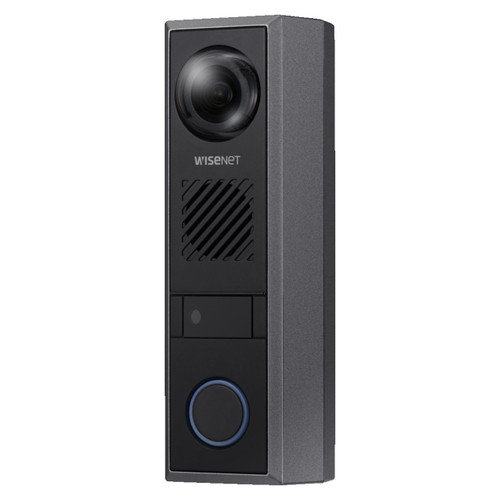
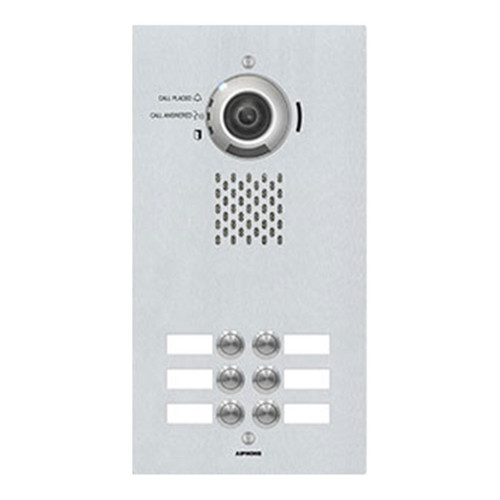
Both the Hanwha TID-600R and the Aiphone IX-DVF-6 are IP-networked video door stations—flush-mountable, PoE-powered units designed for building-entry access control and two-way audio/video communication. The TID-600R is a single-call-point intercom with a high-resolution 1080p camera and deep analytics, while the IX-DVF-6 is a multi-directory door station supporting up to six call destinations. Buyers evaluating an entry-point intercom for a commercial or multi-tenant facility will find these two units in direct competition on imaging quality, call capacity, and integration depth.
In This Guide
- How do the imaging quality and audio capabilities compare between the TID-600R and the IX-DVF-6?
- Which unit better supports multi-tenant or multi-destination deployments, and what access-control outputs does each provide?
- How do the two units differ in platform integration, analytics, and cybersecurity features?
- Which should you choose: the TID-600R or the IX-DVF-6?
- Side-by-Side Specs
- FAQ
How do the imaging quality and audio capabilities compare between the TID-600R and the IX-DVF-6?
The TID-600R uses a 1/2.8" CMOS sensor delivering 1080p (2MP) at up to 60fps, with a minimum illumination of 0.018 lux in color mode and 0 lux under IR—aided by a built-in IR illuminator rated to 5m. It supports WDR at 150dB, BLC, HLC, and SSDR, and includes digital image stabilization and defog. The Aiphone IX-DVF-6 specifies a 1.23-megapixel camera with a minimum illumination of 5 lux using a white LED; no IR illuminator, WDR value, or dynamic range figure is provided in its spec sheet.
On audio, the TID-600R has a built-in mic and an 85dB speaker at 0.5m, supports G.711 and G.726, and offers full-duplex two-way operation. The IX-DVF-6 supports G.711 and G.722 codecs; the presence of a built-in speaker and microphone is implied by its door-station function but specific SPL and codec details beyond G.711/G.722 are not specified. G.722 (wideband) support on the Aiphone is a differentiator for higher voice clarity that the TID-600R spec does not list.
Which unit better supports multi-tenant or multi-destination deployments, and what access-control outputs does each provide?
The Aiphone IX-DVF-6 is explicitly designed for multi-destination calling, supporting 6 individual call buttons with separate directories—a direct fit for small multi-tenant buildings, multi-department offices, or lobbies requiring distinct call routing without a separate directory panel. The Hanwha TID-600R provides a single call point; multi-destination capability is not specified.
For access control integration, the TID-600R provides 2 alarm inputs and 1 relay output, enabling direct connection to electric strikes or maglocks as well as external trigger devices. The IX-DVF-6 provides 2 contact outputs; alarm input count is not specified in its published specs. Both units are PoE (IEEE 802.3af) powered. The TID-600R also accepts 12VDC; the IX-DVF-6 accepts 24VDC as an alternative—relevant where PoE budget is constrained.
How do the two units differ in platform integration, analytics, and cybersecurity features?
The TID-600R offers extensive integration depth: ONVIF Profile S, native SIP 2.0 (RFC 3261) with named compatibility for Cisco, Grandstream, Yealink, and Asterisk PBX systems, Hanwha SUNAPI/HTTP API, and Wisenet open platform support. Its analytics suite includes directional detection, appear/disappear, enter/exit, loitering, tampering, virtual line, audio detection, shock detection, and sound classification. On-board edge storage runs up to 256GB microSD, with 2GB RAM. Cybersecurity features include HTTPS/SSL, digest authentication, IP filtering, 802.1X (EAP-TLS, EAP-LEAP), and device certificates.
The IX-DVF-6 is ONVIF Profile S compliant and SIP-compatible, supporting IPv4/IPv6, RTSP/RTP, SMTP, SFTP, DHCP, NTP, and IEEE 802.1x port security. It supports microSD storage; capacity is not specified. Analytics capabilities beyond basic motion are not listed in the published specs. The IX-DVF-6's integration story is centered on the Aiphone IX Series ecosystem; third-party PBX compatibility details beyond SIP are not provided in the spec sheet.
Which should you choose: the TID-600R or the IX-DVF-6?
Our take: The TID-600R is the stronger choice when imaging fidelity, advanced analytics, and deep SIP/PBX integration are the primary requirements. Its 2MP 1080p sensor at 60fps outresolves the IX-DVF-6's 1.23MP camera, its IR illuminator enables true 0-lux night identification versus the IX-DVF-6's 5-lux white-LED floor, and its WDR is rated at 150dB against no published figure for the Aiphone. The TID-600R's analytics suite—loitering, enter/exit, sound classification, and more—adds intelligence the IX-DVF-6 spec sheet does not address. Conversely, the IX-DVF-6 is the purpose-built solution where six independently addressable call destinations are required; no multi-button call routing is specified for the TID-600R. For a single-entry point in a Hanwha VMS or Cisco/Asterisk PBX environment, the TID-600R is the clear fit. For a small multi-tenant lobby or Aiphone IX Series deployment requiring discrete per-unit calling, the IX-DVF-6 is the correct selection.
Side-by-Side Comparison
Spec-for-spec, from manufacturer data.
| Specification | Hanwha TID-600R | Aiphone IX-DVF-6 |
|---|---|---|
| Camera Resolution | 2MP (1080p) | 1.23MP |
| Sensor Size | 1/2.8" CMOS | Not specified |
| Max Framerate | 60fps | Not specified |
| Min. Illumination (Color) | 0.018 lux | 5 lux (white LED) |
| Min. Illumination (IR/Night) | 0 lux (IR) | Not specified |
| IR Illuminator | Yes, 5m range | No (white LED only) |
| Wide Dynamic Range | 150dB WDR | Not specified |
| Call Buttons | 1 | 6 |
| Video Compression | H.265, H.264, MJPEG | H.264/AVC, MJPEG |
| Audio Codec | G.711 u-law, G.726 | G.711, G.722 |
| SIP / PBX Integration | SIP 2.0; Cisco, Grandstream, Yealink, Asterisk | SIP (RFC not specified; no named PBX) |
| ONVIF | Profile S | Profile S |
| Contact Outputs | 1 relay output | 2 contact outputs |
| Alarm Inputs | 2 | Not specified |
| Edge Storage | microSD up to 256GB | microSD (capacity not specified) |
| Power | PoE 802.3af or 12VDC, 12.95W max | PoE 802.3af or 24VDC, 5.28W |
| Operating Temperature | -30°C to +55°C | -40°F to +140°F (-40°C to +60°C) |
| Protection Rating | IP65, IK08, NEMA4X | IP65, IK08 |
| Analytics | Loitering, enter/exit, virtual line, audio detection, sound classification, tampering, and more | Not specified |
| Dimensions | 1.93" W x 6.50" H x 1.89" D | 7-3/16" W x 13-11/16" H |
| Warranty | 3 years | Not specified |
Frequently Asked Questions
Which should you choose: the TID-600R or the IX-DVF-6?
The TID-600R is the stronger choice when imaging fidelity, advanced analytics, and deep SIP/PBX integration are the primary requirements. Its 2MP 1080p sensor at 60fps outresolves the IX-DVF-6's 1.23MP camera, its IR illuminator enables true 0-lux night identification versus the IX-DVF-6's 5-lux white-LED floor, and its WDR is rated at 150dB against no published figure for the Aiphone. The TID-600R's analytics suite—loitering, enter/exit, sound classification, and more—adds intelligence the IX-DVF-6 spec sheet does not address. Conversely, the IX-DVF-6 is the purpose-built solution where six independently addressable call destinations are required; no multi-button call routing is specified for the TID-600R. For a single-entry point in a Hanwha VMS or Cisco/Asterisk PBX environment, the TID-600R is the clear fit. For a small multi-tenant lobby or Aiphone IX Series deployment requiring discrete per-unit calling, the IX-DVF-6 is the correct selection.
Is the TID-600R or IX-DVF-6 better for a building with multiple tenants needing separate call buttons?
The IX-DVF-6 is the appropriate choice for that scenario. It is explicitly spec'd with 6 individual call buttons and individual directories, enabling discrete call routing to up to six destinations from a single door station. The TID-600R spec does not describe multi-button or multi-directory functionality.
Which unit works better in low-light or nighttime entry environments?
The TID-600R has a significant advantage here. It includes a built-in IR illuminator rated to 5 meters, achieves 0 lux under IR and 0.018 lux in color mode, and supports 150dB WDR. The IX-DVF-6 uses a white LED for low-light and specifies a minimum illumination of 5 lux; no IR mode or WDR rating is published for it.
Can either unit connect directly to an existing office PBX or VoIP phone system?
Both units support SIP and ONVIF Profile S, enabling integration with SIP-based PBX systems. The TID-600R additionally names specific compatible platforms—Cisco, Grandstream, Yealink, and Asterisk—in its published specs. The IX-DVF-6 lists SIP compliance but does not name specific third-party PBX systems in its available spec data.
More Intercom Comparisons
- Hanwha TID-600R vs Aiphone IX-EA
- Hanwha TID-600R vs Axis A8207-VE
- Hanwha TID-600R vs Aiphone JOS-1FW
- Aiphone IX-EA vs Axis A8207-VE
- Aiphone IX-EA vs 2N 01273-001
- Aiphone IX-EA vs 2N 01274-001
Intercom Buying Guides
Get a Second Opinion on Your Camera Choice
Share your site layout, coverage goals, and budget. Our team will validate the camera selection, flag anything we would change, and recommend products that match the use case.