
Hanwha TID-600R vs Aiphone IX-EA: Specification Comparison
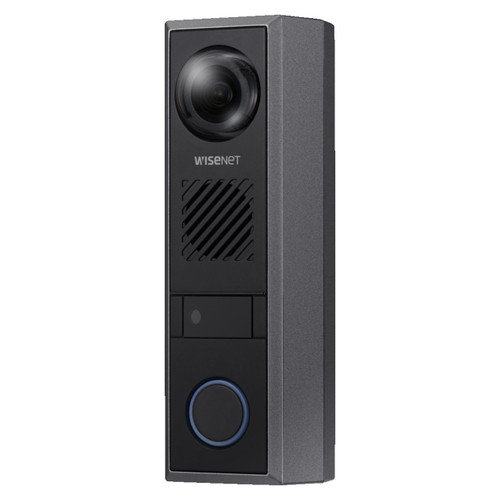
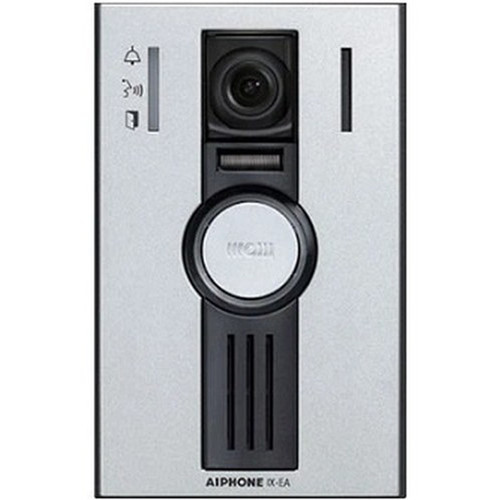
Both the Hanwha TID-600R and the Aiphone IX-EA are PoE-powered IP video door stations designed for outdoor access-control entry points — the same product class a security integrator or IT buyer would evaluate side by side. The TID-600R is a 1080p SIP-capable intercom with onboard analytics, while the IX-EA is a 1.23MP surface-mount door station. This comparison covers imaging and low-light performance, environmental and power specifications, and integration and protocol support — the three axes that most directly affect deployment decisions for video door stations.
In This Guide
- Which door station delivers better image quality and low-light performance?
- Which unit is better suited for harsh outdoor environments and demanding installation conditions?
- Which door station offers broader protocol support, access-control integration, and cybersecurity features?
- Which should you choose: the TID-600R or the IX-EA?
- Side-by-Side Specs
- FAQ
Which door station delivers better image quality and low-light performance?
The TID-600R uses a 1/2.8" CMOS sensor producing 1080p (2MP) video at up to 60 fps, with a minimum illumination of 0.018 lux in color mode and 0 lux with IR active — an onboard IR illuminator rated to 5 m. It supports H.265, H.264 (Main/Baseline/High), and MJPEG compression with CBR or VBR bitrate control, up to 10 simultaneous streaming profiles, and WDR rated at 150 dB. Additional imaging features include Auto ICR day/night switching, SSNR V digital noise reduction, digital image stabilization, defog, BLC/HLC/SSDR backlight compensation, and 32 polygonal privacy mask zones.
The IX-EA uses a 1/3" CMOS sensor at 1.23MP resolution. Its minimum illumination is specified at 5 lux, and no IR illuminator is listed in the provided specifications. Compression is limited to H.264/AVC and Motion JPEG; H.265 is not specified. Frame rate, WDR rating, noise reduction, and stabilization details are absent from the provided specifications.
For deployments requiring high-resolution capture, low-light or zero-lux identification, or advanced image processing, the TID-600R's sensor size, resolution, frame rate, IR capability, and 150 dB WDR represent a substantial specified advantage over the IX-EA, for which most imaging parameters are not provided.
Which unit is better suited for harsh outdoor environments and demanding installation conditions?
The TID-600R carries IP65, IK08, and NEMA 4X certifications, indicating dust-tight and water-jet resistance plus impact resistance to 5 joules. Its operating temperature range is −30 °C to +55 °C (−22 °F to +131 °F) with humidity up to 95% RH. The housing is aluminum (RAL7022 dark gray) and the unit weighs 490 g. Maximum power draw is 12.95 W over PoE. An optional skin cover (SBC-165W) is listed.
The IX-EA is rated for outdoor use and its operating temperature is specified as 14 °F to 140 °F (−10 °C to 60 °C). IP or IK impact ratings are not listed in the provided specifications. The housing material is not specified. Maximum PoE draw is 5.18 W, classified as IEEE 802.3af Class 0.
The TID-600R's cold-end operating floor of −30 °C extends roughly 20 °C below the IX-EA's −10 °C floor, which is relevant in northern-climate or unheated-enclosure installations. The TID-600R's IK08 impact and NEMA 4X ratings provide documented vandal and weather resistance; equivalent ratings are absent from the IX-EA's provided specifications. The IX-EA's lower power draw (5.18 W vs. 12.95 W) is an advantage in switch-port or midspan budget planning.
Which door station offers broader protocol support, access-control integration, and cybersecurity features?
The TID-600R supports ONVIF Profile S, SIP 2.0 (RFC 3261) with named PBX compatibility (Cisco, Grandstream, Yealink, Asterisk), a full HTTP/HTTPS API (SUNAPI), and the Wisenet open platform. Its protocol list includes IPv4/IPv6, RTSP, RTP/RTCP, SRTP, SNMPv1/v2c/v3, 802.1X (EAP-TLS, EAP-LEAP), HTTPS/SSL/TLS, IP address filtering, digest authentication, and device certificates via Hanwha Techwin Root CA. It provides 2 alarm inputs and 1 relay output, onboard analytics (directional detection, loitering, appear/disappear, enter/exit, tampering, audio detection, shock detection, sound classification), and a 256 GB micro SD edge storage slot.
The IX-EA supports ONVIF Profile S, RTSP, and IEEE 802.1X port security. Two-way audio is specified. Additional VMS integration protocols, alarm I/O counts, API details, analytics capabilities, and edge storage are not listed in the provided specifications.
The TID-600R's native SIP 2.0 support enables direct PBX or softphone integration without a proprietary controller, and its analytics suite adds intrusion-detection value beyond basic door-station function. The IX-EA's integration capabilities beyond ONVIF, RTSP, and 802.1X are not documented in the provided specifications, making it difficult to assess fitness for enterprise PBX or complex VMS environments from spec data alone.
Which should you choose: the TID-600R or the IX-EA?
Our take: The TID-600R is the stronger choice when imaging performance, harsh-environment resilience, and open-protocol integration are primary requirements. Its 2MP/1080p 60 fps sensor with 0 lux IR outclasses the IX-EA's 1.23MP/5 lux specification by a meaningful margin for nighttime identification; its −30 °C cold-floor and IK08/NEMA 4X certifications make it suitable for unheated or vandal-prone enclosures where the IX-EA's −10 °C floor and unspecified impact rating leave gaps; and its native SIP 2.0 with named PBX compatibility plus onboard analytics (loitering, enter/exit, sound classification) add functionality the IX-EA's provided specifications do not address. The IX-EA's lower 5.18 W power ceiling and surface-mount form factor may suit budget-constrained PoE switch ports or straightforward Aiphone IX-series controller deployments. Buyers standardized on Aiphone IX infrastructure should verify IX-EA system compatibility requirements before substituting the TID-600R.
Side-by-Side Comparison
Spec-for-spec, from manufacturer data.
| Specification | Hanwha TID-600R | Aiphone IX-EA |
|---|---|---|
| Product Type | IP Video Intercom / Door Station | IP Video Door Station |
| Sensor | 1/2.8" CMOS | 1/3" CMOS |
| Resolution | 1080p (2MP) | 1.23MP |
| Max Frame Rate | 60 fps | — |
| Min. Illumination | 0.018 lux color / 0 lux IR | 5 lux |
| IR Illuminator | Yes, 5 m range | — |
| WDR | 150 dB | — |
| Video Compression | H.265 / H.264 / MJPEG | H.264 / MJPEG |
| ONVIF | Profile S | Profile S |
| SIP / VoIP | SIP 2.0 (RFC 3261); Cisco, Grandstream, Yealink, Asterisk | — |
| Audio | Two-way / one-way selectable, full duplex; 85 dB speaker | Two-way |
| Alarm I/O | 2 inputs / 1 relay output | — |
| Edge Storage | Micro SD/SDHC/SDXC up to 256 GB | — |
| PoE Standard | PoE (802.3af) | PoE IEEE 802.3af Class 0 |
| Max Power Draw | 12.95 W | 5.18 W |
| Operating Temp. | −30 °C to +55 °C | −10 °C to +60 °C |
| Ingress / Impact Rating | IP65, IK08, NEMA 4X | — |
| Cybersecurity | HTTPS/SSL, 802.1X (EAP-TLS/LEAP), IP filtering, device cert | IEEE 802.1X |
| Warranty | 3 years | 2 years |
Frequently Asked Questions
Which should you choose: the TID-600R or the IX-EA?
The TID-600R is the stronger choice when imaging performance, harsh-environment resilience, and open-protocol integration are primary requirements. Its 2MP/1080p 60 fps sensor with 0 lux IR outclasses the IX-EA's 1.23MP/5 lux specification by a meaningful margin for nighttime identification; its −30 °C cold-floor and IK08/NEMA 4X certifications make it suitable for unheated or vandal-prone enclosures where the IX-EA's −10 °C floor and unspecified impact rating leave gaps; and its native SIP 2.0 with named PBX compatibility plus onboard analytics (loitering, enter/exit, sound classification) add functionality the IX-EA's provided specifications do not address. The IX-EA's lower 5.18 W power ceiling and surface-mount form factor may suit budget-constrained PoE switch ports or straightforward Aiphone IX-series controller deployments. Buyers standardized on Aiphone IX infrastructure should verify IX-EA system compatibility requirements before substituting the TID-600R.
Can either door station connect directly to our existing PBX without a proprietary controller?
The TID-600R specifies SIP 2.0 (RFC 3261) support with named compatibility for Cisco, Grandstream, Yealink, and Asterisk PBX systems, enabling direct peer-to-peer or PBX-registered calling. SIP support is not listed in the provided specifications for the IX-EA, so PBX integration capability cannot be confirmed from spec data for that unit.
Which unit holds up better in very cold climates or outdoor installations without heating?
The TID-600R is rated for operation down to −30 °C (−22 °F) with IP65, IK08, and NEMA 4X certifications and an aluminum housing. The IX-EA is rated to −10 °C (14 °F), and no IP or IK impact certification is listed in its provided specifications. For sub-zero or vandal-exposed locations, the TID-600R's documented environmental ratings provide a clearer baseline.
Does either door station record locally if the network goes down?
The TID-600R includes a micro SD/SDHC/SDXC slot supporting up to 256 GB of edge storage and lists SD/NAS recording as an alarm event action. Local storage capability is not listed in the provided specifications for the IX-EA.
More Intercom Comparisons
- Hanwha TID-600R vs Axis A8207-VE
- Hanwha TID-600R vs Aiphone IX-DVF-6
- Hanwha TID-600R vs Aiphone JOS-1FW
- Aiphone IX-EA vs Axis A8207-VE
- Aiphone IX-EA vs 2N 01273-001
- Aiphone IX-EA vs 2N 01274-001
Intercom Buying Guides
Get a Second Opinion on Your Camera Choice
Share your site layout, coverage goals, and budget. Our team will validate the camera selection, flag anything we would change, and recommend products that match the use case.