
Video Intercom & Door Station Buying Guide
How to choose a video intercom and door station — IP vs analog, door station vs master/guard station, mobile app answering, and multi-tenant directory options.

Jerry Tildsen
Access Control & Intercoms Specialist · Working integrator
Bottom line
Choosing a video intercom or door station comes down to three variables that cascade into everything else: network architecture (IP/PoE versus analog), where calls need to be answered (dedicated master station, mobile app, or both), and the environmental demands at the door itself. IP-based PoE systems dominate new commercial installations because they run on existing structured cabling, integrate with VMS and access control platforms, and support mobile answering without a separate gateway — but they require a managed PoE switch and IT coordination that analog systems sidestep. Match the door station's IP rating, form factor, and ecosystem before any other spec.
How to Choose
Video intercoms span a wide range of architectures and use cases — from a single-door office entry to a multi-tenant residential tower with a lobby directory. The factors below determine which platform and hardware actually fits your project.
- IP vs. analog architecture: IP/SIP-based systems ride standard Cat5e/6 runs, support software-based management, and can ring smartphones or any SIP endpoint. Analog and proprietary 2-wire systems are simpler to wire in retrofit situations but lock you into a specific vendor ecosystem for expansion and cannot natively reach mobile devices without an adapter.
- PoE availability at the door: Most modern IP door stations are PoE-powered (802.3af/at), eliminating a separate 12/24 V power run. Confirm your switch port delivers adequate wattage — heated/IR models can draw more than standard PoE budgets — and that cable runs stay within 100 m (328 ft) of the nearest switch.
- Answer point — master station, app, or hybrid: Dedicated master/guard stations (hardwired indoor units) give reliable, always-on answering with one-touch door release. Mobile app answering adds flexibility but depends on Wi-Fi/cellular reliability and staff discipline. Many enterprise deployments use both: a guard station at the desk plus mobile for roaming personnel.
- Environmental rating at the door: Exterior-facing doors need at minimum IP54 (splash-resistant); exposed façades or loading docks warrant IP65 or higher. Check operating temperature range against local extremes — wide-range units (-30 °C capable) are essential for cold-climate installations. Vandal resistance (IK rating) matters at high-traffic or unsupervised entries.
- Multi-tenant directory and call routing: For apartment buildings or multi-suite commercial, look for built-in directory support (virtual or physical keypad), tenant-to-mobile call forwarding, and easy tenant management via a web portal. Not all door stations include this natively — some require a separate controller or software license.
- Access control integration: Door stations that output a dry-contact relay or integrate via OSDP/Wiegand with an access panel give you unified audit trails and credential management. Pure video intercom systems that operate a door release only via their own app or master station can create siloed records — evaluate whether that matters for compliance or reporting requirements.
- Video quality, field of view, and night vision: At a door station the camera needs to capture a usable face image at 0.5–1.5 m, not a wide-area scene. Look for wide dynamic range (WDR) to handle backlit doorways, a narrow-to-moderate FOV (90–120°), and IR or white-light illumination for low-light identification rather than raw megapixel count.
Models to Consider
Selected from our catalog by spec-fit. All channel-direct and factory-new — not ranked by price.
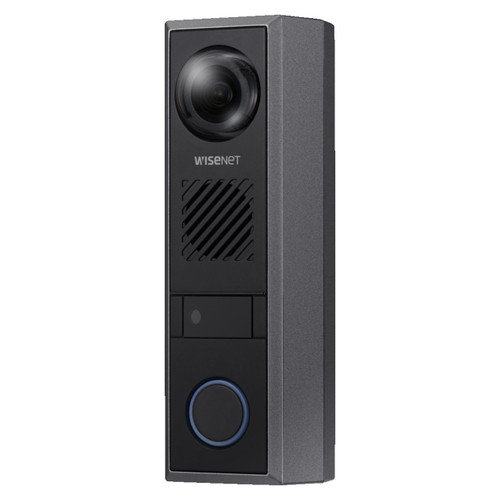
Hanwha TID-600R
Video Door Station
The Hanwha TID-600R is a PoE-powered IP video door station well-suited for commercial entrances that need to feed directly into a Hanwha (Wisenet) VMS or access control ecosystem; its IP65 rating makes it a practical fit for exposed exterior mounting where weather and dust ingress are a concern.
View product →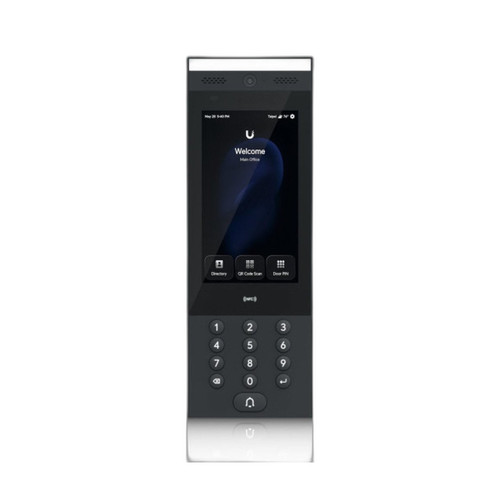
Ubiquiti UA-G3-INTERCOM
Door Station
The Ubiquiti UniFi Access G3 Intercom is a strong fit for facilities already running a UniFi network and UniFi Access control infrastructure, where a single-pane-of-glass dashboard is a priority; rated IP65 and operable from -30 to 60 °C, it handles demanding outdoor environments and cold-climate deployments that would disqualify many competing door stations.
View product →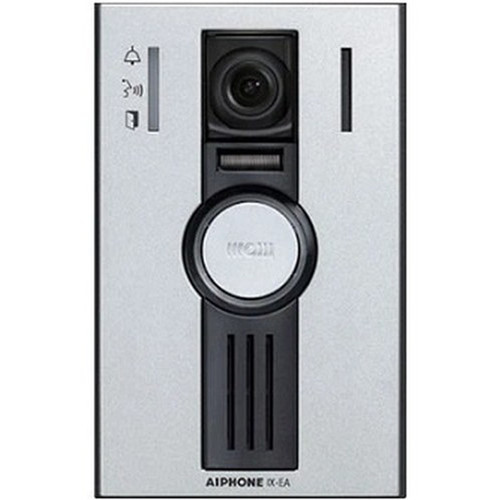
Aiphone IX-EA
Video Door Station
The Aiphone IX-EA is a PoE-powered video door station from Aiphone's IX Series IP platform, well-suited for projects that require tight integration with Aiphone master stations and multi-tenant call routing; its IP54 rating covers protected exterior alcoves and vestibule installations, and the flush-mount form factor suits architecturally finished entries where surface-mount hardware would look out of place.
View product →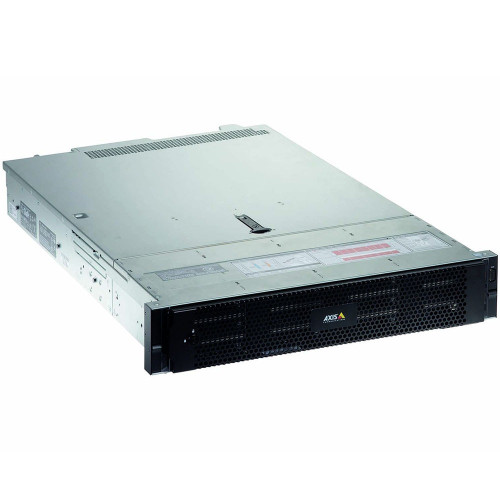
Axis 03448-001
Door Station
The Axis 03448-001 door station is a strong fit for enterprise and campus deployments already standardized on Axis network video infrastructure, supporting One-Click Cloud Connection for simplified remote provisioning and an IP66 rating for fully exposed exterior locations subject to rain and hose-down cleaning.
View product →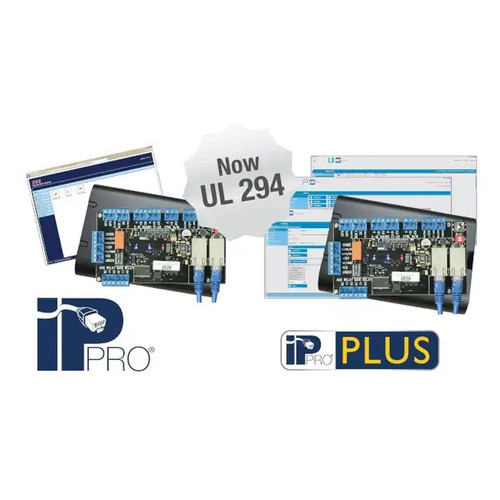
SDC IPDSE
Door Station
The SDC IPDSE is a wired IP door station packaged in an enclosure form factor, making it well-suited for retrofit or conduit-run installations where a discrete, self-contained housing is preferred over a flush-panel aesthetic; its wired connectivity keeps it appropriate for sites where network infrastructure is already established at the door location.
View product →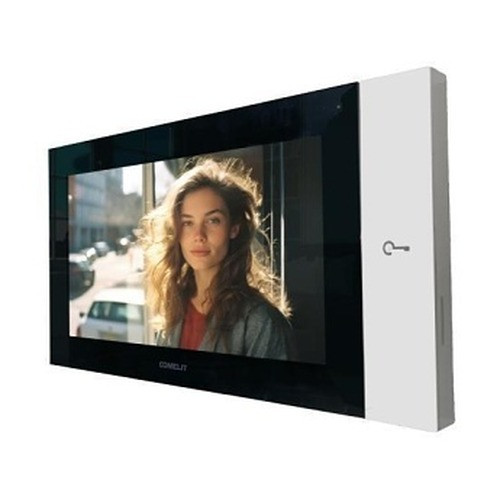
Comelit TP6842
Door Station
The Comelit TP6842 is a PoE-powered door entry system from a vendor with deep multi-tenant residential and small-commercial intercom heritage, making it a strong fit for apartment entry, mixed-use lobbies, or any application where an integrated door entry system with familiar Comelit ecosystem compatibility is the design baseline.
View product →
Aiphone IX-MV7-HB
Master/Guard Station
The Aiphone IX-MV7-HB is an IX Series master/guard station designed as the indoor answer point for IX Series door station deployments; operating between 0 °C and 40 °C, it is well-suited for conditioned interior environments such as a reception desk, security office, or guard station where staff need a dedicated, always-on unit for door monitoring and one-touch release without relying on a mobile device.
View product →Frequently Asked Questions
Can I answer a door station call on my smartphone?
Yes — IP/SIP-based door stations can ring any SIP-compatible app or a vendor's own mobile client over your LAN or the internet. The key dependencies are a stable Wi-Fi or cellular connection for the staff member, correct SIP server configuration (or a cloud relay the vendor provides), and a firewall/NAT rule that lets the call reach the phone. For mission-critical entries, pairing mobile answering with a hardwired master station is the more reliable design so that the door can always be answered even if a phone is out of range.
What is the difference between a door station and a master station?
A door station is the outdoor-facing unit — it houses the camera, microphone, speaker, and typically a call button or keypad, and is built to survive weather and physical abuse. A master station (also called a guard station or indoor station) is the interior unit that receives the call, displays the video feed, and sends the door-release signal; it lives in a conditioned indoor environment and prioritizes screen size, audio quality, and ease of use for the person answering. In IP systems, a master station can often be replaced or supplemented by a software client or mobile app, but a dedicated hardware station remains the most reliable answer point for high-call-volume or 24/7-staffed positions.
How do I choose between a proprietary intercom system and a SIP-based open platform?
Proprietary systems (where the door station and master station are from the same vendor's closed ecosystem) are typically easier to commission and may offer tighter feature integration — directory management, call history, and door release all work out of the box. SIP-based open platforms give you flexibility to mix hardware, integrate with a PBX, and route calls to standard desk phones or softphones, but require more upfront configuration and a competent SIP administrator. For single-site commercial with a clear vendor preference, proprietary is often the faster path; for multi-site enterprise, PBX integration, or future-proof flexibility, SIP is the stronger architectural choice.
What IP rating do I need for an outdoor door station?
IP54 is the minimum for a protected exterior location such as a recessed vestibule or covered awning where the unit is not directly exposed to rain. For fully exposed façades, loading docks, or installations in jurisdictions with heavy precipitation, IP65 or IP66 is the appropriate spec — these ratings confirm the enclosure is dust-tight and can withstand directed water jets. If the installation is in a climate with hard freezes, also verify the operating temperature floor of the door station independently of the IP rating, since IP ratings say nothing about thermal performance.
Do I need a separate access control panel if my door station has a relay output?
It depends on your security and audit requirements. Many door stations include a built-in dry-contact relay that can directly drive an electric strike or magnetic lock — adequate for low-security single-door applications where a simple call-and-release workflow is sufficient. If you need credential-based access (cards, PINs, mobile credentials), time-based schedules, per-user audit trails, or integration with a larger security management platform, a dedicated access control panel connected to the door station is the right architecture. The two are complementary: the intercom handles visitor call-in, the access panel handles credentialed entry.
What cabling do I need for a PoE door station?
Standard Cat5e or Cat6 UTP is the correct cable for PoE IP door stations, with a maximum run of 100 m (328 ft) from the PoE switch port to the device — this is an Ethernet protocol limit, not a vendor choice. Use shielded cable (STP/FTP) in environments with high EMI such as near elevator shafts, motor rooms, or industrial equipment. Confirm the PoE budget of your switch port against the door station's power draw specification, particularly for models with built-in heaters or high-power IR illuminators that can exceed the 15.4 W of standard 802.3af and require 802.3at (PoE+) or higher.
Related Resources
- Intercom comparisons — head-to-head spec matchups
- Best Video Intercoms for Apartment & Multi-Tenant Entry
- All product comparisons
Speccing this for a project?
Send us your requirements and our senior specialists will confirm specs, compatibility, availability and pricing — free, usually within one business day. Channel-direct, factory-new, serving commercial integrators since 2014.
Get a Free QuoteComparing for a project?
Send us the models you are weighing and our team will confirm specs, compatibility, availability, and pricing — free, usually within one business day.