
Best Video Intercoms for Apartment & Multi-Tenant Entry
Video intercoms for apartment and multi-tenant entries — IP door stations with a building directory, mobile app answering, and weather-rated entrance panels.

Jerry Tildsen
Access Control & Intercoms Specialist · Working integrator
Bottom line
For apartment and multi-tenant building entry, the right video intercom lives at the intersection of directory management, mobile-app remote answering, and outdoor durability — not just door-release capability. IP65/IP66-rated PoE door stations with cloud or SIP connectivity eliminate analog wiring runs and let residents answer calls from anywhere. Match your pick to tenant count, existing network infrastructure, and whether the property needs a managed cloud subscription or a self-hosted on-premise system.
What This Setup Needs
Multi-tenant entry intercoms carry a different spec burden than single-family or office door stations. Before shortlisting models, work through these decision axes — they separate a system that residents will actually use from one that generates service calls.
- Tenant directory capacity and management: How many units does the building have, and how often does tenant turnover happen? Some systems require on-site panel programming; cloud-managed systems let the property manager add, remove, or rename tenants from a browser without a truck roll. Confirm the advertised directory size matches your unit count with room to grow.
- Mobile app vs. in-unit sub-station answering: Modern multi-family buildings increasingly rely on smartphone answering (residents unlock from anywhere), but retrofit properties with existing analog or IP sub-stations may need a system that supports both. Verify whether the app is free to end-users, whether it supports remote unlock, and what happens when the resident's phone is offline.
- IP/weather rating of the entrance panel: Exterior panels must survive rain, condensation, and temperature swings. IP65 keeps out low-pressure water jets; IP66 handles more powerful jets; IP54 is splash-resistant but marginal for fully exposed entries. In cold climates, check the rated operating temperature — panels that spec down to -30 °C are in a different class than those rated to 0 °C.
- Power delivery — PoE vs. dry-contact vs. legacy 2-wire: PoE-powered door stations dramatically simplify installation: one CAT5e/6 run carries power and data. Confirm the switch port supplies the required wattage (most IP door stations are 802.3af/at). Systems without native PoE require a separate power supply at the door, adding labor and a potential failure point.
- Access control integration — relay outputs and wiring: The door station must trigger the electric strike or mag-lock you already have. Check for dry-contact relay output ratings (current and voltage), and whether the relay logic (NO/NC) matches your hardware. Some stations integrate directly with access control panels; others use a simple momentary relay that the panel reads as a REX input.
- SIP / ONVIF / proprietary ecosystem lock-in: SIP-based stations interoperate with VoIP PBX systems, video management software, and third-party sub-stations. Proprietary ecosystems (like dedicated app platforms) offer a smoother out-of-box experience but tie you to one vendor's hardware and subscription pricing indefinitely. Assess the property owner's tolerance for ongoing SaaS costs vs. integration complexity.
- Form factor and surface-mount vs. flush-mount installation: Flush-mount panels require a gang box or custom rough-in — feasible in new construction or full renovation, but costly in retrofit concrete or brick entries. Surface-mount and enclosure-style units cut installation time significantly on retrofit jobs; confirm the form factor before quoting labor.
Our Picks
Selected from our catalog by spec-fit. All channel-direct and factory-new — not ranked by price.
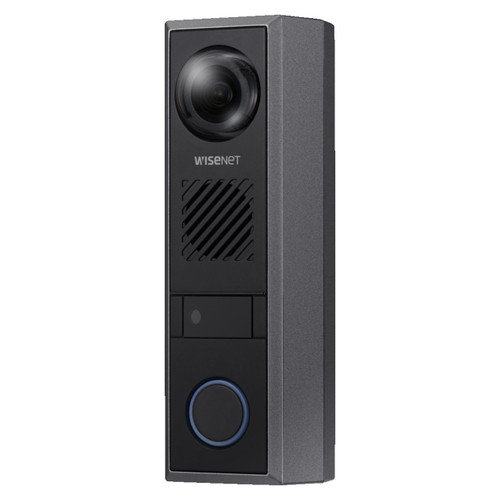
Hanwha TID-600R
Video Door Station
The Hanwha TID-600R is a PoE-powered IP video door station rated IP65, making it a strong fit for exposed exterior entry points in apartment buildings where weather resilience and network-native operation are both required. Its integration within the Hanwha ecosystem suits properties already running Wisenet NVRs or access controllers who want a unified management plane rather than a standalone intercom silo.
View product →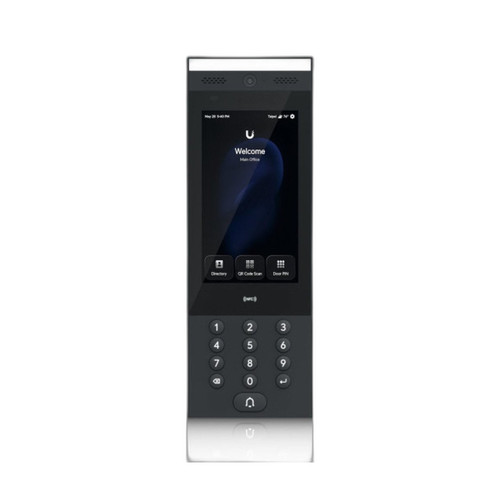
Ubiquiti UA-G3-INTERCOM
Door Station
The Ubiquiti UA-G3-INTERCOM is well-suited for multi-tenant properties already deployed on a UniFi network, where a single-pane-of-glass management approach is the priority. With PoE power, IP65 weather protection, and a rated operating range down to -30 °C, it handles harsh-climate exterior installations that would disqualify warmer-rated panels, and it slots cleanly into the UniFi Access ecosystem for directory and remote-unlock management.
View product →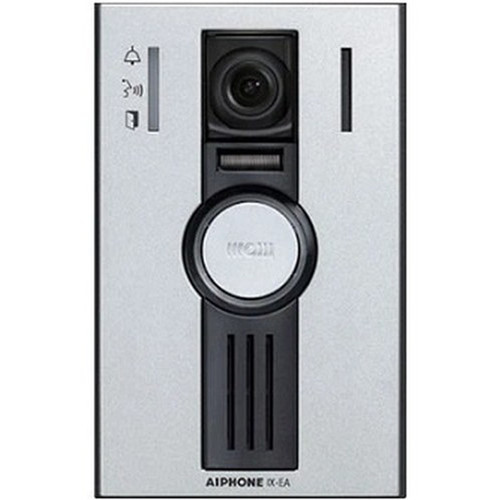
Aiphone IX-EA
Video Door Station
The Aiphone IX-EA is a PoE video door station in the IX Series IP intercom platform, well-suited for mid-to-large multi-tenant buildings that need a proven, SIP-compatible system with deep sub-station flexibility — including both IP room stations and mobile-app answering. Its IP54 rating makes it appropriate for covered or recessed entry vestibules; installations in fully exposed locations should evaluate whether additional weatherproofing or a canopy is needed.
View product →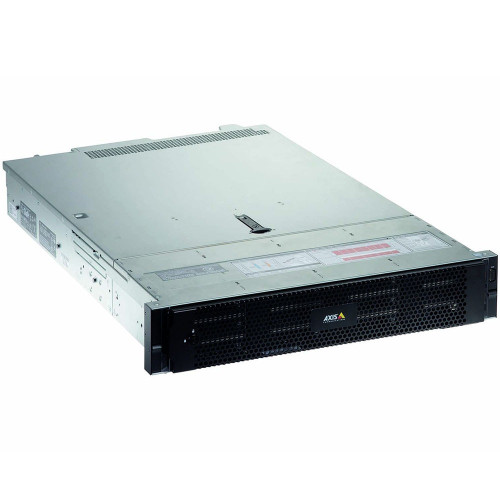
Axis 03448-001
Door Station
The Axis 03448-001 door station is a strong fit for security-forward multi-tenant deployments where the intercom needs to integrate with a broader Axis ecosystem — including AXIS Camera Station or third-party ONVIF-compliant VMS — rather than operate as a closed intercom island. The IP66 rating exceeds the baseline for most exterior entry conditions, and One-Click Cloud Connection simplifies remote provisioning on properties where on-site IT support is limited.
View product →
SDC IPDSE
Door Station
The SDC IPDSE is an IP door station in enclosure form, making it a strong fit for retrofit access control projects where the integrator needs to surface-mount at an existing entry point without a flush rough-in. Its wired connectivity and enclosure form factor suit industrial or high-traffic building entries where panel protection and flexible mounting take priority over a slim architectural profile.
View product →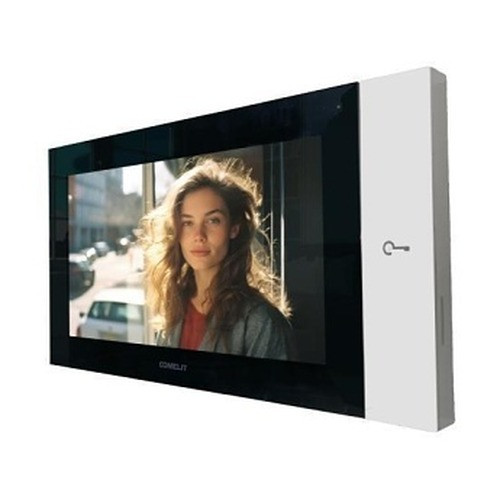
Comelit TP6842
Door Station
The Comelit TP6842 is a PoE door entry system well-suited for apartment and multi-family buildings where a complete, branded door entry ecosystem is preferred — Comelit's platform supports both IP sub-stations and mobile app answering, giving property managers flexibility as tenant expectations shift toward smartphone-based access. Its door-entry-system class designation indicates it is designed as a full entry solution rather than a component, which simplifies specification and commissioning on straightforward multi-tenant deployments.
View product →Frequently Asked Questions
Do I need a separate access control system, or can a video intercom handle door release on its own?
Most IP video door stations include a built-in dry-contact relay that can directly trigger an electric strike or mag-lock for simple single-entry applications — no separate access control panel required. However, if you need credential-based access (key fobs, mobile credentials, PIN), audit logging per-tenant, time schedules, or multi-door management, pairing the intercom with a dedicated access control panel is the right architecture. The intercom handles visitor calling and video verification; the access panel handles credentialed entry.
Can residents answer the door from their smartphones if they're not home?
Systems built on cloud or SIP platforms — including several of the options above — support mobile app answering with remote door release, so residents can admit a delivery or guest from anywhere with a data connection. The key variables are whether the app is included in the hardware cost or requires a per-unit subscription, how notifications are delivered (push vs. SIP call), and what the fallback behavior is when the resident's phone is unavailable. Confirm these details with the vendor before promising the feature to a property manager.
What's the difference between IP54, IP65, and IP66 ratings for outdoor door stations?
The second digit of the IP rating defines water ingress protection: IP54 resists water splash from any direction but is marginal for a fully exposed exterior entry — suitable for covered vestibules. IP65 protects against low-pressure water jets from any direction, meeting the baseline for most building entry applications. IP66 handles more powerful sustained water jets and is the stronger choice for entries exposed to driving rain or pressure washing. For cold climates, the IP rating tells you nothing about temperature performance — always check the rated operating temperature range separately.
How difficult is it to update the tenant directory when residents move in or out?
This is one of the sharpest operational differences between systems. Cloud-managed platforms let the property manager update the directory from a browser or app immediately, with no physical access to the panel. On-premise or panel-programmed systems require either physical access to the unit, a local network connection to a management server, or a service call. For properties with frequent turnover — student housing, corporate apartments — cloud-managed directory control is a significant operational advantage worth prioritizing in the specification.
Will a PoE door station work with my existing network switch?
Most IP door stations draw 5–13W and are powered by standard 802.3af (15.4W budget) PoE. Verify your switch port's per-port power budget and that the switch's total PoE power supply can handle the load across all connected devices simultaneously. If the entry is far from the IDF, confirm your CAT cable run is under 100 meters (328 ft) for standard PoE. For outdoor runs, use outdoor-rated or shielded cable and ensure conduit or cable protection is in place to meet code.
Can these door stations integrate with an existing VoIP phone system?
SIP-compliant door stations can register as extensions on a VoIP PBX (Cisco, Yealink, 3CX, FreePBX, etc.), routing visitor calls to desk phones, soft clients, or mobile apps that are already on the phone system — without a separate intercom app. Not all door stations in this category are SIP-native; some use proprietary protocols that require the vendor's own app or sub-station hardware. If SIP integration with an existing PBX is a requirement, confirm the station's SIP compliance and whether it supports the specific codec and registration method your PBX requires before specifying it.
Related Resources
- Intercom comparisons — head-to-head spec matchups
- Video Intercom & Door Station Buying Guide
- All product comparisons
Speccing this for a project?
Send us your requirements and our senior specialists will confirm specs, compatibility, availability and pricing — free, usually within one business day. Channel-direct, factory-new, serving commercial integrators since 2014.
Get a Free QuoteComparing for a project?
Send us the models you are weighing and our team will confirm specs, compatibility, availability, and pricing — free, usually within one business day.