
Hanwha TID-600R vs Aiphone JOS-1FW: Specification Comparison
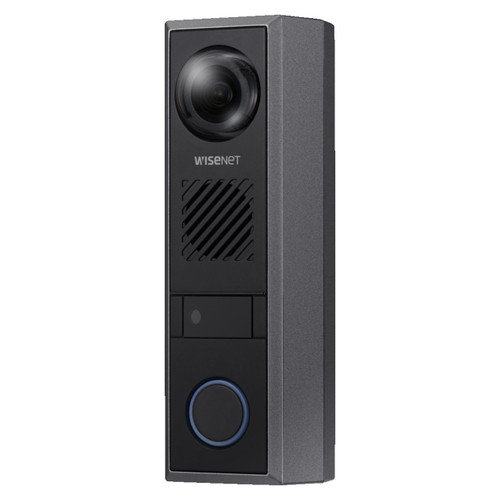
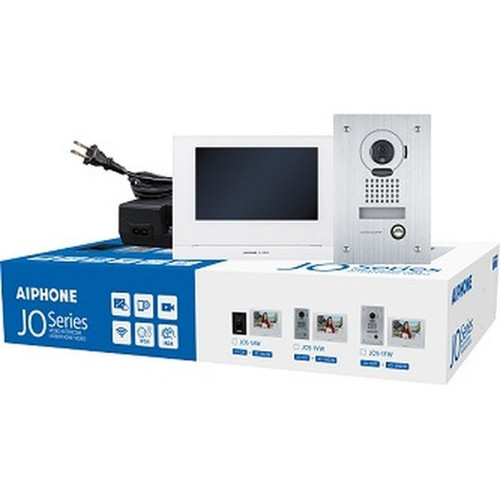
Both the Hanwha TID-600R and the Aiphone JOS-1FW are wired video intercom systems designed for single-entry access control at a door station, placing them squarely in the same product class for a B2B buyer evaluating IP-based visitor management. The TID-600R is a standalone network camera/intercom door station with SIP/VoIP integration and full IP camera analytics, while the JOS-1FW is a complete box set pairing a 7-inch touchscreen indoor master station with a flush-mount outdoor door station and mobile app support. The comparison centers on imaging capability, environmental resilience, and system integration depth.
In This Guide
- How do the imaging quality and audio capabilities compare between the TID-600R and JOS-1FW?
- Which unit is better suited to demanding outdoor environments in terms of ratings, power, and construction?
- How do the two systems differ in network integration, SIP/PBX compatibility, and platform ecosystem?
- Which should you choose: the TID-600R or the JOS-1FW?
- Side-by-Side Specs
- FAQ
How do the imaging quality and audio capabilities compare between the TID-600R and JOS-1FW?
The TID-600R uses a 1/2.8" CMOS sensor delivering 1080P at up to 60fps, with a minimum illumination of 0.018 lux in color mode and 0 lux with IR (5m IR range), Auto ICR day/night switching, WDR at 150dB, SSDR, BLC, HLC, and SSNR V digital noise reduction. The JOS-1FW door station uses a 1/4" color CMOS sensor; no resolution, frame rate, lux rating, or IR specification is provided in the available data.
On audio, the TID-600R specifies a built-in microphone, a built-in speaker rated at 85dB at 0.5m, full-duplex two-way audio, and compression via G.711 u-law and G.726 ADPCM at 8KHz. The JOS-1FW specifies microphone support on the door station but provides no speaker dB rating, audio compression standard, or duplex mode in the available specifications.
For video compression, the TID-600R supports H.265, H.264 (Main/Baseline/High profiles), and MJPEG with CBR/VBR bitrate control, WiseStream II smart codec, and up to 10 simultaneous streaming profiles. No video compression or streaming specification is listed for the JOS-1FW door station camera.
Which unit is better suited to demanding outdoor environments in terms of ratings, power, and construction?
The TID-600R carries IP65, IK08, and NEMA4X certifications, with UL safety and FCC/CE EMC marks. Its operating temperature range is -30°C to +55°C (-22°F to +131°F). It is constructed from aluminium (RAL7022 dark gray) and is powered by PoE (802.3af) or 12VDC at a maximum draw of 12.95W. Dimensions are 49(W) × 165(H) × 48(D) mm and weight is 490g.
The JOS-1FW door station (JO-DVF) is rated IP54 and IK07. The master station (JO-1MDW) is an indoor unit with no outdoor rating. Power is supplied by the included PS-1820UL 18V AC power supply (UL/CSA certified); PoE is not listed as a power option. The door station material is described as flame-resistant PC and resin; the master station weight is approximately 530g and the door station approximately 570g. No operating temperature range is specified in the available data.
The TID-600R's IP65 versus the JOS-1FW door station's IP54 represents a meaningful gap in ingress protection: IP65 is fully dust-tight and protected against water jets, while IP54 permits limited dust ingress and splash protection only. Similarly, IK08 versus IK07 gives the TID-600R one additional impact resistance tier (5 joules vs 2 joules per IEC 62262).
How do the two systems differ in network integration, SIP/PBX compatibility, and platform ecosystem?
The TID-600R is a full IP network camera with SIP 2.0 (RFC 3261) support and named PBX compatibility with Cisco, Grandstream, Yealink, and Asterisk. It supports ONVIF Profile S, Hanwha SUNAPI (HTTP API), and the Wisenet open platform, enabling direct integration into enterprise VMS environments. Security features include HTTPS/SSL, Digest authentication, IP address filtering, 802.1X (EAP-TLS, EAP-LEAP), and device certificates via Hanwha Techwin Root CA. Its protocol stack covers IPv4/IPv6, RTSP, SRTP, SNMPv1/v2c/v3, QoS, UPnP, Bonjour, and more.
The JOS-1FW integrates via Wi-Fi to support a mobile app on up to 8 iOS/Android devices, enabling remote answer of visitor calls. Connectivity is described as Wi-Fi with expansion noted as master router and cloud server. No SIP, ONVIF, VMS API, or specific network protocol stack is listed in the available specifications. The system is self-contained around its own JO-series ecosystem.
Edge storage on the TID-600R supports microSD/SDHC/SDXC up to 256GB with 2GB onboard RAM. The JOS-1FW supports microSD from 4GB to 32GB, rated for approximately 1,000 recorded calls. The TID-600R also supports NAS recording, FTP upload, SMTP notification, and analytics-triggered recording; no equivalent event-driven recording triggers are specified for the JOS-1FW.
Which should you choose: the TID-600R or the JOS-1FW?
Our take: The TID-600R is the stronger choice when the deployment requires IP network integration, SIP/PBX connectivity, or enterprise-grade outdoor durability. Against the JOS-1FW, it delivers a larger 1/2.8" sensor vs 1/4" with a documented 1080P/60fps output and 0-lux IR capability where the JOS-1FW lists no lux or IR specification; IP65/IK08 vs IP54/IK07 environmental ratings; and an operating range of -30°C to +55°C vs no stated temperature range for the JOS-1FW. It also offers PoE (802.3af) single-cable deployment versus the JOS-1FW's dedicated 18V power supply. The JOS-1FW is the more practical choice for a small single-family or light-commercial installation where a self-contained box set with a 7-inch touchscreen master station, mobile app for up to 8 devices, and simple 4-wire wiring is preferred over network configuration depth. Buyers integrating into a Wisenet VMS or Asterisk/Cisco PBX environment should select the TID-600R; buyers wanting a turnkey consumer-friendly intercom set should evaluate the JOS-1FW.
Side-by-Side Comparison
Spec-for-spec, from manufacturer data.
| Specification | Hanwha TID-600R | Aiphone JOS-1FW |
|---|---|---|
| Product Type | IP intercom door station (standalone) | Video intercom box set (door + master station) |
| Image Sensor | 1/2.8" CMOS | 1/4" color CMOS |
| Resolution / Frame Rate | 1080P / up to 60fps | — |
| Min. Illumination | 0.018 lux color / 0 lux IR | — |
| IR Night Vision | Yes, 5m range | — |
| Wide Dynamic Range | WDR 150dB | — |
| Video Compression | H.265 / H.264 / MJPEG | — |
| Audio | Built-in mic + 85dB speaker, full duplex | Microphone supported (speaker spec not listed) |
| IP Rating | IP65 | IP54 (door station) |
| Impact Rating | IK08 | IK07 |
| Operating Temperature | -30°C to +55°C | — |
| Power | PoE (802.3af) or 12VDC, max 12.95W | 18V AC power supply (included) |
| Edge Storage | microSD/SDHC/SDXC up to 256GB | microSD 4–32GB (~1,000 calls) |
| SIP / PBX Integration | SIP 2.0; Cisco, Grandstream, Yealink, Asterisk | — |
| ONVIF | Yes, Profile S | — |
| Mobile App | — | iOS/Android, up to 8 devices |
| Warranty | 3 years | 2 years |
Frequently Asked Questions
Which should you choose: the TID-600R or the JOS-1FW?
The TID-600R is the stronger choice when the deployment requires IP network integration, SIP/PBX connectivity, or enterprise-grade outdoor durability. Against the JOS-1FW, it delivers a larger 1/2.8" sensor vs 1/4" with a documented 1080P/60fps output and 0-lux IR capability where the JOS-1FW lists no lux or IR specification; IP65/IK08 vs IP54/IK07 environmental ratings; and an operating range of -30°C to +55°C vs no stated temperature range for the JOS-1FW. It also offers PoE (802.3af) single-cable deployment versus the JOS-1FW's dedicated 18V power supply. The JOS-1FW is the more practical choice for a small single-family or light-commercial installation where a self-contained box set with a 7-inch touchscreen master station, mobile app for up to 8 devices, and simple 4-wire wiring is preferred over network configuration depth. Buyers integrating into a Wisenet VMS or Asterisk/Cisco PBX environment should select the TID-600R; buyers wanting a turnkey consumer-friendly intercom set should evaluate the JOS-1FW.
Can either the TID-600R or JOS-1FW connect to an existing office phone system or PBX?
Yes, but only the TID-600R. It explicitly supports SIP 2.0 (RFC 3261) and lists compatibility with Cisco, Grandstream, Yealink, and Asterisk PBX systems. The JOS-1FW specifications do not mention SIP, VoIP, or PBX integration; it operates within its own JO-series ecosystem with mobile app support via Wi-Fi.
Is the TID-600R or JOS-1FW better suited for outdoor installation in harsh conditions?
The TID-600R is better specified for harsh outdoor use. It carries IP65 (dust-tight, water-jet resistant), IK08 impact rating, NEMA4X, and an operating temperature range of -30°C to +55°C. The JOS-1FW door station is rated IP54 (limited dust, splash-only) and IK07. No operating temperature range is listed for the JOS-1FW in the available specifications.
Which system is easier to set up for a small business without dedicated IT support?
The JOS-1FW is designed as a complete box set — master station, door station, power supply, cable, and mounting hardware are all included, and it pairs with a mobile app for up to 8 iOS/Android devices without requiring network configuration. The TID-600R is a standalone IP camera/intercom door station that requires network infrastructure, PoE or 12VDC wiring, and VMS or SIP configuration; it does not include an indoor master station.
More Intercom Comparisons
- Hanwha TID-600R vs Aiphone IX-EA
- Hanwha TID-600R vs Axis A8207-VE
- Hanwha TID-600R vs Aiphone IX-DVF-6
- Aiphone IX-EA vs Axis A8207-VE
- Aiphone IX-EA vs 2N 01273-001
- Aiphone IX-EA vs 2N 01274-001
Intercom Buying Guides
Get a Second Opinion on Your Camera Choice
Share your site layout, coverage goals, and budget. Our team will validate the camera selection, flag anything we would change, and recommend products that match the use case.