
Geovision POE0812-000 vs Geovision POE0811: Specification Comparison
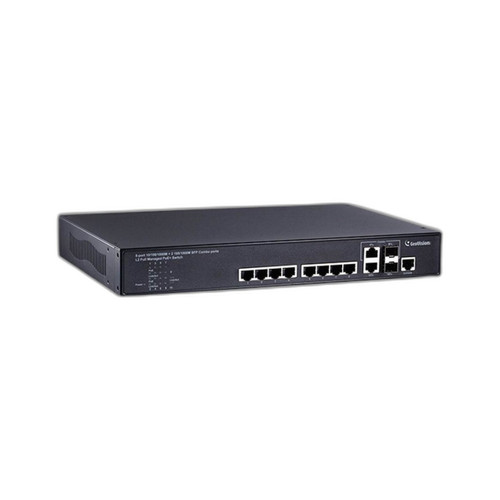
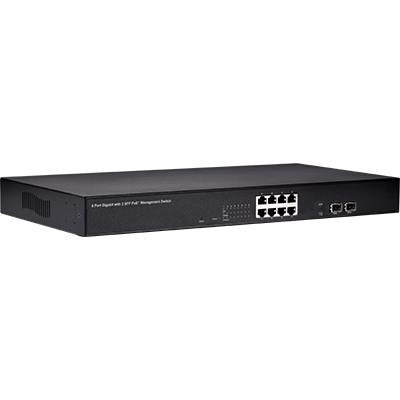
Both the Geovision POE0812-000 and the GV-POE0811 are 8-port PoE+ (802.3at) gigabit network switches aimed at IP surveillance installers who need powered ports for cameras and edge devices. The POE0812-000 is an unmanaged rack-mount switch with a fixed 119W total PoE budget and two SFP uplink slots, while the GV-POE0811 is a managed gigabit switch with VLAN, QoS, and per-port traffic controls. The comparison turns on whether the deployment demands managed network segmentation or a simpler plug-and-play power delivery appliance.
In This Guide
- Which switch delivers more PoE power, and is the per-port headroom enough for the cameras you are running?
- Does the switch offer the network segmentation and uplink flexibility modern IP surveillance infrastructure requires?
- How do these switches differ in physical form factor, compatibility, and deployment environment?
- Which should you choose: the POE0812-000 or the POE0811?
- Side-by-Side Specs
- FAQ
Which switch delivers more PoE power, and is the per-port headroom enough for the cameras you are running?
The POE0812-000 specifies a total PoE power budget of 119W across its 8 RJ-45 ports, which works out to roughly 14.9W average per port — sufficient for standard PoE+ devices but limiting if multiple high-draw PTZ cameras (which can pull up to 25–30W each) are installed simultaneously. The spec sheet also lists a separate 'Power Watts' figure of 95W, which may reflect system (non-PoE) draw; buyers should confirm the usable PoE budget with Geovision directly.
The GV-POE0811 states that all 8 gigabit ports deliver simultaneous PoE+ (802.3at), with each port capable of up to 30W. However, no aggregate PoE power budget (total wattage ceiling) is provided in the available specifications. A per-port maximum of 30W × 8 ports implies a theoretical ceiling of 240W, but without a confirmed total budget figure, installers cannot size the power supply or predict brownout behavior under full load. This is a critical spec gap for the GV-POE0811.
Does the switch offer the network segmentation and uplink flexibility modern IP surveillance infrastructure requires?
The POE0812-000 is unmanaged. There are no VLAN, QoS, or traffic-shaping features specified. It does, however, include two SFP slots for optional fiber or long-distance copper transceivers, which is a meaningful hardware advantage for runs beyond copper's 100-meter limit or for electrically isolated segments between buildings.
The GV-POE0811 is a managed switch, offering VLAN, traffic shaping, and network segmentation per its specifications. These features allow surveillance traffic to be isolated from corporate LAN traffic, per-port QoS to prioritize video streams, and policy-based access controls — capabilities that are increasingly required in enterprise, government, and multi-tenant deployments. No SFP or fiber uplink slots are listed in the available specifications for the GV-POE0811.
How do these switches differ in physical form factor, compatibility, and deployment environment?
The POE0812-000 is specified as rack-mount and is listed as compatible with IP-based systems, with cable category noted as IPPTZCam — suggesting it is positioned for PTZ camera infrastructure. Physical dimensions and weight are not provided in the available specifications.
The GV-POE0811 is specified with dimensions of 20.00 × 12.00 × 4.00 inches and a weight of 4.85 lb. Its housing color is listed as white. The form factor is described as a managed switch, though explicit rack-mount confirmation is absent from the provided specs. It carries a stated 3-year warranty. No warranty duration is listed for the POE0812-000 in the available specifications. The GV-POE0811 distributor SKU is 140-POE0811-G02, indicating it is a Geovision-branded product with a formal distribution channel part number.
Which should you choose: the POE0812-000 or the POE0811?
Our take: The GV-POE0811 is the stronger choice when the installation demands managed network segmentation — VLAN isolation, per-port QoS, and traffic shaping are specified for the POE0811 and entirely absent on the unmanaged POE0812-000. Conversely, the POE0812-000 is preferable when fiber uplinks are required, as it includes two SFP slots not listed on the GV-POE0811, and when a confirmed total PoE budget matters: the POE0812-000 states 119W aggregate, while the GV-POE0811 provides no aggregate budget figure — a gap that complicates power planning on fully loaded deployments. The GV-POE0811 also carries an explicit 3-year warranty, whereas no warranty term is listed for the POE0812-000. For simple, plug-and-play PTZ camera runs over fiber-extended links, the POE0812-000 fits; for enterprise or multi-tenant surveillance networks requiring traffic isolation, the GV-POE0811 is the appropriate choice.
Side-by-Side Comparison
Spec-for-spec, from manufacturer data.
| Specification | Geovision POE0812-000 | Geovision POE0811 |
|---|---|---|
| Port Count (PoE) | 8 × RJ-45 | 8 × RJ-45 |
| PoE Standard | PoE+ (802.3at) | PoE+ (802.3at) |
| Max Per-Port PoE Power | — | 30W |
| Total PoE Power Budget | 119W | — |
| Port Speed | 10/100/1000BaseT | 1000 Mbps |
| Switch Type | Unmanaged | Managed |
| VLAN Support | — | Yes |
| QoS / Traffic Shaping | — | Yes |
| Network Segmentation | — | Yes |
| SFP Uplink Slots | 2 | — |
| Form Factor | Rack-mount | Managed Switch (rack confirmation absent) |
| Housing Color | — | White |
| Dimensions | — | 20.00 × 12.00 × 4.00 in |
| Weight | — | 4.85 lb |
| Warranty | — | 3-Year |
| Compatible With | IP-based systems | — |
Frequently Asked Questions
Which should you choose: the POE0812-000 or the POE0811?
The GV-POE0811 is the stronger choice when the installation demands managed network segmentation — VLAN isolation, per-port QoS, and traffic shaping are specified for the POE0811 and entirely absent on the unmanaged POE0812-000. Conversely, the POE0812-000 is preferable when fiber uplinks are required, as it includes two SFP slots not listed on the GV-POE0811, and when a confirmed total PoE budget matters: the POE0812-000 states 119W aggregate, while the GV-POE0811 provides no aggregate budget figure — a gap that complicates power planning on fully loaded deployments. The GV-POE0811 also carries an explicit 3-year warranty, whereas no warranty term is listed for the POE0812-000. For simple, plug-and-play PTZ camera runs over fiber-extended links, the POE0812-000 fits; for enterprise or multi-tenant surveillance networks requiring traffic isolation, the GV-POE0811 is the appropriate choice.
Can either switch handle high-wattage PTZ cameras on all 8 ports at once?
The POE0812-000 specifies a 119W total PoE budget, which limits simultaneous high-draw operation — eight PTZ cameras each pulling 25–30W would exceed that ceiling. The GV-POE0811 states up to 30W per port across all 8 ports simultaneously, but does not disclose a total aggregate PoE budget in the available specifications, so full-load behavior cannot be confirmed without consulting Geovision directly.
Which switch is better suited for a network that also carries corporate IT traffic alongside cameras?
The GV-POE0811 is the better fit. It is specified as a managed switch with VLAN, traffic shaping, and network segmentation capabilities, which allow surveillance traffic to be isolated from other network traffic. The POE0812-000 is unmanaged and offers none of those features.
Does either switch support fiber uplinks for long cable runs or building-to-building connections?
Yes — the POE0812-000 includes two SFP slots that accept optional fiber transceivers for extended or electrically isolated runs. No SFP slots or fiber uplink capability is listed in the available specifications for the GV-POE0811.
More Network Switch Comparisons
- Vivotek IHT-1271 vs TP-Link SG3210XHP-M2
- Vivotek IHT-1271 vs TP-Link S4500-8GP2F
- Vivotek IHT-1271 vs TP-Link SG1210P
- Vivotek IHT-1271 vs Allied Telesis AT-x530L-10GHXm-10
- Vivotek IHT-1271 vs Vivotek GEV-108A-130
- Vivotek IHT-1271 vs Vivotek IHT-1000
Network Switch Buying Guides
Get a Second Opinion on Your Camera Choice
Share your site layout, coverage goals, and budget. Our team will validate the camera selection, flag anything we would change, and recommend products that match the use case.