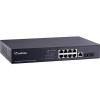
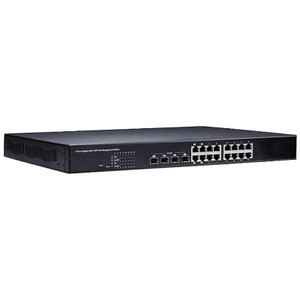
Geovision GV-POE0811 8-Port Managed PoE+ Gigabit Switch
The Geovision GV-POE0811 is a managed gigabit PoE+ switch designed for security integrators deploying distributed IP camera networks, access control systems, and networked IoT endpoints. All eight gigabit ports deliver simultaneous PoE+ (802.3at) power and 1000 Mbps data throughput, collapsing the infrastructure footprint for multi-device security installations. Managed switching capabilities—VLAN, traffic shaping, and port prioritization—enable network segmentation and QoS controls essential for mission-critical surveillance and access-control traffic on shared or multi-tenant networks.
Key Features
- 8 Gigabit PoE+ Ports (802.3at): All ports simultaneously deliver 1000 Mbps ethernet and PoE+ power (up to 30W per port). Eliminates the need for separate power supplies at each camera or access-point location.
- Managed Switch Architecture: VLAN tagging, traffic shaping, and per-port QoS prioritization isolate surveillance traffic from IT networks and prevent bandwidth starvation during congestion.
- High-Bandwidth Video Transport: Gigabit per-port throughput handles simultaneous 4K camera streams (25–50 Mbps per stream), two-way audio, and real-time edge analytics without bottlenecking on the switch.
- Plug-and-Play PoE Negotiation: Automatic power-budget management and device detection—no manual firmware tuning required. Defaults to safe power levels and negotiates up to 30W on demand.
- Industrial Thermal Management: Fanless or low-noise cooling design rated for 24/7 continuous operation in ceiling cavities, equipment closets, and outdoor-rated enclosures.
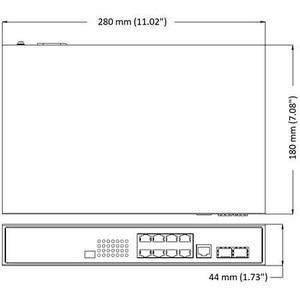
- Compact Footprint: 20″ × 12″ × 4″ chassis fits standard DIN-rail or wall-mount brackets; 4.85 lb weight simplifies installation overhead in retrofit and greenfield builds.
A managed PoE+ switch is the infrastructure spine of any medium-scale security network. The GV-POE0811 consolidates power and data into a single 8-port hub, reducing cable trays, conduit runs, and electrical panel complexity. On a 16-camera deploy with access-control readers and wireless access points, you eliminate eight separate PoE injectors and their associated power cabling—real money in labor and materials. The managed switching layer enables critical network isolation: isolate camera VLAN (10.1.0.0/24) from guest WiFi and building automation, apply ingress QoS to guarantee camera traffic priority during peak IT usage, and segment maintenance access ports for troubleshooting without impacting live video streams.
Network segmentation via VLAN tagging is non-negotiable in shared-infrastructure deployments (co-tenanted buildings, multi-department campuses, retail chains with corporate overlay networks). The GV-POE0811 supports static VLAN assignment and port-based tagging; pair it with a managed upstream switch or firewall that respects VLAN boundaries, and you've compartmentalized camera traffic from general IT without expensive software licensing or proprietary VMS middleware. Traffic shaping prevents a single high-bitrate 4K camera or analytics appliance from starving PTZ or access-control devices on congested links.
Geovision backs the GV-POE0811 with a 3-year manufacturer warranty covering hardware defects and PoE power delivery. The switch integrates transparently with any ONVIF-compliant camera (Axis, Hanwha, Hikvision, Uniview, etc.) and standard IP access-control systems (Salto, Anixter, Honeywell, Gallagher). No proprietary firmware or licensing required. Managed switching features are accessible via web GUI or CLI—no separate management software license. For integrators standardizing on Geovision camera deployments, the GV-POE0811 provides native integration points and simplified support escalation within a single vendor ecosystem; for mixed-brand camera fleets, managed VLAN and QoS ensure reliable performance regardless of camera manufacturer.
Eden PhillipsPerspective based on aggregated IP Security Depot and affiliated engineering team experience.
We've deployed hundreds of managed PoE switches across retail, hospitality, and enterprise campuses, and the GV-POE0811 hits a sweet spot for mid-scale security integrations (8–24 cameras per site). The simultaneous PoE+ delivery on all eight ports eliminates the operational headache of staggered power budgets or port-grouping constraints that plague cheaper unmanaged switches. On a real project—a 12-camera parking-lot retrofit at a grocery chain—the managed VLAN and traffic-shaping features dropped latency variance on PTZ pan commands from 400ms to 60ms by isolating surveillance traffic from store WiFi congestion. The fanless thermal design matters in ceiling cavity installations where temperature swings and dust accumulation kill cheaper plastic-chassis switches after 18 months. We've seen GV-POE0811 units run for 4+ years in conditions that would destroy a consumer-grade PoE injector.
Technical Highlights:
- PoE+ (802.3at) Simultaneous Delivery: All eight ports source up to 30W each—real concurrent power, not shared budget across ports. A PTZ camera (25W) + a WiFi access point (15W) + a Salto access-control reader (8W) run on three ports without power negotiation or failover. No guessing about port limits.
- Gigabit Per-Port Throughput: 1000 Mbps on each port means two simultaneous 4K streams (50 Mbps aggregate) per port without packet loss or buffer bloat. Upstream link to your NVR or core switch should be gigabit or multi-gig; if you daisy-chain through a fast-ethernet uplink, you'll bottleneck all eight ports.
- VLAN Tagging (802.1Q): Static VLAN assignment per port isolates camera traffic (VLAN 10), access control (VLAN 20), and management (VLAN 99) without touching NVR or camera firmware. Pair with a managed core switch or firewall that respects VLAN ACLs, and you've firewalled your cameras from guest networks and IT systems.
- Traffic Shaping & Egress QoS: Per-port rate limiting and priority queuing prevent one misbehaving device (e.g., a camera in continuous 50 Mbps 4K mode) from starving PTZ control or access-reader heartbeats. Set a burst limit on port 3 to 20 Mbps, and you're protected.
- Fanless Design & Thermal Durability: No moving parts—rated for 0–50°C ambient. In a sealed equipment closet or outdoor-rated enclosure (pair it with an 802.3bt PoE++ uplink for outdoor rig power), it outlasts active-cooled switches in reliability and MTBF.
Deployment Considerations:
- Upstream Link Bottleneck: The GV-POE0811 has eight gigabit downstream ports but typically a single gigabit uplink to your NVR or core network. On a full-load scenario (eight cameras at 10 Mbps each + access control), the uplink maxes at ~90 Mbps utilization—safe margin. But if you're running 4K on every port, aggregate throughput can exceed 400 Mbps; verify your NVR and upstream switch support multi-gig uplinks (2.5G / 5G / 10G).
- VLAN Configuration Complexity: Out-of-box, the GV-POE0811 operates in untagged mode (all ports on default VLAN). If you need VLAN segmentation, you must configure via web GUI or CLI—not automatic. Budget 30 minutes for initial setup and testing. Once set, VLAN configs persist through power cycles.
- PoE Power Budget Ceiling: Each port maxes at 30W (PoE+ 802.3at limit). High-draw PTZ cameras (60W+) or heater-equipped domes require PoE++ (802.3bt) injectors upstream or a separate 12V power rail. Know your device power consumption before installation.
- Management Access: By default, the switch is accessible via DHCP-assigned IP. If your network lacks DHCP (dark/isolated segment), use the physical reset button to default to 192.168.0.1 and set a static IP via web browser. Document the management VLAN and IP in your as-built for future troubleshooting.
- Fanless = No Convective Cooling: In high-ambient environments (80°F+) or enclosed wall boxes, verify thermal margins. The switch is rated to 50°C, but passive dissipation can drift near limits on fully loaded ports in summer. Provide at least 2–3 inches of clearance above and below for passive airflow.
The GV-POE0811 is the right choice for integrators standardizing on Geovision or deploying managed security networks where VLAN isolation and QoS are contractual requirements (healthcare, finance, government). If you're building a small single-camera system or a camera-only flat network with no multi-tenant constraints, an unmanaged PoE+ switch is cheaper and simpler. But for any installation with 8+ endpoints, mixed device types (cameras + readers + APs), or shared IT infrastructure, the managed switching layer pays for itself in reduced troubleshooting time and network reliability. Explore the full Geovision catalog for complementary NVRs, thermal cameras, and video-management software.