
Geovision POE0812-000 vs Geovision APOE0811: Specification Comparison
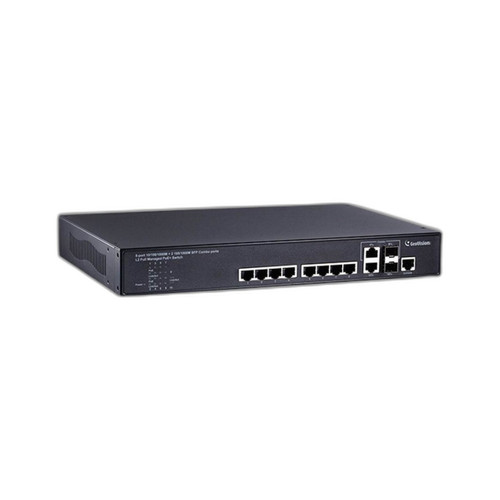
Both units are Geovision-branded 8-port 802.3at PoE+ network switches aimed at IP camera deployments, making them genuine cross-shop candidates for installers specifying edge switching infrastructure. The POE0812-000 (140-POE0812-000) is an unmanaged rack-mount switch with SFP fiber uplink slots, while the APOE0811 (GV-APOE0811-140) is a managed switch offering VLAN, QoS, and port mirroring with dedicated gigabit uplinks and flexible wall or rack mounting. The comparison turns primarily on power budget, management capability, and physical deployment flexibility.
In This Guide
- Which switch delivers more PoE power, and does the budget matter for your camera mix?
- Does the switch offer management features and how does it connect to the upstream network?
- Where can each switch be mounted, and how do they fit into a broader Geovision or ONVIF ecosystem?
- Which should you choose: the POE0812-000 or the APOE0811?
- Side-by-Side Specs
- FAQ
Which switch delivers more PoE power, and does the budget matter for your camera mix?
The POE0812-000 carries a specified total PoE budget of 119 W across its 8 PoE+ ports. Each port operates at 802.3at (up to 30 W per port per the standard), but the aggregate ceiling of 119 W means simultaneous full-draw operation of all 8 ports is not possible. A secondary spec entry lists 95 W under 'Power Watts,' suggesting the internal power supply rating may differ from the PoE budget figure; buyers should confirm with Geovision which number reflects the sustained aggregate PoE delivery.
The APOE0811 specifies a 140 W total power budget, a 21 W advantage over the POE0812-000's stated 119 W figure. Its 'Power Watts' entry is listed as 140 W, which aligns consistently with the PoE budget. For deployments mixing PTZ cameras, IR illuminators, or heated-housing cameras that draw near the 25–30 W per-port ceiling, the APOE0811's larger aggregate budget reduces the risk of brownout conditions without requiring a supplemental injector.
Does the switch offer management features and how does it connect to the upstream network?
The POE0812-000 specifications do not indicate any management capability—no VLAN, QoS, port mirroring, or similar features are listed. Its uplink path is provided by two SFP slots, which accept optional fiber transceivers. The SFP approach gives flexibility for long-distance or electrically isolated uplinks to an NVR or core switch, but the transceiver cost and compatibility must be factored in separately. No copper gigabit uplink is specified.
The APOE0811 is explicitly described as a managed network switch, with VLAN, QoS, and port mirroring listed in its specification set. It provides two dedicated gigabit uplinks—speed specified as 10/100/1000 Mbps—that are copper-based per the spec listing, keeping backhaul physically separate from the 8 camera-facing PoE ports. VLAN segmentation is particularly relevant for cybersecurity-conscious end users who need to isolate camera traffic from the corporate LAN. VMS compatibility is noted as ONVIF Profile S.
Where can each switch be mounted, and how do they fit into a broader Geovision or ONVIF ecosystem?
The POE0812-000 is specified for rack mounting only. Its form factor is listed as 'Network Switch' with a rack-mount designation. Physical dimensions and weight are not provided in the supplied specifications. Compatibility is noted as 'IP-based,' and the cable category is IPPTZCam, indicating suitability for IP PTZ camera infrastructure. No ONVIF or VMS compatibility claim is made in the provided spec data.
The APOE0811 supports both wall and rack mounting per its specification, adding installation flexibility in locations where a rack is unavailable—common in smaller branch sites or retrofit jobs. Physical dimensions are specified at 12.00 × 8.00 × 3.00 in with a weight of 3.75 lb. The housing is listed as white, which may matter in exposed or client-visible locations. A 3-year warranty is explicitly stated. ONVIF Profile S compatibility is listed, and the Geovision distributor SKU is 140-APOE81W-000. No warranty term is provided for the POE0812-000 in the supplied specifications.
Which should you choose: the POE0812-000 or the APOE0811?
Our take: The APOE0811 is the stronger choice when management capability, a higher PoE power budget, and mounting flexibility are priorities. Concretely: its 140 W aggregate PoE budget exceeds the POE0812-000's 119 W by 21 W, reducing the likelihood of power contention in dense high-draw camera deployments; it includes VLAN, QoS, and port mirroring absent from the POE0812-000; and it supports wall or rack mounting versus rack-only on the POE0812-000. It also carries an explicit 3-year warranty, which is not stated for the POE0812-000. The POE0812-000 is the better fit when fiber uplinks are required—its two SFP slots accommodate long-run or electrically isolated backhaul that the APOE0811's copper gigabit uplinks cannot replicate. Choose the POE0812-000 for fiber-connected, unmanaged edge closets; choose the APOE0811 for managed, VLAN-segmented deployments on copper infrastructure where a higher power budget and mounting flexibility matter.
Side-by-Side Comparison
Spec-for-spec, from manufacturer data.
| Specification | Geovision POE0812-000 | Geovision APOE0811 |
|---|---|---|
| PoE Standard | 802.3at (PoE+) | 802.3at (PoE+) |
| PoE Ports | 8 | 8 |
| Total PoE Power Budget | 119 W | 140 W |
| Power Watts (supply spec) | 95 W | 140 W |
| Port Speed | 10/100/1000BaseT | 10/100/1000 Mbps |
| Uplink Type | 2 × SFP (fiber optional) | 2 × Gigabit copper |
| Management | — | Managed (VLAN, QoS, Port Mirroring) |
| ONVIF Compatibility | — | ONVIF Profile S |
| Mount Type | Rack-mount | Wall or rack-mount |
| Housing Color | — | White |
| Dimensions | — | 12.00 × 8.00 × 3.00 in |
| Weight | — | 3.75 lb |
| Warranty | — | 3-Year |
| Distributor SKU | 140-POE0812-000 | 140-APOE81W-000 |
| Form Factor | Network Switch | Managed Network Switch |
| Compatible With | IP-based | IP cameras (ONVIF Profile S) |
Frequently Asked Questions
Which should you choose: the POE0812-000 or the APOE0811?
The APOE0811 is the stronger choice when management capability, a higher PoE power budget, and mounting flexibility are priorities. Concretely: its 140 W aggregate PoE budget exceeds the POE0812-000's 119 W by 21 W, reducing the likelihood of power contention in dense high-draw camera deployments; it includes VLAN, QoS, and port mirroring absent from the POE0812-000; and it supports wall or rack mounting versus rack-only on the POE0812-000. It also carries an explicit 3-year warranty, which is not stated for the POE0812-000. The POE0812-000 is the better fit when fiber uplinks are required—its two SFP slots accommodate long-run or electrically isolated backhaul that the APOE0811's copper gigabit uplinks cannot replicate. Choose the POE0812-000 for fiber-connected, unmanaged edge closets; choose the APOE0811 for managed, VLAN-segmented deployments on copper infrastructure where a higher power budget and mounting flexibility matter.
Is the POE0812-000 or APOE0811 better for powering multiple high-draw PTZ cameras simultaneously?
Based on the provided specifications, the APOE0811 has the higher total PoE power budget at 140 W versus 119 W for the POE0812-000. For deployments where several PTZ or heated-housing cameras draw close to the 802.3at per-port maximum, the APOE0811's larger aggregate budget reduces the risk of power contention. Note that the POE0812-000 also lists a separate 'Power Watts' figure of 95 W, which may indicate the sustained supply rating; buyers should verify with Geovision before finalizing.
Can I segment camera traffic from my corporate network using either of these switches?
Only the APOE0811 lists VLAN support in its specifications. The POE0812-000 does not indicate any management or VLAN capability in the provided spec data. If network segmentation is a cybersecurity or compliance requirement, the APOE0811 is the only option of the two that addresses it per the available specifications.
Which switch is the right choice if I need to run a fiber uplink back to my core switch?
The POE0812-000 includes two SFP slots that accept optional fiber transceivers, making it suited for long-distance or electrically isolated uplinks. The APOE0811 specifies two dedicated gigabit uplinks but does not list SFP or fiber capability in the provided specifications. If fiber backhaul is required, the POE0812-000 is the appropriate choice between these two models.
More Network Switch Comparisons
- Vivotek IHT-1271 vs TP-Link SG3210XHP-M2
- Vivotek IHT-1271 vs TP-Link S4500-8GP2F
- Vivotek IHT-1271 vs TP-Link SG1210P
- Vivotek IHT-1271 vs Allied Telesis AT-x530L-10GHXm-10
- Vivotek IHT-1271 vs Vivotek GEV-108A-130
- Vivotek IHT-1271 vs Vivotek IHT-1000
Network Switch Buying Guides
Get a Second Opinion on Your Camera Choice
Share your site layout, coverage goals, and budget. Our team will validate the camera selection, flag anything we would change, and recommend products that match the use case.