
Axis T8508 vs Vivotek IHT-1000: Specification Comparison
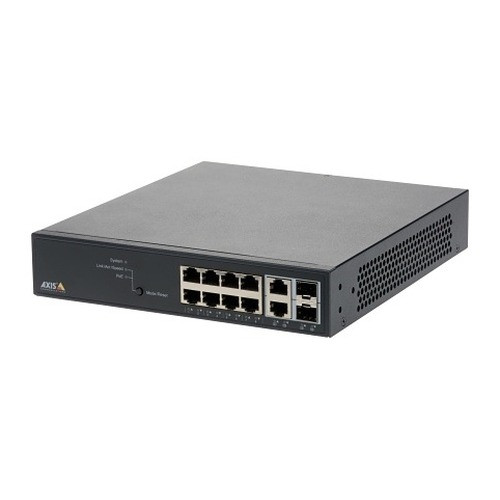
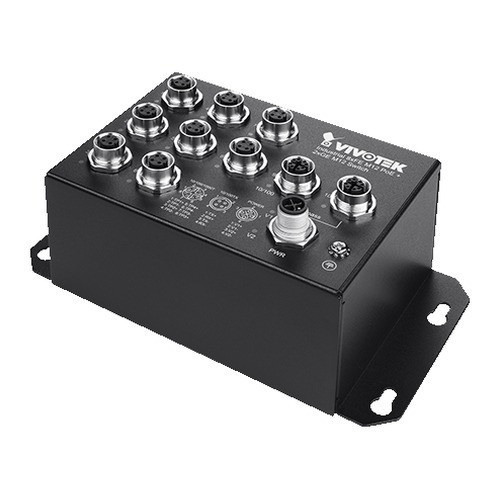
Both the Axis T8508 and the Vivotek AW-IHT-1000 are 8-port gigabit PoE+ managed switches targeting IP security camera deployments. Each delivers eight 802.3at PoE+ ports at up to 30 W per port, two uplink slots, and 20 Gbps switching capacity—making them direct cross-shop candidates for installers sizing edge switch infrastructure. The comparison turns on three practical axes: total PoE power budget and uplink architecture; operating environment ratings and physical ruggedness; and management, security features, and platform integration.
In This Guide
How do the total PoE power budget and uplink architecture compare?
The AW-IHT-1000 carries a 240 W total PoE budget versus the T8508's 130 W. With eight ports each capped at 30 W, the Vivotek unit can sustain the full 30 W draw on all eight ports simultaneously (240 W ÷ 8 = 30 W), whereas the Axis unit would be constrained to an average of roughly 16 W per port if all eight ports were loaded concurrently against its 130 W ceiling. For deployments mixing PTZ cameras, multi-sensor units, or heated housings that draw close to 30 W, this gap is operationally significant.
On uplinks, both switches offer two uplink slots, but they differ in flexibility. The T8508 provides two combo RJ45/SFP ports, allowing either copper or fiber at each uplink position. The AW-IHT-1000 provides two dedicated SFP (1000-BASE-X) slots—fiber only, with no copper fallback on those ports. The Vivotek also supports redundant power input (dual 48–56 V DC feeds, PW1 and PW2), a feature not listed in the Axis T8508 specification.
Power input architecture differs fundamentally: the T8508 runs on 100–240 V AC (50/60 Hz), making it suitable for standard IT closets with AC outlets. The AW-IHT-1000 requires a 48–56 V DC source for both power inputs, which typically means an external DC power supply or integration with a DC-powered panel—an additional design consideration for indoor IT environments but a natural fit for industrial or transportation control-room settings.
Which switch is better suited to harsh or outdoor-adjacent operating environments?
The AW-IHT-1000 is rated for –40 °C to 75 °C operation and –40 °C to 85 °C storage, with surge protection of 12 kV per PoE port. It carries vibration (IEC 60068-2-6), shock (IEC 60068-2-27), and free-fall (IEC 60068-2-32) certifications, and its EMS compliance covers EN 61000-4-2/3/4/5/6/8. These ratings indicate a purpose-built industrial design intended for transportation, utility, or factory-floor edge deployments where temperature swings, vibration, and electrical transients are routine.
The T8508 is rated for 0 °C to 50 °C operation and –10 °C to 70 °C storage. Its surge protection is listed at 6 kV on all network ports and AC lines. The T8508 does not carry vibration, shock, or free-fall certifications in the provided specification. Its metal chassis and 6 kV surge rating are appropriate for hardened indoor IT closets, but the operating temperature floor of 0 °C rules it out for unheated enclosures in cold climates.
Weight also reflects the design philosophy: the T8508 weighs 2.1 kg in a 220 × 242 × 44 mm form factor with optional rack-mount kit. The AW-IHT-1000 weighs 0.8 kg in a 172 × 132 × 39 mm body, suggesting a DIN-rail or wall-mount industrial profile rather than a rack-unit form factor—though mounting method is not explicitly stated in the provided specification.
How do the management capabilities and network security features compare?
The T8508 publishes an explicit security feature set: IEEE 802.1X network access control, ACL, Private VLANs, DHCP Snooping, IP address filtering, HTTPS encryption, password protection, and SSH. Network protocol support includes IPv4, IPv6, HTTP, HTTPS, TCP, UDP, DHCP, SNMP, and NTP. It also integrates directly with AXIS Device Manager, Axis's centralized device-management platform, which is a concrete operational advantage for all-Axis camera deployments.
The AW-IHT-1000 specification as provided does not enumerate security features such as 802.1X, ACL, Private VLANs, or DHCP Snooping, nor does it list supported management protocols (SNMP version, SSH, HTTPS). No management software platform is identified. Buyers who require documented network access control or who need a named management interface should note this gap and verify with Vivotek's full product documentation before specifying.
Both switches share a 9,216-byte jumbo frame limit and the same 20 Gbps switching capacity and similar forwarding rates (T8508: 14.9 Mpps; AW-IHT-1000: 14.88 Mbps as listed—the Mbps unit in the Vivotek spec appears to be a datasheet typographical error consistent with the standard 14.88 Mpps figure for a switch of this capacity; buyers should confirm with Vivotek). The T8508 lists an 8K MAC table; the AW-IHT-1000 lists 4K, half the T8508's address capacity—relevant in larger or more complex network segments.
Which should you choose: the T8508 or the IHT-1000?
Our take: The AW-IHT-1000 is the stronger choice when the deployment demands a high total PoE budget, extreme-temperature operation, or industrial electrical resilience. Its 240 W power budget is 110 W greater than the T8508's 130 W, allowing all eight 30 W ports to run at full load simultaneously. Its –40 °C to 75 °C operating range and 12 kV per-port surge protection—double the T8508's 6 kV—suit unheated enclosures, outdoor cabinets, and industrial sites. The T8508 is the stronger choice for IT-managed, all-Axis security deployments: it offers a documented security stack (802.1X, ACL, Private VLAN, DHCP Snooping), native AXIS Device Manager integration, combo SFP/RJ45 uplinks, and an 8K MAC table versus the Vivotek's 4K. Choose the AW-IHT-1000 for rugged, high-power industrial edge sites; choose the T8508 for managed indoor Axis camera networks where security policy enforcement and platform integration take priority.
Side-by-Side Comparison
Spec-for-spec, from manufacturer data.
| Specification | Axis T8508 | Vivotek IHT-1000 |
|---|---|---|
| PoE Ports | 8x RJ45 PoE+ (802.3at) | 8x RJ45 PoE+ (802.3at/af) |
| Total PoE Power Budget | 130 W | 240 W |
| Max PoE Per Port | 30 W | 30 W |
| Uplink Ports | 2x Combo RJ45/SFP | 2x SFP (1000-BASE-X only) |
| Switching Capacity | 20 Gbps | 20 Gbps |
| Forwarding Rate | 14.9 Mpps | 14.88 Mpps (listed as Mbps in spec—likely typo) |
| MAC Address Table | 8K | 4K |
| Jumbo Frames | 9,216 Bytes | 9,216 Bytes |
| Surge Protection (per port) | 6 kV | 12 kV |
| Operating Temperature | 0 °C to 50 °C | –40 °C to 75 °C |
| Storage Temperature | –10 °C to 70 °C | –40 °C to 85 °C |
| Power Input | 100–240 V AC, 50/60 Hz | 48–56 V DC (dual redundant inputs) |
| Redundant Power Input | — | Yes (PW1 + PW2) |
| Vibration / Shock Certification | — | IEC 60068-2-6 / IEC 60068-2-27 |
| Security Features (802.1X, ACL, PVLAN) | Yes (documented) | Not listed in provided spec |
| Management Platform | AXIS Device Manager | Not listed in provided spec |
| Weight | 2.1 kg | 0.8 kg |
| Warranty | 5 years | Not listed in provided spec |
Frequently Asked Questions
Which should you choose: the T8508 or the IHT-1000?
The AW-IHT-1000 is the stronger choice when the deployment demands a high total PoE budget, extreme-temperature operation, or industrial electrical resilience. Its 240 W power budget is 110 W greater than the T8508's 130 W, allowing all eight 30 W ports to run at full load simultaneously. Its –40 °C to 75 °C operating range and 12 kV per-port surge protection—double the T8508's 6 kV—suit unheated enclosures, outdoor cabinets, and industrial sites. The T8508 is the stronger choice for IT-managed, all-Axis security deployments: it offers a documented security stack (802.1X, ACL, Private VLAN, DHCP Snooping), native AXIS Device Manager integration, combo SFP/RJ45 uplinks, and an 8K MAC table versus the Vivotek's 4K. Choose the AW-IHT-1000 for rugged, high-power industrial edge sites; choose the T8508 for managed indoor Axis camera networks where security policy enforcement and platform integration take priority.
Can either switch power all eight ports at full 30 W simultaneously?
The AW-IHT-1000 can: its 240 W total budget equals 8 × 30 W. The Axis T8508 cannot sustain simultaneous full-load on all eight ports—its 130 W budget averages roughly 16 W per port across eight active ports. If you are deploying high-draw devices such as PTZ cameras with heaters or dual-radio access points, the AW-IHT-1000's larger budget is the deciding factor.
Which switch is better for outdoor or unheated-enclosure installations?
The AW-IHT-1000 is purpose-built for that environment. Its operating range of –40 °C to 75 °C, 12 kV surge protection per port, and IEC vibration/shock/free-fall certifications make it appropriate for transportation, utility, or industrial outdoor-cabinet use. The T8508's 0 °C lower operating limit and absence of vibration/shock certifications in the provided spec make it unsuitable for those conditions.
Does either switch integrate with video management or security platforms?
The T8508 integrates with AXIS Device Manager for centralized configuration and monitoring of Axis devices. The AW-IHT-1000 specification as provided does not identify a management software platform or VMS integration. If your site runs Axis cameras and an Axis-centric management workflow, the T8508 offers a direct integration advantage; if your deployment is platform-agnostic or Vivotek-centric, verify management software support directly with Vivotek.
More Network Switch Comparisons
- Vivotek IHT-1271 vs TP-Link SG3210XHP-M2
- Vivotek IHT-1271 vs TP-Link S4500-8GP2F
- Vivotek IHT-1271 vs TP-Link SG1210P
- Vivotek IHT-1271 vs Allied Telesis AT-x530L-10GHXm-10
- Vivotek IHT-1271 vs Vivotek GEV-108A-130
- Vivotek IHT-1271 vs Vivotek IHT-1000
Network Switch Buying Guides
Get a Second Opinion on Your Camera Choice
Share your site layout, coverage goals, and budget. Our team will validate the camera selection, flag anything we would change, and recommend products that match the use case.