
Axis T8508 vs Vivotek GEV-108A-130: Specification Comparison
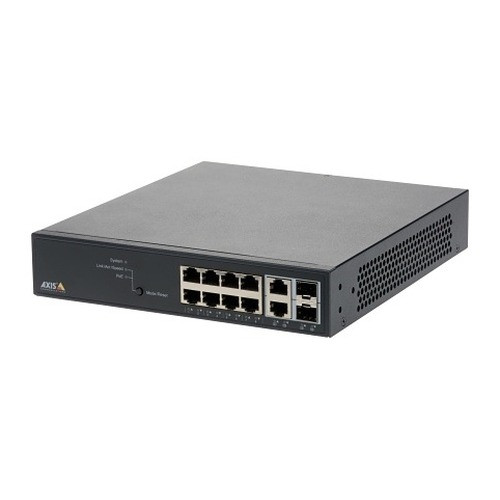
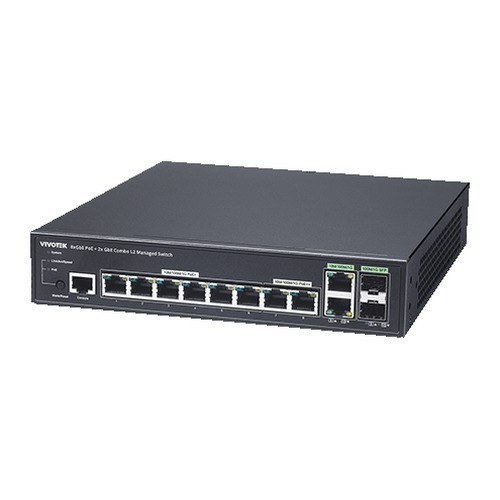
Both the Axis T8508 (01191-004) and Vivotek AW-GEV-108A-130 are 8-port Gigabit PoE managed switches targeting IP security camera installations. Each delivers a 130W PoE budget, dual combo SFP/RJ45 uplinks, 20 Gbps switching capacity, and web-based management with surveillance-oriented features. This comparison evaluates PoE port architecture and power delivery, physical build and environmental ratings, and management depth and protocol support — the three axes that most directly determine fit in a professional surveillance deployment.
In This Guide
- How do the PoE port configurations and power delivery differ between the T8508 and GEV-108A-130?
- How do the two switches compare on physical construction, operating environment, and electrical protection?
- Which switch offers deeper management capabilities and protocol support for enterprise or multi-site surveillance networks?
- Which should you choose: the T8508 or the GEV-108A-130?
- Side-by-Side Specs
- FAQ
How do the PoE port configurations and power delivery differ between the T8508 and GEV-108A-130?
The Axis T8508 delivers PoE+ (IEEE 802.3at, up to 30W) uniformly across all eight RJ45 ports, with a shared power budget of 130W. Every port operates at the same maximum class, making power allocation predictable when deploying standard IP cameras, access controllers, or intercoms drawing up to 30W each.
The Vivotek AW-GEV-108A-130 uses a tiered port architecture: ports 1–6 are rated at 30W (IEEE 802.3af/at, 4-pair AF/AT pin assignment), while ports 7–8 support IEEE 802.3bt at up to 90W each (4-pair BT pin assignment). The total PoE budget remains 130W. This means ports 7–8 can individually power high-draw devices such as PTZ cameras with integrated heaters, multisensor panoramics, or dual-band Wi-Fi APs, provided the aggregate budget is not exceeded. The Vivotek also specifies an Extended PoE Mode reaching up to 250m at 10 Mbps — a spec not present in the Axis T8508 datasheet.
Buyers powering exclusively standard 25W-or-less cameras gain no advantage from the Vivotek's 90W ports; the uniform Axis layout is simpler to manage. Installations with even one or two high-draw BT-class devices benefit directly from the Vivotek's port 7–8 headroom without requiring a separate injector.
How do the two switches compare on physical construction, operating environment, and electrical protection?
Both switches share identical external footprints (220 × 242 × 44 mm) and ship in a metal chassis. The Axis T8508 weighs 2.1 kg; the Vivotek AW-GEV-108A-130 is lighter at 1.95 kg. Both accept 100–240V AC at 50/60 Hz.
The Axis T8508 specifies 6kV surge protection on all network ports and AC lines — a concrete electrical-protection rating important in outdoor-adjacent or lightning-prone installations. The Vivotek spec sheet does not list a surge protection rating.
On operating temperature, the Vivotek has a measurable advantage: its rated range is -10°C to 50°C (14°F to 122°F), versus 0°C to 50°C for the Axis T8508. For installations in unheated closets, parking structures, or transitional spaces that may fall below freezing, the Vivotek's lower floor provides more margin. Storage temperature also favors the Vivotek at -20°C vs -10°C for the Axis. The Axis T8508 specifies an indoor environment rating; the Vivotek does not explicitly state an indoor/outdoor classification in its spec sheet.
Certifications differ: the Axis T8508 carries EMC EN 55032/35, FCC Part 15B, VCCI, RCM, and IEC 62368-1. The Vivotek lists UL, CE, UKCA, FCC, VCCI, LVD, and ICES. Both cover major North American and EU markets; the Axis adds RCM (Australia/NZ) and IEC 62368-1 safety; the Vivotek adds UKCA (UK post-Brexit) and UL.
Which switch offers deeper management capabilities and protocol support for enterprise or multi-site surveillance networks?
The Axis T8508 integrates with AXIS Device Manager, Axis's unified management platform, and supports SNMP, SSH, HTTPS, IEEE 802.1X network access control, ACL, Private VLANs, DHCP Snooping, and IP address filtering. Its documented network protocols include IPv4, IPv6, HTTP, HTTPS, TCP, UDP, DHCP, NTP, and SSH. The spec sheet does not list STP/RSTP/MSTP, LACP, RMON, LLDP, port mirroring, QoS hardware queue count, RADIUS/TACACS+, or IP Source Guard.
The Vivotek AW-GEV-108A-130 documents a substantially broader protocol and feature set: IEEE 802.1D/w/s (STP/RSTP/MSTP), LACP and static link aggregation, 4096 VLAN IDs (802.1Q tag-based), Q-in-Q double tagging, MAC-based VLAN, Voice VLAN, IP Subnet-based VLAN, MVR, IGMP Snooping v1/v2, MLD v1/v2 Snooping, DHCP Relay, 8 hardware QoS queues with WRR and DSCP, RADIUS and TACACS+ authentication, IP Source Guard, storm control, loop detection, RMON (groups 1/2/3/9), LLDP and LLDP-MED, S-Flow, UPnP, port mirroring, and PoE scheduling with Non-Stop PoE.
The Vivotek also includes surveillance-specific management functions: auto-discovery of up to 256 Vivotek devices, topology/floor/Google Map views, PoE alive-checking with reboot, device grouping for VLAN, config file export/import, and cable diagnostics. These features are native to Vivotek's management interface and are absent from the Axis T8508 spec sheet. The Axis T8508's integration strength is its tight coupling with AXIS Device Manager in all-Axis deployments — a meaningful advantage if the camera layer is entirely Axis.
Warranty: the Axis T8508 carries a 5-year warranty. The Vivotek AW-GEV-108A-130 is warranted for 24 months.
Which should you choose: the T8508 or the GEV-108A-130?
Our take: The AW-GEV-108A-130 is the stronger choice when the installation includes high-draw PoE BT devices, operates in sub-zero environments, or requires deep Layer 2 management depth independent of camera brand. Its ports 7–8 support up to 90W each — 3× the 30W ceiling on any Axis T8508 port — enabling PTZ cameras with integrated heating or other 802.3bt loads without external injectors. Its operating floor of -10°C beats the Axis's 0°C lower limit, and its documented protocol stack (STP/RSTP/MSTP, LACP, RMON, LLDP, RADIUS/TACACS+, QoS with 8 hardware queues) is substantially broader. The Axis T8508 is the stronger choice for all-Axis camera deployments where AXIS Device Manager integration is the priority, where 6kV-rated surge protection on every port is a hard requirement, or where a 5-year warranty (versus Vivotek's 24-month term) materially affects lifecycle cost calculations. Switching capacity, port count, MAC table size, jumbo frame support, and PoE budget are identical across both models.
Side-by-Side Comparison
Spec-for-spec, from manufacturer data.
| Specification | Axis T8508 | Vivotek GEV-108A-130 |
|---|---|---|
| PoE Standard — all ports | IEEE 802.3at (PoE+) | IEEE 802.3af/at (ports 1–6) / IEEE 802.3bt (ports 7–8) |
| Max per-port PoE output | 30W (all 8 ports) | 30W (ports 1–6) / 90W (ports 7–8) |
| Total PoE budget | 130W | 130W |
| PoE port count | 8 | 8 |
| Uplink ports | 2× combo RJ45/SFP | 2× combo RJ45/SFP |
| Switching capacity | 20 Gbps | 20 Gbps |
| Forwarding rate | 14.9 Mpps | 14.88 Mpps |
| MAC address table | 8K | 8K |
| Jumbo frames | 9216 Bytes | 9216 Bytes |
| Operating temperature | 0°C to 50°C | -10°C to 50°C |
| Storage temperature | -10°C to 70°C | -20°C to 70°C |
| Surge protection | 6kV (all ports + AC lines) | Not specified |
| Extended PoE reach | Not specified | Up to 250m at 10 Mbps |
| RADIUS / TACACS+ | Not specified | RADIUS and TACACS+ |
| STP / RSTP / MSTP | Not specified | IEEE 802.1D / 802.1w / 802.1s |
| Warranty | 5 years | 24 months |
Frequently Asked Questions
Which should you choose: the T8508 or the GEV-108A-130?
The AW-GEV-108A-130 is the stronger choice when the installation includes high-draw PoE BT devices, operates in sub-zero environments, or requires deep Layer 2 management depth independent of camera brand. Its ports 7–8 support up to 90W each — 3× the 30W ceiling on any Axis T8508 port — enabling PTZ cameras with integrated heating or other 802.3bt loads without external injectors. Its operating floor of -10°C beats the Axis's 0°C lower limit, and its documented protocol stack (STP/RSTP/MSTP, LACP, RMON, LLDP, RADIUS/TACACS+, QoS with 8 hardware queues) is substantially broader. The Axis T8508 is the stronger choice for all-Axis camera deployments where AXIS Device Manager integration is the priority, where 6kV-rated surge protection on every port is a hard requirement, or where a 5-year warranty (versus Vivotek's 24-month term) materially affects lifecycle cost calculations. Switching capacity, port count, MAC table size, jumbo frame support, and PoE budget are identical across both models.
Can either switch power a high-watt PTZ camera or a multi-sensor panoramic that draws more than 30W?
Only the Vivotek AW-GEV-108A-130 can do this natively. Ports 7 and 8 are IEEE 802.3bt rated at up to 90W each. The Axis T8508 caps every port at 30W (IEEE 802.3at PoE+); devices requiring more than 30W would need a separate injector on the Axis platform.
Which switch is better suited for mixed-brand camera deployments managed by an IT team, not just Axis tools?
The Vivotek AW-GEV-108A-130 is better suited here. Its documented management feature set includes RADIUS/TACACS+ authentication, LLDP/LLDP-MED, RMON, STP/RSTP/MSTP, LACP, and S-Flow — standard IT-network protocols that integrate with vendor-neutral NMS platforms. The Axis T8508's management integration is documented primarily through AXIS Device Manager; its spec sheet does not list LLDP, LACP, or RMON.
Which switch offers better long-term warranty coverage?
The Axis T8508 carries a 5-year warranty. The Vivotek AW-GEV-108A-130 is warranted for 24 months. For installations where extended hardware coverage reduces total cost of ownership or simplifies service contract administration, the Axis T8508 holds a clear advantage on this single dimension.
More Network Switch Comparisons
- Vivotek IHT-1271 vs TP-Link SG3210XHP-M2
- Vivotek IHT-1271 vs TP-Link S4500-8GP2F
- Vivotek IHT-1271 vs TP-Link SG1210P
- Vivotek IHT-1271 vs Allied Telesis AT-x530L-10GHXm-10
- Vivotek IHT-1271 vs Vivotek GEV-108A-130
- Vivotek IHT-1271 vs Vivotek IHT-1000
Network Switch Buying Guides
Get a Second Opinion on Your Camera Choice
Share your site layout, coverage goals, and budget. Our team will validate the camera selection, flag anything we would change, and recommend products that match the use case.