
Axis T8508 vs TP-Link SG3210XHP-M2: Specification Comparison
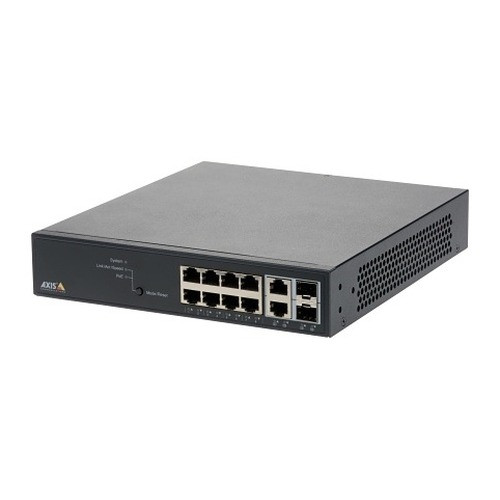
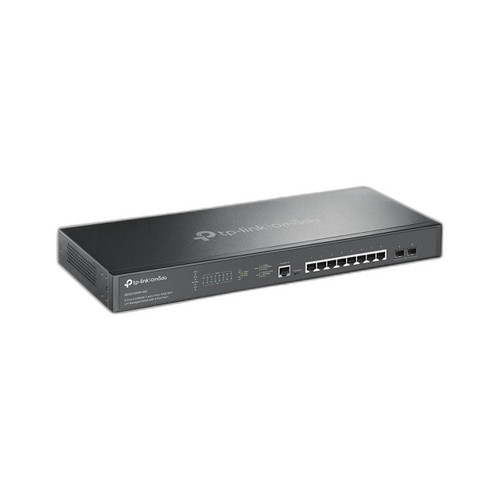
Both the Axis T8508 and TP-Link SG3210XHP-M2 are 8-port managed PoE switches targeting structured network deployments, making them genuine cross-shop candidates for installers sizing edge switching for IP cameras, access control, or converged security infrastructure. The T8508 is a security-ecosystem-integrated Gigabit PoE+ switch with a 130W budget and native AXIS Device Manager support, while the SG3210XHP-M2 is an Omada-managed L2+ switch with 2.5GBase-T access ports, an 80 Gbps fabric, and a 240W PoE++ budget—representing a meaningful generational step in port speed and power delivery.
In This Guide
- Which switch delivers more bandwidth and PoE power per port?
- How do the two switches compare on physical build, surge protection, and operating environment?
- Which switch offers stronger management, security features, and ecosystem integration?
- Which should you choose: the T8508 or the SG3210XHP-M2?
- Side-by-Side Specs
- FAQ
Which switch delivers more bandwidth and PoE power per port?
The Axis T8508 provides 8 × RJ45 PoE+ ports rated to IEEE 802.3at (up to 30W each) and 2 × combo SFP/RJ45 uplinks, with a switching capacity of 20 Gbps and a forwarding rate of 14.9 Mpps. Total PoE power budget is 130W shared across all eight ports. Access-port speed is Gigabit (1GbE implied by the 20 Gbps fabric across 10 ports).
The TP-Link SG3210XHP-M2 offers 8 × 2.5GBase-T PoE ports (supporting 802.3af/at and 802.3bt PoE++) and 2 × 10G SFP+ uplinks, with a switching capacity of 80 Gbps. The PoE budget is 240W, and the spec sheet notes 802.3bt support allowing up to 90W per port on compatible endpoints. Access ports auto-negotiate down to 1G and 100M for legacy devices.
The bandwidth gap is substantial: the SG3210XHP-M2 delivers four times the switching capacity and 2.5× the per-port access speed. Its PoE budget is 85% larger (240W vs 130W), and PoE++ (802.3bt) support enables high-draw endpoints such as PTZ cameras with heaters or multi-radio APs that exceed the 30W ceiling of the T8508's 802.3at ports.
How do the two switches compare on physical build, surge protection, and operating environment?
The Axis T8508 is housed in a metal chassis (black) rated for indoor use, measuring 220 × 242 × 44 mm and weighing 2.1 kg. It carries 6kV surge protection on all network ports and AC lines—a specification explicitly stated in the datasheet. Operating temperature is 0°C to 50°C; storage is −10°C to 70°C at 5–95% RH non-condensing. Regulatory approvals include EMC EN 55032/35, FCC Part 15B, VCCI, RCM, and IEC 62368-1.
The TP-Link SG3210XHP-M2 is rack-mounted (1U, 440 × 180 × 44 mm) with a maximum heat dissipation of 51.18 BTU/hr and a maximum power consumption of 240W. Operating temperature matches at 0°C to 50°C. Surge protection rating, chassis material, storage temperature range, and third-party safety certifications beyond the spec excerpt provided are not stated in the available specifications.
The T8508's explicit 6kV surge rating is a meaningful differentiator for perimeter camera deployments where induced transients are a real risk. The SG3210XHP-M2's rack form factor (440 mm wide) suits 19-inch IDF/MDF cabinets natively; the T8508 requires an optional AXIS T85 Rack Mount Kit. Both target the same 0–50°C ambient range.
Which switch offers stronger management, security features, and ecosystem integration?
The Axis T8508 is managed via AXIS Device Manager—Axis's proprietary platform for unified configuration of cameras, recorders, and network devices—alongside SNMP, SSH, HTTPS, and NTP. Security features include IEEE 802.1X network access control, ACL, Private VLANs, DHCP Snooping, IP address filtering, password protection, and HTTPS encryption. The switch supports IPv4 and IPv6 and includes a built-in DHCP server with VLAN segmentation. MAC table size is 8K; jumbo frame support reaches 9216 bytes.
The TP-Link SG3210XHP-M2 is managed through the Omada SDN platform (cloud, hardware controller, or software controller) and supports CLI, SNMP v1/v2c/v3, and RMON. Security features include 802.1X with RADIUS/TACACS+, ACL, and VLAN. L2+ capabilities include static routing, QoS, STP/RSTP/MSTP, IGMP snooping, and LACP. Flash storage is 32 MB; specific MAC table size and jumbo frame specifications are not stated in the provided specs.
The T8508's integration with AXIS Device Manager is a decisive factor for all-Axis deployments, enabling single-pane-of-glass management of the entire edge stack. The SG3210XHP-M2's Omada SDN controller supports multi-site, multi-device management across TP-Link infrastructure (APs, routers, switches) and adds LACP, MSTP, and static routing not listed for the T8508. RADIUS/TACACS+ authentication on the SG3210XHP-M2 offers more flexible AAA integration in enterprise environments.
Which should you choose: the T8508 or the SG3210XHP-M2?
Our take: The SG3210XHP-M2 is the stronger choice when raw throughput, PoE headroom, and higher-speed access ports are the primary drivers. Its 80 Gbps switching fabric outpaces the T8508's 20 Gbps by 4×, its 240W PoE++ budget exceeds the T8508's 130W by 110W, and its 2.5GBase-T ports with 10G SFP+ uplinks are a generation ahead of the T8508's Gigabit access tier. However, the T8508 wins on documented surge protection (6kV on all ports vs. not stated for the SG3210XHP-M2) and on native AXIS Device Manager integration, which is operationally significant for installers running Axis-only camera and access-control stacks. Choose the T8508 for Axis-ecosystem deployments requiring unified management and verified surge hardening; choose the SG3210XHP-M2 for bandwidth-intensive or multi-vendor environments where PoE++ endpoints, 2.5G uplinks to NVRs, and SDN-controller flexibility are required.
Side-by-Side Comparison
Spec-for-spec, from manufacturer data.
| Specification | Axis T8508 | TP-Link SG3210XHP-M2 |
|---|---|---|
| Product Type | 8-Port PoE+ Gigabit Switch | 8-Port PoE+ 2.5GBase-T L2+ Switch |
| Access Port Speed | 1GbE (Gigabit) | 2.5GBase-T (auto-neg to 1G/100M) |
| Uplink Ports | 2 × Combo SFP/RJ45 | 2 × 10G SFP+ |
| Switching Capacity | 20 Gbps | 80 Gbps |
| Forwarding Rate | 14.9 Mpps | Not stated |
| PoE Standard | IEEE 802.3at (PoE+) | IEEE 802.3af/at/bt (PoE++) |
| Max PoE per Port | 30W | 90W (802.3bt) |
| Total PoE Budget | 130W | 240W |
| Surge Protection | 6kV all network ports + AC | Not stated |
| Operating Temp | 0°C to 50°C | 0°C to 50°C |
| MAC Table | 8K | Not stated |
| Jumbo Frames | 9216 bytes | Not stated |
| Management Platform | AXIS Device Manager | Omada SDN (cloud/HW/SW controller) |
| CLI / SNMP | SNMP, SSH | CLI, SNMP v1/v2c/v3, RMON |
| Security Features | 802.1X, ACL, Private VLAN, DHCP Snooping, IP filtering | 802.1X, ACL, VLAN, RADIUS/TACACS+ |
| Warranty | 5 years | Not stated |
| Dimensions (mm) | 220 × 242 × 44 | 440 × 180 × 44 |
| Weight | 2.1 kg (4.63 lbs) | Not stated |
| Form Factor | Desktop / Optional rack kit | 1U Rack |
| Power Supply | 100–240V AC, 50/60 Hz | 100–240V AC, 50/60 Hz |
Frequently Asked Questions
Which should you choose: the T8508 or the SG3210XHP-M2?
The SG3210XHP-M2 is the stronger choice when raw throughput, PoE headroom, and higher-speed access ports are the primary drivers. Its 80 Gbps switching fabric outpaces the T8508's 20 Gbps by 4×, its 240W PoE++ budget exceeds the T8508's 130W by 110W, and its 2.5GBase-T ports with 10G SFP+ uplinks are a generation ahead of the T8508's Gigabit access tier. However, the T8508 wins on documented surge protection (6kV on all ports vs. not stated for the SG3210XHP-M2) and on native AXIS Device Manager integration, which is operationally significant for installers running Axis-only camera and access-control stacks. Choose the T8508 for Axis-ecosystem deployments requiring unified management and verified surge hardening; choose the SG3210XHP-M2 for bandwidth-intensive or multi-vendor environments where PoE++ endpoints, 2.5G uplinks to NVRs, and SDN-controller flexibility are required.
Is the T8508 or SG3210XHP-M2 better for powering PTZ cameras with built-in heaters or high-draw endpoints?
The SG3210XHP-M2 is the better fit. It supports IEEE 802.3bt (PoE++) with up to 90W per port and a 240W total budget, versus the T8508's 802.3at ceiling of 30W per port and 130W total. High-draw PTZ cameras with heaters, multi-radio APs, or video intercoms that exceed 30W require PoE++ and will not operate at full capability on the T8508.
Can I manage the T8508 and SG3210XHP-M2 with the same software platform?
No. The T8508 is managed through AXIS Device Manager, Axis's proprietary platform, alongside standard protocols (SNMP, SSH). The SG3210XHP-M2 is managed via TP-Link's Omada SDN controller (cloud, hardware, or software). The two platforms are separate ecosystems. If your deployment is Axis-only, the T8508 offers tighter integration; if you run mixed TP-Link infrastructure (APs, routers), the SG3210XHP-M2 fits into a unified Omada SDN topology.
Which switch is better protected against electrical surges on outdoor camera runs?
The T8508 has a documented 6kV surge protection rating on all network ports and AC lines, which is a stated specification. The SG3210XHP-M2's surge protection rating is not specified in the available product data. For perimeter and outdoor camera installations where induced transients from lightning or long cable runs are a concern, the T8508's explicit 6kV rating is the verifiable choice; the SG3210XHP-M2's protection level cannot be confirmed from the provided specs.
More Network Switch Comparisons
- Vivotek IHT-1271 vs TP-Link SG3210XHP-M2
- Vivotek IHT-1271 vs TP-Link S4500-8GP2F
- Vivotek IHT-1271 vs TP-Link SG1210P
- Vivotek IHT-1271 vs Allied Telesis AT-x530L-10GHXm-10
- Vivotek IHT-1271 vs Vivotek GEV-108A-130
- Vivotek IHT-1271 vs Vivotek IHT-1000
Network Switch Buying Guides
Get a Second Opinion on Your Camera Choice
Share your site layout, coverage goals, and budget. Our team will validate the camera selection, flag anything we would change, and recommend products that match the use case.