
Axis A8207-VE vs Axis I8307-VE: Specification Comparison
Both the Axis A8207-VE Mk II and the Axis I8307-VE are outdoor-rated, PoE-powered network video intercoms designed for access-controlled building entry points. The A8207-VE is a 3MP video door station with analog-style I/O integration, while the I8307-VE is an 8MP 4K intercom with a built-in touchscreen, RFID reader, and PIN keypad. Buyers in the commercial and enterprise access control market would legitimately cross-shop these as primary entry intercoms, though they differ significantly in resolution, authentication modalities, and onboard user-interface capability.
In This Guide
- Which unit delivers better imaging and field of view for identifying visitors?
- What authentication methods and on-site user interaction does each unit support?
- How does each unit integrate with access control panels, VMS platforms, and third-party systems?
- Which should you choose: the A8207-VE or the I8307-VE?
- Side-by-Side Specs
- FAQ
Which unit delivers better imaging and field of view for identifying visitors?
The A8207-VE captures at 3MP with 30fps and Forensic WDR across a 180° horizontal field of view, making it suitable for wide vestibule or lobby entrances where panoramic coverage matters more than pixel density. The Forensic WDR designation is cited in specs but no dB figure is provided for this model.
The I8307-VE steps up to 8MP 4K Ultra HD with a 150° × 112° field of view and Forensic WDR rated up to 120dB, providing significantly higher resolution for facial identification and license plate capture at closer range. It also includes a low-light color operation capability, a spec not listed for the A8207-VE.
For deployments where positive identification at the door is the priority, the I8307-VE's 8MP sensor and 120dB WDR rating represent a clear imaging advantage. The A8207-VE's 180° panoramic coverage is the differentiator when wide spatial situational awareness at an entry vestibule outweighs pixel count.
What authentication methods and on-site user interaction does each unit support?
The A8207-VE provides two-way audio with microphone support and video-based visitor identification, relying on remote operator decision-making via the associated access control platform. No onboard credential reader or display is listed in its specifications.
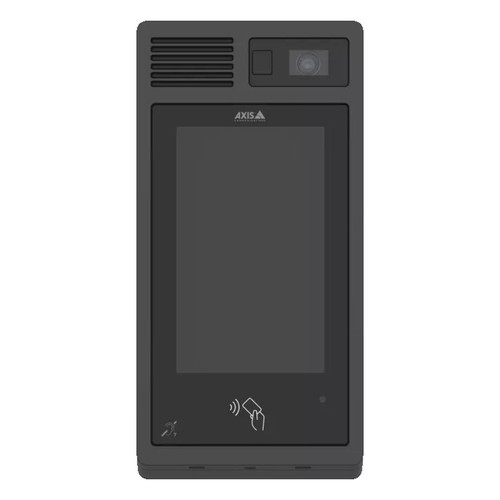
The I8307-VE integrates dual-factor authentication directly at the door: a 125kHz and 13.56MHz RFID reader supporting both legacy and modern card formats, plus a metal PIN keypad for code entry. A 7-inch capacitive touchscreen provides an interactive visitor interface. Audio includes dual microphones with echo cancellation and noise reduction, and a built-in speaker rated at 85dB SPL.
The A8207-VE's audio specs note microphone support but do not specify a dual-mic array, echo cancellation, or speaker SPL rating. Buyers requiring self-service credential presentation at the door—without relying solely on remote operator buzzing—will find the I8307-VE's onboard RFID, PIN, and touchscreen to be a substantive functional difference.
How does each unit integrate with access control panels, VMS platforms, and third-party systems?
The A8207-VE provides 4 alarm inputs/outputs, 2 relays, and video outputs, giving installers direct dry-contact integration to access control panels and door hardware without an intermediate controller. Video compression is H.264, and onboard storage is supported via microSD. Protocol support beyond PoE connectivity is not detailed in the provided specifications.
The I8307-VE's connectivity specifications explicitly list ONVIF Profiles G, M, S, and T, SIP for VoIP call routing, and VAPIX API for Axis ecosystem integration. This makes its compatibility with third-party VMS, IP-PBX, and Axis camera management platforms verifiable from published specs. Onboard I/O counts and relay specs are not listed for the I8307-VE in the provided data.
The A8207-VE's 4-input/2-relay I/O density is a concrete advantage for panel-integrated deployments where direct wired connections to REX devices, door contacts, and electric strikes are required. The I8307-VE's explicit ONVIF and SIP listings are the stronger fit for software-centric access platforms and IP telephony workflows. Neither model's I/O spec set is fully overlapping, so installers should verify both against their specific panel and VMS requirements.
Which should you choose: the A8207-VE or the I8307-VE?
Our take: The I8307-VE is the stronger choice when the deployment demands higher-resolution identification, multi-factor credential authentication at the door, and verified VMS/SIP protocol interoperability. Its 8MP 4K sensor versus the A8207-VE's 3MP, its 120dB Forensic WDR versus an unquantified WDR rating, and its onboard RFID (dual-frequency) plus PIN keypad versus audio-only visitor interaction represent meaningful capability gaps for enterprise lobby or high-security entry applications. The A8207-VE earns its place where panoramic 180° horizontal coverage at a vestibule, direct dry-contact I/O integration (4 inputs, 2 relays) to an access control panel, and a lower hardware profile matter more than pixel density or self-service credentials. Its -40°C cold-weather floor also extends deployment range versus the I8307-VE's -30°C minimum. Platform commitment to Axis VAPIX is assumed for both; confirm SIP infrastructure before specifying the I8307-VE.
Side-by-Side Comparison
Spec-for-spec, from manufacturer data.
| Specification | Axis A8207-VE | Axis I8307-VE |
|---|---|---|
| Product Type | Video Door Station / Intercom | Network Video Intercom |
| Resolution | 3MP | 8MP 4K Ultra HD |
| Field of View | 180° horizontal | 150° × 112° |
| Wide Dynamic Range | Forensic WDR (dB not specified) | Forensic WDR, up to 120dB |
| Low-Light Color | — | Yes |
| IP Rating | IP66 | IP66 |
| Vandal Rating | IK08 | IK08 |
| Operating Temperature | -40°C to +55°C | -30°C to +55°C |
| Power Type | PoE+ (802.3at) | PoE |
| Alarm I/O | 4 inputs/outputs | — |
| Relays | 2 | — |
| RFID Support | — | 125kHz & 13.56MHz |
| PIN Keypad | — | Metal keypad |
| Display | — | 7-inch capacitive touchscreen |
| Audio | Microphone supported | Dual mics, echo cancellation, 85dB SPL speaker |
| Protocols | — | ONVIF (G, M, S, T), SIP, VAPIX API |
| Cybersecurity | — | FIPS 140-3 Level 3 secure key storage |
| Onboard Storage | microSD | — |
| Video Compression | H.264 | — |
| Warranty | 3-year | 5-year |
Frequently Asked Questions
Which should you choose: the A8207-VE or the I8307-VE?
The I8307-VE is the stronger choice when the deployment demands higher-resolution identification, multi-factor credential authentication at the door, and verified VMS/SIP protocol interoperability. Its 8MP 4K sensor versus the A8207-VE's 3MP, its 120dB Forensic WDR versus an unquantified WDR rating, and its onboard RFID (dual-frequency) plus PIN keypad versus audio-only visitor interaction represent meaningful capability gaps for enterprise lobby or high-security entry applications. The A8207-VE earns its place where panoramic 180° horizontal coverage at a vestibule, direct dry-contact I/O integration (4 inputs, 2 relays) to an access control panel, and a lower hardware profile matter more than pixel density or self-service credentials. Its -40°C cold-weather floor also extends deployment range versus the I8307-VE's -30°C minimum. Platform commitment to Axis VAPIX is assumed for both; confirm SIP infrastructure before specifying the I8307-VE.
Is the A8207-VE or I8307-VE better for a lobby where visitors need to present their own badge or enter a PIN?
The I8307-VE is the appropriate choice. It includes an onboard 125kHz/13.56MHz RFID reader and a metal PIN keypad, enabling visitors to self-authenticate without requiring a remote operator to grant access. The A8207-VE does not list any onboard credential reader in its specifications.
Which unit handles colder outdoor climates better?
The A8207-VE is specified down to -40°C, compared to the I8307-VE's -30°C lower limit. In installations subject to extreme cold—northern outdoor vestibules, unheated parking structures—the A8207-VE's broader thermal range is a documented specification advantage.
Do both units work with third-party VMS and access control software?
The I8307-VE explicitly lists ONVIF Profiles G, M, S, and T plus VAPIX API in its specifications, providing verifiable third-party VMS compatibility. The A8207-VE's protocol support is not detailed in the provided specifications beyond PoE connectivity and H.264 compression; buyers should confirm VMS compatibility with Axis documentation before specifying it in a mixed-vendor environment.
More Intercom Comparisons
- Hanwha TID-600R vs Aiphone IX-EA
- Hanwha TID-600R vs Axis A8207-VE
- Hanwha TID-600R vs Aiphone IX-DVF-6
- Hanwha TID-600R vs Aiphone JOS-1FW
- Aiphone IX-EA vs Axis A8207-VE
- Aiphone IX-EA vs 2N 01273-001
Intercom Buying Guides
Get a Second Opinion on Your Camera Choice
Share your site layout, coverage goals, and budget. Our team will validate the camera selection, flag anything we would change, and recommend products that match the use case.