
APC by Schneider Electric SMT750CUS vs CyberPower PR750LCDRT1U: Specification Comparison
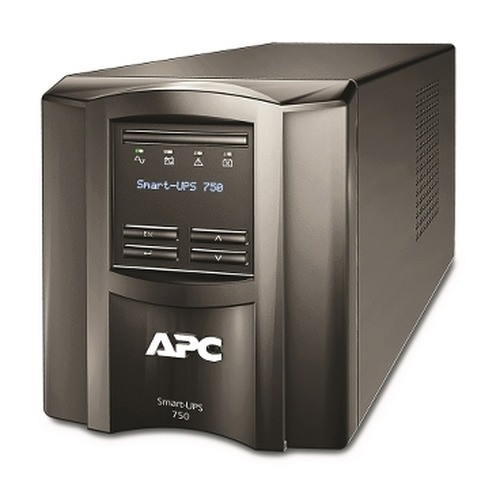
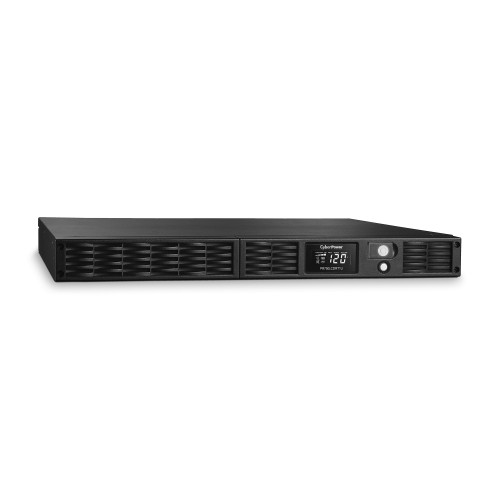
Both units are 750VA line-interactive UPS systems delivering pure sinewave output at 120 V AC, targeting small server rooms, network closets, and workstations. The APC SMT750CUS ships as a tower with a rack-conversion kit sold separately, while the CyberPower PR750LCDRT1U ships as a 1U rack/tower convertible unit. A buyer cross-shopping these would weigh runtime, waveform quality, management depth, form factor, and warranty coverage across the same fundamental power-protection class.
In This Guide
- How do runtime, battery capacity, and recharge time compare between the SMT750CUS and PR750LCDRT1U?
- How do form factor, mounting options, and remote management capabilities differ between the two units?
- How do surge protection, input voltage tolerance, compliance certifications, and warranty terms compare?
- Which should you choose: the SMT750CUS or the PR750LCDRT1U?
- Side-by-Side Specs
- FAQ
How do runtime, battery capacity, and recharge time compare between the SMT750CUS and PR750LCDRT1U?
The APC SMT750CUS specifies runtime of 4.5 minutes at 100% load (500 W) and 16 minutes at 50% load (250 W), with a recharge time of 3 hours. APC does not disclose individual battery cell count or cell voltage in the provided specs, listing the type only as sealed, maintenance-free lead acid.
The CyberPower PR750LCDRT1U uses four 6 V / 7 Ah sealed lead-acid cells. CyberPower does not publish runtime curves or recharge time in the provided specs, so a direct runtime comparison cannot be completed from available data. Buyers needing confirmed runtime figures for the PR750LCDRT1U should consult the manufacturer datasheet at the path noted in the spec (/content/product-datasheets/PR750LCDRT1U.pdf).
On the data that is available, the SMT750CUS's 16-minute half-load runtime is a concrete, testable figure; the PR750LCDRT1U's runtime under equivalent load is not spec-stated here and cannot be inferred solely from the 4 × 6 V / 7 Ah battery pack configuration without a discharge curve.
How do form factor, mounting options, and remote management capabilities differ between the two units?
The CyberPower PR750LCDRT1U is a native 1U rack unit (17.25 × 1.75 × 15.8 in, W×H×D) that also converts to tower orientation, making it a purpose-built choice for populated equipment racks where rack units are scarce. The APC SMT750CUS provides only a height dimension (5.4 in) in the supplied specs; its rack-mount form factor or conversion kit availability is not confirmed in the provided data.
For remote management, the SMT750CUS specifies two interfaces: USB and Ethernet (SmartConnect), plus one free SmartSlot expansion bay for optional network management cards. It also lists one USB port explicitly on the interface panel. The PR750LCDRT1U's management interfaces beyond the front-panel LCD are not described in the provided specs; no network port, SNMP card slot, or expansion bay is mentioned.
The SMT750CUS's SmartSlot expands future management options — a meaningful advantage in environments running network management systems or seeking SNMP/Modbus integration without replacing the unit.
How do surge protection, input voltage tolerance, compliance certifications, and warranty terms compare?
The SMT750CUS carries a 540-joule surge energy rating and a $150,000 equipment protection value guarantee. Its input voltage window spans AC 82–144 V nominal (adjustable 75–154 V), and transfer time from line to battery is 6 ms. Compliant standards include UL 1449, UL 1778, CSA, ICES-003, FCC Part 15 Class B, CSA C22.2 No. 107.1, RoHS, and REACH.
The PR750LCDRT1U lists an input voltage range of 80–150 VAC nominal. Its surge joule rating, equipment protection dollar value, and transfer time are not stated in the provided specs. Compliance is listed as UL 1778 and RoHS only; FCC, CSA, and REACH certifications are not mentioned in the available data.
On warranty, the SMT750CUS offers a 3-year limited unit warranty plus a separate 2-year battery warranty. The PR750LCDRT1U carries a single 3-year limited warranty; whether that covers batteries on the same or different terms is not differentiated in the provided specs. The SMT750CUS's explicit split battery warranty is a documented advantage for maintenance planning.
Which should you choose: the SMT750CUS or the PR750LCDRT1U?
Our take: The SMT750CUS is the stronger choice when management depth, documented runtime, and multi-standard compliance are the deciding factors. It specifies a confirmed 16-minute half-load runtime versus no published runtime figure for the PR750LCDRT1U; it provides Ethernet (SmartConnect) plus a free SmartSlot expansion bay versus no documented network management option on the PR750LCDRT1U; and it carries eight compliance certifications (UL 1449, UL 1778, CSA, ICES-003, FCC Part 15 B, CSA C22.2, RoHS, REACH) versus two for the PR750LCDRT1U (UL 1778, RoHS). The PR750LCDRT1U's 1U native rack form factor is a concrete advantage in dense rack environments where the SMT750CUS's rack-mount configuration is not confirmed in the supplied specs. For IT closets requiring verified runtime SLAs, SNMP-capable management, or broader regulatory compliance, the SMT750CUS is better documented. For a dedicated 1U rack deployment where management needs are minimal, the PR750LCDRT1U warrants evaluation against its full datasheet.
Side-by-Side Comparison
Spec-for-spec, from manufacturer data.
| Specification | APC by Schneider Electric SMT750CUS | CyberPower PR750LCDRT1U |
|---|---|---|
| VA / Watt Rating | 750 VA / 500 W | 750 VA / — |
| UPS Technology | Line interactive | — |
| Output Waveform | Pure sinewave | Pure sinewave |
| Form Factor | Tower (rack conversion not confirmed in specs) | 1U Rack or Tower |
| Dimensions (W×H×D) | — × 5.4 in × — (height only provided) | 17.25 × 1.75 × 15.8 in |
| Weight | 30.91 lb | 30.7 lb |
| Input Voltage Range | AC 82–144 V (adj. 75–154 V) | 80–150 VAC nominal |
| Output Voltage | AC 120 V 50/60 Hz | 120 VAC ± 5% |
| Transfer Time | 6 ms | — |
| Runtime at Full Load | 4.5 min | — |
| Runtime at Half Load | 16 min | — |
| Battery Type | Sealed lead acid (qty/voltage not stated) | 4 × 6 V / 7 Ah Sealed Lead-Acid |
| Recharge Time | 3 hours | — |
| Surge Energy Rating | 540 J | — |
| Equipment Protection Value | $150,000 | — |
| Management Interfaces | USB, Ethernet (SmartConnect), 1 free SmartSlot | — |
| Operating Temperature | 32–104 °F | 32–104 °F |
| Noise Level | 41 dBA | — |
| Compliance Standards | UL 1449, UL 1778, CSA, ICES-003, FCC Part 15 B, CSA C22.2, RoHS, REACH | UL 1778, RoHS |
| Unit Warranty | 3 years limited | 3 years limited |
| Battery Warranty | 2 years limited | — |
| Output Receptacles | 6 × NEMA 5-15R | 7 × NEMA 5-15R |
| Input Connector | NEMA 5-15P | — |
Frequently Asked Questions
Which should you choose: the SMT750CUS or the PR750LCDRT1U?
The SMT750CUS is the stronger choice when management depth, documented runtime, and multi-standard compliance are the deciding factors. It specifies a confirmed 16-minute half-load runtime versus no published runtime figure for the PR750LCDRT1U; it provides Ethernet (SmartConnect) plus a free SmartSlot expansion bay versus no documented network management option on the PR750LCDRT1U; and it carries eight compliance certifications (UL 1449, UL 1778, CSA, ICES-003, FCC Part 15 B, CSA C22.2, RoHS, REACH) versus two for the PR750LCDRT1U (UL 1778, RoHS). The PR750LCDRT1U's 1U native rack form factor is a concrete advantage in dense rack environments where the SMT750CUS's rack-mount configuration is not confirmed in the supplied specs. For IT closets requiring verified runtime SLAs, SNMP-capable management, or broader regulatory compliance, the SMT750CUS is better documented. For a dedicated 1U rack deployment where management needs are minimal, the PR750LCDRT1U warrants evaluation against its full datasheet.
Which UPS is better suited for a 1U rack deployment — the SMT750CUS or the PR750LCDRT1U?
Based on the provided specs, the CyberPower PR750LCDRT1U is explicitly rated as a 1U rack or tower unit (17.25 × 1.75 × 15.8 in). The APC SMT750CUS is listed with a single height dimension (5.4 in) and no rack-unit designation in the supplied specs, so its native rack-mount form is not confirmed from the available data. Buyers requiring a confirmed 1U footprint should verify the SMT750CUS's rack-mount options directly with APC or confirm via the separate rack-mount kit.
Does either UPS support network management or SNMP monitoring out of the box?
The SMT750CUS includes an Ethernet port (SmartConnect) and a USB port as standard management interfaces, plus one free SmartSlot expansion bay for optional network management cards. The PR750LCDRT1U's management interfaces beyond its front-panel LCD are not described in the provided specs — no Ethernet port, SNMP slot, or expansion bay is mentioned. If remote or SNMP-based monitoring is required, the SMT750CUS has documented support; the PR750LCDRT1U's capability in this area cannot be confirmed from the available data.
How do the warranties compare between the SMT750CUS and PR750LCDRT1U, especially for battery replacement?
The APC SMT750CUS carries a 3-year limited warranty on the unit and a separate 2-year limited warranty covering batteries. The CyberPower PR750LCDRT1U carries a single 3-year limited warranty; the provided specs do not differentiate battery coverage within that term. The SMT750CUS's explicit 2-year battery warranty is a documented planning advantage, since battery replacement is typically the primary maintenance cost for lead-acid UPS units.
More UPS Comparisons
- APC by Schneider Electric SMT750C vs CyberPower PR750RTXL2UC
- APC by Schneider Electric SMT750C vs Vertiv GXT5-750LVRT2UXL
- APC by Schneider Electric SMT750C vs CyberPower PR750LCDRT1U
- APC by Schneider Electric SMT750C vs CyberPower AVRG750U
- APC by Schneider Electric SMT750C vs APC by Schneider Electric SMT750CUS
- APC by Schneider Electric SMT750CUS vs CyberPower PR750RTXL2UC
UPS Buying Guides
Get a Second Opinion on Your Camera Choice
Share your site layout, coverage goals, and budget. Our team will validate the camera selection, flag anything we would change, and recommend products that match the use case.