
APC by Schneider Electric SMT750C vs CyberPower AVRG750U: Specification Comparison
Both the APC SMT750C and CyberPower AVRG750U are 750VA line-interactive UPS units targeting small office, workstation, and network-edge applications on 120V North American circuits. This comparison covers power capacity and output quality, physical form factor and weight, and management and monitoring capabilities — the three dimensions that most directly drive purchasing decisions when selecting a desktop or tower UPS for IT or light-industrial load protection.
In This Guide
- How do the SMT750C and AVRG750U compare on real power capacity and output quality?
- How do the SMT750C and AVRG750U differ in physical size, weight, and installation flexibility?
- Which unit offers more connectivity and management capability for IT environments?
- Which should you choose: the SMT750C or the AVRG750U?
- Side-by-Side Specs
- FAQ
How do the SMT750C and AVRG750U compare on real power capacity and output quality?
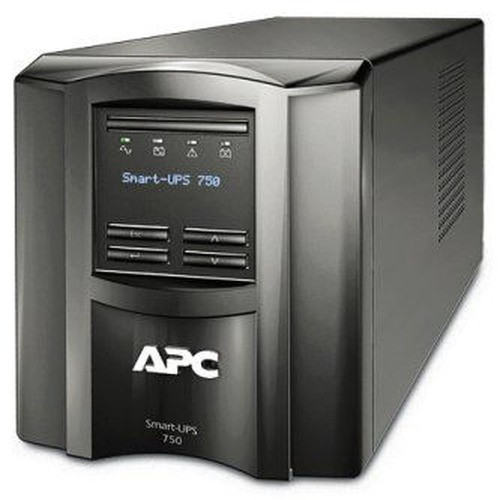
The APC SMT750C is rated at 500W / 750VA, while the CyberPower AVRG750U is rated at 450W / 750VA. Both share the same VA rating, but the SMT750C delivers 50W more in watt capacity — a 11% difference that matters when powering loads close to the watt ceiling. The SMT750C specifies a pure sine wave output, which is compatible with active PFC power supplies common in modern servers and workstations. The AVRG750U's waveform type is not stated in the provided specifications.
On transfer time, the SMT750C specifies 6ms typical / 10ms maximum. The AVRG750U's transfer time is not provided in the available specs. The SMT750C also documents harmonic distortion at less than 5% and output frequency regulation at 50/60 Hz ±3 Hz sync to mains; neither figure is available for the AVRG750U.
Battery capacity for the SMT750C is listed at 24V / 7.0Ah (146 VAh runtime), with a 3-hour typical recharge time and a named replacement battery (RBC48). The AVRG750U lists a 12V / 7Ah sealed lead-acid battery; VAh runtime, recharge time, and replacement battery identifier are not provided in the supplied specs.
How do the SMT750C and AVRG750U differ in physical size, weight, and installation flexibility?
The APC SMT750C weighs 29.0 lbs (13.18 kg) and its listed depth dimension is 6.34 inches (161mm); full dimensional data (length × width × depth) is not fully enumerated in the provided specs. It is explicitly noted as not rack-mountable, with a tower/desktop mounting preference and no two-post mount support. Acoustic output is rated at 41 dBA and heat dissipation at 90 Btu/h.
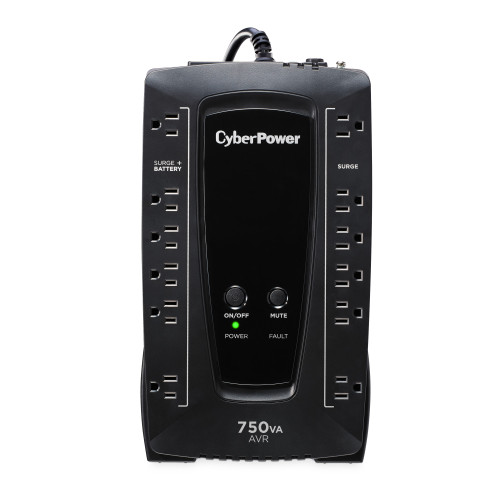
The CyberPower AVRG750U is described as a compact form factor, measuring 12.2 × 7 × 3.5 inches (310 × 178 × 89 mm) and weighing 13.44 lbs (6.1 kg) — less than half the weight of the SMT750C. It includes keyhole mounting slots for wall or under-desk installation. Acoustic level and heat dissipation figures are not provided for the AVRG750U.
For installers constrained by space or weight — such as under-desk deployments or wall-mount locations — the AVRG750U's compact chassis and keyhole slots offer clear physical flexibility. The SMT750C's heavier, tower-only chassis suits a dedicated equipment room or desk-side placement where weight and rackability are not constraints.
Which unit offers more connectivity and management capability for IT environments?
The APC SMT750C includes a dedicated SmartConnect Ethernet port enabling cloud-based monitoring; the product sub-family is explicitly listed as 'Cloud-enabled monitoring.' It also provides a free expansion slot (1 free slot) and an LED status display panel with on-line, on-battery, replace-battery, and overload indicators. Alarm behaviors are configurable, including on-battery alarm and low-battery alarm with configurable delays.
The CyberPower AVRG750U's management and connectivity features are not described in the provided specifications. No communication ports, software platform, display panel, or alarm capabilities are listed.
For IT buyers who need remote visibility, event logging, or integration with a monitoring platform, the SMT750C's built-in Ethernet and cloud management port is a documented differentiator. Buyers should independently verify CyberPower's management ecosystem for the AVRG750U, as no connectivity specs were provided here.
Which should you choose: the SMT750C or the AVRG750U?
Our take: The SMT750C is the stronger choice when output waveform quality, remote monitoring, and higher watt headroom are priorities. First, it delivers 500W versus the AVRG750U's 450W — a 50W advantage relevant to loads approaching the watt ceiling. Second, the SMT750C specifies a pure sine wave output (waveform type not stated for the AVRG750U), making it safer for active PFC power supplies in servers and network gear. Third, the SMT750C includes a dedicated SmartConnect Ethernet port for cloud monitoring; no equivalent connectivity is listed for the AVRG750U. Conversely, the AVRG750U weighs 13.44 lbs versus 29.0 lbs for the SMT750C and ships in a compact chassis with keyhole mounting, making it better suited to space- and weight-constrained deployments. The AVRG750U also carries a stated 3-year limited warranty with a $150,000 connected equipment guarantee; warranty terms for the SMT750C are not present in the provided specs.
Side-by-Side Comparison
Spec-for-spec, from manufacturer data.
| Specification | APC by Schneider Electric SMT750C | CyberPower AVRG750U |
|---|---|---|
| UPS Topology | Line Interactive | Line Interactive |
| VA Rating | 750VA | 750VA |
| Watt Rating | 500W | 450W |
| Input Voltage | 120V (also 110V, 125V) | 120 VAC Nominal |
| Output Voltage | 120V (also 110V, 125V) | 120 VAC ± 5% |
| Waveform Type | Sine wave | — |
| Transfer Time | 6ms typical / 10ms maximum | — |
| Battery Type | Lead-acid, 24V / 7.0Ah | Sealed Lead-Acid, 12V / 7Ah |
| Typical Recharge Time | 3 hours | — |
| Replacement Battery | RBC48 | — |
| Output Receptacles | (6) NEMA 5-15R | — |
| Input Plug | NEMA 5-15P | — |
| Weight | 29.0 lbs (13.18 kg) | 13.44 lbs (6.1 kg) |
| Form Factor / Mounting | Tower, not rack-mountable | Compact, keyhole mounting slots |
| Remote Monitoring | SmartConnect Ethernet port (cloud) | — |
| Acoustic Level | 41 dBA | — |
| Operating Temperature | — | 32–104°F (0–40°C) |
| Warranty / Equipment Guarantee | — | 3-Year Limited, $150,000 CEG |
Frequently Asked Questions
Which should you choose: the SMT750C or the AVRG750U?
The SMT750C is the stronger choice when output waveform quality, remote monitoring, and higher watt headroom are priorities. First, it delivers 500W versus the AVRG750U's 450W — a 50W advantage relevant to loads approaching the watt ceiling. Second, the SMT750C specifies a pure sine wave output (waveform type not stated for the AVRG750U), making it safer for active PFC power supplies in servers and network gear. Third, the SMT750C includes a dedicated SmartConnect Ethernet port for cloud monitoring; no equivalent connectivity is listed for the AVRG750U. Conversely, the AVRG750U weighs 13.44 lbs versus 29.0 lbs for the SMT750C and ships in a compact chassis with keyhole mounting, making it better suited to space- and weight-constrained deployments. The AVRG750U also carries a stated 3-year limited warranty with a $150,000 connected equipment guarantee; warranty terms for the SMT750C are not present in the provided specs.
Does the SMT750C or AVRG750U work better with servers that have active PFC power supplies?
The SMT750C specifies a pure sine wave output, which is the recommended waveform for active PFC power supplies used in most modern servers and workstations. The AVRG750U's waveform type is not stated in the provided specifications, so buyers with active PFC equipment should verify this directly with CyberPower before purchasing.
Can I monitor either UPS remotely without buying additional hardware?
The SMT750C includes a built-in SmartConnect Ethernet port for cloud-based monitoring as a standard feature. The AVRG750U's connectivity and monitoring options are not described in the provided specifications; buyers should consult CyberPower's documentation to determine what, if any, monitoring is available.
Which UPS is easier to install in a tight space or under a desk?
The AVRG750U is the more physically flexible option: it weighs 13.44 lbs, measures 12.2 × 7 × 3.5 inches, and includes keyhole mounting slots for wall or under-desk mounting. The SMT750C weighs 29.0 lbs and is not rack-mountable, making it better suited for a tower placement on a desk or floor rather than a compact or mounted installation.
More UPS Comparisons
- APC by Schneider Electric SMT750C vs CyberPower PR750RTXL2UC
- APC by Schneider Electric SMT750C vs Vertiv GXT5-750LVRT2UXL
- APC by Schneider Electric SMT750C vs CyberPower PR750LCDRT1U
- APC by Schneider Electric SMT750C vs APC by Schneider Electric SMT750CUS
- APC by Schneider Electric SMT750CUS vs CyberPower PR750RTXL2UC
- APC by Schneider Electric SMT750CUS vs Vertiv GXT5-750LVRT2UXL
UPS Buying Guides
Get a Second Opinion on Your Camera Choice
Share your site layout, coverage goals, and budget. Our team will validate the camera selection, flag anything we would change, and recommend products that match the use case.