
APC by Schneider Electric SMT750C vs CyberPower PR750LCDRT1U: Specification Comparison
Both the APC SMT750C and CyberPower PR750LCDRT1U are 750VA line-interactive UPS systems designed for small servers, network equipment, and workstations operating on 120V North American power. This comparison covers the three most decision-relevant dimensions for a 750VA UPS purchase: power capacity and runtime characteristics, physical form factor and installation flexibility, and monitoring, management, and warranty support. Neither unit has been independently tested here; all figures are drawn strictly from the manufacturer specifications provided.
In This Guide
- Which UPS delivers more usable power and how do their runtime and battery specs compare?
- How do the two units differ in physical form factor, mounting options, and installation environment?
- Which unit offers stronger remote monitoring, management interfaces, and after-sale coverage?
- Which should you choose: the SMT750C or the PR750LCDRT1U?
- Side-by-Side Specs
- FAQ
Which UPS delivers more usable power and how do their runtime and battery specs compare?
Both units share the same 750VA / 500W rating ceiling, so neither outperforms the other at the nameplate level. The APC SMT750C specifies a 24V lead-acid battery rated at 7.0 Ah with 146 VAh of runtime capacity and a 49W battery charge rating; typical recharge time is listed at 3 hours. The replacement battery is identified as RBC48.
The CyberPower PR750LCDRT1U specifies four 6V/7Ah sealed lead-acid cells (totalling 24V/7Ah — identical chemistry and ampere-hour rating to the SMT750C). CyberPower does not publish a VAh runtime figure, a recharge time, or a replacement battery part number in the provided specifications, so a direct runtime comparison cannot be made from these specs alone.
The SMT750C additionally specifies a transfer time of 6ms typical / 10ms maximum and a pure sine-wave output, along with less-than-5% harmonic distortion. The PR750LCDRT1U also specifies pure sine-wave output and lists an output voltage tolerance of ±5%; no transfer time figure is provided in the supplied specs.
How do the two units differ in physical form factor, mounting options, and installation environment?
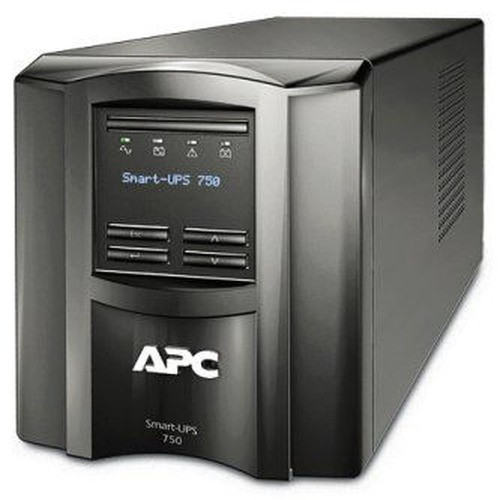
This is the sharpest hardware divide between the two models. The SMT750C is explicitly listed as 'Not rack-mountable' with a tower/desktop orientation only. Its published dimension is a single figure of 6.34 inches (161 mm), which represents one axis; full dimensional data is not provided in the spec sheet. Weight is 29.0 lb (13.18 kg). Its input connection is a NEMA 5-15P plug on a 6 ft (1.83 m) cord, and it offers six NEMA 5-15R output receptacles.
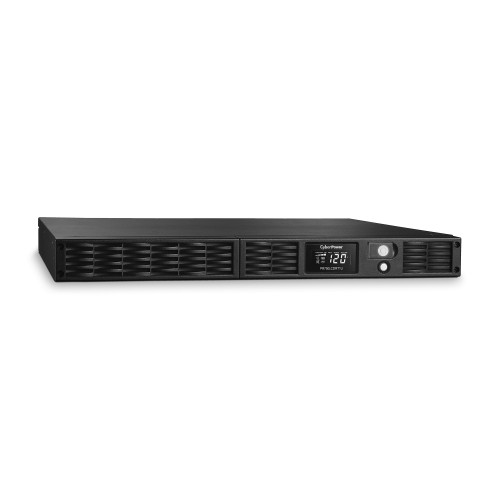
The PR750LCDRT1U is a 1U rack-mountable unit that also supports tower orientation, giving installers both options. Its full dimensions are 17.25 × 1.75 × 15.8 in (W×H×D), consistent with a standard 1U rack shelf. Weight is 30.7 lb. Input voltage range is specified as 80–150 VAC, and it provides seven output receptacles (NEMA 5-15R). The broader input voltage window (80–150 VAC vs. the SMT750C's 110–125V range) may offer greater ride-through on sites with marginal utility voltage.
Operating temperature range also differs: the SMT750C is rated 0–10,000 ft altitude with storage to 50,000 ft, and the spec lists humidity tolerance of 0–95%. The PR750LCDRT1U specifies an operating temperature of 32–104°F (0–40°C); altitude and humidity figures are not provided in the supplied specs for that model.
Which unit offers stronger remote monitoring, management interfaces, and after-sale coverage?
The SMT750C includes a dedicated SmartConnect Ethernet port for cloud-based monitoring; the product sub-family is described as 'Cloud-enabled monitoring.' It also supports an alarm system (on-battery, low-battery, and configurable-delay alarms) and an LED status display with indicators for on-line, on-battery, replace-battery, and overload states. One free expansion slot is listed. No warranty term is specified in the supplied specifications for the SMT750C.
The PR750LCDRT1U specifies an LCD display (implied by model name 'LCDRT') and carries UL1778 and RoHS compliance certifications. The supplied specs do not detail a network management port, SNMP card slot, or cloud monitoring capability for this model. However, CyberPower provides a stated 3-Year Limited Warranty, which is a concrete, documented coverage period. No warranty term is present in the SMT750C's provided spec set.
From the supplied data, the SMT750C has a documented network management path (Ethernet/cloud); the PR750LCDRT1U has a documented 3-year warranty. Neither spec set is complete enough to declare one comprehensively superior in management features — the PR750LCDRT1U may support optional network cards, but that is not stated in the provided specs.
Which should you choose: the SMT750C or the PR750LCDRT1U?
Our take: The PR750LCDRT1U is the stronger choice when rack integration and physical installation flexibility are the primary requirements, while the SMT750C is the stronger choice for desktop/tower deployments where cloud monitoring is a priority. On raw power capacity both units are identical at 750VA/500W. The SMT750C documents a transfer time of 6ms typical/10ms max and a 146 VAh runtime figure — neither is provided for the PR750LCDRT1U from the supplied specs. The PR750LCDRT1U counters with a 1U rack/tower dual-mount form factor (the SMT750C is tower-only), seven output receptacles versus six, and a wider stated input range of 80–150 VAC versus 110–125V. The PR750LCDRT1U also carries an explicit 3-year warranty; no warranty term appears in the SMT750C spec set provided. Buyers equipping a rack cabinet should favor the PR750LCDRT1U; those needing documented cloud monitoring on a desktop installation should favor the SMT750C.
Side-by-Side Comparison
Spec-for-spec, from manufacturer data.
| Specification | APC by Schneider Electric SMT750C | CyberPower PR750LCDRT1U |
|---|---|---|
| Rated Capacity (VA) | 750VA | 750VA |
| Rated Capacity (W) | 500W | 500W |
| UPS Topology | Line Interactive | Line Interactive (implied by AVR label) |
| Waveform Output | Sine wave | Pure Sine wave |
| Input Voltage (Nominal) | 120V | 120 VAC nominal |
| Input Voltage Range | 110–125V | 80–150 VAC |
| Output Voltage | 120V (110–125V) | 120 VAC ±5% |
| Input Connection | NEMA 5-15P | — |
| Output Receptacles | 6 × NEMA 5-15R | 7 × NEMA 5-15R |
| Battery | Lead-acid, 24V / 7.0 Ah | 4 × 6V/7Ah Sealed Lead-Acid (24V/7Ah) |
| Transfer Time | 6ms typical / 10ms max | — |
| Recharge Time | 3 hours | — |
| Runtime Capacity | 146 VAh | — |
| Form Factor / Mounting | Tower only (not rack-mountable) | 1U Rack or Tower |
| Weight | 29.0 lb (13.18 kg) | 30.7 lb |
| Network / Cloud Monitoring | SmartConnect Ethernet port | — |
| Warranty | — | 3 Year Limited |
| Certifications | — | UL1778, RoHS |
| Acoustic Level | 41 dBA | — |
| Operating Temperature | — | 32–104°F (0–40°C) |
Frequently Asked Questions
Which should you choose: the SMT750C or the PR750LCDRT1U?
The PR750LCDRT1U is the stronger choice when rack integration and physical installation flexibility are the primary requirements, while the SMT750C is the stronger choice for desktop/tower deployments where cloud monitoring is a priority. On raw power capacity both units are identical at 750VA/500W. The SMT750C documents a transfer time of 6ms typical/10ms max and a 146 VAh runtime figure — neither is provided for the PR750LCDRT1U from the supplied specs. The PR750LCDRT1U counters with a 1U rack/tower dual-mount form factor (the SMT750C is tower-only), seven output receptacles versus six, and a wider stated input range of 80–150 VAC versus 110–125V. The PR750LCDRT1U also carries an explicit 3-year warranty; no warranty term appears in the SMT750C spec set provided. Buyers equipping a rack cabinet should favor the PR750LCDRT1U; those needing documented cloud monitoring on a desktop installation should favor the SMT750C.
Can I mount either of these UPS units in a server rack?
Only the CyberPower PR750LCDRT1U supports rack mounting — it is a 1U unit that also converts to tower orientation. The APC SMT750C is explicitly listed as 'Not rack-mountable' in its specifications; it is a tower/desktop unit only.
Which unit has the longer warranty?
The CyberPower PR750LCDRT1U carries a stated 3-Year Limited Warranty per its specifications. No warranty term is provided in the APC SMT750C specification set supplied for this comparison, so a direct warranty duration comparison cannot be made from the available data.
Does either UPS support remote or network monitoring?
The APC SMT750C includes a SmartConnect Ethernet port for cloud-based monitoring as a documented specification. The CyberPower PR750LCDRT1U's supplied specifications do not list a network port or cloud monitoring capability, so that feature cannot be confirmed for the PR750LCDRT1U from the data provided here.
More UPS Comparisons
- APC by Schneider Electric SMT750C vs CyberPower PR750RTXL2UC
- APC by Schneider Electric SMT750C vs Vertiv GXT5-750LVRT2UXL
- APC by Schneider Electric SMT750C vs CyberPower AVRG750U
- APC by Schneider Electric SMT750C vs APC by Schneider Electric SMT750CUS
- APC by Schneider Electric SMT750CUS vs CyberPower PR750RTXL2UC
- APC by Schneider Electric SMT750CUS vs Vertiv GXT5-750LVRT2UXL
UPS Buying Guides
Get a Second Opinion on Your Camera Choice
Share your site layout, coverage goals, and budget. Our team will validate the camera selection, flag anything we would change, and recommend products that match the use case.