
APC by Schneider Electric SMT750CUS vs Vertiv GXT5-750LVRT2UXL: Specification Comparison
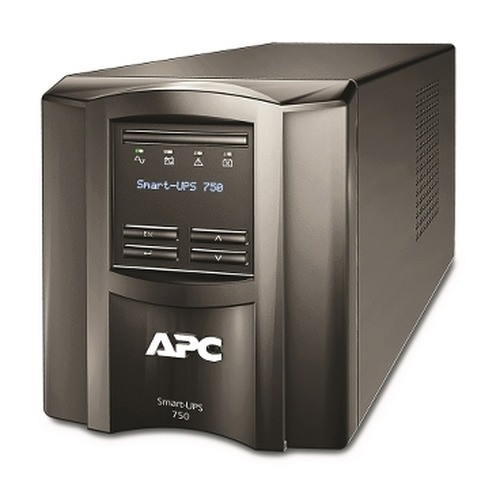
Both the APC Smart-UPS SMT750CUS and the Vertiv Liebert GXT5-750LVRT2UXL are 750VA uninterruptible power supplies designed to protect sensitive electronic equipment from power disturbances. The APC unit is a line-interactive tower UPS targeting desktop and small-server environments, while the Vertiv unit is a true online double-conversion rack/tower convertible UPS aimed at rack-mounted IT infrastructure. Buyers weighing these two will be evaluating topology trade-offs, form factor fit, output power capacity, runtime behavior, manageability, and certification differences at the same VA class.
In This Guide
- How do UPS topology and battery runtime differ between the SMT750CUS and GXT5-750LVRT2UXL?
- What are the output power, waveform, and receptacle differences that matter to a system installer?
- How do the SMT750CUS and GXT5-750LVRT2UXL compare on connectivity, management, and certifications?
- Which should you choose: the SMT750CUS or the GXT5-750LVRT2UXL?
- Side-by-Side Specs
- FAQ
How do UPS topology and battery runtime differ between the SMT750CUS and GXT5-750LVRT2UXL?
The SMT750CUS uses line-interactive topology with a 6 ms transfer time to battery. It is rated at 500 W / 750 VA and delivers up to 4.5 minutes of runtime at full load and 16 minutes at half load, with a 3-hour recharge time. Its battery is a sealed, maintenance-free lead-acid type and is not specified as hot-swappable.
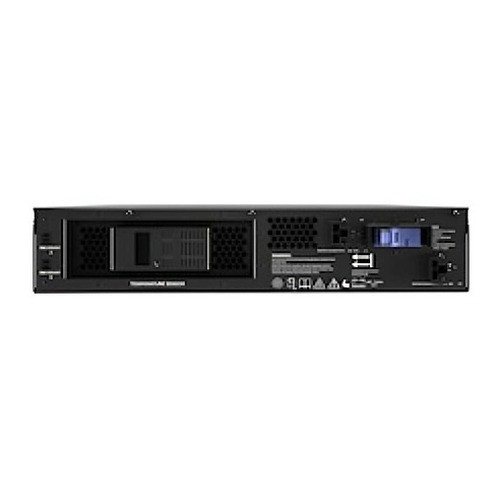
The GXT5-750LVRT2UXL uses true online double-conversion topology, meaning the output is always conditioned through the inverter with zero transfer time — the load never experiences a switchover event. It is rated at 750 W / 750 VA (unity power factor), giving it 50% more usable watt capacity than the APC at the same VA rating. The Vertiv's battery is hot-swappable and supports external battery cabinet expansion; specific runtime figures are not provided in the supplied specifications.
For environments where even a 6 ms interruption is unacceptable — medical, industrial control, precision audio/video, or high-availability compute — the Vertiv's zero-transfer online topology is the functionally superior choice. For standard office or light server protection where brief transfer windows are tolerable, the APC's line-interactive design is adequate and simpler.
What are the output power, waveform, and receptacle differences that matter to a system installer?
The SMT750CUS delivers 500 W output at 120 V AC with a sinewave waveform across 6 × NEMA 5-15R receptacles. It also provides surge protection rated at 540 joules and equipment protection valued at $150,000. Input voltage range is AC 82–144 V (adjustable to 75–154 V), with a frequency output of 50/60 Hz ± 3 Hz.
The GXT5-750LVRT2UXL delivers 750 W output at user-configurable 110/115/120/125 V AC ± 3% with a pure sine wave waveform. Its 6 × NEMA 5-15R receptacles include 4 programmable outlets, enabling load-shedding or sequenced shutdown — a feature not listed for the APC. Input voltage range is 60–150 V nominal 120 V. Surge joule rating and equipment protection value are not specified for the Vertiv.
Installers protecting active-PFC power supplies or variable-speed motors will benefit from the Vertiv's pure sine wave and higher watt headroom. The APC's programmable outlet capability is absent; the Vertiv's four programmable receptacles add scripted load management without an add-on PDU.
How do the SMT750CUS and GXT5-750LVRT2UXL compare on connectivity, management, and certifications?
The SMT750CUS provides one USB port, one SmartConnect Ethernet interface, and one free SmartSlot expansion bay. It ships with a USB cable and a 6 ft power cable. Management is available via USB and Ethernet natively. Certifications include UL 1449, UL 1778, CSA, ICES-003, FCC Part 15 B, CSA C22.2 No. 107.1, RoHS, and REACH. Warranty coverage is 3 years limited (replace or repair) with 2 years on batteries.
The GXT5-750LVRT2UXL provides USB, RS-232, RS-485, and a dry-contact terminal block. An optional IntelliSlot card (e.g., RDU120 for SNMP/web) adds network management; no native Ethernet port is listed without this card. The display is a gravity-sensing color LCD that reorients for rack or tower orientation. Certifications include ENERGY STAR 2.0, UL 1778 4th edition, CSA 22.2 No. 107.1, RoHS2, REACH, and WEEE. Warranty is listed only as 'Manufacturer Warranty' with no duration specified in the provided data.
The APC has a native Ethernet management port without an add-on card, which lowers deployment cost in networked monitoring environments. The Vertiv's RS-485 and dry-contact terminals offer integration paths for building management systems (BMS) and generator signaling that are absent in the APC spec sheet. ENERGY STAR 2.0 certification is listed for the Vertiv but not for the APC.
Which should you choose: the SMT750CUS or the GXT5-750LVRT2UXL?
Our take: The GXT5-750LVRT2UXL is the stronger choice when zero transfer time, higher watt capacity, and hot-swap battery serviceability are non-negotiable. Its true online double-conversion topology eliminates the 6 ms transfer window present in the SMT750CUS, its 750 W output rating is 250 W greater than the APC's 500 W at the same 750 VA class, and its hot-swappable battery with external expansion capability allows runtime extension and in-service maintenance that the APC does not specify. Conversely, the SMT750CUS is the stronger choice for buyers who need native Ethernet management without an optional card, a documented 3-year hardware / 2-year battery warranty, a $150,000 equipment protection guarantee, and a desktop tower form factor. Platform qualifier: rack-mounted IT infrastructure requiring high availability should favor the Vertiv; cost-sensitive desktop or small-server deployments with standard availability requirements align better with the APC.
Side-by-Side Comparison
Spec-for-spec, from manufacturer data.
| Specification | APC by Schneider Electric SMT750CUS | Vertiv GXT5-750LVRT2UXL |
|---|---|---|
| UPS Topology | Line Interactive | True Online Double Conversion |
| Capacity (VA / W) | 750 VA / 500 W | 750 VA / 750 W |
| Power Factor | Not specified | 0.9 – 1.0 |
| Transfer Time | 6 ms | Zero (continuous online) |
| Output Waveform | Sinewave | Pure Sine Wave |
| Form Factor | Tower | Rack/Tower Convertible, 2U |
| Output Receptacles | 6 × NEMA 5-15R | 6 × NEMA 5-15R (4 programmable) |
| Input Plug | NEMA 5-15P | NEMA 5-15P |
| Input Voltage Range | AC 82–144 V (adj. 75–154 V) | 60–150 V (120 V nominal) |
| Battery Type | Sealed lead acid, maintenance-free | Hot-swappable, external expansion supported |
| Runtime at Full Load | 4.5 min | Not specified |
| Runtime at Half Load | 16 min | Not specified |
| Recharge Time | 3 hours | Not specified |
| Connectivity | USB, SmartConnect Ethernet, 1× SmartSlot | USB, RS-232, RS-485, dry-contact, optional SNMP card |
| Efficiency | 97.2% (25% load) – 98.9% (100% load) | Up to 98% (Active ECO mode) |
| Surge Energy Rating | 540 joules | Not specified |
| Equipment Protection Value | $150,000 | Not specified |
| Certifications | UL 1449, UL 1778, CSA, FCC Pt 15 B, RoHS, REACH | ENERGY STAR 2.0, UL 1778 4th ed., CSA 22.2 No. 107.1, RoHS2, REACH, WEEE |
| Operating Temperature | 32–104 °F (0–40 °C) | 32–104 °F (0–40 °C) |
| Weight | 30.91 lb | 37 lb |
| Warranty (Hardware) | 3 years limited | Not specified ("Manufacturer Warranty") |
| Warranty (Battery) | 2 years limited | Not specified |
Frequently Asked Questions
Which should you choose: the SMT750CUS or the GXT5-750LVRT2UXL?
The GXT5-750LVRT2UXL is the stronger choice when zero transfer time, higher watt capacity, and hot-swap battery serviceability are non-negotiable. Its true online double-conversion topology eliminates the 6 ms transfer window present in the SMT750CUS, its 750 W output rating is 250 W greater than the APC's 500 W at the same 750 VA class, and its hot-swappable battery with external expansion capability allows runtime extension and in-service maintenance that the APC does not specify. Conversely, the SMT750CUS is the stronger choice for buyers who need native Ethernet management without an optional card, a documented 3-year hardware / 2-year battery warranty, a $150,000 equipment protection guarantee, and a desktop tower form factor. Platform qualifier: rack-mounted IT infrastructure requiring high availability should favor the Vertiv; cost-sensitive desktop or small-server deployments with standard availability requirements align better with the APC.
Can either the SMT750CUS or GXT5-750LVRT2UXL be rack-mounted?
Only the GXT5-750LVRT2UXL supports rack mounting. It is a 2U rack/tower convertible unit with a gravity-sensing LCD that reorients between orientations. The SMT750CUS is a tower-only unit; rack mounting is not listed in its specifications.
Which UPS provides better protection for sensitive equipment during a power event?
The GXT5-750LVRT2UXL's true online double-conversion topology provides continuous power conditioning with zero transfer time, meaning the connected load never sees raw utility power or a switchover gap. The SMT750CUS is line-interactive with a 6 ms transfer time to battery. For the most sensitive loads — medical equipment, industrial controllers, or high-availability servers — the Vertiv's online topology offers superior protection. For standard IT equipment tolerant of brief interruptions, the APC's line-interactive design is adequate.
Which unit is easier to monitor and manage in a networked environment?
The SMT750CUS includes a native SmartConnect Ethernet interface and one free SmartSlot expansion bay, providing out-of-box network monitoring without an additional card. The GXT5-750LVRT2UXL offers USB, RS-232, RS-485, and dry-contact terminals natively but requires an optional IntelliSlot SNMP/web card (e.g., RDU120) for network-based monitoring. If minimizing add-on cost for basic network management is a priority, the APC has an advantage; if BMS integration via RS-485 or dry-contact is needed, the Vertiv provides those interfaces and the APC does not.
More UPS Comparisons
- APC by Schneider Electric SMT750C vs CyberPower PR750RTXL2UC
- APC by Schneider Electric SMT750C vs Vertiv GXT5-750LVRT2UXL
- APC by Schneider Electric SMT750C vs CyberPower PR750LCDRT1U
- APC by Schneider Electric SMT750C vs CyberPower AVRG750U
- APC by Schneider Electric SMT750C vs APC by Schneider Electric SMT750CUS
- APC by Schneider Electric SMT750CUS vs CyberPower PR750RTXL2UC
UPS Buying Guides
Get a Second Opinion on Your Camera Choice
Share your site layout, coverage goals, and budget. Our team will validate the camera selection, flag anything we would change, and recommend products that match the use case.