
APC by Schneider Electric SMT750CUS vs CyberPower PR750RTXL2UC: Specification Comparison
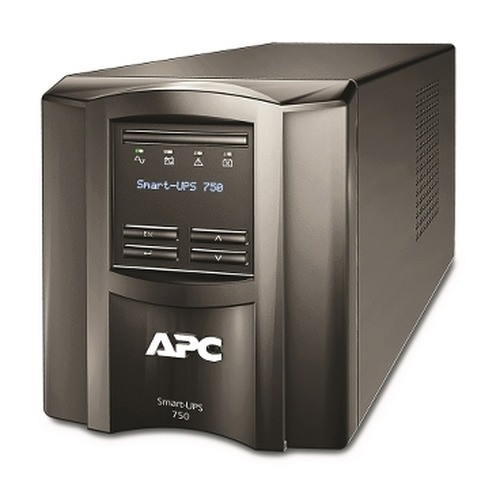
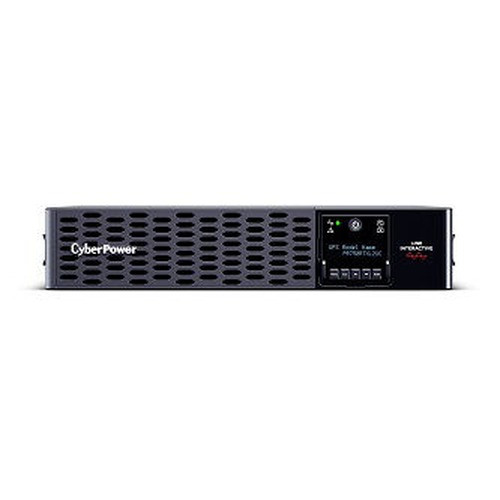
Both the APC SMT750CUS and CyberPower PR750RTXL2UC are 750VA line-interactive sine wave UPS units designed to protect sensitive IT and security equipment from power disturbances. The SMT750CUS is a desktop/tower form factor aimed at workstation and small-server environments, while the PR750RTXL2UC is a 2U rack/tower convertible unit targeting rack-mounted deployments. Buyers cross-shopping these models are typically evaluating protected runtime, surge suppression capability, outlet count, remote management depth, and connected-equipment guarantee value.
In This Guide
Which UPS delivers more runtime and power protection capacity?
At full load, the CyberPower PR750RTXL2UC provides a specified runtime of 11.3 minutes versus 4.5 minutes for the APC SMT750CUS — a difference of 6.8 minutes that is significant in any scenario requiring extended bridge time during an outage. At half load, the gap widens further: the PR750RTXL2UC runs for 28 minutes compared to 16 minutes for the SMT750CUS.
Both units are rated at 750VA, but the CyberPower carries a true 750W power capacity (output power factor of 1.0), while the APC is rated at 500W — meaning the SMT750CUS can only support 500W of real load despite the shared VA rating. For loads approaching 600–750W of actual wattage, only the PR750RTXL2UC can handle the draw without overload.
Surge suppression also favors the CyberPower at 2,430 joules versus 540 joules for the APC — a 4.5× advantage that is relevant for environments with frequent electrical storms or dirty utility power. The APC specifies an adjustable input voltage range of AC 75–154V; the CyberPower covers 70–155VAC, a marginally wider low-end tolerance. CyberPower's AVR topology provides double boost and single buck correction; APC does not specify AVR steps in the provided specs.
How do outlet count, form factor, and physical installation requirements compare?
The CyberPower PR750RTXL2UC provides 8 x NEMA 5-15R outlets, all rated for both battery backup and surge protection, with 4 designated as critical-load outlets. The APC SMT750CUS provides 6 x NEMA 5-15R outlets. For installations requiring more simultaneous protected connections, the PR750RTXL2UC has a two-outlet advantage.
Form factor is a meaningful differentiator. The PR750RTXL2UC is explicitly rated as a 2U rack/tower convertible, making it suitable for 19-inch rack cabinets common in NVR, server, and network closet deployments. The APC SMT750CUS spec lists only a 5.4-inch height dimension with no rack-unit designation, indicating a desktop/tower form factor. Installers mounting equipment in a rack enclosure should treat the APC as incompatible with standard rack rails unless third-party adapters are used — no rail kit is mentioned in the provided specs.
The APC's cord length is specified at 6 feet; the CyberPower ships with a 10-foot cord, providing greater flexibility in reaching distant PDUs or wall outlets in rack environments. Physical weight differs: the APC weighs 30.91 lbs; the CyberPower weighs 24.09 kg (approximately 53.1 lbs), reflecting its larger battery bank of 4 cells versus the APC's unspecified battery quantity.
Which unit offers more comprehensive remote management and buyer protection?
The CyberPower PR750RTXL2UC provides substantially broader management connectivity: USB, Serial, SNMP, Relay, EPO (Emergency Power Off), and Cloud interfaces are all listed. It ships with PowerPanel® Business software and supports an optional RMCARD205 for full SNMP/web remote management. The APC SMT750CUS provides USB and Ethernet (SmartConnect) plus one SmartSlot expansion bay for optional network management cards — a capable stack, but the provided specs do not enumerate SNMP, EPO, or cloud natively without a card.
Connected-equipment guarantees differ substantially: CyberPower offers $400,000 USD; APC specifies $150,000 USD. While the practical claim process depends on each manufacturer's terms and conditions — which are not provided here — the nominal guarantee figure is 2.67× higher on the CyberPower.
Warranty coverage is comparable at a top level: CyberPower lists a 3-year warranty. APC specifies a 3-year limited warranty for the unit and a 2-year limited warranty for batteries specifically. The APC spec also details battery recharge time at 3 hours, which matches the CyberPower's specified 3-hour recharge. APC provides audible noise at 41 dBA; CyberPower is louder at 52.5 dB — a relevant factor in quiet office or control-room environments. Both units carry sealed lead-acid batteries and operate within the 32–104°F range per APC specs; CyberPower's operating temperature range is not specified in the provided data.
Which should you choose: the SMT750CUS or the PR750RTXL2UC?
Our take: The PR750RTXL2UC is the stronger choice when the installation is rack-mounted, requires extended runtime, or demands deeper remote management integration. It delivers 11.3 minutes of full-load runtime versus the SMT750CUS's 4.5 minutes, supports a true 750W load capacity versus the APC's 500W ceiling, and provides 2,430 joules of surge suppression versus 540 joules — all material advantages for protecting NVRs, switches, and servers under real working loads. Its native EPO, SNMP, serial, and cloud interfaces also make it a better fit for managed IT environments. The SMT750CUS is the stronger choice for quiet desktop or workstation settings where acoustics matter (41 dBA vs 52.5 dB), where a compact tower form factor is required, and where APC's SmartConnect ecosystem or existing SmartSlot infrastructure is already in use. Buyers standardized on APC management software or network management cards should weigh ecosystem continuity against the CyberPower's runtime and wattage advantages.
Side-by-Side Comparison
Spec-for-spec, from manufacturer data.
| Specification | APC by Schneider Electric SMT750CUS | CyberPower PR750RTXL2UC |
|---|---|---|
| VA / Watt Rating | 750 VA / 500 W | 750 VA / 750 W |
| UPS Topology | Line Interactive | Line Interactive |
| Output Waveform | Sine Wave | Sine Wave |
| Runtime at Full Load | 4.5 min | 11.3 min |
| Runtime at Half Load | 16 min | 28 min |
| Battery Recharge Time | 3 hours | 3 hours |
| Surge Suppression | 540 J | 2,430 J |
| Input Voltage Range (Adjustable) | AC 75–154 V | 70–155 VAC |
| Output Outlets | 6 x NEMA 5-15R | 8 x NEMA 5-15R |
| Form Factor | Tower (5.4 in height) | Rack/Tower 2U |
| Power Cord Length | 6 ft | 10 ft |
| Management Interfaces | USB, Ethernet (SmartConnect) | USB, Serial, SNMP, Relay, EPO, Cloud |
| Expansion Slot | 1 x SmartSlot | Optional RMCARD205 |
| Connected Equipment Guarantee | $150,000 USD | $400,000 USD |
| Warranty (Unit) | 3 years limited | 3 years |
| Audible Noise | 41 dBA | 52.5 dB |
Frequently Asked Questions
Which should you choose: the SMT750CUS or the PR750RTXL2UC?
The PR750RTXL2UC is the stronger choice when the installation is rack-mounted, requires extended runtime, or demands deeper remote management integration. It delivers 11.3 minutes of full-load runtime versus the SMT750CUS's 4.5 minutes, supports a true 750W load capacity versus the APC's 500W ceiling, and provides 2,430 joules of surge suppression versus 540 joules — all material advantages for protecting NVRs, switches, and servers under real working loads. Its native EPO, SNMP, serial, and cloud interfaces also make it a better fit for managed IT environments. The SMT750CUS is the stronger choice for quiet desktop or workstation settings where acoustics matter (41 dBA vs 52.5 dB), where a compact tower form factor is required, and where APC's SmartConnect ecosystem or existing SmartSlot infrastructure is already in use. Buyers standardized on APC management software or network management cards should weigh ecosystem continuity against the CyberPower's runtime and wattage advantages.
Can I install either of these UPS units in a standard 19-inch equipment rack?
Only the CyberPower PR750RTXL2UC is specified as a rack/tower convertible at 2U and is designed for 19-inch rack installation. The APC SMT750CUS is listed with a 5.4-inch height dimension and no rack-unit rating in the provided specifications, indicating a desktop or tower form factor not natively compatible with standard rack rails.
Which unit will keep my equipment running longer during a power outage?
The CyberPower PR750RTXL2UC specifies 11.3 minutes at full load and 28 minutes at half load. The APC SMT750CUS specifies 4.5 minutes at full load and 16 minutes at half load. The CyberPower provides more than double the full-load runtime, which is relevant for NVR and server workloads that draw near-maximum wattage.
Is the SMT750CUS or PR750RTXL2UC better for a high-wattage security appliance drawing close to 700W?
The CyberPower PR750RTXL2UC is the appropriate choice. Its specified power capacity is 750VA/750W with an output power factor of 1.0, meaning it can support up to 750W of real load. The APC SMT750CUS is rated at 750VA but only 500W of real power output; a 700W load would exceed its rated wattage capacity and risk an overload condition.
More UPS Comparisons
- APC by Schneider Electric SMT750C vs CyberPower PR750RTXL2UC
- APC by Schneider Electric SMT750C vs Vertiv GXT5-750LVRT2UXL
- APC by Schneider Electric SMT750C vs CyberPower PR750LCDRT1U
- APC by Schneider Electric SMT750C vs CyberPower AVRG750U
- APC by Schneider Electric SMT750C vs APC by Schneider Electric SMT750CUS
- APC by Schneider Electric SMT750CUS vs Vertiv GXT5-750LVRT2UXL
UPS Buying Guides
Get a Second Opinion on Your Camera Choice
Share your site layout, coverage goals, and budget. Our team will validate the camera selection, flag anything we would change, and recommend products that match the use case.