
APC by Schneider Electric SMT750C vs APC by Schneider Electric SMT750CUS: Specification Comparison
Both products are APC Smart-UPS 750VA Line-Interactive tower UPS units rated 120V/500W, designed for protecting workstations, networking equipment, and small servers. The SMT750C and SMT750CUS share the same core platform but are differentiated by regional variant and documented specification depth. This comparison examines their power and runtime characteristics, environmental and physical specifications, and connectivity and protection features to help integrators and IT buyers choose the correct procurement unit for their deployment.
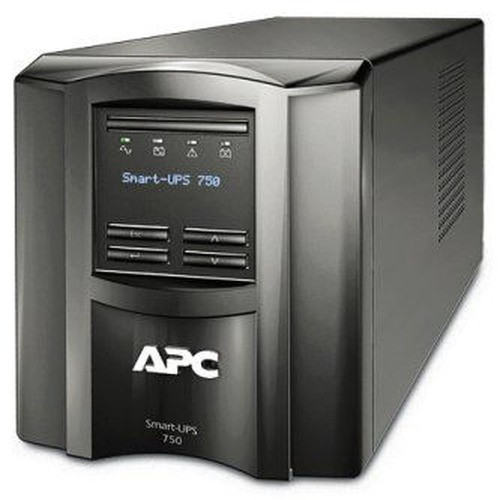
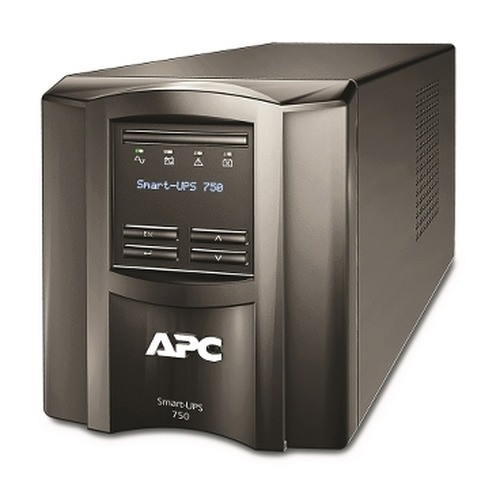
In This Guide
- How do the SMT750C and SMT750CUS compare on power capacity and battery runtime?
- How do the SMT750C and SMT750CUS differ in physical dimensions, weight, and operating environment?
- Which unit offers stronger connectivity options, surge protection, and compliance certifications?
- Which should you choose: the SMT750C or the SMT750CUS?
- Side-by-Side Specs
- FAQ
How do the SMT750C and SMT750CUS compare on power capacity and battery runtime?
Both units are rated identically at 500W / 750VA output with a sine-wave waveform and Line-Interactive topology — no difference there. The SMT750CUS provides explicit runtime figures: 4.5 minutes at full load (500W) and 16 minutes at half load (250W). The SMT750C does not list runtime in minutes; instead it documents battery capacity as 146 VAh and 49W rated charge power, with a 24V lead-acid battery rated at 7.0 Ah. Both units share a 3-hour typical recharge time.
The SMT750C specifies a maximum transfer time of 10ms and a typical of 6ms. The SMT750CUS lists only 6ms transfer time without a documented maximum. For installations where worst-case transfer time matters — such as servers with tight hold-up specifications — the SMT750C's explicit 10ms maximum is the more conservative, plannable figure. Input voltage range is only documented for the SMT750CUS: AC 82–144V nominal, adjustable to AC 75–154V; this range is absent from the SMT750C spec sheet.
How do the SMT750C and SMT750CUS differ in physical dimensions, weight, and operating environment?
Weight differs slightly: SMT750C is listed at 29.0 lbs (13.18 kg), while SMT750CUS is listed at 30.91 lbs — a difference of approximately 1.9 lbs. The SMT750C provides a depth dimension of 6.34 inches (161mm) and specifies a mounting location of 'Front' with a 'Not rack-mountable' designation. The SMT750CUS provides a height dimension of 5.4 inches, plus shipping dimensions (10.9 in W × 19.6 in D × 11.9 in H), but does not separately document a rack-mountability status.
Operating temperature is explicitly bounded for the SMT750CUS: 32°F minimum, 104°F maximum. The SMT750C does not list an operating temperature range directly, only a storage range of 5–113°F (−15 to 45°C). Both units share 0–95% relative humidity for operation and storage. The SMT750C additionally documents operating altitude (0–10,000 ft) and storage altitude (0–50,000 ft); the SMT750CUS does not specify altitude ratings. Acoustic emission is identical at 41 dBA. Heat dissipation is only specified for the SMT750C at 90 Btu/h.
Which unit offers stronger connectivity options, surge protection, and compliance certifications?
Both units include one SmartConnect Ethernet port for cloud monitoring, one USB interface, and one SmartSlot expansion bay. The SMT750C lists the SmartConnect port with a note that cloud monitoring feature availability varies by terms of use; the SMT750CUS lists '1 x SmartConnect' and '1 x USB' as interfaces without that caveat.
Surge protection specifics are only documented for the SMT750CUS: 540 Joules surge energy rating and a $150,000 equipment protection guarantee. The SMT750C does not provide a joule rating or equipment protection value in the supplied specs. Circuit protection type (circuit breaker) is only listed for the SMT750CUS. Efficiency figures are also exclusive to the SMT750CUS: 97.2% at 25% load, 98.4% at 50% load, 98.8% at 75% load, and 98.9% at 100% load. Compliance certifications are only documented for the SMT750CUS: CSA, UL 1449, UL 1778, FCC Part 15 B, CSA C22.2 No. 107.1, ICES-003, RoHS, and REACH. The SMT750CUS also includes a documented limited warranty: 3 years replace-or-repair, 2 years on batteries. No warranty terms are provided in the SMT750C spec set.
Which should you choose: the SMT750C or the SMT750CUS?
Our take: The SMT750CUS is the stronger documented choice for most structured procurement decisions. The SMT750CUS uniquely provides a 540-joule surge rating and a $150,000 equipment protection guarantee — neither figure appears in the SMT750C spec sheet — and is the only unit with explicit efficiency data (up to 98.9% at full load) and a stated warranty (3-year unit / 2-year battery). The SMT750CUS also documents a wider input voltage range (AC 82–144V nominal, adjustable to 75–154V) versus no published range for the SMT750C. The SMT750C's advantage is its more detailed environmental envelope: a confirmed 10ms maximum transfer time, operating altitude to 10,000 ft, heat dissipation of 90 Btu/h, and storage altitude to 50,000 ft — specs the SMT750CUS sheet omits. For US-market deployments requiring documented surge and warranty terms for insurance or compliance purposes, specify the SMT750CUS. For altitude-sensitive or infrastructure-dense environments where thermal and transfer-time worst cases must be spec-confirmed, the SMT750C's sheet is more complete.
Side-by-Side Comparison
Spec-for-spec, from manufacturer data.
| Specification | APC by Schneider Electric SMT750C | APC by Schneider Electric SMT750CUS |
|---|---|---|
| UPS Topology | Line Interactive | Line Interactive |
| Power Capacity | 500W / 750VA | 500W / 750VA |
| Output Waveform | Sine wave | Sinewave |
| Input Voltage (Nominal) | 120V (110–125V range listed) | AC 120V (82–144V range documented) |
| Input Connectors | 1 x NEMA 5-15P | 1 x NEMA 5-15P |
| Output Connectors | 6 x NEMA 5-15R | 6 x NEMA 5-15R |
| Transfer Time | 6ms typical / 10ms maximum | 6ms (maximum not specified) |
| Runtime at Full Load | — | 4.5 min |
| Runtime at Half Load | — | 16 min |
| Recharge Time | 3 hours | 3 hours |
| Battery Type | Lead-acid, 24V, 7.0 Ah | Lead acid (voltage/Ah not specified) |
| Surge Energy Rating | — | 540 Joules |
| Equipment Protection Value | — | $150,000 USD |
| Efficiency (peak) | — | 98.9% at 100% load |
| Weight | 29.0 lbs (13.18 kg) | 30.91 lbs |
| Acoustic Level | 41 dBA | 41 dBA |
| Operating Temperature | Not specified | 32–104°F |
| Operating Altitude | 0–10,000 ft | — |
| Heat Dissipation | 90 Btu/h | — |
| SmartSlot Expansion | 1 slot (1 free) | 1 slot (1 free) |
| Remote Interfaces | SmartConnect Ethernet, USB | SmartConnect Ethernet, USB |
| Compliance Certifications | — | UL 1449, UL 1778, CSA, FCC Part 15 B, RoHS, REACH |
| Warranty (Unit / Battery) | — | 3 years / 2 years |
| Color | Black | Black |
| Rack-Mountable | No | Not specified |
Frequently Asked Questions
Which should you choose: the SMT750C or the SMT750CUS?
The SMT750CUS is the stronger documented choice for most structured procurement decisions. The SMT750CUS uniquely provides a 540-joule surge rating and a $150,000 equipment protection guarantee — neither figure appears in the SMT750C spec sheet — and is the only unit with explicit efficiency data (up to 98.9% at full load) and a stated warranty (3-year unit / 2-year battery). The SMT750CUS also documents a wider input voltage range (AC 82–144V nominal, adjustable to 75–154V) versus no published range for the SMT750C. The SMT750C's advantage is its more detailed environmental envelope: a confirmed 10ms maximum transfer time, operating altitude to 10,000 ft, heat dissipation of 90 Btu/h, and storage altitude to 50,000 ft — specs the SMT750CUS sheet omits. For US-market deployments requiring documented surge and warranty terms for insurance or compliance purposes, specify the SMT750CUS. For altitude-sensitive or infrastructure-dense environments where thermal and transfer-time worst cases must be spec-confirmed, the SMT750C's sheet is more complete.
Does either the SMT750C or SMT750CUS carry UL certification?
UL certification (UL 1449 and UL 1778) is documented only for the SMT750CUS in the supplied specifications. The SMT750C spec sheet does not list any compliance certifications, so no UL status can be confirmed from available data for that model.
Which unit is better if I need to know how long it will run my equipment during an outage?
The SMT750CUS provides explicit runtime figures: 4.5 minutes at full (500W) load and 16 minutes at half (250W) load. The SMT750C does not list runtime in minutes in the supplied specs — only battery capacity (146 VAh, 7.0 Ah at 24V) — so actual runtime must be calculated or sourced from APC's runtime selector tool.
Is the SMT750C or SMT750CUS rack-mountable?
Neither unit is rack-mountable per the supplied specifications. The SMT750C explicitly states 'Not rack-mountable.' The SMT750CUS does not specify rack-mountability; no tower-to-rack rail kit compatibility is documented for either model in the provided specs.
More UPS Comparisons
- APC by Schneider Electric SMT750C vs CyberPower PR750RTXL2UC
- APC by Schneider Electric SMT750C vs Vertiv GXT5-750LVRT2UXL
- APC by Schneider Electric SMT750C vs CyberPower PR750LCDRT1U
- APC by Schneider Electric SMT750C vs CyberPower AVRG750U
- APC by Schneider Electric SMT750CUS vs CyberPower PR750RTXL2UC
- APC by Schneider Electric SMT750CUS vs Vertiv GXT5-750LVRT2UXL
UPS Buying Guides
Get a Second Opinion on Your Camera Choice
Share your site layout, coverage goals, and budget. Our team will validate the camera selection, flag anything we would change, and recommend products that match the use case.