
APC by Schneider Electric BN1350M2 vs APC by Schneider Electric BR1350MS: Specification Comparison
Both the BN1350M2 and BR1350MS are 1350VA / 810W tower-form line-interactive UPS units from APC by Schneider Electric, targeted at desktop workstations, small servers, and networking gear on 120 V North American circuits. They share the same VA/watt rating, input voltage range, transfer time window, surge energy rating, and maximum current draw. The comparison centers on outlet configuration and protection coverage, runtime and battery characteristics, and communication/feature depth — the three dimensions that differentiate these two otherwise closely matched units for an installer or IT buyer.
In This Guide
- How do outlet count, protection coverage, and surge handling differ between the BN1350M2 and BR1350MS?
- What runtime and battery characteristics should an installer expect from each model?
- Which model offers more communication and management capability for IT and security integration?
- Which should you choose: the BN1350M2 or the BR1350MS?
- Side-by-Side Specs
- FAQ
How do outlet count, protection coverage, and surge handling differ between the BN1350M2 and BR1350MS?
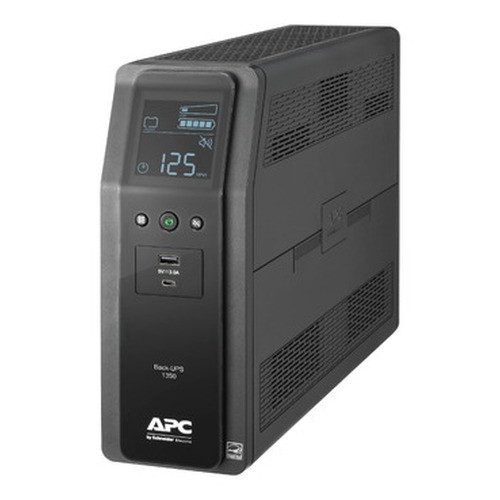
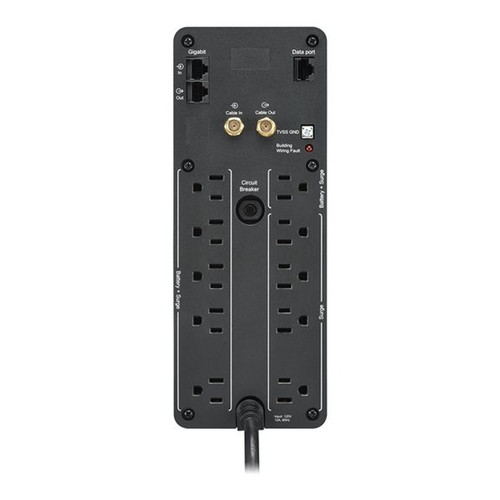
The BN1350M2 specifies 10 total NEMA 5-15R outlets: 6 with full battery-backed surge protection and 4 with surge protection only, including 2 transformer-sized spaces. The BR1350MS does not state a specific outlet count or layout in the provided specifications.
Both units share an identical 1080-joule surge energy rating. For data-line protection, the BN1350M2 explicitly lists coaxial (1-in/1-out) and RJ45 ports. The BR1350MS indicates surge protection features covering coax and network but gives no port-count detail.
Noise filtering is quantified on the BN1350M2 at 5% EMI/RFI attenuation. The BR1350MS confirms EMI/RFI filtering is present but provides no percentage figure. For physical deployments where outlet count and transformer-sized spacing matter — common in security head-end racks — the BN1350M2 provides concrete, plannable numbers; the BR1350MS leaves those details unspecified.
What runtime and battery characteristics should an installer expect from each model?
The BN1350M2 provides specified runtimes of 2.6 minutes at full load (810 W) and 10.4 minutes at half load (~405 W), with a recharge time of 16 hours. Battery capacity is listed at 153 VAh using a sealed lead-acid chemistry, and the user-replaceable battery cartridge is identified as APCRBC162.
The BR1350MS provides a minimum hold time of 8 ms and a maximum of 10 ms — values that correspond to transfer time rather than sustained battery runtime. No extended runtime figures (full-load or half-load minutes), battery capacity (VAh), recharge time, or replacement battery part number are present in the BR1350MS specifications provided.
For any deployment where graceful shutdown windows or generator handoff intervals must be engineered — NVR closets, access control servers, small PoE switch stacks — the BN1350M2 gives plannable runtime numbers. The BR1350MS spec set does not support that calculation from the data provided.
Which model offers more communication and management capability for IT and security integration?
The BN1350M2 specifies two communications interfaces: USB and Serial via RJ45. It also includes two USB charging ports for device charging independent of protected outlets, and carries an LCD display per the product name. Certifications listed are ENERGY STAR, FCC, NOM, and cTUVus, and the unit produces a noise level of 45 dBA.
The BR1350MS confirms an audible alarm is present and a noise level of 45 dB. No communications interfaces (USB, serial, network card slot) are listed in the provided specifications, and no certifications are stated.
For managed environments — where UPS status must feed into a DCIM tool, NMS, or initiate a scripted shutdown via PowerChute — the BN1350M2's documented USB and serial interfaces provide defined integration paths. The BR1350MS cannot be evaluated on that dimension from the specifications provided.
Which should you choose: the BN1350M2 or the BR1350MS?
Our take: The BN1350M2 is the stronger choice when outlet count, runtime planning, and management integration are required at this VA class. Both units deliver 1350VA / 810W on 120 V with identical 1080-joule surge ratings, 8–10 ms transfer time, and 45 dB noise levels. However, the BN1350M2 adds three concrete advantages from its spec sheet: 10 defined NEMA 5-15R outlets (versus an unspecified count on the BR1350MS), documented runtimes of 2.6 minutes at full load and 10.4 minutes at half load (versus no runtime data for the BR1350MS), and explicit USB plus serial-via-RJ45 management interfaces (versus no communications interfaces listed for the BR1350MS). The BR1350MS spec data as provided is materially incomplete for side-by-side evaluation; buyers requiring verified outlet layout, runtime budgets, or managed shutdown capability should select the BN1350M2 or request the full BR1350MS datasheet before committing.
Side-by-Side Comparison
Spec-for-spec, from manufacturer data.
| Specification | APC by Schneider Electric BN1350M2 | APC by Schneider Electric BR1350MS |
|---|---|---|
| UPS Topology | Line Interactive | Line-Interactive |
| Load Capacity | 1350 VA | 1.35 kVA |
| Output Power | 810 W | 810 W |
| Nominal Input Voltage | 120 VAC | 120 V (implied) |
| Input Voltage Range | 88–139 VAC | 88–147 V |
| Input Frequency | 50/60 Hz ± 3 Hz | 60 Hz |
| Output Frequency | 50/60 Hz ± 3 Hz | 60 Hz |
| Maximum Current | 12 A | 12 A |
| Surge Energy Rating | 1080 J | 1080 J |
| Transfer Time | 8–10 ms | 8–10 ms |
| Waveform | Simulated Sine Wave | Sine |
| Total Outlets | 10x NEMA 5-15R | — |
| Battery-Backed Outlets | 6x NEMA 5-15R | — |
| Full-Load Runtime | 2.6 min | — |
| Half-Load Runtime | 10.4 min | — |
| Recharge Time | 16 hours | — |
| Battery Capacity | 153 VAh (Lead-Acid) | — |
| Replacement Battery | APCRBC162 | — |
| Communications I/O | USB, Serial via RJ45 | — |
| Data-Line Protection | Coax (1-in/1-out), RJ45 | Coax, Network (no port count) |
| Noise Level | 45 dBA | 45 dB |
| EMI/RFI Filtering | 5% | Yes (no percentage) |
| Audible Alarm | — | Yes |
| AVR | Yes (implied by topology) | Yes |
| Certifications | ENERGY STAR, FCC, NOM, cTUVus | — |
| Cable Length | 6 ft / 1.8 m | — |
| Dimensions (W x H x D) | 3.94 x 10.24 x 14.49 in | — |
| Package Weight | 29 lb | — |
Frequently Asked Questions
Which should you choose: the BN1350M2 or the BR1350MS?
The BN1350M2 is the stronger choice when outlet count, runtime planning, and management integration are required at this VA class. Both units deliver 1350VA / 810W on 120 V with identical 1080-joule surge ratings, 8–10 ms transfer time, and 45 dB noise levels. However, the BN1350M2 adds three concrete advantages from its spec sheet: 10 defined NEMA 5-15R outlets (versus an unspecified count on the BR1350MS), documented runtimes of 2.6 minutes at full load and 10.4 minutes at half load (versus no runtime data for the BR1350MS), and explicit USB plus serial-via-RJ45 management interfaces (versus no communications interfaces listed for the BR1350MS). The BR1350MS spec data as provided is materially incomplete for side-by-side evaluation; buyers requiring verified outlet layout, runtime budgets, or managed shutdown capability should select the BN1350M2 or request the full BR1350MS datasheet before committing.
Can I calculate a safe shutdown window for my NVR or server with either unit?
Yes for the BN1350M2 — it specifies 2.6 minutes at full load (810 W) and 10.4 minutes at half load, giving you a concrete window to configure graceful shutdown software. The BR1350MS specifications provided do not include extended runtime figures, so that calculation cannot be made from the available data; consult the full APC datasheet for that model before assuming a shutdown window.
Does either UPS support coaxial and network data-line surge protection for security equipment?
The BN1350M2 explicitly lists coaxial (1-in/1-out) and RJ45 data-line protection ports. The BR1350MS lists coax and network as surge protection features but does not specify port counts or connector types in the specifications provided. Both units carry the same 1080-joule surge energy rating on the AC line.
Which model works better in a managed IT environment where UPS status needs to feed into monitoring software?
The BN1350M2 documents USB and Serial-via-RJ45 communications interfaces, which are the connection points used by APC PowerChute and third-party NMS integrations. The BR1350MS specifications provided list no communications interfaces. If remote monitoring or scripted shutdown is a requirement, the BN1350M2 has confirmed integration paths; the BR1350MS would require verification against its full datasheet.
More UPS Comparisons
- APC by Schneider Electric BN1350M2-CA vs CyberPower CP1350PFCLCD
- APC by Schneider Electric BN1350M2-CA vs Vertiv PSA6-1350LVT
- APC by Schneider Electric BN1350M2-CA vs APC by Schneider Electric BN1350M2
- APC by Schneider Electric BN1350M2-CA vs APC by Schneider Electric BR1350MS
- CyberPower CP1350PFCLCD vs APC by Schneider Electric BN1350M2
- CyberPower CP1350PFCLCD vs APC by Schneider Electric BR1350MS
UPS Buying Guides
Get a Second Opinion on Your Camera Choice
Share your site layout, coverage goals, and budget. Our team will validate the camera selection, flag anything we would change, and recommend products that match the use case.