
APC by Schneider Electric BN1350M2-CA vs APC by Schneider Electric BN1350M2: Specification Comparison
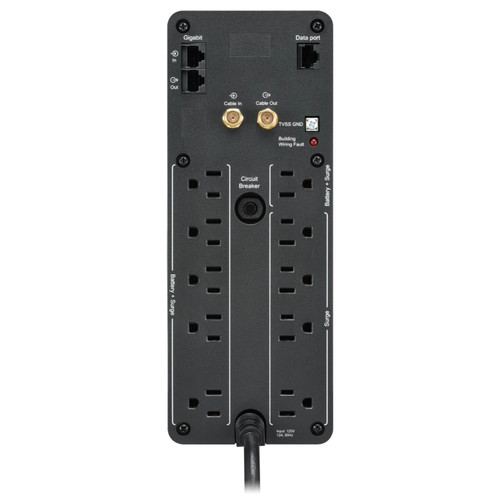
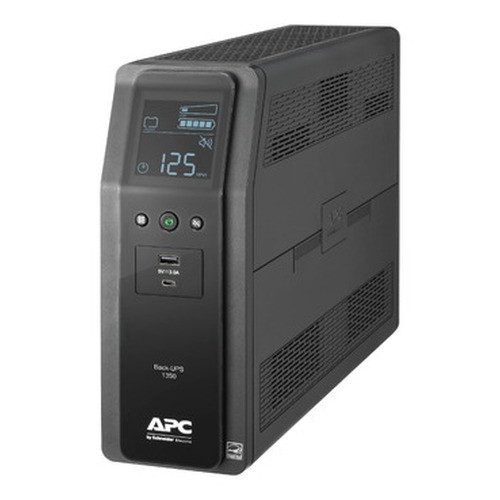
Both units are APC Back-UPS Pro BN 1350VA line-interactive UPS devices sharing the same 810 W / 1350 VA capacity, 120 V input, and 10-outlet layout. The BN1350M2-CA is the Canadian-market variant (TUV C-US / NOM certified, coaxial data-line protection), while the BN1350M2 is the US-market model (cTUVus / FCC certified, RJ45 data-line protection plus an LCD display). A buyer choosing between them is really deciding on market compliance, display presence, and data-port protection type.
In This Guide
- How much runtime and load capacity does each UPS deliver under real workloads?
- What surge, noise, and data-line protection does each model provide, and how do they connect to a host system?
- Which markets and environments is each unit certified and rated for?
- Which should you choose: the BN1350M2-CA or the BN1350M2?
- Side-by-Side Specs
- FAQ
How much runtime and load capacity does each UPS deliver under real workloads?
Both units are rated identically at 810 W / 1350 VA maximum output with a 12 A maximum input current draw at 120 V. The BN1350M2 spec sheet provides explicit runtime figures: 2.6 minutes at full load (810 W) and 10.4 minutes at half load (405 W). The BN1350M2-CA spec sheet does not publish runtime curves, so a direct numeric runtime comparison cannot be made from the provided data. Battery chemistry is lead-acid on both, with a 16-hour recharge time shared by both models. The BN1350M2 lists its replacement battery as APCRBC162; the BN1350M2-CA spec does not name a replacement part number. Both specify a battery service life of 3–5 years.
The BN1350M2-CA adds one spec the BN1350M2 omits: a 10 W rated battery charger power figure. Neither unit publishes a watt-hour capacity in standard kWh terms; the BN1350M2 lists '153 VAh' as battery life, which is a non-standard unit and not directly convertible without additional data.
What surge, noise, and data-line protection does each model provide, and how do they connect to a host system?
Surge energy rating is identical at 1080 J on both models. Outlet layout is the same: 6 battery-backed NEMA 5-15R outlets and 4 surge-only NEMA 5-15R outlets, for 10 total. The BN1350M2-CA describes noise suppression as 'full time multi-pole noise filtering' but does not publish a percentage attenuation figure. The BN1350M2 states 5% noise filtering — a modest figure worth noting for sensitive audio or measurement equipment.
Data-line protection diverges meaningfully. The BN1350M2-CA protects coaxial cable (CATV / SATV / modem / audio-video). The BN1350M2 protects RJ45 (Ethernet / phone) with 1-in 1-out coax protection also noted. Host communications on the BN1350M2 are USB plus serial via RJ45; the BN1350M2-CA spec does not list a communications interface. Both include 2 USB charging ports per the product name, but neither spec sheet publishes USB charging wattage.
Which markets and environments is each unit certified and rated for?
Certification sets differ by market. The BN1350M2-CA carries ENERGY STAR V2.0 (USA), NOM, and TUV C-US. The BN1350M2 carries ENERGY STAR (version unspecified in its spec), FCC, NOM, and cTUVus. The FCC mark on the BN1350M2 confirms US electromagnetic compatibility compliance; the BN1350M2-CA omits FCC but adds TUV C-US, indicating Canadian Standards Association equivalency through TUV.
Operating environment specs are provided only for the BN1350M2-CA: 0–40 °C operating temperature, 0–95% non-condensing relative humidity, 0–10,000 ft operating altitude, and −15–40 °C storage temperature. The BN1350M2 does not publish environmental ratings in the provided spec sheet. Physical dimensions are effectively identical (10 × 26 × 36.8 cm), weight differs: the BN1350M2-CA is 10.4 kg (net); the BN1350M2 is listed at 29 lb package weight (≈ 13.2 kg), which is a packaged — not net — figure, so a direct weight comparison is not valid. Acoustic output is 45 dBA on both.
Which should you choose: the BN1350M2-CA or the BN1350M2?
Our take: The BN1350M2-CA is the stronger choice when the installation is in Canada or a market requiring TUV C-US / NOM compliance and coaxial-cable data-line protection, or when operating environment certification (0–40 °C, 0–10,000 ft altitude) must be documented. The BN1350M2 is the stronger choice for US-market deployments requiring FCC compliance, an LCD display for local status monitoring, RJ45 data-line protection for Ethernet runs, and USB-plus-serial host communications — none of which appear in the BN1350M2-CA spec. Runtime transparency also favors the BN1350M2: it publishes 2.6-minute full-load and 10.4-minute half-load figures plus a named replacement battery (APCRBC162), whereas the BN1350M2-CA omits these. Core electrical specs — 810 W / 1350 VA, 1080 J surge, 12 A draw, 16-hour recharge, lead-acid chemistry, 45 dBA — are identical. Select by market certification and data-port type, not by power capacity.
Side-by-Side Comparison
Spec-for-spec, from manufacturer data.
| Specification | APC by Schneider Electric BN1350M2-CA | APC by Schneider Electric BN1350M2 |
|---|---|---|
| Rated Power (VA) | 1350 VA | 1350 VA |
| Rated Power (W) | 810 W | 810 W |
| UPS Topology | Line Interactive | Line Interactive |
| Waveform | Stepped approximation to sinewave | Simulated Sine Wave |
| Input Voltage | 120 V | 120 VAC |
| Input Voltage Range | 88–139 V | 88–139 VAC |
| Input Frequency | 60 Hz ± 3 Hz | 50/60 Hz ± 3 Hz |
| Maximum Input Current | 12 A | 12 A |
| Transfer Time | 8 ms typical / 10 ms max | 8–10 ms |
| Surge Energy Rating | 1080 J | 1080 J |
| Battery-Backed Outlets | 6x NEMA 5-15R | 6x NEMA 5-15R |
| Surge-Only Outlets | 4x NEMA 5-15R | 4x NEMA 5-15R |
| Data-Line Protection | Coaxial (CATV/SATV/modem/AV) | RJ45; Coax 1-in 1-out |
| Communications Interface | — | USB; Serial via RJ45 |
| LCD Display | — | Yes (per product name) |
| Battery Recharge Time | 16 h | 16 h |
| Battery Chemistry | Lead-acid | Lead-Acid |
| Battery Life (published) | 3–5 years | 153 VAh (non-standard unit) |
| Replacement Battery | — | APCRBC162 |
| Full-Load Runtime | — | 2.6 min |
| Half-Load Runtime | — | 10.4 min |
| Noise Level | 45 dBA | 45 dBA |
| Operating Temperature | 0–40 °C | — |
| Operating Altitude | 0–10,000 ft | — |
| Certifications | ENERGY STAR V2.0, NOM, TUV C-US | ENERGY STAR, FCC, NOM, cTUVus |
| Cable Length | 1.8 m | 1.8 m / 6 ft |
| Dimensions (W x H x D) | 10 x 26 x 36.8 cm | 10.01 x 26.01 x 36.8 cm |
| Net Weight | 10.4 kg | — (29 lb pkg weight only) |
| Warranty | 3 years repair or replace | — |
Frequently Asked Questions
Which should you choose: the BN1350M2-CA or the BN1350M2?
The BN1350M2-CA is the stronger choice when the installation is in Canada or a market requiring TUV C-US / NOM compliance and coaxial-cable data-line protection, or when operating environment certification (0–40 °C, 0–10,000 ft altitude) must be documented. The BN1350M2 is the stronger choice for US-market deployments requiring FCC compliance, an LCD display for local status monitoring, RJ45 data-line protection for Ethernet runs, and USB-plus-serial host communications — none of which appear in the BN1350M2-CA spec. Runtime transparency also favors the BN1350M2: it publishes 2.6-minute full-load and 10.4-minute half-load figures plus a named replacement battery (APCRBC162), whereas the BN1350M2-CA omits these. Core electrical specs — 810 W / 1350 VA, 1080 J surge, 12 A draw, 16-hour recharge, lead-acid chemistry, 45 dBA — are identical. Select by market certification and data-port type, not by power capacity.
Can I use the BN1350M2-CA in the United States?
The BN1350M2-CA carries TUV C-US and NOM certifications but does not list FCC compliance in the provided spec sheet. For US installations where FCC marking is required — common in commercial and government sites — the BN1350M2 with its explicit FCC certification is the documented choice. The BN1350M2-CA appears intended for the Canadian market.
Does either model include an LCD display for monitoring battery status?
The BN1350M2 product name includes 'LCD' and is described as the LCD-equipped variant. The BN1350M2-CA spec sheet does not mention an LCD display. If local visual status monitoring without software is a requirement, the BN1350M2 is the unit with that feature documented.
Which model is better for protecting a cable TV or satellite modem connection versus an Ethernet switch port?
The BN1350M2-CA explicitly lists coaxial cable (CATV / SATV / modem / audio-video) as its data-line protection type. The BN1350M2 lists RJ45 data-line protection and notes 1-in 1-out coax protection as well. For a pure coax-only run, both offer coax protection per their specs; for Ethernet port protection, the BN1350M2's RJ45 spec is the documented option.
More UPS Comparisons
- APC by Schneider Electric BN1350M2-CA vs CyberPower CP1350PFCLCD
- APC by Schneider Electric BN1350M2-CA vs Vertiv PSA6-1350LVT
- APC by Schneider Electric BN1350M2-CA vs APC by Schneider Electric BR1350MS
- CyberPower CP1350PFCLCD vs APC by Schneider Electric BN1350M2
- CyberPower CP1350PFCLCD vs APC by Schneider Electric BR1350MS
- CyberPower CP1350PFCLCD vs APC by Schneider Electric BX1350M
UPS Buying Guides
Get a Second Opinion on Your Camera Choice
Share your site layout, coverage goals, and budget. Our team will validate the camera selection, flag anything we would change, and recommend products that match the use case.