
Vivotek GET-083A-120 vs TP-Link SG1005P: Specification Comparison
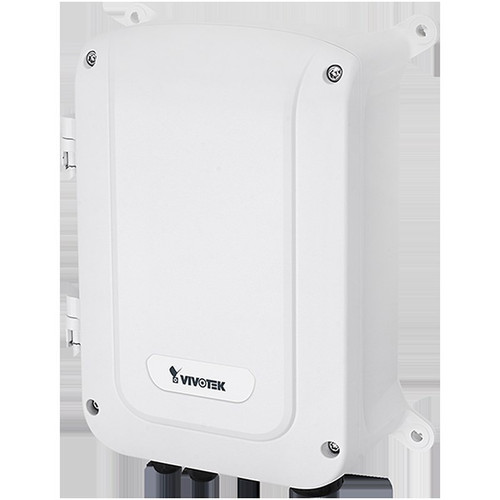
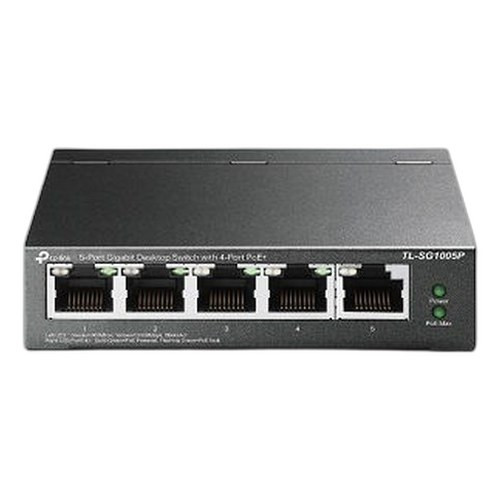
Both the Vivotek AW-GET-083A-120 and the TP-Link TL-SG1005P are unmanaged Gigabit Ethernet PoE+ switches with four PoE-capable ports, placing them in the same general product class. The Vivotek is a ruggedized outdoor enclosure rated IP67/IK10, while the TP-Link is a compact desktop unit. Buyers comparing these two are typically choosing between a field-hardened switch for exterior or industrial camera deployments versus a cost-effective indoor desktop switch for small surveillance or office installs. This comparison covers PoE capacity and port configuration, physical build and environmental ratings, and switching performance.
In This Guide
Which switch delivers more PoE power and port flexibility?
The Vivotek AW-GET-083A-120 provides a total PoE budget of 120W across four PoE+ ports, each rated at a maximum of 30W, supporting IEEE 802.3af and 802.3at. In addition to the four PoE RJ45 ports, it includes two standard GbE RJ45 uplink ports and two 1G SFP slots, giving installers eight total ports and flexible uplink options including fiber.
The TP-Link TL-SG1005P offers a total PoE budget of 65W across four PoE+ ports. Its fifth port is a standard GbE port with no SFP expansion. The spec data contains a conflicting wattage figure (30W listed under 'Wattage' alongside 65W budget), and no per-port maximum PoE wattage is explicitly stated in the provided specs. No SFP slots are present.
For deployments requiring simultaneous full 30W draw on all four PoE ports (e.g., four PTZ or multi-sensor cameras), the AW-GET-083A-120's 120W budget accommodates that load. The TL-SG1005P's 65W budget limits average per-port delivery to approximately 16W when all four ports are active simultaneously, which may throttle high-power devices.
Which switch is rated for outdoor and harsh-environment installation?
The Vivotek AW-GET-083A-120 is explicitly designed for outdoor deployment. It carries an IP67 ingress protection rating (dust-tight and submersion-resistant to 1m) and an IK10 impact resistance rating (protected against 20J mechanical impacts). Its operating temperature range spans -40°C to +65°C (-40°F to +149°F). Surge protection is rated at 6KV per PoE port and 40KV on the AC power input, per ITU-T K.21 and IEC-61643-11. It has passed IEC 60068-2-6 vibration, IEC 60068-2-27 shock, and IEC 60068-2-32 freefall testing. Cable entry is via M16 and M25 gland connectors. The unit weighs 4.52 kg and supports wall, pole, corner, and rack mounting.
The TP-Link TL-SG1005P is a desktop-form-factor switch with no IP or IK rating stated in the provided specifications. Its operating temperature is listed as 0°C to 40°C (32°F to 104°F) in one field, with a conflicting value of -30°C to 70°C in another field. No surge protection rating is provided. The unit measures approximately 99.8 x 98 x 25 mm and is powered by an external power adapter. It is not rated or warranted for outdoor use based on the provided specs.
For any installation outside a climate-controlled indoor space — pole-mounted in a parking lot, inside a roadside cabinet, or in a rooftop IDF — the AW-GET-083A-120 is the only specced option of the two. The TL-SG1005P is unsuitable for unprotected outdoor environments based on available specifications.
How do the two switches compare on throughput and Layer 2 forwarding performance?
The Vivotek AW-GET-083A-120 is rated at 16 Gbps switching bandwidth with a forwarding capacity of 11.904 Mpps. It supports an 8K MAC address table and jumbo frames up to 9216 bytes. Auto-MDI/MDI-X and auto-negotiation are supported on all ports. The two SFP slots enable fiber uplinks, extending backhaul distance beyond copper limitations.
The TP-Link TL-SG1005P is rated at 10 Gbps switching capacity. No forwarding rate in Mpps, MAC table size, or jumbo frame support is stated in the provided specifications. It supports an Extend mode that reduces port speed to 10 Mbps but extends PoE range to 250m, which is a spec the AW-GET-083A-120 does not list.
Both switches are non-blocking for their respective port counts at Gigabit line rate under normal conditions. The Vivotek's 16 Gbps capacity versus the TP-Link's 10 Gbps reflects the difference in total port count (eight ports vs. five). Neither device offers managed features such as VLANs, QoS, or SNMP per the provided specifications — both are unmanaged plug-and-play switches.
Which should you choose: the GET-083A-120 or the SG1005P?
Our take: The AW-GET-083A-120 is the stronger choice when the installation environment is outdoors, subject to temperature extremes, moisture, mechanical impact, or electrical surges. The Vivotek delivers a 120W total PoE budget — 55W more than the TP-Link's 65W — supporting four full 30W 802.3at devices simultaneously without throttling. Its IP67/IK10 enclosure and -40°C to +65°C operating range put it in a fundamentally different deployment class than the TL-SG1005P, which carries no environmental protection rating and is limited to 0–40°C (per the primary spec field). The addition of two SFP fiber uplink slots on the Vivotek further differentiates it for backbone integration. The TL-SG1005P is appropriate only for protected indoor environments with modest PoE loads, where its lower cost and compact desktop footprint are the deciding factors. Platform qualifier: either switch is unmanaged; neither supports VLANs or QoS per the provided specifications.
Side-by-Side Comparison
Spec-for-spec, from manufacturer data.
| Specification | Vivotek GET-083A-120 | TP-Link SG1005P |
|---|---|---|
| Product Class | Outdoor Hardened PoE+ GbE Switch | Desktop PoE+ GbE Switch |
| Total Ports | 8 (4x PoE RJ45 + 2x GbE RJ45 + 2x SFP) | 5 (4x PoE RJ45 + 1x GbE RJ45) |
| PoE Ports | 4 | 4 |
| PoE Standard | IEEE 802.3af/at | PoE+ (802.3af listed; PoE+ in product name) |
| Max PoE per Port | 30W | Not explicitly stated in specs |
| Total PoE Budget | 120W | 65W |
| SFP Uplink Slots | 2x 1G SFP | — |
| Switching Bandwidth | 16 Gbps | 10 Gbps |
| Forwarding Capacity | 11.904 Mpps | — |
| MAC Address Table | 8K | — |
| Jumbo Frame Support | 9216 bytes | — |
| IP Rating | IP67 | — |
| Impact Rating | IK10 | — |
| Operating Temperature | -40°C to +65°C | 0°C to 40°C (primary spec field) |
| Surge Protection (PoE Port) | 6 KV | — |
| Surge Protection (AC Input) | 40 KV | — |
| Power Input | 100–240VAC / 50–60Hz | External power adapter |
| Dimensions | 315.4 x 245.8 x 118 mm | 99.8 x 98 x 25 mm |
| Weight | 4.52 kg | — |
| Mounting | Wall, Pole, Corner, Rack | Desktop (mounting holes noted) |
| Enclosure | Outdoor hardened | Desktop indoor |
| Warranty | 24 months | — |
| Management | Unmanaged | Unmanaged |
Frequently Asked Questions
Which should you choose: the GET-083A-120 or the SG1005P?
The AW-GET-083A-120 is the stronger choice when the installation environment is outdoors, subject to temperature extremes, moisture, mechanical impact, or electrical surges. The Vivotek delivers a 120W total PoE budget — 55W more than the TP-Link's 65W — supporting four full 30W 802.3at devices simultaneously without throttling. Its IP67/IK10 enclosure and -40°C to +65°C operating range put it in a fundamentally different deployment class than the TL-SG1005P, which carries no environmental protection rating and is limited to 0–40°C (per the primary spec field). The addition of two SFP fiber uplink slots on the Vivotek further differentiates it for backbone integration. The TL-SG1005P is appropriate only for protected indoor environments with modest PoE loads, where its lower cost and compact desktop footprint are the deciding factors. Platform qualifier: either switch is unmanaged; neither supports VLANs or QoS per the provided specifications.
Can I mount either of these switches outside on a pole or building exterior?
Only the Vivotek AW-GET-083A-120 is rated for outdoor installation. It carries an IP67 weatherproofing rating and an IK10 impact rating, operates from -40°C to +65°C, and is tested to IEC 60068-2-6/27/32 for vibration, shock, and freefall. The TP-Link TL-SG1005P has no IP or IK rating in its provided specifications and is a desktop unit intended for indoor use.
Will the TP-Link TL-SG1005P power four 25W PTZ cameras at the same time?
The TL-SG1005P's total PoE budget is 65W across four ports. Four cameras drawing 25W each would require 100W total — well above the 65W budget. The switch would either throttle port power or fail to power all four devices simultaneously. The Vivotek AW-GET-083A-120, with its 120W budget and 30W per-port rating, can support four 25W cameras concurrently with headroom remaining.
Does either switch support fiber uplinks for long-distance backhaul to a head-end NVR?
The Vivotek AW-GET-083A-120 includes two 1G SFP slots, which accept standard SFP fiber or copper transceivers for flexible uplink topology. The TP-Link TL-SG1005P has no SFP slots per its provided specifications; all five ports are copper RJ45 only, limiting backhaul to 100m over Cat5e/Cat6 unless the Extend mode (250m at 10 Mbps) is used.
More Network Switch Comparisons
- Vivotek GET-083A-120 vs Axis T8504-E
- Vivotek GET-083A-120 vs Axis D8004
- Vivotek GET-083A-120 vs Ubiquiti N-SW
- TP-Link SG1005P vs Axis T8504-E
- TP-Link SG1005P vs Axis D8004
- TP-Link SG1005P vs Ubiquiti N-SW
Network Switch Buying Guides
Get a Second Opinion on Your Camera Choice
Share your site layout, coverage goals, and budget. Our team will validate the camera selection, flag anything we would change, and recommend products that match the use case.