
Vivotek GET-083A-120 vs Ubiquiti N-SW: Specification Comparison
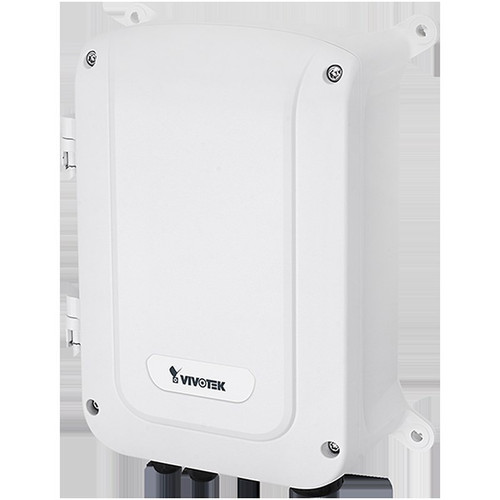
Both products are 4-port outdoor Gigabit PoE switches intended for remote surveillance and wireless infrastructure deployments. The Vivotek AW-GET-083A-120 is an 8-port managed-style unmanaged switch (4x PoE+ RJ45, 2x GbE RJ45, 2x SFP) powered from 100–240VAC mains with a 120W PoE budget, while the Ubiquiti N-SW is a compact 4-port passive-PoE passthrough switch drawing power from a single 24V passive PoE injector with a 24W aggregate output budget. Both target outdoor physical-security edge installations but differ substantially in power architecture, port count, and ruggedization.

In This Guide
Which switch delivers enough PoE power for your camera payload?
The AW-GET-083A-120 provides a 120W total PoE budget across four ports at 30W per port, conforming to IEEE 802.3af/at (PoE+). This allows four 802.3at cameras—such as multi-sensor, PTZ, or heated models drawing up to 25.5W—to run simultaneously at full allocation without throttling. Per-port surge protection is rated at 6 kV, and the AC input surge protection is rated at 40 kV.
The N-SW operates on passive 24V PoE (2-pair, 21.6–30V input) from a single injector such as the POE-24-30W-G-W (sold separately). Its aggregate passthrough output is 24W across three downstream PoE ports at up to 1A per port (~24V × 1A = 24W total), leaving the fourth port as the PoE input. This architecture limits the N-SW to low-power endpoints—typically Ubiquiti UISP radios or G3-class cameras—and cannot power IEEE 802.3at (PoE+) devices. ESD/EMP protection is listed at ±24 kV air/contact.
For installations with multiple full-power cameras or any 802.3at device, the AW-GET-083A-120's 120W budget and standards-based PoE+ output is the only viable option between these two. The N-SW's 24W aggregate is suited only to lightweight, passive-PoE-compatible endpoints.
How do the enclosures and operating environments compare for harsh outdoor sites?
The AW-GET-083A-120 carries an IP67 ingress-protection rating (dust-tight, immersion to 1 m) and IK10 impact resistance (20-joule vandal-proof), making it suitable for exposed pole, wall, corner, or rack mounting in high-abuse environments. Its operating temperature spans −40°C to +65°C and storage reaches −75°C, with vibration (IEC 60068-2-6), shock (IEC 60068-2-27), and freefall (IEC 60068-2-32) certifications. EMC marks include CE, FCC, VCCI, and C-Tick Class A; safety certifications are EN60950-1 and IEC60950-1. Cable entry uses M16 (×4) and M25 (×2) metric conduit glands. Unit weight is 4.52 kg.
The N-SW is described as a weatherproof polycarbonate enclosure rated for 5–95% non-condensing humidity, with an operating temperature of −30°C to +70°C. No IP or IK rating is stated in the provided specifications. Certifications listed are CE, FCC, and IC. Mount options are wall and pole. Weight is approximately 0.54 kg (1.200 lb). Dimensional data as listed (196.4" × 93.5" × 32.4") appears to reflect millimeters mislabeled as inches in the source spec sheet; direct dimensional comparison is therefore unreliable.
The AW-GET-083A-120 offers a meaningfully more ruggedized enclosure profile based on available specs: its IP67 and IK10 ratings, lower cold-floor temperature limit (−40°C vs −30°C), and formal vibration/shock/freefall test certifications address site conditions—such as traffic vibration, vandalism risk, or standing-water exposure—where the N-SW's enclosure rating is unspecified.
Which switch better supports uplink flexibility and network throughput capacity?
The AW-GET-083A-120 provides 16 Gbps switching bandwidth with a forwarding capacity of 11.904 Mpps, an 8K MAC address table, and 9216-byte jumbo frame support. Its port layout—4× PoE+ RJ45, 2× standard GbE RJ45, and 2× 1G SFP slots—enables fiber uplinks for long cable runs or ring topologies, making it suitable for integration into larger managed network backbones. Auto-MDI/MDI-X and auto-negotiation are supported across all RJ45 ports.
The N-SW is specified at 4 Gbps non-blocking throughput. No switching bandwidth figure beyond this, no MAC table size, no jumbo frame specification, and no fiber uplink (SFP) option are provided in the available specifications. The single passive PoE input port constrains topology: the switch must sit at the end of a PoE run from a 24V injector, not inline with a managed fiber backbone.
For deployments requiring fiber uplinks, higher forwarding capacity, or integration with enterprise-grade switching infrastructure, the AW-GET-083A-120's dual SFP slots and 16 Gbps backplane provide options the N-SW does not offer. The N-SW's simpler 4 Gbps non-blocking design is adequate for small clusters of low-bandwidth endpoints where passive PoE chaining is acceptable.
Which should you choose: the GET-083A-120 or the N-SW?
Our take: The AW-GET-083A-120 is the stronger choice when the installation involves 802.3at (PoE+) cameras, harsh physical environments, or fiber uplink requirements. Concretely: its 120W PoE budget dwarfs the N-SW's 24W aggregate passthrough (a 5× difference), its IP67/IK10 enclosure and −40°C cold-floor rating exceed the N-SW's unrated enclosure and −30°C floor, and its dual 1G SFP slots support fiber uplinks that the N-SW entirely lacks. The N-SW is appropriate only in Ubiquiti UISP ecosystems where endpoints are passive-24V-compatible (e.g., Ubiquiti G3 cameras or UISP radios), cable runs are copper-only, and the aggregate camera power draw stays well under 24W. Buyers should also note that the N-SW requires a separate 24V PoE injector (not included), adding to total installed cost.
Side-by-Side Comparison
Spec-for-spec, from manufacturer data.
| Specification | Vivotek GET-083A-120 | Ubiquiti N-SW |
|---|---|---|
| PoE Port Count | 4× RJ45 PoE+ | 3× RJ45 PoE passthrough (+ 1× PoE input) |
| PoE Standard | IEEE 802.3af/at | Passive 24V (non-standard; no 802.3af/at stated) |
| Max Power Per PoE Port | 30W | ~8W (24W ÷ 3 ports at 1A/port) |
| Total PoE Power Budget | 120W | 24W aggregate passthrough |
| Additional RJ45 Uplink Ports | 2× GbE RJ45 | — |
| SFP/Fiber Uplink Slots | 2× 1G SFP | — |
| Switching Bandwidth | 16 Gbps | — |
| Forwarding Capacity | 11.904 Mpps | — |
| Throughput (stated) | — | 4 Gbps non-blocking |
| MAC Address Table | 8K | — |
| Jumbo Frame Support | 9216 bytes | — |
| Power Input | 100–240VAC / 50–60Hz | Passive PoE 21.6–30V (injector not included) |
| IP Rating | IP67 | Not specified |
| Impact Rating | IK10 | Not specified |
| Operating Temperature | −40°C to +65°C | −30°C to +70°C |
| Per-Port Surge Protection | 6 kV | ±24 kV ESD/EMP (air/contact) |
| AC Input Surge Protection | 40 kV | — |
| EMC / Safety Certifications | CE, FCC, VCCI, C-Tick Class A; EN/IEC60950-1 | CE, FCC, IC |
| Enclosure Rating | IP67 / IK10 | Weatherproof polycarbonate (no IP/IK stated) |
| Warranty | 24 months | Manufacturer warranty (duration not specified) |
Frequently Asked Questions
Which should you choose: the GET-083A-120 or the N-SW?
The AW-GET-083A-120 is the stronger choice when the installation involves 802.3at (PoE+) cameras, harsh physical environments, or fiber uplink requirements. Concretely: its 120W PoE budget dwarfs the N-SW's 24W aggregate passthrough (a 5× difference), its IP67/IK10 enclosure and −40°C cold-floor rating exceed the N-SW's unrated enclosure and −30°C floor, and its dual 1G SFP slots support fiber uplinks that the N-SW entirely lacks. The N-SW is appropriate only in Ubiquiti UISP ecosystems where endpoints are passive-24V-compatible (e.g., Ubiquiti G3 cameras or UISP radios), cable runs are copper-only, and the aggregate camera power draw stays well under 24W. Buyers should also note that the N-SW requires a separate 24V PoE injector (not included), adding to total installed cost.
Can I use the N-SW to power standard 802.3af or 802.3at IP cameras?
Based on the provided specifications, the N-SW uses passive 24V PoE (2-pair, 21.6–30V) and no IEEE 802.3af/at compliance is stated. Standard 802.3af/at cameras require active PoE negotiation and are not guaranteed to operate with passive PoE injectors; compatibility depends on the specific camera's power input tolerance. The AW-GET-083A-120 explicitly lists IEEE 802.3af/at support across all four PoE ports.
Is the AW-GET-083A-120 or the N-SW better suited for a pole-mounted deployment in a parking structure exposed to vibration and impact?
Based on the provided specifications, the AW-GET-083A-120 is better suited. It holds IK10 (impact) and IP67 (ingress) ratings and has passed IEC 60068-2-6 vibration and IEC 60068-2-27 shock testing. The N-SW's specifications do not include an IP or IK rating, nor vibration or shock test certifications.
Does either switch require a separate power supply, and does that affect total installed cost?
The AW-GET-083A-120 accepts 100–240VAC directly via its integrated power input—no separate PoE injector is needed. The N-SW requires a passive 24V PoE injector (the POE-24-30W-G-W is referenced in its specifications as 'not included'), which is an additional line-item cost. Installers should account for this when comparing total installed cost between the two units.
More Network Switch Comparisons
- Vivotek GET-083A-120 vs TP-Link SG1005P
- Vivotek GET-083A-120 vs Axis T8504-E
- Vivotek GET-083A-120 vs Axis D8004
- TP-Link SG1005P vs Axis T8504-E
- TP-Link SG1005P vs Axis D8004
- TP-Link SG1005P vs Ubiquiti N-SW
Network Switch Buying Guides
Get a Second Opinion on Your Camera Choice
Share your site layout, coverage goals, and budget. Our team will validate the camera selection, flag anything we would change, and recommend products that match the use case.