
Vivotek GET-083A-120 vs Axis T8504-E: Specification Comparison
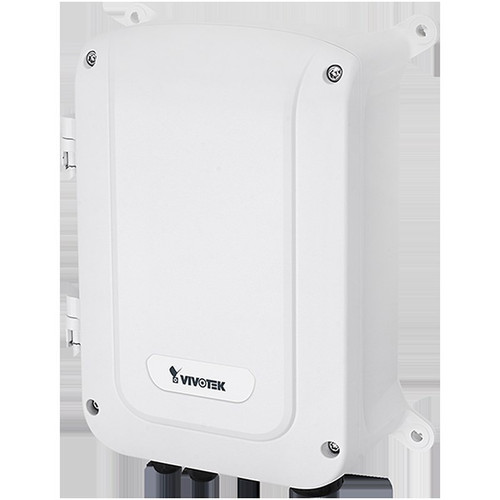
Both products are 4-port outdoor PoE+ Gigabit Ethernet switches designed for surveillance deployments in harsh environments, making them directly comparable. The Vivotek AW-GET-083A-120 and the Axis T8504-E target the same installer use case: powering IP cameras at remote or exposed locations over fiber or copper uplinks. Key decision axes are port capacity and PoE power architecture, physical protection and operating environment, and network management and platform integration.

In This Guide
- How do the port counts, PoE architecture, and total power budget compare?
- Which unit is better suited for extreme outdoor conditions in terms of ingress protection, surge tolerance, and temperature range?
- What management capabilities and platform integration do each switch offer?
- Which should you choose: the GET-083A-120 or the T8504-E?
- Side-by-Side Specs
- FAQ
How do the port counts, PoE architecture, and total power budget compare?
The Vivotek AW-GET-083A-120 provides four PoE+ ports each rated at a uniform 30W, two additional GbE RJ45 ports (no PoE), and two SFP slots, for a total of eight physical ports. Its total PoE budget is 120W. The switching capacity is 16 Gbps with a forwarding rate of 11.904 Mpps.
The Axis T8504-E provides four PoE+ RJ45 ports with an asymmetric power distribution: ports 1–2 deliver 60W each (IEEE 802.3at Type 2 Class 4) and ports 3–4 deliver 30W each, for a total PoE budget of 180W as implied by the per-port maximums — however, the spec header states 150W total budget. It offers one SFP uplink slot (no additional untagged GbE ports). Switching capacity is 10 Gbps at 7.44 Mpps.
For installations requiring high-power PTZ cameras or dual-radio wireless APs on ports 1–2, the T8504-E's 60W per-port capability is a decisive advantage. For installations that need more uplink flexibility or additional non-PoE copper drops, the Vivotek's two extra GbE ports and second SFP slot offer greater topology options. The Vivotek's higher switching capacity (16 Gbps vs. 10 Gbps) and forwarding rate (11.904 Mpps vs. 7.44 Mpps) provide more headroom under aggregate load.
Which unit is better suited for extreme outdoor conditions in terms of ingress protection, surge tolerance, and temperature range?
The Vivotek AW-GET-083A-120 carries an IP67 ingress protection rating and an IK10 impact resistance rating. Its operating temperature range is -40°C to +65°C (-40°F to +149°F) with storage rated to -40°C to +75°C. It weighs 4.52 kg and measures 315.4 × 245.8 × 118 mm. Surge protection is rated at 6 kV per PoE port and 40 kV on the AC power input, per ITU-T K.21 and IEC 61643-11. Vibration, shock, and freefall are tested to IEC 60068-2-6, -2-27, and -2-32 respectively. The enclosure uses M16 and M25 conduit connectors. Alarm relay output at 24VDC is specified.
The Axis T8504-E's ingress protection rating is not explicitly stated in the provided specifications (the NEMA 4X rating is listed, which implies weather-tight protection, but an IP code is not given). It does not specify an IK impact rating. Its operating temperature range is -40°C to +60°C (-40°F to +140°F) per the spec sheet, though one data field states -40°C to +50°C — the more conservative figure should be used until confirmed. Storage is rated to -40°C to +85°C. It weighs 2.9 kg and measures 240 × 166 × 72 mm. Surge protection is 6 kV on all network ports and AC input lines. The casing is aluminum and is stated to be PVC-free. No alarm relay is specified.
The Vivotek unit offers the more quantified ruggedization profile: a confirmed IP67 seal, IK10 impact resistance, a wider confirmed upper operating temperature (+65°C vs. +60°C), and a significantly higher AC-line surge rating (40 kV vs. 6 kV). The Axis T8504-E's aluminum enclosure with NEMA 4X rating is weather-resistant but lacks an explicit IP or IK certification in the provided specs, which complicates direct comparison for specifications-driven procurement. The Vivotek is also heavier and larger, consistent with a more heavily protected housing.
What management capabilities and platform integration do each switch offer?
The Vivotek AW-GET-083A-120 specification does not list any network management protocols, VLAN support, SNMP, or management software. No CLI, web UI, or out-of-band management interface is specified in the provided data. PoE PD auto-detection is listed. The switch appears to be unmanaged based on the available specifications.
The Axis T8504-E is explicitly a managed switch. It supports IPv4, IPv6, HTTP, HTTPS, SSH, SNMP, DNS, TCP, UDP, and VLAN. Management software is AXIS Device Manager — Axis's own platform for centralized configuration of Axis network devices. Password protection, HTTPS encryption, RADIUS/TACACS authentication (referenced in card bullets), and VLAN segmentation are supported. Security hardening features are part of the Axis platform ecosystem.
For deployments requiring remote monitoring, VLAN segmentation for camera traffic isolation, SNMP integration with an NMS, or centralized device management via AXIS Device Manager, the T8504-E is the only option of the two with documented support for these capabilities. The Vivotek AW-GET-083A-120 provides no management feature data in the supplied specifications; buyers requiring managed functionality should verify with Vivotek whether a management interface exists before selecting this unit.
Which should you choose: the GET-083A-120 or the T8504-E?
Our take: The AW-GET-083A-120 is the stronger choice when the deployment demands maximum physical hardening, a higher AC surge tolerance, two SFP uplinks, and additional copper ports at a uniform 30W-per-port budget. Its IP67/IK10 ratings, 40 kV AC surge protection (vs. 6 kV on the T8504-E), higher switching throughput (16 Gbps / 11.904 Mpps vs. 10 Gbps / 7.44 Mpps), and extra ports (6 data ports vs. 5) are concrete differentiators. The Axis T8504-E is the stronger choice for managed network environments: it supports VLAN, SNMP, SSH, RADIUS/TACACS, and integrates with AXIS Device Manager — none of which are documented for the Vivotek. It also delivers 60W per port on two ports, enabling 802.3bt-class-adjacent loads the Vivotek cannot serve. Specify the Vivotek for unmanaged, extreme-environment pole or wall installations; specify the Axis T8504-E for managed Axis-ecosystem deployments where port-level power asymmetry or network segmentation is required.
Side-by-Side Comparison
Spec-for-spec, from manufacturer data.
| Specification | Vivotek GET-083A-120 | Axis T8504-E |
|---|---|---|
| PoE Ports | 4x RJ45 (30W each) | 4x RJ45 (60W/60W/30W/30W) |
| Total PoE Budget | 120W | 150W (spec header) |
| Max PoE Per Port | 30W | 60W (ports 1–2) |
| PoE Standard | IEEE 802.3af/at | IEEE 802.3at Type 2 Class 4 |
| Additional Copper Ports (non-PoE) | 2x GbE RJ45 | — |
| SFP Uplink Slots | 2 | 1 |
| Switching Capacity | 16 Gbps | 10 Gbps |
| Forwarding Rate | 11.904 Mpps | 7.44 Mpps |
| MAC Table | 8K | 8K |
| Jumbo Frame | 9,216 bytes | 10,000 bytes (10 KB) |
| Ingress Protection | IP67 / IK10 | NEMA 4X (IP code not specified) |
| Operating Temperature | -40°C to +65°C | -40°C to +60°C |
| Surge Protection (per port) | 6 kV | 6 kV |
| Surge Protection (AC input) | 40 kV | 6 kV |
| Management | Unmanaged (not specified) | Managed — VLAN, SNMP, SSH, AXIS Device Manager |
| Warranty | 24 months | 5 years |
| Weight | 4.52 kg | 2.9 kg |
| Dimensions (W×H×D mm) | 315.4 × 245.8 × 118 | 240 × 166 × 72 |
| Alarm Relay | 24VDC | — |
Frequently Asked Questions
Which should you choose: the GET-083A-120 or the T8504-E?
The AW-GET-083A-120 is the stronger choice when the deployment demands maximum physical hardening, a higher AC surge tolerance, two SFP uplinks, and additional copper ports at a uniform 30W-per-port budget. Its IP67/IK10 ratings, 40 kV AC surge protection (vs. 6 kV on the T8504-E), higher switching throughput (16 Gbps / 11.904 Mpps vs. 10 Gbps / 7.44 Mpps), and extra ports (6 data ports vs. 5) are concrete differentiators. The Axis T8504-E is the stronger choice for managed network environments: it supports VLAN, SNMP, SSH, RADIUS/TACACS, and integrates with AXIS Device Manager — none of which are documented for the Vivotek. It also delivers 60W per port on two ports, enabling 802.3bt-class-adjacent loads the Vivotek cannot serve. Specify the Vivotek for unmanaged, extreme-environment pole or wall installations; specify the Axis T8504-E for managed Axis-ecosystem deployments where port-level power asymmetry or network segmentation is required.
Can either switch power a high-watt PTZ camera or 802.3bt device that draws more than 30W?
Only the Axis T8504-E can do this: its ports 1 and 2 are each rated at 60W (IEEE 802.3at Type 2 Class 4), which covers most PTZ cameras and dual-radio APs. The Vivotek AW-GET-083A-120 caps all four PoE ports at 30W each and cannot power devices requiring more than 30W per port. If you have even one camera or device exceeding 30W, the T8504-E is the only option between these two.
Which switch is better for a remote pole-mount installation exposed to lightning, flooding, and physical impact?
The Vivotek AW-GET-083A-120 is the more thoroughly documented choice for extreme physical environments. It carries an IP67 (dust-tight, temporarily submersible) and IK10 (high-impact) rating, a 40 kV AC surge rating per IEC 61643-11 and ITU-T K.21, and an upper operating temperature of +65°C. The Axis T8504-E lists NEMA 4X (weather-tight) but does not provide an explicit IP or IK code in the available specifications, and its AC surge rating is listed at 6 kV. For pole-mount locations with high lightning exposure risk or potential vandalism, the Vivotek's published ingress and surge ratings are stronger on paper.
Does either switch support VLAN segmentation and remote monitoring via SNMP?
Yes, the Axis T8504-E explicitly supports VLAN, SNMP, IPv4/IPv6, SSH, HTTPS, and integrates with AXIS Device Manager for centralized configuration. The Vivotek AW-GET-083A-120 does not list any management protocols, VLAN support, or SNMP in the provided specifications and appears to be an unmanaged switch. If your network design requires traffic segmentation between camera VLANs and corporate LAN, or if you need SNMP polling for uptime monitoring, the T8504-E is the only documented option between these two products.
More Network Switch Comparisons
- Vivotek GET-083A-120 vs TP-Link SG1005P
- Vivotek GET-083A-120 vs Axis D8004
- Vivotek GET-083A-120 vs Ubiquiti N-SW
- TP-Link SG1005P vs Axis T8504-E
- TP-Link SG1005P vs Axis D8004
- TP-Link SG1005P vs Ubiquiti N-SW
Network Switch Buying Guides
Get a Second Opinion on Your Camera Choice
Share your site layout, coverage goals, and budget. Our team will validate the camera selection, flag anything we would change, and recommend products that match the use case.