
Vertiv GXT5LI-10KMVRT4UXLN vs Vertiv GXT5-10KMVRT6UXLN: Specification Comparison
Both the Vertiv GXT5LI-10KMVRT4UXLN and the GXT5-10KMVRT6UXLN are 10,000 VA / 10,000 W double-conversion online UPS units sharing the same GXT5 platform and designed for rack/tower data-center deployments. The primary differentiator is battery chemistry: the GXT5LI uses lithium-ion cells in a shallower 4U chassis, while the GXT5 uses a conventional (VRLA-implied) chemistry in a taller 6U enclosure. This comparison evaluates physical footprint, connectivity and management depth, and certifications relevant to a typical IT or physical-security infrastructure buyer.
In This Guide
- How do the power ratings, physical footprint, and battery chemistry differ between the two units?
- Which unit offers deeper remote management, protocol support, and interface options?
- How do the units compare on efficiency ratings, safety certifications, and regulatory compliance?
- Which should you choose: the GXT5LI-10KMVRT4UXLN or the GXT5-10KMVRT6UXLN?
- Side-by-Side Specs
- FAQ
How do the power ratings, physical footprint, and battery chemistry differ between the two units?
Both units are rated identically at 10,000 VA / 10,000 W with a double-conversion online topology, so neither offers a capacity advantage.
The GXT5LI-10KMVRT4UXLN occupies a 4U rack space (6.9 in H × 16.9 in W × 35 in D) and weighs 156.3 lb. Its defining feature is the lithium-ion battery chemistry, explicitly called out in its UL listings (UL 1642 for Li-Ion cells; UL 1973 for Li-Ion battery pack with UPS). Li-Ion batteries typically offer longer service life, faster recharge, and a smaller footprint per watt-hour compared to VRLA alternatives.
The GXT5-10KMVRT6UXLN occupies a 6U rack space (10.2 in H × 16.9 in W × 25.6 in D) and weighs 224.8 lb — 68.5 lb heavier. Its depth is 9.4 in shallower (25.6 in vs 35 in), which may suit shallower racks. Battery chemistry for the GXT5 is not explicitly stated in the provided specs; UL 1642 and UL 1973 are absent from its listing set.
The GXT5LI consumes 2 fewer rack units, making it preferable where rack space is at a premium. The GXT5 is shorter in depth and lighter per rack unit is not directly comparable since total weight is higher.
Which unit offers deeper remote management, protocol support, and interface options?
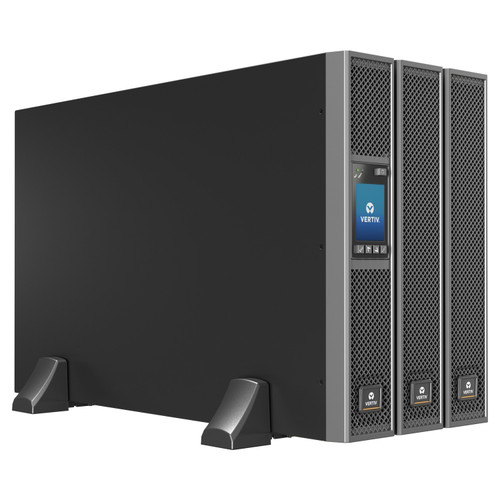
The GXT5-10KMVRT6UXLN ships with a factory pre-installed Vertiv Liebert IntelliSlot RDU120 SNMP/Webcard that enables SNMP and web-based management out of the box. It also provides RS485, RS232, USB, a terminal block, and an external battery connector. A full-color graphic LCD with gravity-sensing orientation assists in both rack and tower orientations. Serial out-of-band management is supported via the RDU120.
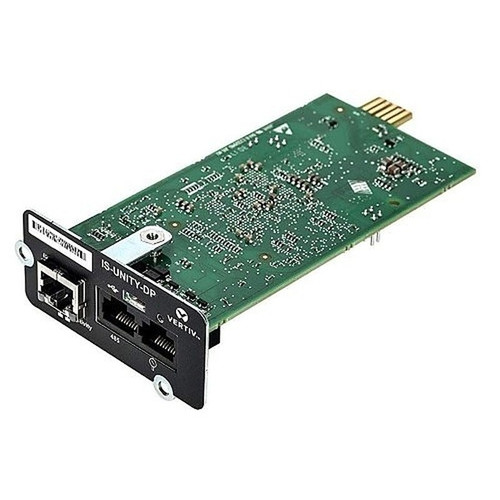
The GXT5LI-10KMVRT4UXLN lists a Serial Port, Network RJ-45 (RDU101), and USB. The RDU101 is an older-generation card versus the RDU120 in the GXT5. The provided specs do not indicate whether SNMP or web management is factory pre-installed or requires a separately purchased card. No mention of RS485, RS232, or an LCD control panel appears in the GXT5LI specs.
For installations requiring immediate SNMP/web visibility without additional procurement, the GXT5 has a documented advantage. The GXT5LI's management depth at the same out-of-box state cannot be confirmed from the provided specifications.
How do the units compare on efficiency ratings, safety certifications, and regulatory compliance?
The GXT5-10KMVRT6UXLN specifies efficiency figures: up to 98% in Active ECO Mode and up to 95% in online (double-conversion) mode. These numbers are absent from the GXT5LI-10KMVRT4UXLN's provided specifications; no efficiency percentages are stated for that model.
The GXT5LI-10KMVRT4UXLN carries UL 1642 (Li-Ion Battery Cells), UL 1973 (Li-Ion Battery Pack with UPS), UL 1778, CSA 22.2 No. 107.3, c-UL, FCC Part 15 Class A, and Energy Star 2.0. The lithium-ion-specific UL marks are safety-significant for jurisdictions with AHJ scrutiny of Li-Ion installations.
The GXT5-10KMVRT6UXLN carries Energy Star 2.0, UL 1778, c-UL, RoHS2, and REACH. RoHS2 and REACH compliance are relevant for deployments with EU-origin equipment restrictions or environmental procurement policies. FCC Part 15 Class A is not listed for the GXT5 in the provided specs.
Both units share UL 1778, c-UL, and Energy Star 2.0 as common ground. The GXT5LI adds battery-chemistry-specific safety listings; the GXT5 adds RoHS2/REACH and published efficiency data.
Which should you choose: the GXT5LI-10KMVRT4UXLN or the GXT5-10KMVRT6UXLN?
Our take: The GXT5LI-10KMVRT4UXLN is the stronger choice when rack space is constrained, lithium-ion battery chemistry is required or preferred, and the installation environment involves AHJ review of battery safety standards. It is 2U shorter (4U vs 6U), 68.5 lb lighter (156.3 lb vs 224.8 lb), and carries explicit Li-Ion UL certifications (UL 1642, UL 1973) absent from the GXT5. Conversely, the GXT5-10KMVRT6UXLN is the stronger choice when immediate out-of-box SNMP and web management are required — it ships with a factory-installed RDU120 card versus the GXT5LI's RDU101 — and when published efficiency figures matter for energy audits (98% ECO / 95% online, versus no stated figures for the GXT5LI). The GXT5 is also 9.4 in shallower in depth (25.6 in vs 35 in), suiting shallower cabinet profiles. Buyers deploying into a modern IT environment with existing SNMP infrastructure and shallow racks should favour the GXT5; those prioritising Li-Ion longevity and rack-unit density should favour the GXT5LI.
Side-by-Side Comparison
Spec-for-spec, from manufacturer data.
| Specification | Vertiv GXT5LI-10KMVRT4UXLN | Vertiv GXT5-10KMVRT6UXLN |
|---|---|---|
| Power Rating | 10,000 VA / 10,000 W | 10,000 VA / 10,000 W |
| Topology | Double-Conversion Online | Double-Conversion Online |
| Battery Chemistry | Lithium-Ion (UL 1642 / UL 1973 listed) | Not specified in provided specs |
| Rack Height | 4U (6.9 in) | 6U (10.2 in) |
| Width | 16.9 in | 16.9 in |
| Depth | 35 in | 25.6 in |
| Weight | 156.3 lb | 224.8 lb |
| Input Voltage Range | 120V / 240V | Typical 208VAC; Range 176–280VAC |
| Output Voltage | 120V / 208V (120V/240V user-configurable) | 208/120VAC (user-configurable) |
| Wiring | Hardwired (L1, L2, N, G) | Hardwired in/out; Optional PODs available |
| Network Interface | RJ-45 (RDU101) | Factory-installed RDU120 SNMP/Webcard |
| Additional Interfaces | Serial Port, USB | RS485, RS232, USB, terminal block, ext. battery connector |
| Protocols | Not specified in provided specs | SNMP, web management, serial out-of-band |
| Control Panel | Not specified in provided specs | Full-color graphic LCD with gravity-sensing orientation |
| Efficiency | Not specified in provided specs | Up to 98% ECO Mode; up to 95% online mode |
| Certifications | UL 1642, UL 1973, UL 1778, CSA 22.2 No. 107.3, c-UL, FCC Part 15 Class A, Energy Star 2.0 | UL 1778, c-UL, RoHS2, REACH, Energy Star 2.0 |
| Operating Temperature | 32°F to 104°F (0°C to 40°C); 10% derating at 50°C | 32°F to 104°F (0°C to 40°C) |
Frequently Asked Questions
Which should you choose: the GXT5LI-10KMVRT4UXLN or the GXT5-10KMVRT6UXLN?
The GXT5LI-10KMVRT4UXLN is the stronger choice when rack space is constrained, lithium-ion battery chemistry is required or preferred, and the installation environment involves AHJ review of battery safety standards. It is 2U shorter (4U vs 6U), 68.5 lb lighter (156.3 lb vs 224.8 lb), and carries explicit Li-Ion UL certifications (UL 1642, UL 1973) absent from the GXT5. Conversely, the GXT5-10KMVRT6UXLN is the stronger choice when immediate out-of-box SNMP and web management are required — it ships with a factory-installed RDU120 card versus the GXT5LI's RDU101 — and when published efficiency figures matter for energy audits (98% ECO / 95% online, versus no stated figures for the GXT5LI). The GXT5 is also 9.4 in shallower in depth (25.6 in vs 35 in), suiting shallower cabinet profiles. Buyers deploying into a modern IT environment with existing SNMP infrastructure and shallow racks should favour the GXT5; those prioritising Li-Ion longevity and rack-unit density should favour the GXT5LI.
Is the GXT5LI-10KMVRT4UXLN or GXT5-10KMVRT6UXLN better for a high-density rack where space is tight?
The GXT5LI-10KMVRT4UXLN is the more space-efficient option at 4U (6.9 in tall) versus the GXT5-10KMVRT6UXLN at 6U (10.2 in tall). However, the GXT5LI is 9.4 in deeper (35 in vs 25.6 in), so cabinet depth must also be verified. If rack-unit height is the binding constraint, the GXT5LI saves 2U; if cabinet depth is the constraint, the GXT5 is the shallower unit.
Which unit is ready for SNMP and web-based monitoring right out of the box?
Based on the provided specifications, the GXT5-10KMVRT6UXLN ships with a factory pre-installed Vertiv Liebert IntelliSlot RDU120 SNMP/Webcard that enables SNMP and web management immediately. The GXT5LI-10KMVRT4UXLN lists a Network RJ-45 port (RDU101) but the provided specs do not confirm whether SNMP and web management are factory pre-installed or require an additional card purchase. Buyers requiring confirmed out-of-box SNMP capability should verify GXT5LI configuration with Vertiv.
Does the lithium-ion battery in the GXT5LI-10KMVRT4UXLN affect installation requirements compared to the GXT5-10KMVRT6UXLN?
Yes, potentially. The GXT5LI-10KMVRT4UXLN carries UL 1642 (Li-Ion Battery Cells) and UL 1973 (Li-Ion Battery Pack with UPS) listings, which are specific to lithium-ion chemistry and may be subject to additional AHJ (Authority Having Jurisdiction) review under local fire and building codes. The GXT5-10KMVRT6UXLN does not carry these listings in its provided specifications. Installers in jurisdictions with strict Li-Ion placement rules — such as those requiring fire suppression adjacency or quantity limits — should review local codes before specifying the GXT5LI.
More UPS Comparisons
- APC by Schneider Electric SRTL10KRM4UT-5KTF2 vs Panduit U10N32V
- APC by Schneider Electric SRTL10KRM4UT-5KTF2 vs Panduit U10N11V
- APC by Schneider Electric SRTL10KRM4UT-5KTF2 vs Panduit U10N12V
- APC by Schneider Electric SRTL10KRM4UT-5KTF2 vs Vertiv GXT5-10KHVRT5UXLN
- APC by Schneider Electric SRTL10KRM4UT-5KTF2 vs APC by Schneider Electric E3SUPS10KFBS
- APC by Schneider Electric SRTL10KRM4UT-5KTF2 vs APC by Schneider Electric SRT10KRMXLT-10KTF
UPS Buying Guides
Get a Second Opinion on Your Camera Choice
Share your site layout, coverage goals, and budget. Our team will validate the camera selection, flag anything we would change, and recommend products that match the use case.