
APC by Schneider Electric SRTL10KRM4UT-5KTF2 vs Panduit U10N11V: Specification Comparison
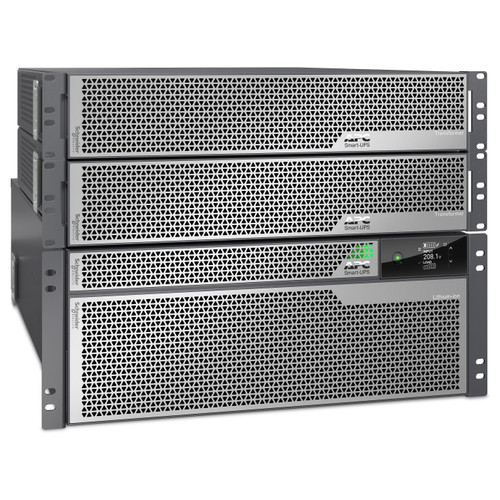
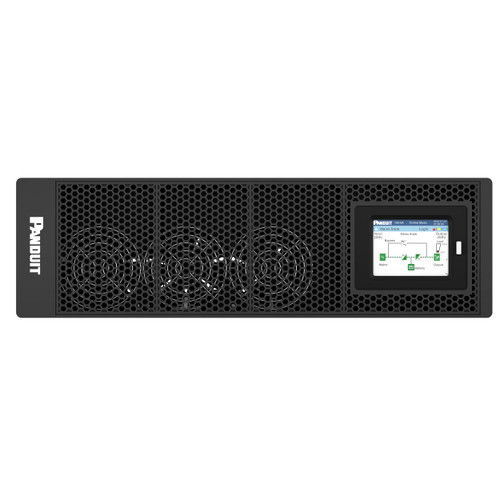
Both the APC Smart-UPS Ultra SRTL10KRM4UT-5KTF2 and the Panduit SteadySine U10N11V are 10 kVA double-conversion online rack-mount UPS units targeting data center and enterprise deployments. The APC unit adds a bundled 2×5 kVA step-down transformer for 240 V–to–208 V conversion and specifies a lithium-ion battery chemistry with a 1.5-hour recharge time, while the Panduit unit lists hot-swappable battery modules and a network card slot. This comparison evaluates power architecture and output capability, battery and runtime characteristics, and physical integration and management.
In This Guide
- How do the power architecture and output capabilities of these two 10 kVA UPS units compare?
- What are the differences in battery technology, recharge time, and runtime extensibility between these two units?
- How do the two units differ in physical form factor, rack space, connectivity, and remote management?
- Which should you choose: the SRTL10KRM4UT-5KTF2 or the U10N11V?
- Side-by-Side Specs
- FAQ
How do the power architecture and output capabilities of these two 10 kVA UPS units compare?
Both units share a 10 kVA / 10 kW double-conversion online topology with a pure sine wave output, meaning neither introduces transfer-time risk during a utility event. The APC SRTL10KRM4UT-5KTF2 specifies an input voltage range of 208 V AC or 240 V AC (1-phase) and an identical output range, with a maximum configurable power of 10,000 VA / 10,000 W and a crest factor of 3:1. Notably, the SKU bundles two 5 kVA step-down transformers (240 V to 208 V), which makes it a pre-packaged solution for facilities where the utility feed is 240 V but IT loads require 208 V.
The Panduit U10N11V specifies hardwire terminal input and an output waveform of pure sine wave, but its spec sheet as provided does not state an explicit input or output voltage rating, rated VA-to-watt power factor, crest factor, or maximum configurable power beyond the '10 kVA' model designation. Buyers requiring confirmed voltage compatibility or power-factor specifications for the Panduit unit will need to consult Panduit's full datasheet (referenced as /content/product-datasheets/U10N11V.pdf) before committing.
What are the differences in battery technology, recharge time, and runtime extensibility between these two units?
The APC SRTL10KRM4UT-5KTF2 uses a lithium-ion (Li-Ion) battery at 180 V DC bus voltage, with a rated recharge time of 1.5 hours and a battery charging power of 1,200 W. The spec explicitly marks extendable runtime as '0', meaning this SKU does not support external battery modules. Li-Ion chemistry generally delivers a longer calendar life and a smaller footprint compared with VRLA, and the 1.5-hour recharge is a meaningful operational advantage in facilities with frequent utility events.
The Panduit U10N11V lists hot-swappable battery modules as its battery characteristic. Hot-swap capability allows battery replacement without shutting down connected loads — an operationally important feature for 24/7 data center environments. However, the provided specs do not disclose the battery chemistry (e.g., VRLA vs. Li-Ion), the DC bus voltage, a recharge time figure, or whether external battery cabinets for runtime extension are supported. These are critical omissions for a buyer doing a runtime calculation or a total-cost-of-ownership analysis.
How do the two units differ in physical form factor, rack space, connectivity, and remote management?
The APC SRTL10KRM4UT-5KTF2 occupies 4U in a standard 19-inch rack and ships with a rack/tower convertible mounting kit. It includes an embedded Network Management Card 3 (NMC3) — no additional adapter purchase is required — plus a USB port, a serial port, an available expansion slot, and a multi-function LCD control panel. Audible and visible alarms are prioritized by severity. The unit's acoustic output is specified at 55 dB. Operating altitude is rated to 10,000 ft; storage altitude extends to 50,000 ft. IP protection is IP20. Package weight is 397.9 lb (180.5 kg).
The Panduit U10N11V is a 6U (approximately) rack-mountable unit compatible with 19-inch EIA 2-post and 4-post racks. Its dimensions are 10.3 inches high by 17.3 inches wide. Remote management requires a separately purchased network card adapter — the NMC is not embedded. No LCD panel, alarm type, acoustic level, operating altitude, IP rating, or unit weight is stated in the provided specifications. The 6U versus 4U difference is meaningful in dense deployments: the APC unit consumes 33% less rack space for the same kVA rating.
Which should you choose: the SRTL10KRM4UT-5KTF2 or the U10N11V?
Our take: The SRTL10KRM4UT-5KTF2 is the stronger choice when full specification transparency, embedded network management, a compact 4U footprint, and a bundled step-down transformer are priorities. Three concrete spec deltas favor it: first, it occupies 4U versus the Panduit's approximately 6U, a 33% rack-space advantage at identical kVA; second, it includes an embedded NMC3 for out-of-box SNMP/network management versus the Panduit's sold-separately card slot; third, it documents a 1.5-hour Li-Ion recharge time and a 55 dB acoustic level, while the Panduit's specs omit both figures entirely. The Panduit U10N11V's hot-swappable battery modules are a genuine operational advantage for environments requiring zero-downtime battery service, but critical specs — input/output voltage, recharge time, battery chemistry, weight, and altitude rating — are absent from the provided data. Buyers evaluating the U10N11V for a finalized design must obtain Panduit's full datasheet before drawing conclusions.
Side-by-Side Comparison
Spec-for-spec, from manufacturer data.
| Specification | APC by Schneider Electric SRTL10KRM4UT-5KTF2 | Panduit U10N11V |
|---|---|---|
| Product Type | Uninterruptible Power Supply (UPS) | Uninterruptible Power Supply (UPS) |
| Topology | On-Line (Double-Conversion) | Double-Conversion Online |
| Rated Power | 10,000 VA / 10,000 W | 10 kVA (W not specified) |
| Input Voltage | 208 V AC or 240 V AC, 1-phase | — |
| Output Voltage | 208 V AC or 240 V AC, 1-phase | — |
| Output Waveform | Sine wave | Pure sine wave |
| Input Frequency | 50/60 Hz | — |
| Battery Chemistry | Li-Ion (Lithium Ion) | — |
| Battery Hot-Swap | — | Yes (hot-swappable modules) |
| Battery Recharge Time | 1.5 h | — |
| Battery Charging Power | 1,200 W | — |
| Rack Height | 4U | 6U (approx.) |
| Form Factor | Rack/tower convertible | Rack-mountable (19" EIA 2-post/4-post) |
| Embedded Network Mgmt | NMC3 (embedded) | Card slot only (adapter sold separately) |
| Other Connectivity | USB, Serial, Expansion slot | — |
| Acoustic Level | 55 dB | — |
| Operating Altitude | 0–10,000 ft | — |
| IP Protection | IP20 | — |
| Unit Weight (packaged) | 397.9 lb (180.5 kg) | — |
| Bundled Step-Down Transformer | 2 × 5 kVA (240 V to 208 V) | — |
Frequently Asked Questions
Which should you choose: the SRTL10KRM4UT-5KTF2 or the U10N11V?
The SRTL10KRM4UT-5KTF2 is the stronger choice when full specification transparency, embedded network management, a compact 4U footprint, and a bundled step-down transformer are priorities. Three concrete spec deltas favor it: first, it occupies 4U versus the Panduit's approximately 6U, a 33% rack-space advantage at identical kVA; second, it includes an embedded NMC3 for out-of-box SNMP/network management versus the Panduit's sold-separately card slot; third, it documents a 1.5-hour Li-Ion recharge time and a 55 dB acoustic level, while the Panduit's specs omit both figures entirely. The Panduit U10N11V's hot-swappable battery modules are a genuine operational advantage for environments requiring zero-downtime battery service, but critical specs — input/output voltage, recharge time, battery chemistry, weight, and altitude rating — are absent from the provided data. Buyers evaluating the U10N11V for a finalized design must obtain Panduit's full datasheet before drawing conclusions.
Does the SRTL10KRM4UT-5KTF2 or the U10N11V include a network management card out of the box?
The APC SRTL10KRM4UT-5KTF2 includes an embedded Network Management Card 3 (NMC3) as part of the unit — no additional purchase is required. The Panduit U10N11V provides a network card slot but the management adapter is sold separately; the provided specs do not identify which adapter or its cost.
Can I replace batteries without taking either UPS offline?
The Panduit U10N11V specifies hot-swappable battery modules, which allows battery replacement under load without shutting down connected equipment. The APC SRTL10KRM4UT-5KTF2 does not describe hot-swap capability in the provided specifications; buyers with a zero-downtime battery-service requirement should confirm APC's battery replacement procedure before selecting that unit.
Which unit takes up less rack space, and does that matter at 10 kVA?
The APC SRTL10KRM4UT-5KTF2 is rated at 4U; the Panduit U10N11V is listed at approximately 6U. At 10 kVA the 2U difference is meaningful in high-density deployments where rack space commands a premium — the APC unit delivers the same kVA output in a one-third smaller rack footprint. If the rack is already near capacity, this delta alone can determine which unit fits without requiring an additional cabinet.
More UPS Comparisons
- APC by Schneider Electric SRTL10KRM4UT-5KTF2 vs Panduit U10N32V
- APC by Schneider Electric SRTL10KRM4UT-5KTF2 vs Panduit U10N12V
- APC by Schneider Electric SRTL10KRM4UT-5KTF2 vs Vertiv GXT5-10KHVRT5UXLN
- APC by Schneider Electric SRTL10KRM4UT-5KTF2 vs APC by Schneider Electric E3SUPS10KFBS
- APC by Schneider Electric SRTL10KRM4UT-5KTF2 vs APC by Schneider Electric SRT10KRMXLT-10KTF
- Panduit U10N32V vs APC by Schneider Electric E3SUPS10KFBS
UPS Buying Guides
Get a Second Opinion on Your Camera Choice
Share your site layout, coverage goals, and budget. Our team will validate the camera selection, flag anything we would change, and recommend products that match the use case.