
APC by Schneider Electric SRTL10KRM4UT-5KTF2 vs Panduit U10N12V: Specification Comparison
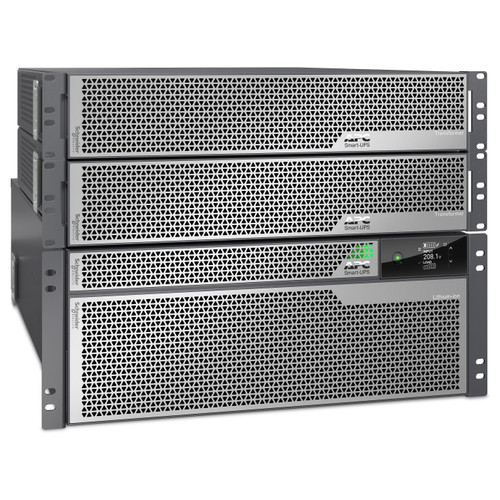
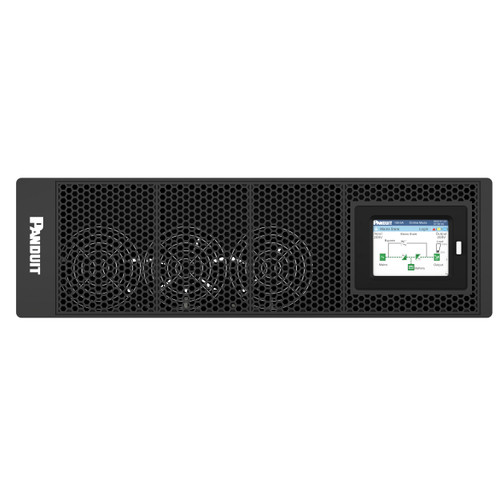
Both units are 10 kVA true online double-conversion rack UPS systems aimed at data-center and enterprise environments. The APC Smart-UPS Ultra SRTL10KRM4UT-5KTF2 is a 4U rack/tower-convertible unit built around Lithium-Ion batteries with an embedded network management card, while the Panduit SteadySine U10N12V is a 2U rack-mount unit using hot-swappable sealed lead-acid modules with SNMP-based management. Both serve the same procurement category—10 kVA critical-power protection—making a direct cross-shop comparison appropriate for IT buyers and installers.
In This Guide
- How do the power output ratings, topology, and input/output voltage flexibility compare?
- Which unit offers better runtime, battery technology, and on-site serviceability?
- How do the physical footprint, management capabilities, and ecosystem integration differ?
- Which should you choose: the SRTL10KRM4UT-5KTF2 or the U10N12V?
- Side-by-Side Specs
- FAQ
How do the power output ratings, topology, and input/output voltage flexibility compare?
Both units are rated at 10 kVA and claim true online double-conversion topology, so neither imposes a transfer-time penalty during a utility event. The APC SRTL10KRM4UT-5KTF2 specifies a 10,000 W real-power rating (unity power factor) with an output of 208 V AC and an input range supporting 208 V and 240 V AC single-phase. It also includes two integrated 5 kVA step-down transformers (per the SKU suffix -5KTF2), effectively delivering usable 120 V branch capacity without external transformers. Its output frequency is 50/60 Hz ±3 Hz synchronized to mains, and it produces a true sine wave with a 3:1 crest factor.
The Panduit U10N12V's output is specified at 120 V AC ±2%, which is a fixed single-voltage output. Its wide-tolerance input spans 160–280 V AC—a broader window than APC's stated 208/240 V—providing stronger ride-through during brownout or high-line conditions. Real-power rating in watts is not stated in the supplied Panduit spec sheet; only VA capacity (10,000 VA) is confirmed. Buyers requiring simultaneous 208 V and 120 V output from a single chassis will find the APC's bundled step-down transformers a meaningful differentiator; buyers needing only 120 V output in a tighter space may lean toward Panduit.
Which unit offers better runtime, battery technology, and on-site serviceability?
The APC SRTL10KRM4UT-5KTF2 uses a Lithium-Ion battery pack at 180 V DC bus voltage. LI-Ion chemistry typically delivers a longer service life (up to 10 years vs 3–5 years for VRLA), lower weight, and faster recharge—APC specifies a 1.5-hour typical recharge time at 1,200 W charging power. However, the spec sheet marks 'Extendable Runtime: 0,' meaning no external battery cabinet is supported for this model; runtime is fixed to the internal pack and is not disclosed in the supplied specs.
The Panduit U10N12V uses hot-swappable sealed lead-acid (VRLA) battery modules accessible from the front of the 2U chassis. Runtime is stated as 5–8 minutes typical at full 10 kVA load. While VRLA chemistry has a shorter service life, front-accessible hot-swap modules allow battery replacement without removing the unit from service or the rack—a meaningful operational advantage in live data-center environments. Recharge time and battery voltage bus are not specified in the supplied Panduit data. Buyers prioritizing zero-downtime battery maintenance favor the Panduit; buyers prioritizing long battery life and fast recharge favor the APC.
How do the physical footprint, management capabilities, and ecosystem integration differ?
The APC SRTL10KRM4UT-5KTF2 occupies 4U in a rack or can be converted to tower orientation using the included kit. Its connectivity suite includes a USB port, serial port, an available expansion slot, and a factory-embedded NMC3 (Network Management Card 3), which provides out-of-box remote monitoring, power-event logging, and integration with APC EcoStruxure IT software without purchasing an add-on card. The control panel is a multi-function LCD with audible and visible alarms prioritized by severity. Acoustic output is rated at 55 dB. Package weight is 397.9 lb (180.5 kg), reflecting the combined transformer and UPS assembly.
The Panduit U10N12V is a 2U unit (10.3 in H × 17.3 in W / 262 mm × 440 mm), saving 2U of rack space compared to the APC. Management is via SNMP v1/v2c/v3 and HTTP, and an LCD front-panel status monitor is included. Depth and unit weight are not specified in the supplied data. The 2U profile and front-serviceability design suit high-density racks and co-location environments where rack real estate is at a premium. No expansion slot or proprietary management ecosystem is mentioned. Buyers already standardized on APC/EcoStruxure benefit from the APC's embedded NMC3; buyers in mixed or vendor-neutral environments may find Panduit's open SNMP/HTTP management more flexible.
Which should you choose: the SRTL10KRM4UT-5KTF2 or the U10N12V?
Our take: The SRTL10KRM4UT-5KTF2 is the stronger choice when the installation requires simultaneous 208 V and 120 V output, a long-life Lithium-Ion battery with a 1.5-hour recharge, and factory-embedded remote management via NMC3—all within a single 4U chassis rated at a confirmed 10,000 W real power. The U10N12V counters with a 2U footprint (half the rack height), front-accessible hot-swappable VRLA modules that allow live battery replacement without downtime, and a wider input tolerance of 160–280 V AC versus APC's 208/240 V. Real-power output in watts is unconfirmed for the Panduit, which is a material gap for load-planning. Specifiers building APC/EcoStruxure-managed sites should standardize on the SRTL10KRM4UT-5KTF2; operators prioritizing rack density, battery hot-swap serviceability, and vendor-neutral SNMP management should evaluate the U10N12V, pending confirmation of its watt rating.
Side-by-Side Comparison
Spec-for-spec, from manufacturer data.
| Specification | APC by Schneider Electric SRTL10KRM4UT-5KTF2 | Panduit U10N12V |
|---|---|---|
| Product Class | Online UPS | Online UPS |
| Topology | On-Line Double-Conversion | True Online Double-Conversion |
| Rated Capacity (VA) | 10,000 VA | 10,000 VA |
| Rated Capacity (W) | 10,000 W | — (not specified) |
| Input Voltage | 208 V / 240 V AC, 1-phase | 160–280 V AC (wide tolerance) |
| Output Voltage | 208 V / 240 V AC, 1-phase | 120 V AC ±2% |
| Step-Down Transformers | 2 × 5 kVA (included) | — |
| Battery Technology | Lithium-Ion (Li-Ion) | Sealed Lead-Acid (VRLA) |
| Battery Hot-Swap | — (not specified) | Yes, front-accessible |
| Recharge Time | 1.5 hours | — (not specified) |
| Runtime at Full Load | — (not specified) | 5–8 minutes typical |
| Form Factor | 4U, Rack/Tower convertible | 2U Rack-Mount |
| Unit Height | 4U | 10.3 in (262 mm) / 2U |
| Management | USB, Serial, NMC3 embedded, expansion slot | SNMP v1/v2c/v3, HTTP |
| Display | Multi-function LCD | LCD Front Panel |
| Acoustic Level | 55 dB | — (not specified) |
Frequently Asked Questions
Which should you choose: the SRTL10KRM4UT-5KTF2 or the U10N12V?
The SRTL10KRM4UT-5KTF2 is the stronger choice when the installation requires simultaneous 208 V and 120 V output, a long-life Lithium-Ion battery with a 1.5-hour recharge, and factory-embedded remote management via NMC3—all within a single 4U chassis rated at a confirmed 10,000 W real power. The U10N12V counters with a 2U footprint (half the rack height), front-accessible hot-swappable VRLA modules that allow live battery replacement without downtime, and a wider input tolerance of 160–280 V AC versus APC's 208/240 V. Real-power output in watts is unconfirmed for the Panduit, which is a material gap for load-planning. Specifiers building APC/EcoStruxure-managed sites should standardize on the SRTL10KRM4UT-5KTF2; operators prioritizing rack density, battery hot-swap serviceability, and vendor-neutral SNMP management should evaluate the U10N12V, pending confirmation of its watt rating.
Can either UPS power both 208 V and 120 V loads at the same time?
The APC SRTL10KRM4UT-5KTF2 includes two integrated 5 kVA step-down transformers (indicated by the -5KTF2 suffix) and supports 208 V and 240 V AC output, enabling both voltage levels from one unit. The Panduit U10N12V is specified with a 120 V AC output only; no dual-voltage output capability is stated in its supplied specifications.
Which UPS is easier to maintain in a live rack without taking equipment offline?
The Panduit U10N12V uses front-accessible hot-swappable sealed lead-acid battery modules, allowing battery replacement while the unit remains online and in service. The APC SRTL10KRM4UT-5KTF2 uses an internal Lithium-Ion pack; the supplied specs do not indicate hot-swap capability or front serviceability for the battery, though LI-Ion chemistry typically extends intervals between replacements significantly.
Which unit is better suited for a high-density data center rack where space is critical?
The Panduit U10N12V occupies 2U of rack space (10.3 in / 262 mm height), making it the more space-efficient option at 10 kVA. The APC SRTL10KRM4UT-5KTF2 requires 4U. If rack space is the primary constraint, the Panduit has a clear advantage; if the bundled step-down transformers, embedded NMC3 management, or Lithium-Ion runtime characteristics outweigh the space cost, the APC is justified.
More UPS Comparisons
- APC by Schneider Electric SRTL10KRM4UT-5KTF2 vs Panduit U10N32V
- APC by Schneider Electric SRTL10KRM4UT-5KTF2 vs Panduit U10N11V
- APC by Schneider Electric SRTL10KRM4UT-5KTF2 vs Vertiv GXT5-10KHVRT5UXLN
- APC by Schneider Electric SRTL10KRM4UT-5KTF2 vs APC by Schneider Electric E3SUPS10KFBS
- APC by Schneider Electric SRTL10KRM4UT-5KTF2 vs APC by Schneider Electric SRT10KRMXLT-10KTF
- Panduit U10N32V vs APC by Schneider Electric E3SUPS10KFBS
UPS Buying Guides
Get a Second Opinion on Your Camera Choice
Share your site layout, coverage goals, and budget. Our team will validate the camera selection, flag anything we would change, and recommend products that match the use case.