
Ubiquiti USW-LITE-8-POE vs TP-Link SG3210XHP-M2: Specification Comparison
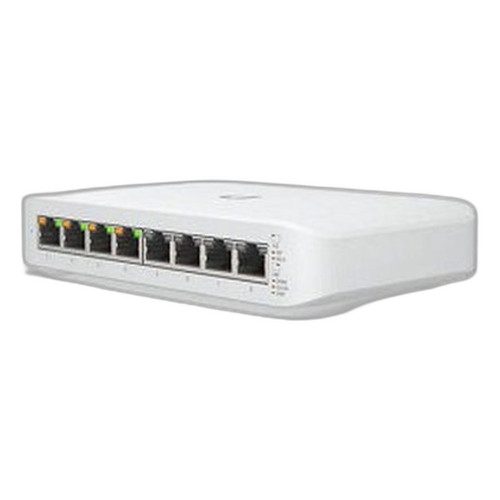
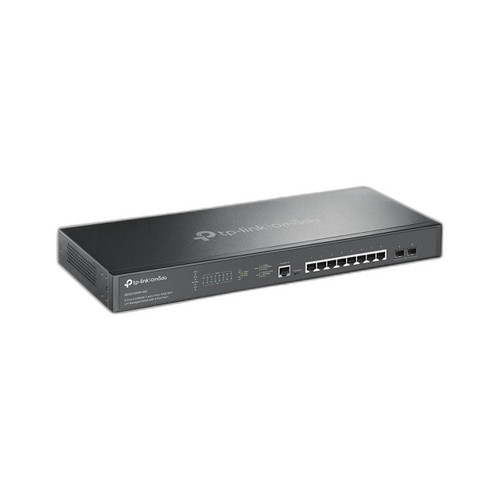
Both the Ubiquiti USW-LITE-8-POE and TP-Link SG3210XHP-M2 are managed PoE switches with 8 PoE-capable ports, placing them in the same general product class. However, they target meaningfully different deployment tiers: the Ubiquiti is a compact 1G desktop/wall-mount unit with a 52W PoE budget, while the TP-Link is a rack-mount L2+ switch with 2.5GBASE-T access ports, 10G SFP+ uplinks, and a 240W PoE budget. A buyer choosing between them is weighing port speed, PoE budget, form factor, and management depth.
In This Guide
- How do port speed, PoE budget, and switching throughput compare?
- How do physical form factor, power input, and operating environment differ?
- What management capabilities and ecosystem integration does each switch offer?
- Which should you choose: the USW-LITE-8-POE or the SG3210XHP-M2?
- Side-by-Side Specs
- FAQ
How do port speed, PoE budget, and switching throughput compare?
The USW-LITE-8-POE provides 8 × 1 Gbps RJ45 ports, all PoE+-capable (802.3at), with a total PoE budget of 52W across all ports. Its switching capacity is 16 Gbps with 8 Gbps non-blocking throughput and a forwarding rate of 12 Mpps.
The SG3210XHP-M2 provides 8 × 2.5GBASE-T RJ45 ports plus 2 × 10G SFP+ uplink slots, with a switching capacity of 80 Gbps. Its PoE budget is 240W, supporting 802.3bt (PoE++) at up to 90W per port per the card bullets, with 802.3af/at also specified. The SFP+ slots add dedicated high-speed uplink capacity absent from the Ubiquiti.
In raw throughput, the TP-Link's 80 Gbps switching capacity is 5× the Ubiquiti's 16 Gbps. The 240W PoE budget is 4.6× larger, enabling high-draw devices such as PTZ cameras, 802.3bt-powered APs, or PoE-powered displays. The Ubiquiti's 52W budget constrains average per-port PoE delivery to approximately 6.5W if all 8 ports are simultaneously loaded, suitable for low-draw cameras and basic APs but not high-wattage endpoints.
How do physical form factor, power input, and operating environment differ?
The USW-LITE-8-POE is a compact polycarbonate desktop/wall-mount unit measuring 99.6 × 163.7 × 31.7 mm and weighing 295 g. It is powered by an included external 60W AC/DC adapter (50–57V DC) and is not rack-mountable without an optional accessory. Its enclosure is polycarbonate.
The SG3210XHP-M2 is a 1U rack-mount unit measuring 440 × 180 × 44 mm, powered by an internal 100–240V AC 50/60 Hz power supply rated at 240W maximum. Rack-mount ears are implied by the 440 mm width matching standard 19-inch rack form factor. No enclosure material is specified.
Operating temperature range differs: the Ubiquiti is rated −15°C to +40°C, while the TP-Link is rated 0°C to +50°C. The Ubiquiti tolerates colder environments (useful in unheated spaces or outdoor enclosures) but has a lower upper thermal limit. The TP-Link's maximum heat dissipation is specified at 51.18 BTU/hr. No heat dissipation figure is provided for the Ubiquiti.
What management capabilities and ecosystem integration does each switch offer?
The USW-LITE-8-POE is managed via Ubiquiti's UniFi controller platform (software or cloud-hosted). The spec lists Ethernet as the management interface and cites support for up to 1,000 VLANs. NDAA Section 889 compliance is confirmed. Certifications include CE, FCC, IC, and Anatel. No CLI, SNMP, or RADIUS detail is provided in the supplied specs.
The SG3210XHP-M2 is an L2+ managed switch under TP-Link's Omada SDN platform. The specs explicitly list CLI, SNMP v1/v2c/v3, RMON, 802.1x authentication, RADIUS/TACACS+, static routing, VLAN, QoS, ACL, STP/RSTP/MSTP, IGMP snooping, and LACP. Encryption via 802.1x and RADIUS/TACACS+ is noted. NDAA compliance status is not stated in the provided specs.
For security deployments integrated with UniFi APs, cameras (UniFi Protect), or access control, the USW-LITE-8-POE fits natively. The SG3210XHP-M2's Omada platform offers richer Layer 2+ feature depth (static routing, LACP, MSTP, TACACS+) and suits IT buyers needing enterprise-grade protocol support or multi-vendor environments. SNMP v3 on the TP-Link enables integration with third-party NMS platforms; no equivalent SNMP spec is provided for the Ubiquiti.
Which should you choose: the USW-LITE-8-POE or the SG3210XHP-M2?
Our take: The SG3210XHP-M2 is the stronger choice when PoE budget, port speed, or management protocol depth are the primary drivers. It delivers 240W of PoE budget versus the USW-LITE-8-POE's 52W — a 4.6× difference that matters for high-draw devices like PTZ cameras or 802.3bt APs. Its 2.5GBASE-T access ports and 10G SFP+ uplinks (80 Gbps switching capacity vs. 16 Gbps) future-proof higher-bandwidth endpoints. Its L2+ feature set includes SNMP v3, TACACS+, LACP, and static routing, none of which are confirmed in the Ubiquiti's specs. The USW-LITE-8-POE is the correct choice for small, cost-sensitive UniFi ecosystems — its compact polycarbonate wall-mount form fits tight spaces, its −15°C lower operating floor suits cold environments, and it is confirmed NDAA Section 889 compliant (NDAA status is not stated for the TP-Link). Buyers deploying exclusively within Ubiquiti UniFi infrastructure at low device counts should choose the USW-LITE-8-POE; all others needing headroom in power, speed, or protocol support should choose the SG3210XHP-M2.
Side-by-Side Comparison
Spec-for-spec, from manufacturer data.
| Specification | Ubiquiti USW-LITE-8-POE | TP-Link SG3210XHP-M2 |
|---|---|---|
| Port Count (PoE) | 8 × 1G RJ45 (all PoE+) | 8 × 2.5GBASE-T RJ45 (all PoE+/++) |
| Uplink Ports | — | 2 × 10G SFP+ |
| PoE Standard | 802.3at (PoE+) | 802.3bt (PoE++), 802.3af/at |
| PoE Budget | 52W total | 240W total |
| Max PoE Per Port | — | Up to 90W (802.3bt) |
| Switching Capacity | 16 Gbps | 80 Gbps |
| Forwarding Rate | 12 Mpps | — |
| Non-Blocking Throughput | 8 Gbps | — |
| Management Level | Managed (UniFi) | L2+ Managed (Omada) |
| SNMP Support | — | v1/v2c/v3 |
| VLAN Support | 1,000 VLANs | VLAN (count not specified) |
| Form Factor | Desktop/wall-mount | 1U rack-mount |
| Dimensions (mm) | 99.6 × 163.7 × 31.7 | 440 × 180 × 44 |
| Power Supply | 60W external AC/DC adapter | Internal 100–240V AC, 50/60 Hz |
| Operating Temperature | −15°C to +40°C | 0°C to +50°C |
| NDAA Section 889 | Yes | Not stated in specs |
Frequently Asked Questions
Which should you choose: the USW-LITE-8-POE or the SG3210XHP-M2?
The SG3210XHP-M2 is the stronger choice when PoE budget, port speed, or management protocol depth are the primary drivers. It delivers 240W of PoE budget versus the USW-LITE-8-POE's 52W — a 4.6× difference that matters for high-draw devices like PTZ cameras or 802.3bt APs. Its 2.5GBASE-T access ports and 10G SFP+ uplinks (80 Gbps switching capacity vs. 16 Gbps) future-proof higher-bandwidth endpoints. Its L2+ feature set includes SNMP v3, TACACS+, LACP, and static routing, none of which are confirmed in the Ubiquiti's specs. The USW-LITE-8-POE is the correct choice for small, cost-sensitive UniFi ecosystems — its compact polycarbonate wall-mount form fits tight spaces, its −15°C lower operating floor suits cold environments, and it is confirmed NDAA Section 889 compliant (NDAA status is not stated for the TP-Link). Buyers deploying exclusively within Ubiquiti UniFi infrastructure at low device counts should choose the USW-LITE-8-POE; all others needing headroom in power, speed, or protocol support should choose the SG3210XHP-M2.
Is the USW-LITE-8-POE or SG3210XHP-M2 better for powering multiple PTZ cameras or high-wattage APs?
The SG3210XHP-M2 is better suited for high-draw PoE devices. Its 240W PoE budget with 802.3bt (PoE++) support — versus the USW-LITE-8-POE's 52W PoE+ (802.3at) budget — provides substantially more headroom. At 52W total, the Ubiquiti averages roughly 6.5W per port under full load, which may be insufficient for PTZ cameras or Wi-Fi 6E APs that can draw 25–90W. The TP-Link spec confirms up to 90W per port.
Can either switch be rack-mounted in a standard 19-inch cabinet?
The SG3210XHP-M2 is designed for rack mounting, with a 440 mm width matching standard 19-inch rack form factor and 1U height (44 mm). The USW-LITE-8-POE is a compact desktop/wall-mount unit measuring 99.6 × 163.7 × 31.7 mm; it is not specified as rack-mountable in the provided specs. Buyers requiring rack installation should select the SG3210XHP-M2.
Which switch is confirmed NDAA Section 889 compliant for federal or government-adjacent deployments?
The USW-LITE-8-POE is explicitly listed as NDAA Section 889 compliant in its certifications. The SG3210XHP-M2's provided specs do not include any statement of NDAA compliance. Buyers with federal procurement requirements or policies restricting non-NDAA equipment should verify the TP-Link's compliance status directly with TP-Link before purchase and should note that the Ubiquiti carries this certification as specified.
More Network Switch Comparisons
- Vivotek IHT-1271 vs TP-Link SG3210XHP-M2
- Vivotek IHT-1271 vs TP-Link S4500-8GP2F
- Vivotek IHT-1271 vs TP-Link SG1210P
- Vivotek IHT-1271 vs Allied Telesis AT-x530L-10GHXm-10
- Vivotek IHT-1271 vs Vivotek GEV-108A-130
- Vivotek IHT-1271 vs Vivotek IHT-1000
Network Switch Buying Guides
Get a Second Opinion on Your Camera Choice
Share your site layout, coverage goals, and budget. Our team will validate the camera selection, flag anything we would change, and recommend products that match the use case.