
Ubiquiti USW-FLEX-MINI-3 vs Ubiquiti USW-FLEX: Specification Comparison
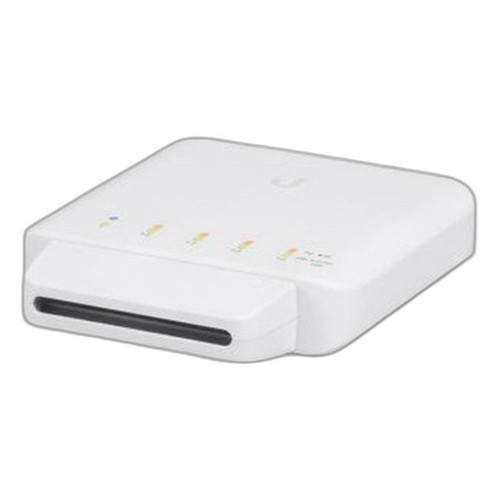
Both the Ubiquiti USW-FLEX-MINI-3 and USW-FLEX are 5-port gigabit managed switches from the UniFi Switching family, each targeting compact, space-constrained deployments where PoE power delivery and remote manageability matter. The core distinction lies in PoE standard and power budget, operating environment range, and physical ruggedness. Buyers cross-shopping these two are typically deciding between a lightweight indoor edge switch and a more hardened unit capable of outdoor or semi-outdoor installations with higher per-port power delivery.

In This Guide
- Which switch delivers more PoE power, and does the standard matter for my endpoints?
- Which unit is rated for harsher environments, and what certifications back that up?
- Are the switching capacity, forwarding rate, and management capabilities equivalent between these two?
- Which should you choose: the USW-FLEX-MINI-3 or the USW-FLEX?
- Side-by-Side Specs
- FAQ
Which switch delivers more PoE power, and does the standard matter for my endpoints?
The USW-FLEX-MINI-3 is rated PoE+ (802.3af per the _Poe Power spec) and distributes that across all 5 ports; no aggregate PoE budget figure is listed in the provided specs. The USW-FLEX steps up to PoE++ (802.3bt per _Poe Power) with a documented 60W total PoE++ output budget and a 46W PoE input path. Its output voltage is specified at 54V, 1.11A, and it accepts a 50–57V PoE voltage range on the input side.
For endpoints that draw within 802.3af limits — standard IP cameras, VoIP phones, basic access points — both switches can serve the load. Where the difference becomes decisive is with high-draw devices: 802.3bt-class APs, pan-tilt-zoom cameras, or digital signage players that pull 30W or more per port. The USW-FLEX's PoE++ standard and 60W aggregate budget accommodate those devices; the USW-FLEX-MINI-3's 802.3af rating and unspecified aggregate budget do not guarantee the same headroom. Installers should verify per-port and aggregate draw against the 60W ceiling on the USW-FLEX before provisioning multiple simultaneous high-draw loads.
Which unit is rated for harsher environments, and what certifications back that up?
The USW-FLEX-MINI-3 specifies an operating temperature of -5 to 45°C (23 to 113°F), placing it firmly in indoor, climate-controlled or lightly conditioned spaces. It weighs 0.330 lb (approx. 150 g) and its form factor is desktop or wall-mount. No ESD protection rating or outdoor mounting provision is listed in the provided specs.
The USW-FLEX is rated -40 to 55°C operating (with 46W PoE output), per both the structured spec and the tilde-prefixed datasheet fields. That 95-degree Celsius wider range enables unheated enclosures, dock installations, outdoor wall or pole mounts, and four-season climates where the MINI-3 would be out of spec. The USW-FLEX also documents ESD protection of ±16kV air and ±16kV contact discharge — a meaningful spec for outdoor or industrial edge points prone to electrostatic events. It weighs 230 g and adds pole-mount as a supported form factor alongside desktop and wall-mount. The USW-FLEX additionally carries NDAA compliance (confirmed in specs) and an Anatel certification, extending its certification footprint beyond the CE/FCC/IC shared by both units.
Are the switching capacity, forwarding rate, and management capabilities equivalent between these two?
Both switches share a 10 Gbps switching capacity. Forwarding rate diverges slightly: the USW-FLEX-MINI-3 is specified at 7.44 Mpps versus the USW-FLEX at 7 Mpps — a negligible real-world delta on a 5-port gigabit device. Both are non-blocking at their rated throughput.
On management, the USW-FLEX-MINI-3 explicitly lists UniFi Network integration and Web GUI under both the structured _Management field and tilde-sourced fields, and documents VLAN, QoS, Port Mirroring, and IGMP Snooping as supported features. The USW-FLEX's _Management field lists only 'Ethernet,' and no equivalent software feature list (VLAN count aside) is present in the structured specs — though the tilde datasheet fields note it as a UniFi-family managed switch and list 1,000 VLAN support. Buyers should treat the MINI-3's explicit feature enumeration as confirmed from provided specs; the USW-FLEX's broader feature set should be verified against Ubiquiti's official datasheet before assuming feature parity beyond VLAN count.
Which should you choose: the USW-FLEX-MINI-3 or the USW-FLEX?
Our take: The USW-FLEX-MINI-3 is the stronger choice when the deployment is strictly indoors, endpoints are 802.3af-class, and confirmed UniFi software feature support (VLAN, QoS, Port Mirroring, IGMP Snooping) is a priority from the provided specs. The USW-FLEX is the stronger choice when any of three conditions apply: the site requires PoE++ (802.3bt) power delivery up to a 60W aggregate budget versus the MINI-3's unspecified 802.3af ceiling; the installation environment falls outside the MINI-3's -5 to 45°C indoor range, since the USW-FLEX is rated to -40 to 55°C; or NDAA compliance is a procurement requirement, which only the USW-FLEX confirms in the provided specs. The USW-FLEX also adds pole-mount capability and ±16kV ESD protection absent from the MINI-3's spec sheet. Both units are UniFi-family 5-port gigabit switches with 10 Gbps switching capacity and shared CE/FCC/IC certifications, making the decision hinge almost entirely on power budget, operating environment, and compliance requirements.
Side-by-Side Comparison
Spec-for-spec, from manufacturer data.
| Specification | Ubiquiti USW-FLEX-MINI-3 | Ubiquiti USW-FLEX |
|---|---|---|
| Device Type | 5-Port Gigabit Managed Switch | 5-Port Gigabit Managed Switch |
| PoE Standard | PoE+ (802.3af) | PoE++ (802.3bt) |
| Total PoE Output Budget | — | 60W |
| PoE Input Voltage | 5V, 1A Power Adapter* | 50–57V PoE |
| Switching Capacity | 10 Gbps | 10 Gbps |
| Forwarding Rate | 7.44 Mpps | 7 Mpps |
| Throughput | — | 5 Gbps non-blocking |
| Operating Temperature | -5 to 45°C (23 to 113°F) | -40 to 55°C (-40 to 131°F) |
| ESD Protection | — | ±16kV Air, ±16kV Contact |
| VLAN Support | Yes (count not specified) | 1,000 VLANs |
| Management Interface | UniFi Network + Web GUI | Ethernet (UniFi family) |
| Confirmed Features | VLAN, QoS, Port Mirroring, IGMP Snooping | VLAN (others not listed in provided specs) |
| Mount Options | Desktop, Wall-mount | Desktop, Wall-mount, Pole-mount |
| Weight | 0.330 lb (~150 g) | 230 g (8.1 oz) |
| NDAA Compliant | — | Yes |
| Certifications | CE, FCC, IC | CE, FCC, IC, Anatel |
Frequently Asked Questions
Which should you choose: the USW-FLEX-MINI-3 or the USW-FLEX?
The USW-FLEX-MINI-3 is the stronger choice when the deployment is strictly indoors, endpoints are 802.3af-class, and confirmed UniFi software feature support (VLAN, QoS, Port Mirroring, IGMP Snooping) is a priority from the provided specs. The USW-FLEX is the stronger choice when any of three conditions apply: the site requires PoE++ (802.3bt) power delivery up to a 60W aggregate budget versus the MINI-3's unspecified 802.3af ceiling; the installation environment falls outside the MINI-3's -5 to 45°C indoor range, since the USW-FLEX is rated to -40 to 55°C; or NDAA compliance is a procurement requirement, which only the USW-FLEX confirms in the provided specs. The USW-FLEX also adds pole-mount capability and ±16kV ESD protection absent from the MINI-3's spec sheet. Both units are UniFi-family 5-port gigabit switches with 10 Gbps switching capacity and shared CE/FCC/IC certifications, making the decision hinge almost entirely on power budget, operating environment, and compliance requirements.
Can I power a high-wattage Wi-Fi 6E access point from the USW-FLEX-MINI-3?
The USW-FLEX-MINI-3 is rated PoE+ (802.3af per provided specs), which is limited to approximately 15.4W per port at the powered device. High-draw Wi-Fi 6E APs frequently require 802.3at (PoE+, up to 30W) or 802.3bt (PoE++, up to 60W). The MINI-3's 802.3af rating may be insufficient for those endpoints. The USW-FLEX is rated PoE++ (802.3bt) with a 60W aggregate output budget, making it the more appropriate choice for high-draw APs. Confirm your AP's power draw against each switch's spec before deployment.
Is the USW-FLEX suitable for an outdoor security camera installation in a northern climate with sub-zero winters?
Yes, based on provided specs. The USW-FLEX is rated for -40 to 55°C operating temperature (with 46W PoE output), covers sub-zero Fahrenheit conditions, and supports pole-mount installation. It also documents ±16kV ESD protection. The USW-FLEX-MINI-3 is rated only to -5°C (23°F) and lists no ESD protection or pole-mount option, making it unsuitable for outdoor or unheated enclosure deployments in cold climates.
Do both switches work inside UniFi Network for centralized management?
The USW-FLEX-MINI-3 explicitly lists UniFi Network integration and Web GUI in its provided specs, along with confirmed support for VLAN, QoS, Port Mirroring, and IGMP Snooping. The USW-FLEX's structured _Management field lists only 'Ethernet,' though its datasheet-sourced fields describe it as a UniFi managed switch with 1,000 VLAN support. Based strictly on the provided specs, the MINI-3's UniFi feature set is more fully documented. Buyers should confirm the USW-FLEX's full UniFi feature list against Ubiquiti's official product documentation before assuming identical software capabilities.
More Network Switch Comparisons
- TP-Link ES205GP vs Ubiquiti USW-FLEX
- TP-Link ES205GP vs Ubiquiti USW-FLEX-MINI
- TP-Link ES205GP vs Ubiquiti USW-FLEX-3
- TP-Link ES205GP vs Ubiquiti USW-FLEX-MINI-3
- TP-Link ES205GP vs TP-Link SG105PP-M2
- TP-Link SG105PP-M2 vs Ubiquiti USW-FLEX
Network Switch Buying Guides
Get a Second Opinion on Your Camera Choice
Share your site layout, coverage goals, and budget. Our team will validate the camera selection, flag anything we would change, and recommend products that match the use case.