
TP-Link SG6428XHP vs NETGEAR GS728TP-300NAS: Specification Comparison
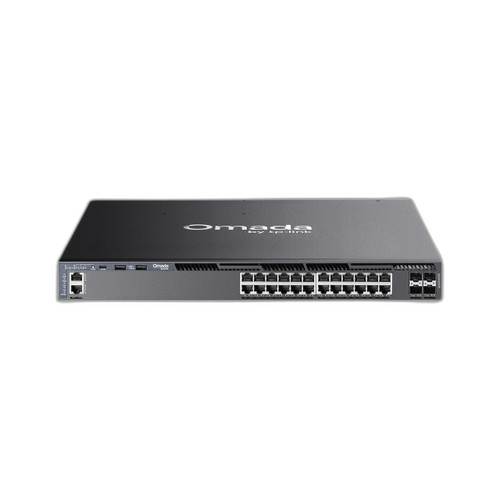
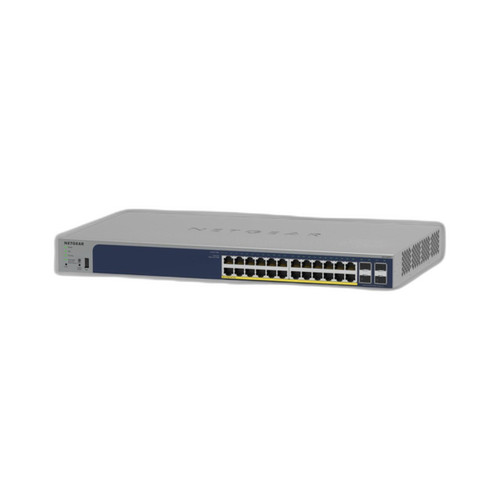
Both the TP-Link SG6428XHP and the NETGEAR GS728TP-300NAS are 24-port gigabit PoE switches aimed at SMB and enterprise-edge deployments running IP cameras, wireless access points, and VoIP endpoints. The SG6428XHP is a rack-mount L3 managed stackable with 10G SFP+ uplinks and a 720W PoE+ budget; the GS728TP-300NAS is a smart-managed switch with a 190W PoE+ budget and 48 Gbps switching fabric. This comparison covers PoE capacity and port density, switching performance and uplinks, and management depth.
In This Guide
Which switch can power more PoE devices — and at what total wattage?
The SG6428XHP provides 24 PoE+ (802.3af/at) ports with a combined budget of 720 W (achieved with dual PSM500-AC power supplies). At the 802.3at maximum of 30 W per port, this budget supports all 24 ports simultaneously at full draw, with headroom remaining. The switch also advertises perpetual PoE and fast PoE recovery features on those ports.
The GS728TP-300NAS provides a 190 W PoE+ (802.3at) total budget across its 24 ports. At a typical 13–15 W camera draw that supports roughly 12–15 powered devices concurrently before the budget ceiling is reached; at 30 W per port the budget is exhausted at approximately 6–7 ports simultaneously.
For deployments where every port may carry a powered device — PTZ cameras, dual-radio APs, or IP phones — the SG6428XHP's 720 W budget is a decisive practical advantage over the GS728TP-300NAS's 190 W ceiling. Buyers with fewer than 10–12 active PoE devices will find the NETGEAR's budget adequate.
How do switching capacity, throughput, and uplink speed compare?
The SG6428XHP is specified at 128 Gbps switching capacity with four dedicated 10G SFP+ uplink slots. A dual-core ARM processor running at 1.5 GHz and 8,192 MB eMMC storage underpin the L3 feature set. The 10G SFP+ ports allow aggregation to a core switch or server at ten times the speed of a standard gigabit uplink, which is material in high-density camera or NVR environments generating sustained throughput.
The GS728TP-300NAS is specified at 48 Gbps switching fabric. Uplink interface type and speed are not stated in the provided specifications beyond the 24 gigabit ports themselves; no dedicated 10G or SFP+ slots are confirmed in the data supplied.
The SG6428XHP's 128 Gbps fabric is 2.7× wider than the GS728TP-300NAS's 48 Gbps, and its four 10G SFP+ uplinks are a significant architectural advantage for aggregating high-bitrate video streams. Where the NETGEAR's 48 Gbps non-blocking fabric is sufficient for moderate traffic loads, the TP-Link's capacity aligns better with high-camera-count or stacked deployments.
Which switch offers deeper management, stacking, and platform integration?
The SG6428XHP is a full L3 managed switch operating under TP-Link's Omada SDN platform. It supports stacking — the 'stackable' designation in the product name — and includes a dedicated out-of-band management RJ45 port. Storage is 2×4 MB NOR flash plus 8,192 MB eMMC, which supports richer firmware and logging capability. The operating system is noted as 'PF' in the provided specs; no further OS detail is given. Bandwidth control features include egress rate limiting and broadcast control per the spec data.
The GS728TP-300NAS is described as smart-managed with Web GUI and SNMP access, and VLAN support is confirmed. This places it below a full L3 managed switch in feature depth — smart-managed switches typically lack routing, advanced ACLs, and SDN controller integration. Stacking capability is not specified in the provided data. Warranty is stated as 5 years; no equivalent warranty duration is provided for the SG6428XHP.
Organizations requiring SDN orchestration, L3 inter-VLAN routing, or multi-switch stacking will find the SG6428XHP's Omada ecosystem and L3 feature set materially deeper. The GS728TP-300NAS's smart-managed Web GUI and SNMP suit smaller installations where simplified browser-based configuration is preferred over controller-managed infrastructure.
Which should you choose: the SG6428XHP or the GS728TP-300NAS?
Our take: The SG6428XHP is the stronger choice when PoE density, switching headroom, and management depth are all required simultaneously. Its 720 W PoE+ budget is 3.8× the GS728TP-300NAS's 190 W, enabling all 24 ports to run at full 30 W draw — critical for PTZ cameras or dual-radio APs. Its 128 Gbps switching capacity is 2.7× wider than the NETGEAR's 48 Gbps, and four 10G SFP+ uplinks support high-bitrate aggregation that the GS728TP-300NAS's spec sheet does not confirm. The Omada L3 managed platform adds SDN control and stacking beyond the NETGEAR's smart-managed feature set. The GS728TP-300NAS is a reasonable fit for smaller installations with fewer than 12 active PoE devices, a preference for simplified web-based management, and a noted 5-year warranty — a warranty term absent from the SG6428XHP's provided specifications. Platform commitment matters: the SG6428XHP locks the buyer into the Omada SDN ecosystem.
Side-by-Side Comparison
Spec-for-spec, from manufacturer data.
| Specification | TP-Link SG6428XHP | NETGEAR GS728TP-300NAS |
|---|---|---|
| Product Type | L3 Managed Stackable Switch | Smart-Managed Switch |
| PoE Standard | 802.3af/at (PoE+) | 802.3at (PoE+) |
| PoE Budget | 720 W (with 2× PSM500-AC) | 190 W |
| PoE Ports | 24× PoE+ RJ45 | 24× PoE+ RJ45 |
| Port Speed | 24× 10/100/1000 Mbps | 24× 10/100/1000 Mbps |
| Uplink Slots | 4× 10G SFP+ | — |
| Switching Capacity | 128 Gbps | 48 Gbps |
| Processor | Dual-core ARM @ 1.5 GHz | — |
| Storage | 2×4 MB NOR + 8,192 MB eMMC | — |
| Management Depth | L3 Managed / Omada SDN | Smart-Managed / Web GUI / SNMP |
| VLAN Support | — | Yes |
| Stacking | Yes (stackable) | — |
| Mount Type | Rack | Wall / Ceiling |
| Power Supply Input | 100–240 V ~ 50/60 Hz | — |
| Operating Temp | −5 °C to 45 °C (23 °F to 113 °F) | — |
| Warranty | — | 5 years |
Frequently Asked Questions
Which should you choose: the SG6428XHP or the GS728TP-300NAS?
The SG6428XHP is the stronger choice when PoE density, switching headroom, and management depth are all required simultaneously. Its 720 W PoE+ budget is 3.8× the GS728TP-300NAS's 190 W, enabling all 24 ports to run at full 30 W draw — critical for PTZ cameras or dual-radio APs. Its 128 Gbps switching capacity is 2.7× wider than the NETGEAR's 48 Gbps, and four 10G SFP+ uplinks support high-bitrate aggregation that the GS728TP-300NAS's spec sheet does not confirm. The Omada L3 managed platform adds SDN control and stacking beyond the NETGEAR's smart-managed feature set. The GS728TP-300NAS is a reasonable fit for smaller installations with fewer than 12 active PoE devices, a preference for simplified web-based management, and a noted 5-year warranty — a warranty term absent from the SG6428XHP's provided specifications. Platform commitment matters: the SG6428XHP locks the buyer into the Omada SDN ecosystem.
Is the SG6428XHP or GS728TP-300NAS better for a 20-camera IP surveillance deployment?
For a 20-camera deployment the SG6428XHP is the more suitable choice based on the provided specs. Its 720 W PoE+ budget can sustain all 24 ports at up to 30 W each simultaneously, covering 20 cameras with room to spare. The GS728TP-300NAS's 190 W budget would be exhausted at approximately 6–7 ports at full 30 W draw, or 12–15 cameras at a typical 13–15 W draw — insufficient for a 20-camera load unless per-camera wattage is very low and carefully managed.
Can the GS728TP-300NAS stack with multiple units the way the SG6428XHP can?
Stacking capability is explicitly listed for the SG6428XHP (described as a 'stackable' L3 switch in its product name and spec data). The GS728TP-300NAS's provided specifications do not mention stacking support. Buyers requiring multi-switch stacking for unified management and expanded port count should rely on the SG6428XHP's confirmed stackable architecture; stacking on the NETGEAR cannot be confirmed from the data supplied.
Which switch is easier to manage without a dedicated network administrator?
The GS728TP-300NAS's smart-managed designation with Web GUI and SNMP access is typically designed for simpler, browser-based configuration without requiring deep networking expertise or a controller appliance. The SG6428XHP is a full L3 managed switch integrated into the Omada SDN platform, which offers greater capability but also greater configuration complexity and benefits most when an Omada controller (hardware or software) is deployed. For installations without a dedicated network administrator, the NETGEAR's smart-managed interface is the more approachable option based on the spec data provided.
More Network Switch Comparisons
- TP-Link S5500-24GP4XF vs NETGEAR GS728TP-300NAS
- TP-Link S5500-24GP4XF vs Comnet CNGE24FX12TX12MSPOE
- TP-Link S5500-24GP4XF vs Ubiquiti USW-24
- TP-Link S5500-24GP4XF vs Ubiquiti USW-ENTERPRISEXG-24
- TP-Link S5500-24GP4XF vs TP-Link SL2428P
- TP-Link S5500-24GP4XF vs TP-Link SG3428XPP-M2
Network Switch Buying Guides
Get a Second Opinion on Your Camera Choice
Share your site layout, coverage goals, and budget. Our team will validate the camera selection, flag anything we would change, and recommend products that match the use case.