
TP-Link SG3452X vs Ubiquiti USW-PRO-MAX-48: Specification Comparison
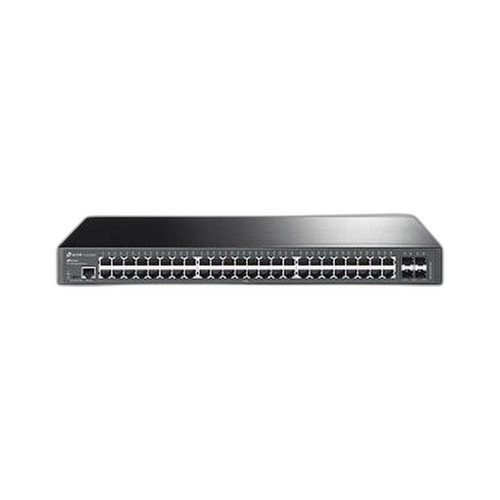
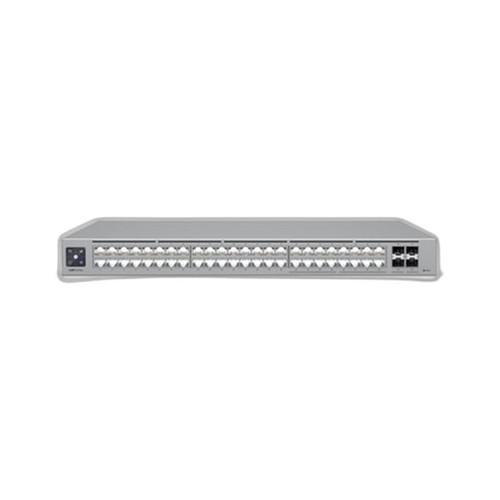
Both the TP-Link TL-SG3452X and the Ubiquiti USW-PRO-MAX-48 are 1U rackmount, 48-port managed switches targeting enterprise LAN and physical-security backbone deployments. Neither unit is a PoE switch in a primary sense—the SG3452X spec data contains conflicting PoE references that are not internally consistent, and the USW-PRO-MAX-48 carries no confirmed PoE budget in its provided specs. The comparison focuses on switching fabric, port-speed mix, power envelope, management tier, and physical environment—the axes that drive cross-shop decisions for installers and IT buyers evaluating a core aggregation or distribution switch.
In This Guide
- Which switch delivers more fabric capacity and the right port-speed mix for your tier?
- How do the two switches compare on power draw, operating environment, and physical build?
- Which unit offers stronger management features and compliance credentials for regulated or segmented deployments?
- Which should you choose: the SG3452X or the USW-PRO-MAX-48?
- Side-by-Side Specs
- FAQ
Which switch delivers more fabric capacity and the right port-speed mix for your tier?
The TL-SG3452X is specified with a switching capacity of 160 Gbps (one source also lists 320 Gbps; both figures appear in the provided specs without clarification, so the lower confirmed value is used here). Its 48 edge ports run at 1 GbE (RJ45), and uplink slots are listed as 4 SFP+ at 10G in the product-type field, though the Interface field also references 8 and 16 SFP+ slot counts that are internally inconsistent. The Memory field shows 32 MB.
The USW-PRO-MAX-48 is specified at 224 Gbps switching capacity with a non-blocking throughput of 112 Gbps and a forwarding rate of 167 Mpps. Its 48 ports are split across three speed tiers: 32 ports at 1G, 16 ports at 2.5G, and 4 SFP+ slots at 10G. No onboard memory figure is provided. The mixed-speed port architecture makes the Ubiquiti unit better suited to deployments where Wi-Fi 6/6E access points, NVRs, or multi-gig workstations require 2.5G edge connections without a separate aggregation layer.
How do the two switches compare on power draw, operating environment, and physical build?
The TL-SG3452X accepts 100–240 V AC at 50/60 Hz. No maximum power consumption figure is provided in the specs. Its operating temperature range is 0 °C to 45 °C (32 °F to 113 °F), and dimensions are 440 × 180 × 44 mm (17.3 × 7.1 × 1.7 in). The chassis material is not specified. Weight is not provided.
The USW-PRO-MAX-48 specifies a typical power consumption of 100 W with a universal 100–240 V AC/DC internal supply. Its operating temperature range is −5 °C to 40 °C (23 °F to 104 °F), which extends 5 °C lower than the TP-Link unit—relevant for unheated IDF closets or outdoor-adjacent enclosures. Dimensions are 442 × 325 × 44 mm; the deeper chassis (325 mm vs. 180 mm) should be verified against rack depth before ordering. Weight is 4.8 kg (10.6 lb) without mounting brackets. The enclosure is SGCC steel.
Which unit offers stronger management features and compliance credentials for regulated or segmented deployments?
The TL-SG3452X is classified as an L2+ managed switch, meaning it supports Layer 2 features plus limited Layer 3 capabilities such as static routing. VLAN count is not explicitly stated in the provided specs. Management interface details beyond the product classification are not listed. No compliance certifications are provided in the spec data.
The USW-PRO-MAX-48 is managed via Ethernet and integrates with Ubiquiti's UniFi controller ecosystem, though specific feature depth (CLI, SNMP version, sFlow, ACL granularity) is not enumerated in the provided specs. VLAN support is explicitly stated at 1,000 VLANs. The unit is confirmed NDAA-compliant—a hard procurement requirement for U.S. federal, state, and many municipal projects. Certifications listed include CE, FCC, IC, and Anatel. The TP-Link unit provides no NDAA or certification data in the provided specs.
Which should you choose: the SG3452X or the USW-PRO-MAX-48?
Our take: The USW-PRO-MAX-48 is the stronger choice when fabric headroom, mixed-speed edge connectivity, and NDAA compliance are the governing requirements. Its 224 Gbps switching capacity exceeds the TL-SG3452X's confirmed 160 Gbps by 40%, and its 16 native 2.5G edge ports eliminate the need for a separate aggregation device in Wi-Fi 6 or multi-gig NVR deployments—a port mix the TP-Link unit does not offer. The Ubiquiti unit also carries a confirmed NDAA-compliant designation, which is a non-negotiable gate for many government and critical-infrastructure projects; the TL-SG3452X provides no such confirmation in its provided specs. The TL-SG3452X may be preferred where budget is the primary constraint, where UniFi ecosystem lock-in is undesirable, or where an L2+ static-routing capability is needed without a full L3 license—though buyers should note the internally inconsistent SFP+ slot and switching-capacity figures in the provided specs and verify against the datasheet before specifying.
Side-by-Side Comparison
Spec-for-spec, from manufacturer data.
| Specification | TP-Link SG3452X | Ubiquiti USW-PRO-MAX-48 |
|---|---|---|
| Product Type | L2+ Managed Switch | Managed Switch |
| Total Ports | 48 | 48 |
| Edge Port Speed | 48 × 1G (RJ45) | 32 × 1G + 16 × 2.5G |
| Uplink / SFP+ Slots | 4 × 10G SFP+ | 4 × 10G SFP+ |
| Switching Capacity | 160 Gbps (per spec; 320 Gbps also listed) | 224 Gbps |
| Non-Blocking Throughput | — | 112 Gbps |
| Forwarding Rate | — | 167 Mpps |
| VLAN Support | — | 1,000 VLANs |
| Power Consumption (typical) | — | 100 W |
| Power Input | 100–240 V AC, 50/60 Hz | 100–240 V AC/DC |
| Operating Temperature | 0 °C to 45 °C | −5 °C to 40 °C |
| Dimensions (W × D × H) | 440 × 180 × 44 mm | 442 × 325 × 44 mm |
| Weight | — | 4.8 kg (10.6 lb) |
| Chassis Material | — | SGCC steel |
| NDAA Compliant | — | Yes |
| Certifications | — | CE, FCC, IC, Anatel |
Frequently Asked Questions
Which should you choose: the SG3452X or the USW-PRO-MAX-48?
The USW-PRO-MAX-48 is the stronger choice when fabric headroom, mixed-speed edge connectivity, and NDAA compliance are the governing requirements. Its 224 Gbps switching capacity exceeds the TL-SG3452X's confirmed 160 Gbps by 40%, and its 16 native 2.5G edge ports eliminate the need for a separate aggregation device in Wi-Fi 6 or multi-gig NVR deployments—a port mix the TP-Link unit does not offer. The Ubiquiti unit also carries a confirmed NDAA-compliant designation, which is a non-negotiable gate for many government and critical-infrastructure projects; the TL-SG3452X provides no such confirmation in its provided specs. The TL-SG3452X may be preferred where budget is the primary constraint, where UniFi ecosystem lock-in is undesirable, or where an L2+ static-routing capability is needed without a full L3 license—though buyers should note the internally inconsistent SFP+ slot and switching-capacity figures in the provided specs and verify against the datasheet before specifying.
Is the USW-PRO-MAX-48 or TL-SG3452X a better fit for a UniFi-based camera or access-control system?
The USW-PRO-MAX-48 is built for the UniFi ecosystem and is managed through the UniFi controller, making it the natural fit if the rest of the infrastructure is already Ubiquiti. The TL-SG3452X uses TP-Link's JetStream management platform; it is not listed as UniFi-compatible in the provided specs. If the deployment is platform-agnostic, either can carry IP camera traffic, but the Ubiquiti unit offers 16 native 2.5G ports that benefit higher-resolution NVR uplinks.
Can I use the TL-SG3452X or USW-PRO-MAX-48 on a U.S. federal or government project?
Only the USW-PRO-MAX-48 carries a confirmed NDAA-compliant designation in the provided specs. No NDAA or federal-procurement certification data is listed for the TL-SG3452X. Buyers with NDAA requirements should not assume compliance for the TP-Link unit without independent verification from the manufacturer.
Which switch has a lower power draw for a constrained UPS or generator budget?
The USW-PRO-MAX-48 specifies a typical power consumption of 100 W. No maximum power consumption figure is provided for the TL-SG3452X in the available specs. Installers sizing UPS capacity should obtain the TL-SG3452X's worst-case power draw from the manufacturer datasheet before comparing; the 100 W figure for the Ubiquiti unit is the only confirmed number available here.
More Network Switch Comparisons
- TP-Link SG6654XHP vs Ubiquiti USW-PRO-MAX-48
- TP-Link SG6654XHP vs Ubiquiti USW-PRO-48
- TP-Link SG6654XHP vs TP-Link SG3452XMPP
- TP-Link SG6654XHP vs TP-Link SG3452XP
- TP-Link SG3452XMPP vs Ubiquiti USW-48
- TP-Link SG3452XMPP vs Ubiquiti USW-PRO-MAX-48
Network Switch Buying Guides
Get a Second Opinion on Your Camera Choice
Share your site layout, coverage goals, and budget. Our team will validate the camera selection, flag anything we would change, and recommend products that match the use case.