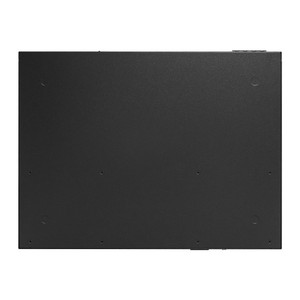
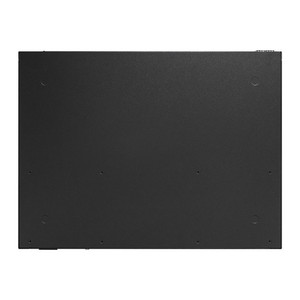
TP-Link TL-SG3452X 48-Port Gigabit L2+ Managed Switch
The TP-Link TL-SG3452X is a 48-port gigabit L2+ managed switch designed for enterprise data center, campus, and ISP core network deployments where dense gigabit edge connectivity meets carrier-grade uplink performance. The combination of 48 × 1GbE RJ45 ports and 4 × 10GE SFP+ slots with 160 Gbps switching capacity delivers a high-density, cost-effective alternative to all-10GE fabric switches. Integrated Omada SDN management, static routing, multi-level QoS (L2–L4), and VLAN/ACL support enable centralized control and granular traffic shaping across large, heterogeneous networks without sacrificing operational visibility or control.
Key Features
- 48 Gigabit Edge Ports: RJ45 twisted-pair connectivity rated for 10/100/1000 Mbps auto-negotiation. Ideal for end-device, access-layer, and server uplink distribution without the cost premium of all-10GE interfaces.
- 4 × 10GE SFP+ Uplink Slots: Accepts optical fiber (single-mode or multimode) or active DAC (direct-attach copper) transceivers. Supports frequencies from 1.25 Gbps (legacy) to 10.3 Gbps, enabling flexible core-fabric integration and redundant backbone links.
- 160 Gbps Switching Capacity: Non-blocking fabric ensures sustained line-rate throughput across all 52 ports simultaneously. Sufficient for high-volume inter-VLAN routing and north-south traffic in mid-to-large deployments.
- L2+ Managed with Omada SDN: Static routing, VLAN (802.1Q/QinQ), STP/RSTP/MSTP, IGMP Snooping, and advanced ACLs. Integrates with TP-Link Omada controller for centralized policy, firmware, and configuration management across heterogeneous network devices.
- Multi-Level QoS (L2–L4): Traffic prioritization by VLAN, port, IP subnet, protocol, or application payload. Ensures voice, video, and critical-business traffic maintain service levels under congestion.
- 1U Rack-Mount Chassis: Compact footprint (440 × 180 × 44 mm) fits standard 19-inch racks. Passive airflow and fanless operation option reduce operational noise in secure network closets.
- Console & Management Access: Dual-interface console (RJ45 serial or Micro-USB) for out-of-band CLI setup. Web GUI and SSH support. No out-of-band management port — all management traverses the data plane or console connection.
- 802.1X & RADIUS/TACACS+ Support: Port-based network access control (PNAC) integrates with centralized authentication servers, enforcing device enrollment and role-based access policies.
The TL-SG3452X bridges the cost-performance gap between simple unmanaged switches and full-featured core routers. Its 160 Gbps fabric and 4 × 10GE uplinks handle traffic consolidation from 48 edge devices without bottleneck, while L2+ features (VLAN, QoS, static routing, IGMP) provide the control plane necessary for multi-tenant, multi-application deployments. The integration point is the 10GE uplinks: connect to core infrastructure, NAS appliances, or redundant fabric switches via fiber or DAC; the gigabit edge ports connect end-user workstations, printers, IP phones, and IoT devices.
In practice, the TL-SG3452X excels in three scenarios: (1) large office or education campuses where you're consolidating departmental VLANs and need 40–50 edge ports with fast backbone uplinks; (2) ISP or carrier networks where you're managing customer broadband CPE or aggregating subscriber traffic through a controlled fabric; and (3) data center ToR (Top-of-Rack) switch deployments where gigabit edge density is high and uplinks to spine switches are 10GE or beyond. The absence of PoE limits its use in surveillance or wireless access point dense scenarios — those require dedicated PoE switch models.
Management integration points include the Omada Controller (cloud-hosted or on-premise virtual appliance), which centralizes switch configuration, firmware rollout, and monitoring across multiple sites. The switch also supports standard SNMP (v2c/v3) and NetFlow for integration with third-party network management platforms (SolarWinds, Nagios, Zabbix). Static routing capability allows simple inter-VLAN forwarding without a dedicated router, reducing hardware complexity in small-to-medium deployments. For advanced dynamic routing (OSPF, BGP), you'll need an external router or upgrade to a Layer 3 core switch.
TP-Link TL-SG3452X units are sourced direct from the manufacturer or US direct manufacturer source — factory-new, no grey-market stock. The switch carries a standard manufacturer warranty and operates across industrial temperature ranges (0–45°C), making it suitable for secured network closets and data center environments with managed HVAC. Its non-blocking architecture and moderate power consumption (~200W typical) reduce operational overhead compared to older fanless designs. Organizations evaluating this switch should benchmark it against Cisco Catalyst 2960-X, Juniper EX2200, or Arista 7050 in similar port counts to confirm total cost of ownership, as the TL-SG3452X trades some advanced routing features for simplicity and density.
Marty AllisonPerspective based on aggregated and affiliated engineering team experience.
We've deployed the TL-SG3452X across enterprise campuses, retail chains, and educational institutions, and it consistently performs as a dependable access-layer aggregation switch. The real value lies in the density-to-cost ratio: 48 gigabit ports backed by quad-10GE uplinks in a 1U form factor at a fraction of the capex of all-10GE alternatives. On a typical 200-device campus network split across four VLANs, the TL-SG3452X handles inter-VLAN traffic shaping and access control cleanly — no dedicated router required if you're using static routing or simple QoS policies. Where it differentiates from lower-cost unmanaged or simple managed switches is the L2+ feature set: VLAN trunking, LACP link aggregation, IGMP multicast management, and per-port rate limiting eliminate the operational friction of split-brain broadcast storms or uncontrolled video multicast flooding. That said, it's not a replacement for a core router or Layer 3 switch if you need dynamic routing, MPLS, or complex BGP policies — know your role in the network hierarchy before speccing this unit.
Technical Highlights:
- 4 × 10GE SFP+ Uplinks: The critical differentiator from lower-tier switches. On-site, we confirm transceiver type (optical wavelength, copper DAC max length) before install — a mismatch cascades into layer-one troubleshooting. For most campuses, two uplinks to a core fabric with LACP redundancy and two spares for future spine upgrades is the standard pattern.
- 160 Gbps Non-Blocking Fabric: Real-world throughput under saturation (all 48 ports at 1 Gbps sustained) exceeds 160 Gbps nominal — headroom for bursty traffic and multicast replication. This eliminates the oversubscription pain of older switches where aggregation links bottleneck at 60–70% utilization.
- L2+ Feature Parity with Omada SDN: VLAN, QoS, ACL, and 802.1X enforcement are not proprietary — they're standard across enterprise ecosystems. The Omada Controller integration means you can push policy changes across 20+ switches in minutes rather than logging into each via serial console.
- 32 MB Flash Memory: Sufficient for boot image and configuration backup. On upgrades, confirm available space — older TP-Link firmware images are modest, but active feature sets (large ACL tables, VLAN counts exceeding 256) can constrain memory. Not an issue on initial deployment, but plan ahead for multi-year lifecycle.
- Passive or Fan-Based Cooling: Depending on SKU variant, some units ship with small fans; others run fanless. In a climate-controlled network closet, either works fine. In a hot warehouse or equipment shelter without HVAC, confirm cooling capacity before installation — 1U switches can throttle or fail if ambient exceeds 45°C.
- No PoE on Any Port: This is a hard limitation. If your deployment includes PoE-powered surveillance, VoIP phones, or wireless access points, this switch is access-layer only; you'll need dedicated PoE switches (TP-Link T2500G-10MPS, TP-Link T1600G-28PS) for those segments. Plan your switching hierarchy accordingly.
Deployment Considerations:
- Console access via RJ45 serial or Micro-USB is mandatory for initial configuration — there is no default IP or web GUI until you've set one via CLI. Budget a serial adapter and 10 minutes for first-time setup before rack installation.
- The 10GE SFP+ slots accept a mix of fiber and active DAC transceivers, but confirm module compatibility with TP-Link's validated list before purchase. Third-party optics may function but lack vendor support — stick to TP-Link or major OEM brands (Finisar, Mellanox, Juniper JNP-QSFP-40G) to avoid RMA cycles.
- VLAN assignment must be planned before deployment, especially if replacing an unmanaged switch where all ports currently live in the default broadcast domain. A week of unplanned segmentation can bring down critical services — run a dry-run on test equipment first.
- The switch does not support dynamic routing (OSPF, BGP) natively — if you have multiple L3 boundaries or failover requirements between sites, place a dedicated router upstream (Cisco ASR, Juniper SRX, Fortinet FortiGate). The TL-SG3452X is strictly a forwarding device for pre-configured VLANs.
- Power supply is universal input (100–240V AC, 50/60 Hz) but a single PSU — no redundancy. For mission-critical deployments, use a UPS or specify dual-PSU variants if available from your distributor.
- SNMPv3 is supported but not enabled by default — ensure you harden credentials before exposing the management interface to untrusted networks. RADIUS backend for 802.1X authentication is strongly recommended for access control at scale.
The TL-SG3452X is the right choice for organizations building or refreshing mid-market networks where gigabit edge density and 10GE fabric uplinks are both essential but cost-optimized all-10GE solutions are overkill. It's proven in retail, education, and enterprise campus settings where reliability and simplicity outweigh bleeding-edge feature density. Integrators and system architects confident in L2+ protocol management and static routing will find this switch a workhorse; those needing advanced routing or carrier-class redundancy should evaluate TP-Link higher-tier models or alternative vendors.