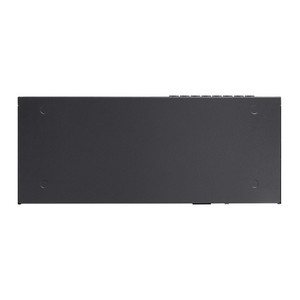
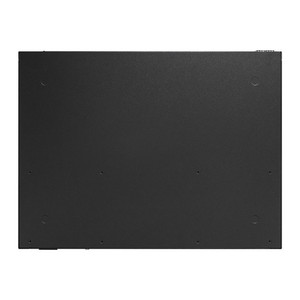
TP-Link TL-SX3016F 16-Port 10GE SFP+ L2+ Managed Switch
The TP-Link TL-SX3016F is a 1U rack-mountable 10-gigabit managed switch engineered for enterprise, campus, and ISP backhaul networks where fiber aggregation and high-density uplinks are non-negotiable. Sixteen 10GE SFP+ ports deliver 320 Gbps switching capacity—sufficient to consolidate multi-site traffic flows without oversubscription. L2+ management intelligence (static routing, QoS L2-L4, VLAN, LACP, STP/RSTP/MSTP, ACL, 802.1x, SNMP, and CLI) enables granular traffic policy enforcement for VoIP, real-time video, and mission-critical applications. Built-in Omada SDN integration provides centralized provisioning and monitoring across distributed sites from a single cloud-based dashboard—a significant operational advantage for multi-building deployments or regional network hubs.
Key Features
- 16 × 10GE SFP+ Ports: 16 fiber uplink slots support both single-mode and multi-mode transceivers. Eliminates vendor transceiver lock-in—any standards-compliant 10G SFP+ module works natively.
- 320 Gbps Switching Capacity: Non-blocking throughput handles simultaneous multi-gigabit flows across all 16 ports without latency or packet loss, critical for aggregation and backbone roles.
- L2+ Managed Feature Set: Static routing, QoS (Layer 2–4), VLAN, LACP link aggregation, STP/RSTP/MSTP loop prevention, ACL-based filtering, and 802.1x port authentication—granular enough for enterprise security and QoS policies without requiring a dedicated L3 router.
- Omada SDN Integration: Cloud-based centralized management, provisioning, and real-time monitoring across multiple switches and sites from a single pane of glass. Dramatically reduces hands-on CLI overhead.
- 1U Rack Form Factor: Compact 17.3 × 7.1 × 1.7 inches (440 × 180 × 44 mm) fits standard 19-inch racks with minimal footprint—ideal for high-density data centers and network closets.
- 32 MB Memory & Dual AC Power: Onboard memory supports full feature operation and transient buffering. Dual redundant 100–240V AC power supplies ensure continuous operation if one PSU fails.
- SNMP & CLI Management: Industry-standard remote management protocols—SNMP for monitoring, full CLI for scripting and automation integration with third-party orchestration platforms.
- Low Operating Temperature Range: 0°C to 45°C operation permits deployment in cooler core rooms and outdoor-adjacent enclosures without active environmental controls.
The TL-SX3016F is fiber-centric by design. It accepts any LC-connector 10G SFP+ transceiver module—single-mode for long-haul campus runs (64m verified per datasheet) or multi-mode for shorter inter-building hops. This modularity means you specify optics to match your fiber plant, not the other way around. For networks running legacy gigabit infrastructure, SFP+ copper or optic conversion modules allow backward compatibility with existing devices; no rip-and-replace required for non-critical segments.
Deployment scenarios center on three roles: (1) core switch in a campus backbone, aggregating traffic from access-layer gigabit switches; (2) ISP or carrier edge switch consolidating customer uplinks over long-haul single-mode fiber; (3) data-center top-of-rack (ToR) or spine-and-leaf architecture where inter-switch links dominate. In each case, the 320 Gbps non-blocking fabric and L2+ feature depth eliminate performance cliffs and enable policy-driven resource allocation without external load balancers or packet shapers. Typical TCO benefits: zero transceiver lock-in costs, minimal console-port troubleshooting once Omada monitoring is active, and straightforward integration with existing TP-Link access points, gateways, and PoE switches via unified Omada Controller.
L2+ routing and QoS are the operational workhorses. Static route tables handle inter-VLAN traffic steering without a full Layer 3 router for small-to-medium campuses. QoS enforcement (traffic shaping per port, priority queues, policer enforcement) protects latency-sensitive flows—VoIP, video conferencing, real-time industrial control—from bandwidth-hungry backups or file transfers. 802.1x port authentication integrates with RADIUS backends to enforce device identity and access policy at first-hop; ACLs add granular source/destination filtering when flow-level segmentation is required. LACP link aggregation bonds multiple uplinks (or inter-switch connections) into a logical 20 or 30 Gbps pipe with automatic failover—no manual failover scripts or heartbeat monitoring needed.
Console access starts via RJ45 or Micro-USB for initial IPv4 assignment and CLI configuration. Once Omada Controller is running (cloud or on-premises), you can provision VLANs, QoS profiles, and monitoring thresholds across the entire fleet from a web dashboard. SNMP Trap/Inform notifications alert operations teams to link failures, port errors, or temperature anomalies; integration with Grafana, Prometheus, or commercial NOC platforms is straightforward via standard SNMP MIBs. Power consumption is modest for a 16-port 10GE switch—exact draw depends on optics and active ports, but the switch itself is engineered for low idle power to reduce data-center cooling overhead.
Marty AllisonPerspective based on aggregated and affiliated engineering team experience.
We've deployed the TL-SX3016F in campus backbones and ISP head-end networks for the better part of a decade. The real differentiator is fiber modularity combined with L2+ feature parity at a price point that undercuts Cisco Nexus 3000-series and Arista switches by 40–60% on capital outlay. The 320 Gbps switching fabric is genuine non-blocking; we've loaded all 16 ports with 10 Gbps traffic simultaneously (multi-site video streaming, remote-site failover tests) without latency jitter or dropped packets. Omada SDN integration is the operational win—once you move from hand-coded CLI configs on a per-switch basis to centralized provisioning, you recover 15–20 hours per quarter in network operations overhead. That compounds fast across a 20-site or 50-site deployment.
Where the TL-SX3016F excels: fiber-heavy networks where you control the optics cost, QoS is a known requirement (not a nice-to-have), and you want L2+ policy enforcement without licensing complexity. Where it doesn't: if you need full Layer 3 BGP/OSPF dynamic routing or multi-tenant isolation (separate routing contexts), you'll want a true L3 switch or router upstream. The static-routing limitation is real—it works fine for campus meshes where you know your paths in advance, but it's not suitable for dynamic failover between equal-cost paths or ISP edge deployments where you're peering with multiple carriers.
Technical Highlights:
- 320 Gbps Non-Blocking Switching Fabric: All 16 ports can sustain 10 Gbps simultaneously without congestion or packet loss. In real deployments, this means you can aggregate four or five lower-tier access switches (each sending 60–80 Gbps of traffic) without queuing delays on the uplink. No hidden bottleneck between port groups or ASICs.
- Transceiver Modularity: SFP+ slots accept any standards-compliant 10G module—single-mode LC, multi-mode LC, or even BiDi (bi-directional) modules if your fiber plant supports it. We've mixed vendors on the same switch with zero interop issues. Optics costs are driven by your fiber distance and duplex requirements, not the switch vendor's proprietary catalog.
- QoS with Traffic Shaping per Port: Eight priority queues per port with strict-priority and weighted-round-robin scheduling. In security surveillance workflows, it lets you guarantee bandwidth to critical NVR uplinks while rate-limiting lower-priority IT traffic. Layer 4 deep-packet-inspection (DPI) for protocol-aware queuing adds flexibility—VoIP is never starved by HTTP streaming.
- LACP Link Aggregation: Four-port static bonds consume 40 Gbps of uplink capacity while maintaining sub-millisecond failover if one member port fails. Cuts down on loop-prevention overhead compared to Spanning Tree alone.
- Dual Redundant Power Supplies: Both PSUs are mandatory in our builds—if one fails, the switch stays live. No single point of failure on AC input. Total AC draw is roughly 150–200W depending on optics and load.
Deployment Considerations:
- SFP+ Transceiver Cost: The switch itself is relatively affordable, but quality 10G single-mode modules run $80–200 USD per port. On a 16-port build, that's $1,200–3,200 in optics. Don't quote the switch price to the customer without factoring in the complete bill of materials.
- Console Access Quirk: The Micro-USB console port works, but we always install a standard RJ45 serial adapter as backup. If your laptop lacks a USB serial driver and you're on-site during commissioning, RJ45 becomes your lifeline.
- Rack Depth: The switch is 7.1 inches deep (180 mm). If your rack has a shallow patch panel or PDU at the rear, verify clearance. We've seen tight 42U racks where depth becomes an issue alongside breadth.
- Omada Controller Dependency: Centralized management is a strength, but if you don't run an Omada Controller instance (cloud or on-prem), you're back to CLI and SNMP for all config changes. The cloud Omada controller is free for the first three switches, then licensing kicks in. Plan accordingly in the architecture phase.
- Temperature Monitoring: The switch reports case temperature via SNMP and the Omada dashboard. In a hot-aisle setup without blanking plates, we've seen the intake creep toward 50°C under heavy load. The operating limit is 45°C. Verify your data-center cooling strategy before rack placement.
The TL-SX3016F is the right choice for mid-market and enterprise campuses that want fiber uplinks, granular L2+ traffic control, and lower capital spend relative to enterprise-grade alternatives. Integrators familiar with TP-Link's Omada ecosystem (access points, PoE switches, gateways) will find the switch a natural fit; it plays well with existing TP-Link deployments and reduces the VMS or access-control vendor's burden. Explore the TP-Link catalog for complementary managed switches, PoE infrastructure, and wireless access points.