
TP-Link SG3210XHP-M2 vs Allied Telesis AT-x530L-10GHXm-10: Specification Comparison
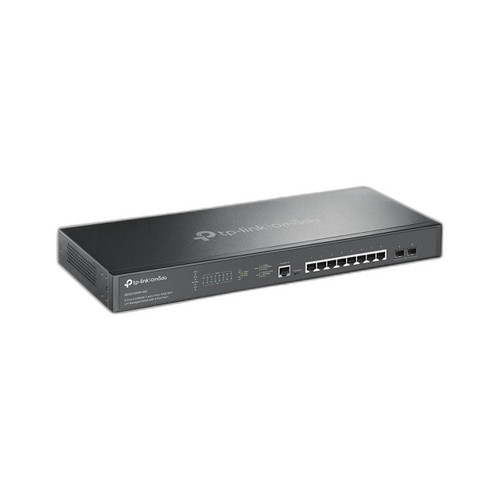
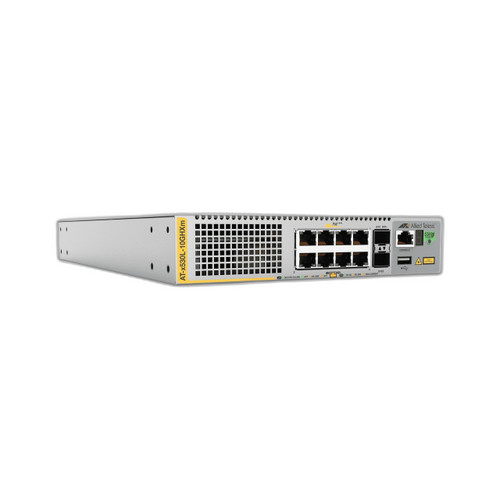
Both the TP-Link SG3210XHP-M2 and the Allied Telesis AT-x530L-10GHXm-10 are 1U rack-mount managed switches sharing an 8-port PoE access tier and dual 10G SFP+ uplinks — making them direct cross-shop candidates for installers sizing a wiring-closet or surveillance edge switch. The comparison turns on three axes that matter most here: PoE power budget and per-port delivery, switching fabric capacity and latency, and management depth plus platform integration. Each product targets the same general deployment scenario but diverges sharply on power envelope and feature tier.
In This Guide
- Which switch delivers more PoE power, and can it sustain high-wattage devices on every port simultaneously?
- How do switching fabric, forwarding rate, and latency compare between the two switches?
- What management capabilities and integration options does each switch offer?
- Which should you choose: the SG3210XHP-M2 or the AT-x530L-10GHXm-10?
- Side-by-Side Specs
- FAQ
Which switch delivers more PoE power, and can it sustain high-wattage devices on every port simultaneously?
The AT-x530L-10GHXm-10 provides a 500 W PoE budget across its 8 ports, supporting IEEE 802.3bt PoE++ at up to 90 W per port on 5 ports simultaneously and 60 W on all 8. This headroom accommodates PTZ cameras, Wi-Fi 6E APs, and multi-sensor devices without power-capping.
The SG3210XHP-M2 carries a 240 W PoE budget. It supports 802.3bt PoE++ (up to 90 W per port per spec), 802.3at PoE+, and 802.3af PoE. However, at 240 W total, simultaneous full-wattage loading across all 8 ports is constrained; the budget limits sustained 90 W draws to roughly 2-3 ports at once.
For deployments where every port must power a high-draw device concurrently, the Allied Telesis unit's 500 W budget is the spec-supported choice. For lighter mixed loads — standard IP cameras, VoIP phones, moderate APs — the SG3210XHP-M2's 240 W budget is adequate.
How do switching fabric, forwarding rate, and latency compare between the two switches?
The AT-x530L-10GHXm-10 specifies a 120 Gbps switching fabric and a 89.2 Mpps forwarding rate. Latency figures are provided at multiple speeds: 2.12 µs at 10 Gbps, 3.49 µs at 5 Gbps, 5.63 µs at 2.5 Gbps, 7.89 µs at 1 Gbps, and 8.24 µs at 100 Mbps.
The SG3210XHP-M2 specifies an 80 Gbps switching capacity. No forwarding rate in Mpps and no latency figures are provided in the supplied specifications.
On raw fabric capacity, the Allied Telesis unit leads with 120 Gbps versus 80 Gbps. Latency performance of the SG3210XHP-M2 cannot be compared because those figures are absent from the provided specs. Buyers with latency-sensitive workloads — real-time video analytics, VoIP — have spec-verified numbers only from the AT-x530L-10GHXm-10.
What management capabilities and integration options does each switch offer?
The SG3210XHP-M2 is classified as an L2+ managed switch. The provided specs reference CLI, SNMP v1/v2c/v3, RMON, 802.1x, RADIUS/TACACS+, static routing, VLAN, QoS, ACL, STP/RSTP/MSTP, IGMP snooping, and LACP. It is part of TP-Link's Omada SDN ecosystem, implying compatibility with Omada controllers (hardware or software) for centralized management, though specific Omada controller compatibility details are not enumerated in the provided specs.
The AT-x530L-10GHXm-10 spec data provided does not enumerate management protocols, software platforms, or feature-set details beyond port counts, power figures, fabric capacity, and physical dimensions. The presence of stacking ports (2×, marked with an asterisk in the spec) suggests support for switch stacking, but stacking protocol specifics are not provided.
For environments already standardized on TP-Link Omada, the SG3210XHP-M2 fits an existing management plane. For Allied Telesis environments or those requiring stacking, the AT-x530L-10GHXm-10's stacking port presence is noted, but management depth cannot be fully assessed from the provided specifications alone.
Which should you choose: the SG3210XHP-M2 or the AT-x530L-10GHXm-10?
Our take: The AT-x530L-10GHXm-10 is the stronger choice when sustained high-wattage PoE across all ports and higher switching throughput are the primary requirements. Specifically: its PoE budget is 500 W versus 240 W — more than double — supporting 60 W on all 8 ports simultaneously where the SG3210XHP-M2 cannot sustain that load; its switching fabric is 120 Gbps versus 80 Gbps; and it provides verified latency figures (2.12 µs at 10 Gbps) that the SG3210XHP-M2 spec set does not supply. The SG3210XHP-M2 is the stronger fit for Omada-standardized deployments where the 240 W PoE budget is sufficient, management protocol depth (SNMP v3, RADIUS/TACACS+, ACL, MSTP) is a priority, and budget is a constraint — noting its max power consumption is 240 W versus 605 W for the Allied Telesis, reducing both operating cost and infrastructure load.
Side-by-Side Comparison
Spec-for-spec, from manufacturer data.
| Specification | TP-Link SG3210XHP-M2 | Allied Telesis AT-x530L-10GHXm-10 |
|---|---|---|
| Switch Type | L2+ Managed | Not specified in provided specs |
| Access Port Count | 8 | 8 |
| Access Port Speed | 2.5GBASE-T (RJ-45) | 100M/1/2.5/5G (RJ-45) |
| Uplink Ports | 2 × 10G SFP+ | 2 × 1/10G SFP+ |
| Stacking Ports | — | 2 (details not specified) |
| PoE Standards | 802.3af / 802.3at / 802.3bt (PoE++) | PoE 7.5W / 15.4W / PoE+ 30W / PoE++ 60W / PoE++ 90W |
| PoE Budget | 240 W | 500 W |
| Max PoE Per Port | 90 W (802.3bt) | 90 W (5 ports); 60 W (8 ports) |
| Switching Fabric | 80 Gbps | 120 Gbps |
| Forwarding Rate | — | 89.2 Mpps |
| Latency @ 10 Gbps | — | 2.12 µs |
| Max Power Consumption | 240 W | 605 W |
| Max Heat Dissipation | 51.18 BTU/hr | 2,065 BTU/hr |
| Noise | — | 64 dBA |
| Dimensions (W×D×H) | 440 × 180 × 44 mm | 210 × 362 × 42.5 mm |
| Operating Temp | 0 °C to 50 °C | — |
Frequently Asked Questions
Which should you choose: the SG3210XHP-M2 or the AT-x530L-10GHXm-10?
The AT-x530L-10GHXm-10 is the stronger choice when sustained high-wattage PoE across all ports and higher switching throughput are the primary requirements. Specifically: its PoE budget is 500 W versus 240 W — more than double — supporting 60 W on all 8 ports simultaneously where the SG3210XHP-M2 cannot sustain that load; its switching fabric is 120 Gbps versus 80 Gbps; and it provides verified latency figures (2.12 µs at 10 Gbps) that the SG3210XHP-M2 spec set does not supply. The SG3210XHP-M2 is the stronger fit for Omada-standardized deployments where the 240 W PoE budget is sufficient, management protocol depth (SNMP v3, RADIUS/TACACS+, ACL, MSTP) is a priority, and budget is a constraint — noting its max power consumption is 240 W versus 605 W for the Allied Telesis, reducing both operating cost and infrastructure load.
Is the SG3210XHP-M2 or AT-x530L-10GHXm-10 better for powering multiple high-wattage PoE++ devices like PTZ cameras or Wi-Fi 6E APs?
The AT-x530L-10GHXm-10 is the spec-supported choice for that scenario. Its 500 W PoE budget supports 60 W on all 8 ports simultaneously and 90 W on up to 5 ports. The SG3210XHP-M2's 240 W budget limits how many 60–90 W devices can be powered concurrently — approximately 2–4 ports at full draw before the budget is exhausted.
Which switch has lower power operating costs for a deployment where PoE loads are light to moderate?
The SG3210XHP-M2 has a lower maximum power consumption figure: 240 W versus 605 W for the AT-x530L-10GHXm-10. For light-to-moderate PoE loads — standard IP cameras, VoIP phones — the TP-Link unit's lower power ceiling translates directly to lower electricity costs and reduced cooling load. Note that real-world draw depends on actual PoE utilization for both units.
Does the AT-x530L-10GHXm-10 support switch stacking, and does the SG3210XHP-M2?
The AT-x530L-10GHXm-10 spec lists 2 stacking ports (marked with an asterisk indicating a condition not elaborated in the provided specs). Stacking protocol details are not provided. The SG3210XHP-M2 spec data provided does not reference stacking ports or stacking capability. Buyers requiring verified stacking support should consult the full Allied Telesis datasheet for stacking protocol specifics before specifying either unit.
More Network Switch Comparisons
- Vivotek IHT-1271 vs TP-Link SG3210XHP-M2
- Vivotek IHT-1271 vs TP-Link S4500-8GP2F
- Vivotek IHT-1271 vs TP-Link SG1210P
- Vivotek IHT-1271 vs Allied Telesis AT-x530L-10GHXm-10
- Vivotek IHT-1271 vs Vivotek GEV-108A-130
- Vivotek IHT-1271 vs Vivotek IHT-1000
Network Switch Buying Guides
Get a Second Opinion on Your Camera Choice
Share your site layout, coverage goals, and budget. Our team will validate the camera selection, flag anything we would change, and recommend products that match the use case.