
TP-Link SG1210P vs Allied Telesis AT-x530L-10GHXm-10: Specification Comparison
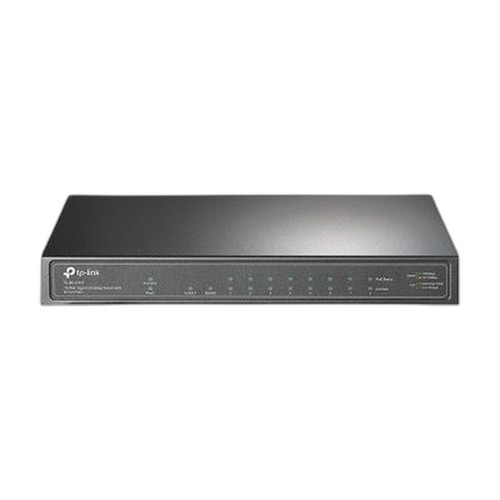
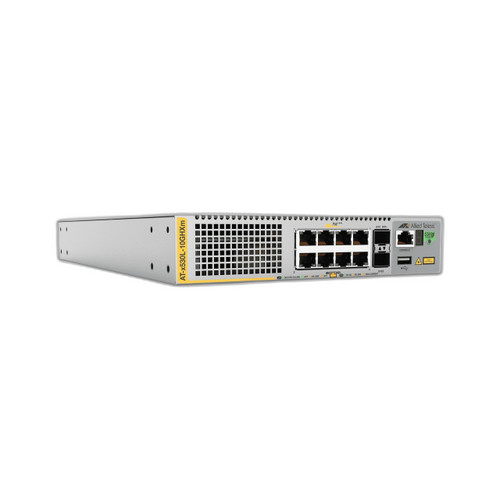
Both the TP-Link TL-SG1210P and the Allied Telesis AT-x530L-10GHXm-10 are eight-port PoE-capable Gigabit switches, but they occupy very different tiers of the network switch market. The TL-SG1210P is a compact, unmanaged desktop unit aimed at small or budget-conscious IP installations, while the AT-x530L-10GHXm-10 is a managed, multi-gig, rack-mount switch engineered for enterprise surveillance, high-density PoE++ endpoints, and structured wiring closets. This comparison examines PoE capacity and port performance, power and physical deployment, and management capabilities.
In This Guide
Which switch delivers more PoE power and higher per-port speeds?
The TL-SG1210P provides a 120 W total PoE budget across its 8 PoE+ ports, capped at 30 W per port per the 802.3at standard. All 8 data ports run at standard Gigabit (10/100/1000 Mbps) speeds, and there are no dedicated uplink ports beyond the two non-PoE Gigabit ports included in the 10-port count. A PoE extend mode is specified that stretches reach to 250 m at reduced speed.
The AT-x530L-10GHXm-10 provides a 500 W total PoE budget — more than four times larger — across its 8 PoE++ ports. Per-port allocation scales from 7.5 W up to 90 W (802.3bt), with the 90 W tier available on 5 of the 8 ports simultaneously. The 8 access ports operate at variable speeds up to 5 Gbps (100M/1/2.5/5G), and two dedicated 10G SFP+ uplink ports are included. Switching fabric is rated at 120 Gbps with a forwarding rate of 89.2 Mpps. Latency is specified at 2.12 µs at 10 Gbps down to 7.89 µs at 1 Gbps.
How do these switches differ in power draw, form factor, and operating environment?
The TL-SG1210P is a desktop-form-factor unit powered by a 12 V DC external adapter. Total power consumption is listed as 30 W, which reflects a very modest draw consistent with its 120 W PoE budget constraint. Operating temperature is specified as 0–40°C (32–104°F). Physical dimensions and weight are not provided in the supplied specifications. Mount options noted include wall and rack, in addition to desktop placement.
The AT-x530L-10GHXm-10 is a 1U rack-mount unit measuring 210 × 362 × 42.5 mm and weighing 3.5 kg unpackaged. Maximum power consumption is 605 W, with maximum heat dissipation of 2,065 BTU/h — both figures consistent with the 500 W PoE budget plus switching electronics. Noise level is specified at 64 dBA, indicating active cooling. Operating temperature range is not provided in the supplied specifications.
What management and integration capabilities does each switch offer?
The TL-SG1210P is explicitly an unmanaged switch. The specifications reference a Wi-Fi 6 management app for provisioning and monitoring, but no VLAN, QoS, SNMP, CLI, or web-GUI management interfaces are specified. There is no support for stacking. Its simplicity suits plug-and-play deployments where centralized network policy is not required.
The AT-x530L-10GHXm-10 specifications include 2 stacking ports (marked with an asterisk indicating a condition not further detailed in the provided data), which enables logical aggregation of multiple units. No explicit management protocol list (CLI, SNMP, web GUI, RADIUS, etc.) is contained in the supplied specifications for this unit. However, the presence of stacking ports and the enterprise-grade switching fabric strongly indicate a managed platform; buyers should confirm full management feature set against the Allied Telesis datasheet before purchasing.
Which should you choose: the SG1210P or the AT-x530L-10GHXm-10?
Our take: The TL-SG1210P is the stronger choice when the deployment is a small, cost-sensitive installation requiring basic plug-and-play PoE+ for up to 8 Gigabit endpoints with a combined draw under 120 W. The AT-x530L-10GHXm-10 is the stronger choice for any environment demanding substantially more power or port headroom: its 500 W PoE budget is 4.2× larger, its per-port ceiling of 90 W (versus 30 W) supports dual-head PTZ cameras, access control panels, and other high-draw devices, and its 5 Gbps variable-speed access ports paired with 10G SFP+ uplinks eliminate bandwidth bottlenecks as camera resolutions scale. The 605 W max consumption and 64 dBA noise level require rack space and adequate HVAC — the TL-SG1210P's 30 W draw and desktop form factor impose no such constraints. Choose the TL-SG1210P for a small branch or home office IP install; choose the AT-x530L-10GHXm-10 for a wiring-closet deployment running high-power or multi-gig endpoints.
Side-by-Side Comparison
Spec-for-spec, from manufacturer data.
| Specification | TP-Link SG1210P | Allied Telesis AT-x530L-10GHXm-10 |
|---|---|---|
| Device Class | Desktop Unmanaged PoE+ Switch | Rack-Mount PoE++ Switch |
| Total PoE Budget | 120 W | 500 W |
| Max PoE Per Port | 30 W (802.3at) | 90 W (802.3bt, 5 ports) |
| PoE Standards Supported | PoE+ (802.3at) | PoE 7.5W / 15.4W / 30W / 60W / 90W (802.3bt) |
| PoE-Enabled Ports | 8 | 8 |
| Access Port Speed | 10/100/1000 Mbps | 100M / 1 / 2.5 / 5 Gbps |
| Uplink Ports | 2x 1G (non-PoE, part of 10-port total) | 2x 10G SFP+ |
| Total Ports | 10 | 10 (8 access + 2 SFP+) |
| Switching Fabric | — | 120 Gbps |
| Forwarding Rate | — | 89.2 Mpps |
| Latency (10G) | — | 2.12 µs |
| Stacking Ports | None | 2 (conditions not detailed in spec) |
| Management | Unmanaged (app-based monitoring only) | Not specified in provided specs (stacking ports indicate managed) |
| Max Power Consumption | 30 W | 605 W |
| Form Factor | Desktop (wall / rack optional) | 1U Rack-mount (210 x 362 x 42.5 mm) |
| Operating Temperature | 0–40°C (32–104°F) | — |
Frequently Asked Questions
Which should you choose: the SG1210P or the AT-x530L-10GHXm-10?
The TL-SG1210P is the stronger choice when the deployment is a small, cost-sensitive installation requiring basic plug-and-play PoE+ for up to 8 Gigabit endpoints with a combined draw under 120 W. The AT-x530L-10GHXm-10 is the stronger choice for any environment demanding substantially more power or port headroom: its 500 W PoE budget is 4.2× larger, its per-port ceiling of 90 W (versus 30 W) supports dual-head PTZ cameras, access control panels, and other high-draw devices, and its 5 Gbps variable-speed access ports paired with 10G SFP+ uplinks eliminate bandwidth bottlenecks as camera resolutions scale. The 605 W max consumption and 64 dBA noise level require rack space and adequate HVAC — the TL-SG1210P's 30 W draw and desktop form factor impose no such constraints. Choose the TL-SG1210P for a small branch or home office IP install; choose the AT-x530L-10GHXm-10 for a wiring-closet deployment running high-power or multi-gig endpoints.
Is the TL-SG1210P or the AT-x530L-10GHXm-10 better for larger surveillance deployments?
The AT-x530L-10GHXm-10 is purpose-built for larger deployments. Its 500 W PoE budget supports up to 8 simultaneous high-draw devices (up to 90 W on 5 ports), and its 10G SFP+ uplinks handle aggregated camera traffic without creating a bottleneck. The TL-SG1210P's 120 W total budget and Gigabit-only speeds are limiting factors as camera counts and resolutions increase.
Can either switch power 90 W PoE++ devices like high-end PTZ cameras or digital displays?
Only the AT-x530L-10GHXm-10 supports 90 W per-port (802.3bt PoE++) delivery, and the specifications confirm that tier is available on 5 of its 8 ports simultaneously. The TL-SG1210P is capped at 30 W per port (802.3at PoE+) and cannot power 60 W or 90 W class endpoints.
Which switch is easier to install in a space-constrained or non-rack environment?
The TL-SG1210P is significantly easier to deploy outside a rack: it is a desktop unit powered by a 12 V DC adapter, draws only 30 W total, and is specified for wall-mount as well as rack-mount use. The AT-x530L-10GHXm-10 is a 1U rack-mount chassis weighing 3.5 kg with a 605 W max draw and active cooling producing 64 dBA — it requires a proper equipment rack and adequate ventilation.
More Network Switch Comparisons
- Vivotek IHT-1271 vs TP-Link SG3210XHP-M2
- Vivotek IHT-1271 vs TP-Link S4500-8GP2F
- Vivotek IHT-1271 vs TP-Link SG1210P
- Vivotek IHT-1271 vs Allied Telesis AT-x530L-10GHXm-10
- Vivotek IHT-1271 vs Vivotek GEV-108A-130
- Vivotek IHT-1271 vs Vivotek IHT-1000
Network Switch Buying Guides
Get a Second Opinion on Your Camera Choice
Share your site layout, coverage goals, and budget. Our team will validate the camera selection, flag anything we would change, and recommend products that match the use case.