
TP-Link SG116E vs Transition Networks SISPM1040-362-LRT: Specification Comparison
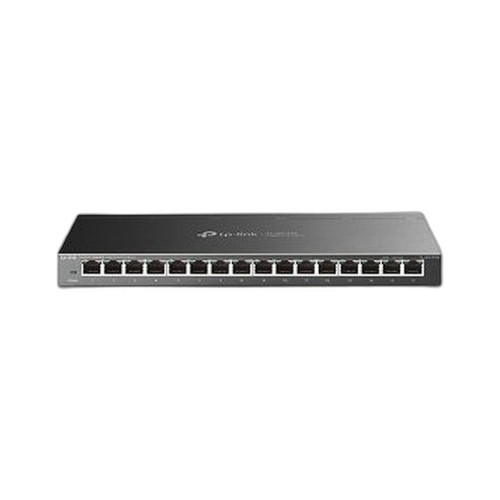
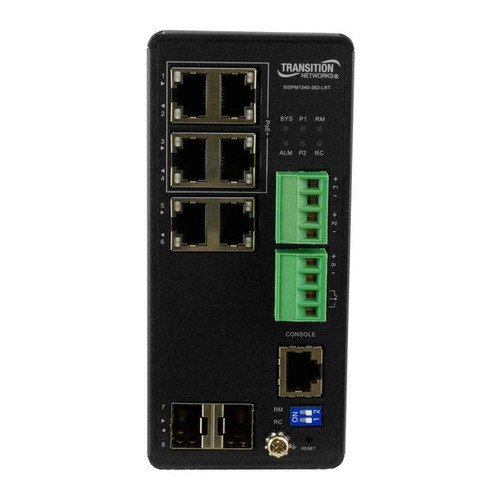
The TP-Link TL-SG116E and Transition Networks SISPM1040-362-LRT are both Ethernet switches aimed at IP camera and edge-network deployments, but they represent opposite ends of the switch design philosophy. The TL-SG116E is a 16-port unmanaged gigabit switch prioritizing simplicity and port density, while the SISPM1040-362-LRT is a 6-port managed PoE+ switch emphasizing control, compliance, and hardened deployment suitability. Buyers evaluating either product are typically building out structured cabling runs for surveillance or access-control endpoints.
In This Guide
- Which switch delivers the right port density and throughput for the deployment?
- Which switch is the right fit for powering PoE cameras and devices directly?
- Which switch provides the management features and compliance credentials needed for the site?
- Which should you choose: the SG116E or the SISPM1040-362-LRT?
- Side-by-Side Specs
- FAQ
Which switch delivers the right port density and throughput for the deployment?
The TL-SG116E provides 16 gigabit ports with a switching capacity of 32 Gbps, accommodating larger camera counts or multi-device edge closets from a single unit. Each port supports runs up to 100 meters over Cat5e or Cat6 cable. The SISPM1040-362-LRT offers 6 ports rated at 10/100/1000 Mbps per port; no aggregate throughput figure is provided in the supplied specifications. For deployments requiring more than 6 endpoints, the SG116E's 16-port layout eliminates the need for cascading switches. For compact installations of 6 or fewer devices, the SISPM1040-362-LRT's port count may be sufficient, and its managed architecture adds per-port control not available on the TP-Link.
Which switch is the right fit for powering PoE cameras and devices directly?
The SISPM1040-362-LRT specifies PoE+ (802.3at) across all 6 ports, enabling it to power cameras, access control panels, and other 802.3at-class devices without external injectors. No PoE budget figure (total wattage) is provided in the supplied specifications for the SISPM1040-362-LRT. The TL-SG116E lists 'PoE' under connectivity and power fields, but no PoE standard (802.3af or 802.3at), no per-port wattage, and no total PoE budget are provided in the supplied specifications, making it impossible to confirm PoE capability or capacity from available data. Buyers who need verified PoE+ delivery across all ports should note that only the SISPM1040-362-LRT explicitly specifies that standard.
Which switch provides the management features and compliance credentials needed for the site?
The SISPM1040-362-LRT is a Layer 2+ managed switch supporting VLAN segmentation, QoS prioritization, and SNMP-based remote monitoring per its spec bullets, and carries TAA (Trade Agreements Act) compliance and a lifetime warranty — attributes required for many federal, state, and regulated-sector procurements. Its 8K MAC address table is specified. The TL-SG116E is explicitly unmanaged, offering plug-and-play Layer 2 forwarding with no VLAN, QoS, or SNMP capability. No TAA compliance status and no warranty term are provided in the supplied specifications for the TL-SG116E. For IT-managed networks, government projects, or deployments requiring network segmentation, the SISPM1040-362-LRT's management suite is a material differentiator; for cost-sensitive, flat-network camera backbones, the SG116E's simplicity is an advantage.
Which should you choose: the SG116E or the SISPM1040-362-LRT?
Our take: The SISPM1040-362-LRT is the stronger choice when the deployment requires verified PoE+ delivery, network management, or TAA-compliant procurement. Three concrete spec deltas drive this: the SISPM1040-362-LRT explicitly specifies PoE+ (802.3at) on all 6 ports while the TL-SG116E provides no confirmed PoE standard or budget in the supplied specifications; the SISPM1040-362-LRT is a managed Layer 2+ switch with VLAN, QoS, and SNMP versus the SG116E's unmanaged architecture; and the SISPM1040-362-LRT carries a lifetime warranty and TAA compliance while neither spec is provided for the SG116E. Conversely, the TL-SG116E is the stronger choice when port density matters most — 16 ports and 32 Gbps switching fabric versus 6 ports with no throughput figure stated — and when a plug-and-play, no-configuration deployment is preferred. Match the SG116E to high-endpoint-count flat-network camera backbones; match the SISPM1040-362-LRT to compact, managed, or regulated-sector edge nodes.
Side-by-Side Comparison
Spec-for-spec, from manufacturer data.
| Specification | TP-Link SG116E | Transition Networks SISPM1040-362-LRT |
|---|---|---|
| Device Type | Unmanaged Gigabit Switch | Managed Switch |
| Total Ports | 16 | 6 |
| Port Speed | 1 Gbps | 10/100/1000 Mbps |
| Switching Capacity | 32 Gbps | Not specified |
| PoE Standard | Not specified in supplied specs | PoE+ (802.3at) |
| PoE Budget (Total) | Not specified | Not specified |
| Management | Unmanaged (plug-and-play) | Layer 2+ managed |
| VLAN Support | No | Yes |
| QoS Support | No | Yes |
| SNMP Support | No | Yes |
| MAC Address Table | Not specified | 8K entries |
| Max Cable Run | 100 m (Cat5e/Cat6) | Not specified |
| Operating Temperature | 0°C to 40°C | Not specified |
| TAA Compliance | Not specified | Yes |
| Warranty | Not specified | Lifetime |
| Chassis | Steel | Not specified |
Frequently Asked Questions
Which should you choose: the SG116E or the SISPM1040-362-LRT?
The SISPM1040-362-LRT is the stronger choice when the deployment requires verified PoE+ delivery, network management, or TAA-compliant procurement. Three concrete spec deltas drive this: the SISPM1040-362-LRT explicitly specifies PoE+ (802.3at) on all 6 ports while the TL-SG116E provides no confirmed PoE standard or budget in the supplied specifications; the SISPM1040-362-LRT is a managed Layer 2+ switch with VLAN, QoS, and SNMP versus the SG116E's unmanaged architecture; and the SISPM1040-362-LRT carries a lifetime warranty and TAA compliance while neither spec is provided for the SG116E. Conversely, the TL-SG116E is the stronger choice when port density matters most — 16 ports and 32 Gbps switching fabric versus 6 ports with no throughput figure stated — and when a plug-and-play, no-configuration deployment is preferred. Match the SG116E to high-endpoint-count flat-network camera backbones; match the SISPM1040-362-LRT to compact, managed, or regulated-sector edge nodes.
Is the TL-SG116E or SISPM1040-362-LRT better for a larger camera deployment?
The TL-SG116E supports up to 16 devices on a single switch with 32 Gbps of switching capacity, making it the more practical choice when port count is the primary concern. The SISPM1040-362-LRT is limited to 6 ports; no aggregate throughput figure is provided in its supplied specifications. For deployments exceeding 6 cameras or endpoints, the SG116E eliminates the need for an additional switch.
Can I power PoE cameras directly from either switch without an external injector?
The SISPM1040-362-LRT explicitly specifies PoE+ (802.3at) on all 6 ports, confirming it can power 802.3at-class cameras directly. The TL-SG116E lists 'PoE' in its connectivity fields, but the supplied specifications do not confirm the PoE standard (802.3af or 802.3at), per-port wattage, or total PoE budget. Buyers who require verified PoE+ should rely on the SISPM1040-362-LRT's stated spec and consult the TL-SG116E datasheet directly for confirmation.
Which switch is required for a government or TAA-compliant project?
The SISPM1040-362-LRT carries explicit TAA compliance per its supplied specifications, making it suitable for federal and regulated-sector procurements that mandate TAA-compliant networking hardware. The TL-SG116E's supplied specifications do not include a TAA compliance statement. If TAA compliance is a contractual requirement, only the SISPM1040-362-LRT satisfies that criterion based on the available data.
More Network Switch Comparisons
- TP-Link SG2206MP vs Lantronix IES-5200-LRT
- TP-Link SG2206MP vs Lantronix SISPM1040-362-LRT-L1Y3
- TP-Link SG2206MP vs Transition Networks SISPM1040-362-LRT
- TP-Link SG2206MP vs TP-Link DS106GPP
- TP-Link DS106GPP vs Lantronix IES-5200-LRT
- TP-Link DS106GPP vs Lantronix SISPM1040-362-LRT-L1Y3
Network Switch Buying Guides
Get a Second Opinion on Your Camera Choice
Share your site layout, coverage goals, and budget. Our team will validate the camera selection, flag anything we would change, and recommend products that match the use case.