
TP-Link DS106GPP vs Lantronix SISPM1040-362-LRT-L1Y3: Specification Comparison
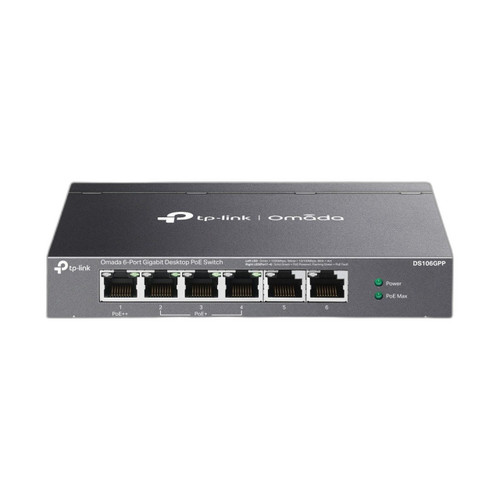
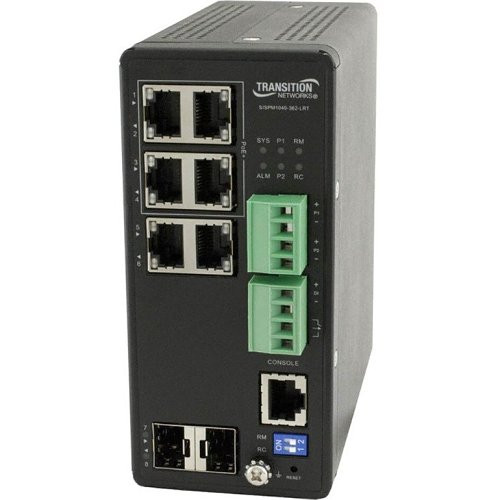
The TP-Link DS106GPP and Lantronix SISPM1040-362-LRT-L1Y3 are both 6-port Gigabit switches positioned for small-to-mid surveillance or networked device deployments. The DS106GPP is an unmanaged desktop switch emphasizing high-wattage PoE delivery, including PoE++ on Port 1. The SISPM1040-362-LRT-L1Y3 is a managed, DIN-rail-capable industrial switch with TAA compliance and a 3-year service plan. Buyers will cross-shop these when deploying 6-port edge switching with PoE, weighing management depth against raw power output.
In This Guide
- Which switch delivers more PoE power, and how is that power distributed across ports?
- How do the two switches differ in management capability and physical operating environment?
- What warranty and compliance commitments does each switch carry, and how do they affect total cost of ownership?
- Which should you choose: the DS106GPP or the SISPM1040-362-LRT-L1Y3?
- Side-by-Side Specs
- FAQ
Which switch delivers more PoE power, and how is that power distributed across ports?
The DS106GPP leads on raw PoE output. Port 1 supports PoE++ (802.3bt) delivering 60–90 W, ports 2–4 deliver up to 60 W PoE+ (802.3af/at) each, and the total PoE budget is 64 W per the spec sheet. This makes Port 1 purpose-fit for high-draw devices such as PTZ cameras or thermal imagers requiring up to 90 W. The spec also notes an Extend Mode capable of pushing PoE to 250 m (820 ft), useful for long cable runs to edge cameras.
The SISPM1040-362-LRT-L1Y3 supports PoE+ (802.3at), which is capped at 30 W per port under that standard. No per-port wattage maximums or total PoE budget figure are provided in the supplied specifications. Buyers powering high-wattage devices such as 802.3bt-class PTZ cameras should note that PoE+ cannot meet the 60–90 W demand that the DS106GPP's Port 1 satisfies.
How do the two switches differ in management capability and physical operating environment?
The DS106GPP is explicitly unmanaged. It offers no VLAN, QoS, or remote configuration interface. Its operating modes are limited to Extend Mode (250 m PoE range extension), Port Isolation, and Auto Recovery — all hardware-level functions requiring no software login. Form factor is desktop with wall, pole, and rack mount options noted in specs.
The SISPM1040-362-LRT-L1Y3 is a fully managed switch. The supplied specs reference an 8K MAC address table, IEEE 802.1w (Rapid Spanning Tree), IEEE 802.1s (Multiple Spanning Tree), IPv4/IPv6 dual-stack support, and static routing capability — features consistent with Layer 2+ managed operation. It carries an IP30 ingress protection rating and a storage temperature range of -40°C to 85°C, indicating industrial-grade environmental tolerance. DIN-rail mounting is confirmed in specs, making it suited for control-panel or cabinet installation in harsh environments. TAA compliance is stated, qualifying it for U.S. federal procurement. No desktop or pole-mount option is listed.
What warranty and compliance commitments does each switch carry, and how do they affect total cost of ownership?
The DS106GPP's supplied specifications do not state a warranty period. No TAA compliance claim appears in the provided spec data. The SKU is flagged with a pricing_violation note dating to 2026-05-06; buyers should verify current pricing and availability status before procurement.
The SISPM1040-362-LRT-L1Y3 SKU name includes '3-Year' support, though the warranty field in the supplied specs states '2-Year Warranty' — a discrepancy within the provided data that buyers should clarify with the vendor. TAA compliance is explicitly listed as a feature, which is a hard requirement for many U.S. government and defense contracts. The 3-year service plan (if confirmed) lowers replacement and support risk in long-lifecycle deployments. This unit also carries a pricing_violation flag from 2026-05-06; verify current availability.
Which should you choose: the DS106GPP or the SISPM1040-362-LRT-L1Y3?
Our take: The DS106GPP is the stronger choice when the priority is maximum PoE output at the edge — specifically deployments with PTZ or thermal cameras requiring up to 90 W on a single port (PoE++, 802.3bt) and long cable runs up to 250 m in Extend Mode, without a need for management software. The SISPM1040-362-LRT-L1Y3 is the stronger choice when the deployment demands managed Layer 2+ switching (802.1w/s, IPv4/IPv6 dual-stack, 8K MAC table), TAA-compliant federal procurement, DIN-rail mounting in industrial enclosures rated to -40°C storage, and a multi-year service commitment. The PoE standard difference is material: PoE+ (802.3at, max 30 W/port) on the Lantronix cannot power 802.3bt-class devices. Neither unit's pricing_violation flag has been resolved in these specs; confirm current order eligibility before specifying either on a bill of materials.
Side-by-Side Comparison
Spec-for-spec, from manufacturer data.
| Specification | TP-Link DS106GPP | Lantronix SISPM1040-362-LRT-L1Y3 |
|---|---|---|
| Product Type | Desktop Switch | Managed Industrial Switch |
| Total Ports | 6 | 6 |
| Port Speed | 1G Gigabit | Gigabit |
| PoE Standard | PoE++ (802.3bt) | PoE+ (802.3at) |
| Max Single-Port PoE Power | 90 W (Port 1) | Not specified (802.3at max 30 W) |
| Total PoE Budget | 64 W | — |
| PoE Extend Range | 250 m (820 ft) | — |
| Management | Unmanaged | Managed (L2+) |
| MAC Address Table | — | 8K |
| Spanning Tree | — | IEEE 802.1w / 802.1s |
| IPv4/IPv6 Dual Stack | — | Yes |
| DIN Rail Mount | — | Yes |
| Wall / Pole / Rack Mount | Yes | Wall; Rack |
| IP Rating | — | IP30 |
| Storage Temperature | — | -40°C to 85°C |
| TAA Compliant | — | Yes |
| Warranty | Not specified | 2-Year (SKU name states 3-Year — verify) |
Frequently Asked Questions
Which should you choose: the DS106GPP or the SISPM1040-362-LRT-L1Y3?
The DS106GPP is the stronger choice when the priority is maximum PoE output at the edge — specifically deployments with PTZ or thermal cameras requiring up to 90 W on a single port (PoE++, 802.3bt) and long cable runs up to 250 m in Extend Mode, without a need for management software. The SISPM1040-362-LRT-L1Y3 is the stronger choice when the deployment demands managed Layer 2+ switching (802.1w/s, IPv4/IPv6 dual-stack, 8K MAC table), TAA-compliant federal procurement, DIN-rail mounting in industrial enclosures rated to -40°C storage, and a multi-year service commitment. The PoE standard difference is material: PoE+ (802.3at, max 30 W/port) on the Lantronix cannot power 802.3bt-class devices. Neither unit's pricing_violation flag has been resolved in these specs; confirm current order eligibility before specifying either on a bill of materials.
Is the DS106GPP or SISPM1040-362-LRT-L1Y3 better for powering high-wattage PTZ or thermal cameras?
The DS106GPP is better suited for high-wattage cameras. Its Port 1 delivers 60–90 W via PoE++ (802.3bt), which meets the power demands of PTZ cameras and thermal imagers that exceed the 30 W ceiling of PoE+ (802.3at) — the standard supported by the SISPM1040-362-LRT-L1Y3. If all cameras in the deployment are within 30 W, the Lantronix's PoE+ ports would be sufficient.
Can the SISPM1040-362-LRT-L1Y3 be used in a U.S. federal or government installation?
Yes, per the provided specs the SISPM1040-362-LRT-L1Y3 lists TAA (Trade Agreements Act) compliance as a feature, which is a typical requirement for U.S. federal, DoD, and GSA procurement. The DS106GPP's specifications do not include any TAA compliance claim, so it cannot be assumed compliant for those procurement vehicles.
Which switch is easier to install in a harsh industrial environment such as a factory floor or outdoor cabinet?
The SISPM1040-362-LRT-L1Y3 is better specified for harsh environments. It carries an IP30 rating, a confirmed DIN-rail mount option, and a storage temperature range of -40°C to 85°C per the supplied specs. The DS106GPP lists wall, pole, and rack mount options and offers a 250 m PoE Extend Mode, but its specs provide no IP ingress protection rating or extended temperature range — details buyers should request from the manufacturer before deploying in industrial or outdoor enclosures.
More Network Switch Comparisons
- TP-Link SG2206MP vs Lantronix IES-5200-LRT
- TP-Link SG2206MP vs Lantronix SISPM1040-362-LRT-L1Y3
- TP-Link SG2206MP vs Transition Networks SISPM1040-362-LRT
- TP-Link SG2206MP vs TP-Link DS106GPP
- TP-Link DS106GPP vs Lantronix IES-5200-LRT
- TP-Link DS106GPP vs Transition Networks SISPM1040-362-LRT
Network Switch Buying Guides
Get a Second Opinion on Your Camera Choice
Share your site layout, coverage goals, and budget. Our team will validate the camera selection, flag anything we would change, and recommend products that match the use case.