
TP-Link SG105-M2 vs TP-Link SG2005P-PD: Specification Comparison
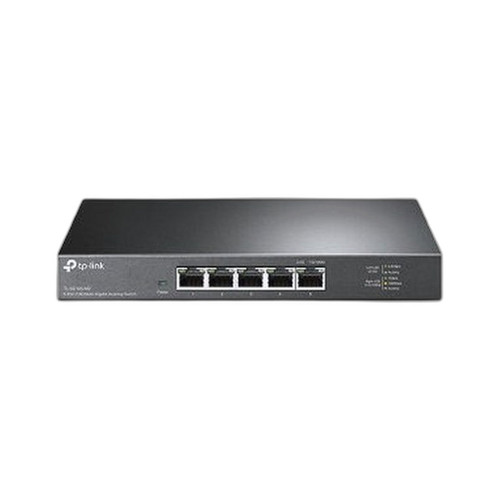
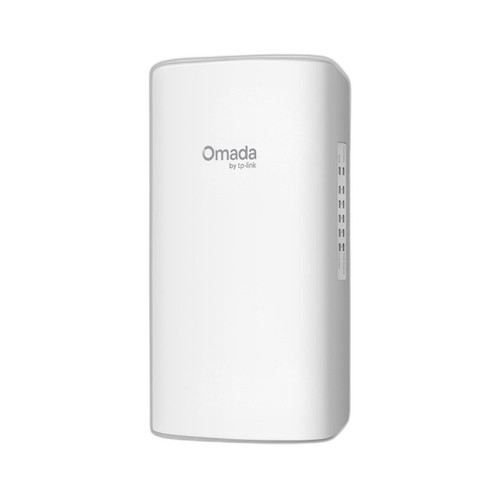
Both the TP-Link TL-SG105-M2 and the TP-Link SG2005P-PD are 5-port desktop/wall-mount switches, but they serve meaningfully different roles. The TL-SG105-M2 is an unmanaged 2.5G multi-gigabit switch aimed at high-throughput desktop or edge LAN segments. The SG2005P-PD is a managed gigabit smart switch in the Omada SDN family, designed to be powered by an upstream PoE++ source and distribute PoE to downstream devices — a topology common in outdoor surveillance and distributed edge deployments. This comparison covers port speed and switching capacity, power architecture and environmental tolerance, and management capability.
In This Guide
- Which switch delivers more bandwidth and switching capacity per port?
- How do the two switches differ in power source, PoE capability, and environmental rating?
- What management and network-control features does each switch provide?
- Which should you choose: the SG105-M2 or the SG2005P-PD?
- Side-by-Side Specs
- FAQ
Which switch delivers more bandwidth and switching capacity per port?
The TL-SG105-M2 provides five 2.5 Gbps multi-gigabit ports, yielding a switching capacity of 25 Gbps (one spec source lists 40 Gbps; the discrepancy is unresolved in the provided data). Each port runs at 2.5x the throughput of a standard gigabit interface, making it well-suited for NAS, Wi-Fi 6 access points, or workstations generating traffic above 1 Gbps.
The SG2005P-PD offers five 10/100/1000 Mbps (gigabit) ports with a switching capacity of 10 Gbps and a forwarding rate of 7.44 Mpps. Every port is capped at 1 Gbps. For a surveillance deployment where cameras stream at 4–25 Mbps each, the gigabit ceiling is rarely a constraint, but the SG105-M2 holds a clear per-port bandwidth advantage for any workload that can use it.
How do the two switches differ in power source, PoE capability, and environmental rating?
The TL-SG105-M2 is powered by an external 12 V DC adapter (1 A or 1.5 A depending on hardware revision). It has no PoE output and no stated IP rating. Its operating temperature range is 0 °C to 40 °C, limiting deployment to conditioned indoor spaces only. It uses a fanless design, which is noted in the product bullets.
The SG2005P-PD has a fundamentally different power architecture: it draws all operating power from a single 802.3af/at/bt (PoE++) source on port 5, requiring no separate power adapter or outlet. It then distributes PoE downstream on ports 1–4 with a total PoE budget that scales with input class: 64 W from a 90 W 802.3bt source, 44 W from a 60 W 802.3at Type 3 source, 19 W from an 802.3at source, or 6 W from an 802.3af source. It carries an IP66 weatherproof rating and an operating temperature range of −40 °C to +60 °C, making it suitable for outdoor enclosures, pole mounts, and unheated equipment spaces where the SG105-M2 cannot be deployed.
What management and network-control features does each switch provide?
The TL-SG105-M2 is unmanaged: there is no configuration interface, no VLAN support, no QoS, and no authentication framework. It passes traffic without administrator intervention, which simplifies deployment but eliminates any traffic-segmentation or access-control capability.
The SG2005P-PD is a managed smart switch supporting Omada SDN cloud management or standalone operation. Its documented feature set includes static routing, ACLs, QoS, 802.1Q VLAN, 802.1X port authentication backed by RADIUS/TACACS+, SNMP trap/inform, and IEEE 802.1az Energy Efficient Ethernet. Memory is specified as 32 MB Flash and 256 MB DRAM. The Omada SDN platform allows the SG2005P-PD to be centrally controlled alongside other Omada-family access points, routers, and switches — a meaningful integration advantage for installations requiring unified network policy. The SG105-M2 offers none of these capabilities.
Which should you choose: the SG105-M2 or the SG2005P-PD?
Our take: The SG2005P-PD is the stronger choice when the deployment is outdoors, in an unheated enclosure, or wherever PoE-powered devices such as IP cameras or access points must be served from a single upstream PoE++ cable with no local AC outlet. Three concrete spec deltas: (1) operating temperature — the SG2005P-PD is rated −40 °C to +60 °C versus the SG105-M2's 0 °C to 40 °C; (2) the SG2005P-PD carries an IP66 environmental rating while the SG105-M2 has none stated; (3) the SG2005P-PD delivers up to 64 W of downstream PoE budget while the SG105-M2 provides zero PoE output. Conversely, the TL-SG105-M2 is the stronger choice for indoor, high-throughput LAN segments — its 2.5 Gbps per-port speed and 25 Gbps switching capacity more than double the SG2005P-PD's 1 Gbps per-port and 10 Gbps capacity. Buyers on an Omada SDN platform who need managed VLANs or 802.1X should prefer the SG2005P-PD regardless of environment.
Side-by-Side Comparison
Spec-for-spec, from manufacturer data.
| Specification | TP-Link SG105-M2 | TP-Link SG2005P-PD |
|---|---|---|
| Product Type | Unmanaged Desktop Switch | Managed Gigabit Smart Switch |
| Managed | No | Yes (Omada SDN / standalone) |
| Port Count | 5 | 5 |
| Port Speed | 2.5 Gbps (Multi-Gigabit) | 10/100/1000 Mbps (Gigabit) |
| Switching Capacity | 25 Gbps (40 Gbps also listed in specs) | 10 Gbps |
| Forwarding Rate | — | 7.44 Mpps |
| PoE Output | None | 4 ports PoE+ out (ports 1–4) |
| PoE Budget (max) | — | 64 W (with 90 W 802.3bt input) |
| Power Input | 12 V DC adapter (1 A or 1.5 A) | 802.3af/at/bt PoE on port 5 only |
| IP Rating | — | IP66 |
| Operating Temperature | 0 °C to 40 °C | −40 °C to +60 °C |
| Storage Temperature | −40 °C to 70 °C | — |
| Mount Type | Wall | Wall; Pole |
| Management Features | None | VLAN, QoS, ACL, 802.1X, SNMP, Static Routing |
| Memory | — | 32 MB Flash; 256 MB DRAM |
| Dimensions (W × D × H) | 209 × 126 × 26 mm (one source: 226 × 131 × 35 mm) | 103.0 × 41.6 × 186.2 mm |
Frequently Asked Questions
Which should you choose: the SG105-M2 or the SG2005P-PD?
The SG2005P-PD is the stronger choice when the deployment is outdoors, in an unheated enclosure, or wherever PoE-powered devices such as IP cameras or access points must be served from a single upstream PoE++ cable with no local AC outlet. Three concrete spec deltas: (1) operating temperature — the SG2005P-PD is rated −40 °C to +60 °C versus the SG105-M2's 0 °C to 40 °C; (2) the SG2005P-PD carries an IP66 environmental rating while the SG105-M2 has none stated; (3) the SG2005P-PD delivers up to 64 W of downstream PoE budget while the SG105-M2 provides zero PoE output. Conversely, the TL-SG105-M2 is the stronger choice for indoor, high-throughput LAN segments — its 2.5 Gbps per-port speed and 25 Gbps switching capacity more than double the SG2005P-PD's 1 Gbps per-port and 10 Gbps capacity. Buyers on an Omada SDN platform who need managed VLANs or 802.1X should prefer the SG2005P-PD regardless of environment.
Can I use the SG2005P-PD indoors to replace the SG105-M2 if I need PoE output?
Yes, the SG2005P-PD can be deployed indoors, but it requires a 802.3af/at/bt PoE-capable upstream port to power itself — it has no DC power input. If your upstream switch or injector provides 802.3bt (90 W), the SG2005P-PD will pass up to 64 W of PoE budget to its four downstream ports. The SG105-M2 provides no PoE output at all, so if powered downstream devices are the requirement, the SG2005P-PD is the only option between the two.
Does the SG105-M2 support VLANs or any traffic segmentation?
No. The TL-SG105-M2 is an unmanaged switch with no configuration interface, so VLANs, QoS, ACLs, and 802.1X authentication are not available. The SG2005P-PD supports all of these features via its Omada SDN management platform or standalone configuration.
Which switch is better suited for a pole-mounted outdoor surveillance enclosure?
The SG2005P-PD is purpose-matched to that scenario: it is IP66-rated, operates from −40 °C to +60 °C, mounts to a wall or pole, draws power from a single upstream PoE++ cable (no outlet needed), and distributes PoE to cameras on ports 1–4. The TL-SG105-M2 lacks an IP rating, is limited to 0 °C to 40 °C, provides no PoE output, and requires a DC adapter — none of which are compatible with a typical outdoor pole-mount installation.
More Network Switch Comparisons
- TP-Link SG2005P-PD vs Ubiquiti USW-FLEX-2.5G-5
- TP-Link SG2005P-PD vs TP-Link ES205G
- TP-Link SG2005P-PD vs TP-Link DS105G
- TP-Link ES205G vs Ubiquiti USW-FLEX-2.5G-5
- TP-Link ES205G vs TP-Link DS105G
- Ubiquiti USW-FLEX-2.5G-5 vs TP-Link DS105G
Network Switch Buying Guides
Get a Second Opinion on Your Camera Choice
Share your site layout, coverage goals, and budget. Our team will validate the camera selection, flag anything we would change, and recommend products that match the use case.