
TP-Link S4500-8GP2F vs Allied Telesis AT-x530L-10GHXm-10: Specification Comparison
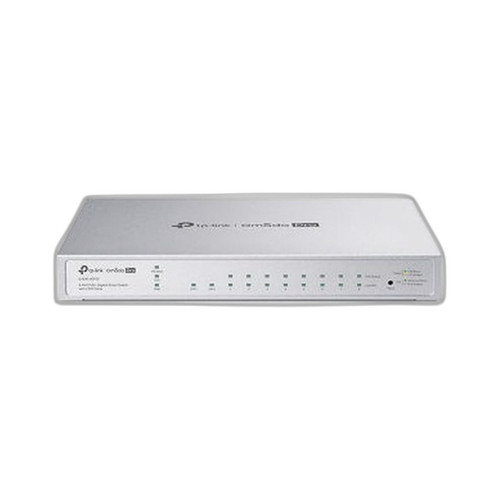
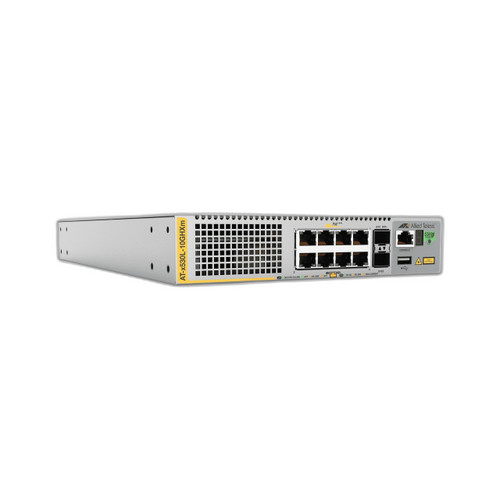
Both the TP-Link S4500-8GP2F and the Allied Telesis AT-x530L-10GHXm-10 are 8-port managed PoE switches with dual SFP+ uplinks in a rack-mountable form factor — a pairing a buyer evaluating edge-layer surveillance or enterprise access switching would legitimately cross-shop. The comparison pivots on PoE power class and budget (PoE+ vs PoE++), switching throughput, and deployment scale, since the two units sit at notably different price and performance tiers despite sharing the same port count and uplink topology.
In This Guide
- Which switch delivers the PoE power budget and per-port wattage your devices actually require?
- How do switching fabric, forwarding rate, and uplink speed compare between these two switches?
- What are the management capabilities, form factor constraints, and deployment environment considerations?
- Which should you choose: the S4500-8GP2F or the AT-x530L-10GHXm-10?
- Side-by-Side Specs
- FAQ
Which switch delivers the PoE power budget and per-port wattage your devices actually require?
The AT-x530L-10GHXm-10 is in a different class here. Its 500 W total PoE budget supports IEEE 802.3bt (PoE++) at up to 90 W per port on five ports, 60 W per port on all eight, and is backward-compatible with PoE++ (60 W), PoE+ (30 W), PoE (15.4 W), and even 7.5 W endpoints simultaneously across all eight ports. That headroom is required for PTZ cameras with integrated heaters, high-wattage access-control panels, Wi-Fi 6E APs, and similar 60–90 W loads.
The S4500-8GP2F operates at PoE+ (802.3at) only, with a total PoE budget specified at 58–62 W (the spec sheet lists both figures; the lower, 58 W, is used here as the conservative value). Maximum per-port delivery is 30 W. This is adequate for standard dome and bullet cameras, basic APs, and VoIP phones, but it cannot power PoE++-class devices and its aggregate budget is exhausted by fewer than two simultaneous 30 W loads. Installers powering more than two high-draw cameras should treat the S4500-8GP2F's budget as a hard constraint.
How do switching fabric, forwarding rate, and uplink speed compare between these two switches?
The AT-x530L-10GHXm-10 is built on a 120 Gbps non-blocking switching fabric with a forwarding rate of 89.2 Mpps. Its eight access ports run at variable speeds — 100 Mbps, 1 Gbps, 2.5 Gbps, or 5 Gbps — and both uplinks are 10 GbE SFP+. Measured latency drops to 2.12 µs at 10 Gbps and 3.49 µs at 5 Gbps, relevant for latency-sensitive video analytics or real-time industrial control. Stacking ports (2×) are listed in the spec sheet with an asterisk; stacking capability specifics are not fully detailed in the provided data.
The S4500-8GP2F specifies a switching capacity of 16 Gbps (with an additional 20 Gbps figure also appearing in the spec data; both values are reproduced from the source without reconciliation). Forwarding rate is not stated in the provided specs. Access ports are 1 Gbps (RJ-45) and uplinks are dual SFP slots; fiber type is listed as single-mode but SFP speed (1 Gbps vs 10 Gbps) is not explicitly confirmed in the provided spec data. The fabric and uplink bandwidth make it appropriate for small edge deployments but unsuitable where multi-gigabit aggregation or 10 GbE uplinks are needed.
What are the management capabilities, form factor constraints, and deployment environment considerations?
The S4500-8GP2F is described as a 'smart' managed switch under TP-Link's Omada Pro ecosystem. Documented management features include SNMP Trap/Inform and EEE (Energy Efficient Ethernet). It supports both wall-mount and rack-mount installation, making it flexible for small-room or closet deployments without a full rack. Dimensions are 11.6 × 7.1 × 1.7 in. Flash storage is 32 MB. Noise level is not specified in the provided data. Power is supplied via an external DC adapter (53.5 VDC / 1.31 A), not an internal AC power supply — a relevant distinction for installations requiring UPS integration.
The AT-x530L-10GHXm-10 is a 1U rack-mount unit (210 × 362 × 42.5 mm / 8.27 × 14.25 × 1.67 in) weighing 3.5 kg. It draws up to 605 W maximum (including full PoE load) and dissipates up to 2,065 BTU/h, which demands adequate rack ventilation and circuit capacity. Noise is rated at 64 dBA under load — audible in quiet environments, acceptable in an IDF closet with other active equipment. Management feature details beyond the physical spec are not provided in the spec data supplied. The stacking ports suggest it is designed for multi-switch deployments, but stacking configuration details are not confirmed in the provided specs.
Which should you choose: the S4500-8GP2F or the AT-x530L-10GHXm-10?
Our take: The AT-x530L-10GHXm-10 is the stronger choice when the deployment requires high-wattage PoE++ endpoints, multi-gigabit access speeds, or a non-blocking 120 Gbps fabric — and the S4500-8GP2F is the appropriate choice for small, cost-sensitive edge installations powering standard PoE+ cameras and devices. The three decisive spec deltas: PoE budget is 500 W vs 58 W — a more than 8× difference that determines whether devices like PTZ cameras with heaters or 802.3bt APs can even be connected; switching fabric is 120 Gbps vs 16 Gbps, meaning the Allied Telesis unit can sustain wire-speed throughput across all ports simultaneously where the TP-Link cannot; and access port speed tops out at 5 Gbps (Allied Telesis) vs 1 Gbps (TP-Link), relevant where multi-gigabit camera streams or NVR uplinks are planned. Use the S4500-8GP2F for a small office or single-room deployment with standard cameras; use the AT-x530L-10GHXm-10 for enterprise edge or mid-size surveillance infrastructure with high-power endpoints.
Side-by-Side Comparison
Spec-for-spec, from manufacturer data.
| Specification | TP-Link S4500-8GP2F | Allied Telesis AT-x530L-10GHXm-10 |
|---|---|---|
| PoE Standard | 802.3af/at (PoE+) | 802.3af/at/bt (PoE, PoE+, PoE++) |
| Total PoE Budget | 58 W | 500 W |
| Max PoE per Port | 30 W | 90 W (5 ports); 60 W (all 8 ports) |
| PoE-Enabled Ports | 8 | 8 |
| Access Port Speed | 1 Gbps (RJ-45) | 100M / 1 / 2.5 / 5 Gbps (RJ-45) |
| SFP+ Uplink Ports | 2 (speed not confirmed in specs) | 2 × 10 GbE SFP+ |
| Switching Fabric | 16 Gbps | 120 Gbps |
| Forwarding Rate | — | 89.2 Mpps |
| Latency (10 Gbps) | — | 2.12 µs |
| Stacking Ports | — | 2 (details not fully specified) |
| Form Factor | Wall or rack-mount | 1U rack-mount only |
| Dimensions (in) | 11.6 × 7.1 × 1.7 | 8.27 × 14.25 × 1.67 |
| Max Power Consumption | 58 W | 605 W |
| Heat Dissipation | — | 2,065 BTU/h |
| Noise Level | — | 64 dBA |
| Power Supply | External DC adapter (53.5 VDC / 1.31 A) | Internal (spec implied; type not stated) |
Frequently Asked Questions
Which should you choose: the S4500-8GP2F or the AT-x530L-10GHXm-10?
The AT-x530L-10GHXm-10 is the stronger choice when the deployment requires high-wattage PoE++ endpoints, multi-gigabit access speeds, or a non-blocking 120 Gbps fabric — and the S4500-8GP2F is the appropriate choice for small, cost-sensitive edge installations powering standard PoE+ cameras and devices. The three decisive spec deltas: PoE budget is 500 W vs 58 W — a more than 8× difference that determines whether devices like PTZ cameras with heaters or 802.3bt APs can even be connected; switching fabric is 120 Gbps vs 16 Gbps, meaning the Allied Telesis unit can sustain wire-speed throughput across all ports simultaneously where the TP-Link cannot; and access port speed tops out at 5 Gbps (Allied Telesis) vs 1 Gbps (TP-Link), relevant where multi-gigabit camera streams or NVR uplinks are planned. Use the S4500-8GP2F for a small office or single-room deployment with standard cameras; use the AT-x530L-10GHXm-10 for enterprise edge or mid-size surveillance infrastructure with high-power endpoints.
Is the S4500-8GP2F or AT-x530L-10GHXm-10 better for powering PTZ cameras with integrated heaters?
The AT-x530L-10GHXm-10 is the correct choice. PTZ cameras with heaters commonly draw 45–90 W, which exceeds the S4500-8GP2F's 30 W per-port PoE+ maximum and its 58 W total budget. The AT-x530L-10GHXm-10 supports up to 90 W per port on five ports and carries a 500 W aggregate budget, covering full PoE++ (802.3bt) loads. The S4500-8GP2F is limited to 802.3at (PoE+) and cannot power PoE++ devices at rated wattage.
Can I wall-mount either of these switches in a small office or retail location without a rack?
Only the S4500-8GP2F supports wall-mount installation — its spec sheet lists both wall and rack mount as valid form factors. The AT-x530L-10GHXm-10 is specified as rack-mount only (1U), weighs 3.5 kg, and requires rack-level ventilation given its up to 605 W power draw and 2,065 BTU/h heat dissipation. For a racklless installation, the S4500-8GP2F is the only option of the two.
Is the AT-x530L-10GHXm-10 or S4500-8GP2F better suited for a larger multi-switch deployment?
The AT-x530L-10GHXm-10 is the better fit for larger deployments. Its spec sheet lists 2 stacking ports (noted with an asterisk; full stacking configuration details are not provided in the supplied spec data), a 120 Gbps switching fabric, dual 10 GbE SFP+ uplinks, and 5 Gbps access ports — all traits suited to aggregation-layer or scalable access-layer roles. The S4500-8GP2F, with a 16 Gbps fabric, 1 Gbps access ports, and no stacking spec provided, is designed for standalone small-edge use.
More Network Switch Comparisons
- Vivotek IHT-1271 vs TP-Link SG3210XHP-M2
- Vivotek IHT-1271 vs TP-Link S4500-8GP2F
- Vivotek IHT-1271 vs TP-Link SG1210P
- Vivotek IHT-1271 vs Allied Telesis AT-x530L-10GHXm-10
- Vivotek IHT-1271 vs Vivotek GEV-108A-130
- Vivotek IHT-1271 vs Vivotek IHT-1000
Network Switch Buying Guides
Get a Second Opinion on Your Camera Choice
Share your site layout, coverage goals, and budget. Our team will validate the camera selection, flag anything we would change, and recommend products that match the use case.