
TP-Link DS105GP vs TP-Link SG2005P-PD: Specification Comparison
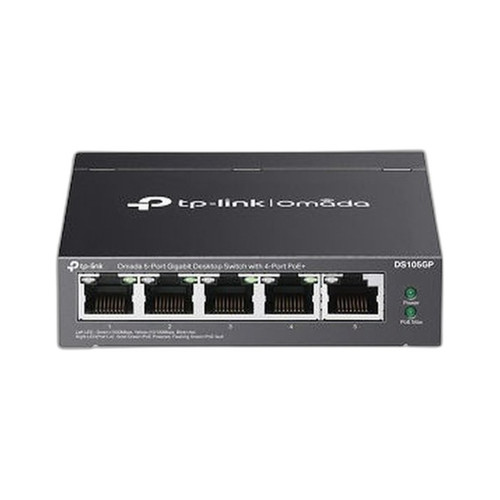
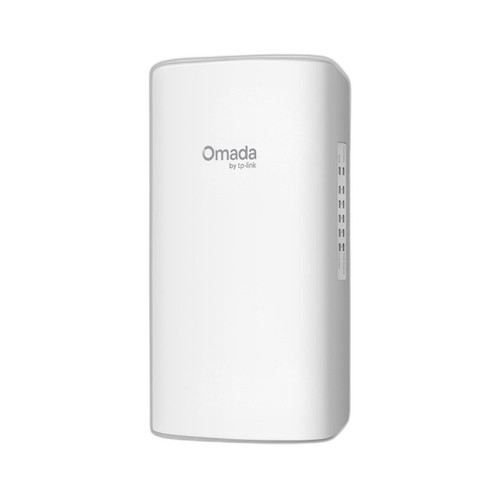
Both the TP-Link DS105GP and SG2005P-PD are 5-port gigabit switches with PoE output capability, making them directly cross-shoppable for small surveillance deployments of up to four IP cameras. The comparison turns on three meaningful axes: management depth and feature set, power architecture and PoE budget, and physical installation environment. The DS105GP is an unmanaged plug-and-play unit running on 12V DC; the SG2005P-PD is a managed Omada SDN switch that is itself powered by an upstream PoE++ source, adding outdoor-rated enclosure flexibility.
In This Guide
- Which switch offers the management depth and security features your deployment requires?
- How do the two switches differ in how they receive power and how much PoE budget they deliver to connected devices?
- Which unit is suited for outdoor or harsh-environment installation, and how do their physical form factors differ?
- Which should you choose: the DS105GP or the SG2005P-PD?
- Side-by-Side Specs
- FAQ
Which switch offers the management depth and security features your deployment requires?
The DS105GP is fully unmanaged. It provides no web interface, no CLI, no VLAN segmentation, no QoS prioritization, and no access-control capabilities. Configuration is zero-touch: plug in and operate. This suits installations where network isolation, traffic shaping, or audit trails are not required and where IT overhead must be minimized.
The SG2005P-PD is a managed smart switch supporting the full Omada SDN controller stack or standalone web-GUI management. Documented feature support includes static routing, ACL, QoS, VLAN, 802.1X port authentication backed by RADIUS/TACACS+, SNMP Trap/Inform, and IEEE 802.1az Energy Efficient Ethernet. It carries CE, FCC, and RoHS certifications. For deployments that require network segmentation, camera VLAN isolation, or centralized Omada controller visibility, the SG2005P-PD provides capabilities the DS105GP cannot match at any configuration level.
How do the two switches differ in how they receive power and how much PoE budget they deliver to connected devices?
The DS105GP draws power from an external 12V DC adapter and provides a total PoE+ (802.3at, 30W per-port max) budget of 65W across all five ports. All five ports are PoE-capable. It does not accept PoE input; a dedicated DC power supply is required at the installation point.
The SG2005P-PD inverts this model: it has no DC power input. It is powered exclusively via 802.3bt PoE++ on port 5 from an upstream PSE source. The available PoE output budget to ports 1–4 scales with the input type: 64W when fed by a 90W 802.3bt Type 4 source, 44W from a 60W Type 3 source, 19W from an 802.3at source, and 6W from an 802.3af source. The DS105GP's 65W budget is marginally higher than the SG2005P-PD's best-case 64W, and the DS105GP spreads PoE across five ports versus four on the SG2005P-PD. Installers must ensure the upstream switch or injector is 802.3bt-capable to realize the SG2005P-PD's full budget.
Which unit is suited for outdoor or harsh-environment installation, and how do their physical form factors differ?
The DS105GP is rated for indoor desktop use only. Its operating temperature range is 0°C to 40°C (32°F to 104°F), storage is −40°C to 70°C. It carries no IP ingress-protection rating per the provided specs. Its footprint is compact at 99.8 × 98 × 25 mm with no mounting provisions specified.
The SG2005P-PD is rated IP66 for dust-tight and jet-water resistance, enabling deployment inside outdoor surveillance enclosures, pole-mount housings, or other exposed locations. Its operating temperature spans −40°C to +60°C (−40°F to +140°F), a 20°C wider high-end range and a 40°C wider cold-end range than the DS105GP. Mounting options specified are wall and pole. Its form factor is 103.0 × 41.6 × 186.2 mm and it weighs 0.82 lbs (0.370 kg). The PoE-in architecture eliminates the need to route a separate DC power cable to the outdoor mounting point, provided an 802.3bt-capable upstream port is available.
Which should you choose: the DS105GP or the SG2005P-PD?
Our take: The SG2005P-PD is the stronger choice when the installation is outdoors, requires network segmentation or Omada SDN management, or must avoid running a separate DC power cable to the edge location. Its IP66 rating, −40°C to +60°C operating range, and PoE++ power-in architecture are purpose-built for pole-mounted or enclosure-based surveillance deployments that the DS105GP cannot serve. Conversely, the DS105GP is the stronger choice for simple, unmanaged indoor camera closets: it delivers 65W of PoE+ across all five ports from a straightforward 12V DC supply, requires no upstream 802.3bt infrastructure, and adds zero management complexity. The DS105GP's 65W budget edges the SG2005P-PD's maximum 64W by 1W, and it distributes PoE to five ports versus four. For IT-managed deployments or any outdoor use case, the SG2005P-PD's VLAN, ACL, 802.1X, and SNMP capabilities—absent entirely on the DS105GP—justify the additional infrastructure dependency.
Side-by-Side Comparison
Spec-for-spec, from manufacturer data.
| Specification | TP-Link DS105GP | TP-Link SG2005P-PD |
|---|---|---|
| Product Type | Unmanaged desktop switch | Managed smart switch (Omada SDN) |
| Managed | No | Yes — Omada SDN / standalone |
| Ports | 5 × 10/100/1000Mbps RJ45 | 5 × 10/100/1000Mbps RJ45 |
| Switching Capacity | 10 Gbps | 10 Gbps |
| Forwarding Rate | — | 7.44 Mpps |
| PoE Standard (Output) | PoE+ (802.3at) | PoE+ (802.3at) on ports 1–4 |
| PoE Budget | 65W (all 5 ports) | 64W max (ports 1–4; input-dependent) |
| Power Input | 12V DC adapter | 802.3bt PoE++ on port 5 only |
| IP Rating | — | IP66 |
| Operating Temperature | 0°C to 40°C | −40°C to +60°C |
| Storage Temperature | −40°C to 70°C | — |
| Mount / Form Factor | Desktop | Wall; Pole |
| VLAN / QoS / ACL | — | Yes (VLAN, QoS, ACL, static routing) |
| 802.1X / RADIUS / TACACS+ | — | Yes |
| SNMP | — | SNMP Trap/Inform |
| Memory | — | Flash: 32 MB; DRAM: 256 MB |
| Dimensions (W×D×H) | 99.8 × 98 × 25 mm | 103.0 × 41.6 × 186.2 mm |
| Weight | — | 0.82 lbs (0.370 kg) |
Frequently Asked Questions
Which should you choose: the DS105GP or the SG2005P-PD?
The SG2005P-PD is the stronger choice when the installation is outdoors, requires network segmentation or Omada SDN management, or must avoid running a separate DC power cable to the edge location. Its IP66 rating, −40°C to +60°C operating range, and PoE++ power-in architecture are purpose-built for pole-mounted or enclosure-based surveillance deployments that the DS105GP cannot serve. Conversely, the DS105GP is the stronger choice for simple, unmanaged indoor camera closets: it delivers 65W of PoE+ across all five ports from a straightforward 12V DC supply, requires no upstream 802.3bt infrastructure, and adds zero management complexity. The DS105GP's 65W budget edges the SG2005P-PD's maximum 64W by 1W, and it distributes PoE to five ports versus four. For IT-managed deployments or any outdoor use case, the SG2005P-PD's VLAN, ACL, 802.1X, and SNMP capabilities—absent entirely on the DS105GP—justify the additional infrastructure dependency.
Can I use either switch to power cameras without running a separate power cable to the installation point?
The SG2005P-PD is specifically designed for this: it receives all operating power through a single 802.3bt PoE++ cable on port 5, eliminating the need for a local DC outlet. The DS105GP requires a 12V DC power adapter at the installation point and cannot be powered via PoE.
Is the DS105GP or SG2005P-PD better suited for an outdoor camera enclosure?
The SG2005P-PD. It carries an IP66 ingress-protection rating and operates from −40°C to +60°C. The DS105GP has no stated IP rating and is rated only to 0°C–40°C, making it unsuitable for outdoor or temperature-extreme environments per its published specifications.
If I need to put cameras on a separate VLAN from the rest of my network, which switch supports that?
Only the SG2005P-PD. It supports VLAN configuration as part of its managed Omada SDN feature set, along with ACL and 802.1X port authentication. The DS105GP is unmanaged and provides no VLAN, ACL, or any traffic-control capability.
More Network Switch Comparisons
- TP-Link SG2005P-PD vs Ubiquiti USW-FLEX-2.5G-5
- TP-Link SG2005P-PD vs TP-Link ES205G
- TP-Link SG2005P-PD vs TP-Link DS105G
- TP-Link ES205G vs Ubiquiti USW-FLEX-2.5G-5
- TP-Link ES205G vs TP-Link DS105G
- Ubiquiti USW-FLEX-2.5G-5 vs TP-Link DS105G
Network Switch Buying Guides
Get a Second Opinion on Your Camera Choice
Share your site layout, coverage goals, and budget. Our team will validate the camera selection, flag anything we would change, and recommend products that match the use case.