
Sato WWCLP3B01-WAR vs Brother TJ4520TN: Specification Comparison
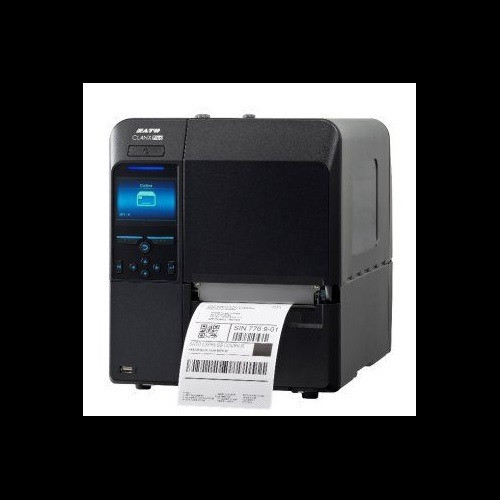
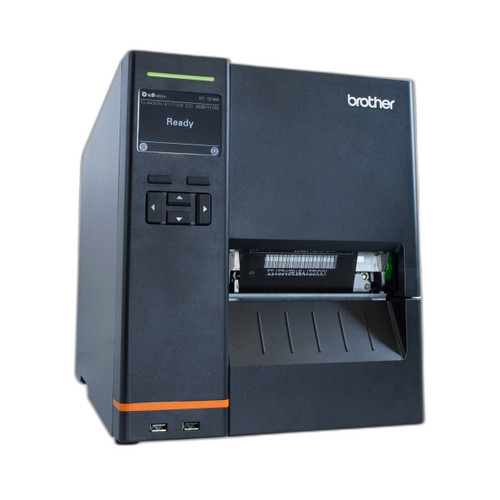
Both the Sato CL4NX Plus (WWCLP3B01-WAR) and Brother TJ4520TN are industrial thermal transfer label printers built for high-volume barcode and label production in demanding environments. They occupy the same product class and share core industrial-grade positioning, making them genuine cross-shop candidates for warehouse, manufacturing, and logistics deployments where print quality, speed, connectivity, and media flexibility are primary selection criteria. This comparison evaluates the key spec-level differences to help integrators and IT buyers determine which unit better fits their operational requirements.
In This Guide
- Which printer delivers better print quality and throughput for high-volume label runs?
- How do the two printers differ in media handling, RFID capability, and onboard memory?
- Which unit offers a more robust physical build, environmental tolerance, and warranty coverage?
- Which should you choose: the WWCLP3B01-WAR or the TJ4520TN?
- Side-by-Side Specs
- FAQ
Which printer delivers better print quality and throughput for high-volume label runs?
The Sato WWCLP3B01-WAR prints at 609 dpi and 14 ips, while the Brother TJ4520TN prints at 300 dpi and 12 ips. The Sato unit's 609 dpi resolution is more than double that of the Brother's 300 dpi, a meaningful advantage for applications requiring fine-detail barcodes, small font sizes, or high-density 2D codes such as Data Matrix or QR codes with tight cell pitch. At 14 ips versus 12 ips, the Sato also edges out the Brother in throughput, though the 2 ips delta may be less decisive than resolution for most deployments. The Brother's 300 dpi is sufficient for standard ISO-compliant 1D and 2D barcodes at typical label sizes, as noted in its spec data.
For print width, the Brother TJ4520TN offers a wider 4.5-inch maximum print width compared to the Sato's 4.09 inches. Buyers printing wider labels—such as full-face shipping labels or wide-format product tags—may favor the Brother's extra 0.41 inches of usable print area. Neither unit's print speed or resolution spec is disputed across the provided data fields.
How do the two printers differ in media handling, RFID capability, and onboard memory?
The Sato WWCLP3B01-WAR supports media widths from 0.87 to 5.04 inches, a media roll maximum diameter of 10 inches, and a ribbon maximum length of 1,968 ft, providing broad flexibility for varied label stock. It also includes 2 GB Flash and 256 MB SDRAM onboard memory, with 100 MB of user storage. No equivalent memory or media dimension specs are provided for the Brother TJ4520TN.
A significant differentiator is RFID: the Sato WWCLP3B01-WAR includes integrated 13.56 MHz HF RFID encoding with auto-antenna tuning (auto-optimization per spec data). The Brother TJ4520TN has no RFID capability listed in its provided specifications. For any deployment requiring RFID label encoding—retail EPC, pharmaceutical serialization, asset tracking—the Sato is the only option between the two as specified.
The Brother TJ4520TN supports Bluetooth connectivity as a standard or optional interface (specs list Bluetooth under both connectivity fields), which the Sato WWCLP3B01-WAR does not include. The Brother also lists RS232C serial as a standard interface. Buyers needing serial legacy integration or Bluetooth mobile printing should note this distinction.
Which unit offers a more robust physical build, environmental tolerance, and warranty coverage?
The Sato WWCLP3B01-WAR specifies a rigid cast aluminum frame with corrosion-resistant materials and weighs 33 lbs (15 kg), indicating a substantial industrial-grade enclosure suited for harsh plant-floor or distribution-center environments. Its operating temperature range is 41°F to 104°F (5°C to 40°C). The Brother TJ4520TN provides no frame material, weight, or operating temperature range in its supplied specifications, making a direct physical durability comparison impossible on available data.
On warranty, the Sato WWCLP3B01-WAR carries a 1-year warranty per its spec. The Brother TJ4520TN is listed with a '2-year Premier Limited with printhead coverage' per its enriched spec field, a notable advantage given that printhead replacement is typically the highest-cost maintenance item in industrial label printers. No equivalent printhead coverage term is stated for the Sato.
The Sato includes a 3.5-inch full-color LCD touchscreen display. The Brother lists a color HVGA LCD touchscreen display but does not specify screen size in the provided data. Both units support AC power; the Sato specifies 100–240V, 50/60Hz input. The Brother's power input range is not stated in the provided specifications.
Which should you choose: the WWCLP3B01-WAR or the TJ4520TN?
Our take: The WWCLP3B01-WAR is the stronger choice when print resolution, RFID encoding, and media versatility are the primary requirements. Its 609 dpi resolution doubles the Brother TJ4520TN's 300 dpi, its 14 ips speed exceeds the Brother's 12 ips, and it adds integrated 13.56 MHz HF RFID capability that the TJ4520TN entirely lacks per provided specs. Its cast aluminum frame and 2 GB Flash / 256 MB SDRAM memory further support demanding industrial workflows. However, the Brother TJ4520TN holds two concrete advantages: a wider 4.5-inch print width versus 4.09 inches, and a 2-year Premier Limited warranty with printhead coverage versus the Sato's 1-year term—a meaningful total-cost-of-ownership factor. The TJ4520TN is better suited to operations printing wide-format labels without RFID requirements and prioritizing longer warranty protection. The Sato is the clear fit for RFID-enabled label encoding and high-resolution print quality in heavy-cycle industrial settings.
Side-by-Side Comparison
Spec-for-spec, from manufacturer data.
| Specification | Sato WWCLP3B01-WAR | Brother TJ4520TN |
|---|---|---|
| Print Method | Direct Thermal / Thermal Transfer | Thermal Transfer |
| Print Resolution | 609 dpi | 300 dpi |
| Print Speed | 14 ips | 12 ips |
| Max Print Width | 4.09" | 4.5" |
| RFID | 13.56 MHz HF (integrated) | — |
| Connectivity | Ethernet, Wi-Fi, USB | Ethernet, Wi-Fi, Bluetooth, USB 2.0, RS232C Serial |
| Display | 3.5" Full-Color LCD touchscreen | Color HVGA LCD touchscreen (size not specified) |
| Memory (Flash) | 2 GB | — |
| Memory (SDRAM) | 256 MB | — |
| User Storage | 100 MB | — |
| Media Width Range | 0.87" – 5.04" | — |
| Max Media Roll Diameter | 10" | — |
| Max Ribbon Length | 1,968 ft | — |
| Frame Material | Rigid cast aluminum, corrosion-resistant | — |
| Weight | 33 lbs (15 kg) | — |
| Operating Temp Range | 41°F – 104°F (5°C – 40°C) | — |
| Power Input | AC 100–240V, 50/60Hz | — |
| Warranty | 1-year | 2-year Premier Limited with printhead coverage |
Frequently Asked Questions
Which should you choose: the WWCLP3B01-WAR or the TJ4520TN?
The WWCLP3B01-WAR is the stronger choice when print resolution, RFID encoding, and media versatility are the primary requirements. Its 609 dpi resolution doubles the Brother TJ4520TN's 300 dpi, its 14 ips speed exceeds the Brother's 12 ips, and it adds integrated 13.56 MHz HF RFID capability that the TJ4520TN entirely lacks per provided specs. Its cast aluminum frame and 2 GB Flash / 256 MB SDRAM memory further support demanding industrial workflows. However, the Brother TJ4520TN holds two concrete advantages: a wider 4.5-inch print width versus 4.09 inches, and a 2-year Premier Limited warranty with printhead coverage versus the Sato's 1-year term—a meaningful total-cost-of-ownership factor. The TJ4520TN is better suited to operations printing wide-format labels without RFID requirements and prioritizing longer warranty protection. The Sato is the clear fit for RFID-enabled label encoding and high-resolution print quality in heavy-cycle industrial settings.
Does either printer support RFID label encoding out of the box?
Only the Sato WWCLP3B01-WAR includes RFID capability, specifically 13.56 MHz HF encoding with auto-antenna tuning, per its provided specifications. The Brother TJ4520TN has no RFID functionality listed in its specs.
Which printer has the better warranty, and does it cover the printhead?
The Brother TJ4520TN specifies a 2-year Premier Limited warranty with printhead coverage per its spec data. The Sato WWCLP3B01-WAR carries a 1-year warranty with no printhead-specific coverage term stated. For buyers weighting long-term maintenance costs, the Brother's warranty terms are stronger on available data.
Can the Brother TJ4520TN print wider labels than the Sato WWCLP3B01-WAR?
Yes. The Brother TJ4520TN supports a maximum print width of 4.5 inches, versus 4.09 inches for the Sato WWCLP3B01-WAR. The Sato does support media up to 5.04 inches wide for feeding purposes, but its printable width is limited to 4.09 inches per spec.
More Label Printer Comparisons
- Honeywell PX940 vs Sato WWCLP3B01-WAR
- Honeywell PX940 vs Sato WWCLP3801-NAR
- Honeywell PX940 vs Sato WWCLP3801-WAR
- Honeywell PX940 vs Wasp WPL408
- Honeywell PX940 vs Honeywell PX4654-020
- Honeywell PX940 vs Honeywell PX6654-000
Label Printer Buying Guides
Get a Second Opinion on Your Camera Choice
Share your site layout, coverage goals, and budget. Our team will validate the camera selection, flag anything we would change, and recommend products that match the use case.