
Sato WWCLP2201-NAR vs Sato WWCLP3801-NAR: Specification Comparison
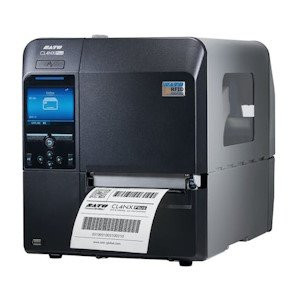
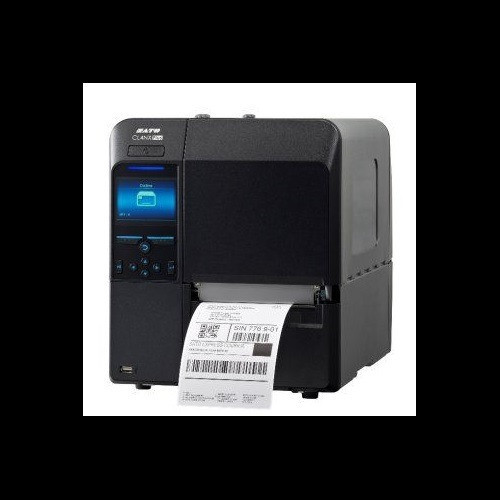
Both the WWCLP2201-NAR and WWCLP3801-NAR are Sato CL4NX Plus industrial thermal printers in the same physical chassis, targeting warehouse, manufacturing, compliance, and asset-tracking label applications. The comparison centers on three decision-relevant axes: print resolution and output quality, RFID capability, and connectivity plus display. Buyers choosing between these two models are weighing whether 609 dpi fidelity and integrated HF RFID encoding justify the step up from the 305 dpi WWCLP2201-NAR.
In This Guide
- Which printer delivers the resolution and throughput your label program requires?
- Does your operation require RFID encoding, and which model supports it?
- Are the connectivity options and operator interface equivalent between these two models?
- Which should you choose: the WWCLP2201-NAR or the WWCLP3801-NAR?
- Side-by-Side Specs
- FAQ
Which printer delivers the resolution and throughput your label program requires?
The WWCLP2201-NAR is rated at 305 dpi, a resolution well-suited to standard 1D barcodes, large-font shipping labels, and GS1-128 compliance labels where character pitch is not a limiting factor. The WWCLP3801-NAR doubles that to 609 dpi, the specified value needed for high-density 2D codes (QR, Data Matrix), fine-pitch barcodes on pharmaceutical unit-dose labels, and small-format asset tags where print element size drops below 10 mils.
Both models share an identical 14 ips print speed spec and a 4.09-inch maximum print width, so throughput and label width capacity are not differentiators. The WWCLP2201-NAR carries a secondary 'Print Resolution: 203' field in the structured data alongside its primary 305 dpi value; the same 203 field appears on the WWCLP3801-NAR alongside 609 dpi. Neither spec sheet explains this secondary figure, so only the primary resolution values (305 vs. 609 dpi) should be used for purchasing decisions.
Media handling is identical across both units: maximum roll diameter 10 inches, ribbon capacity 1,968 ft (600 m on the WWCLP3801-NAR spec; the WWCLP2201-NAR spec lists feet only), media width range 0.87 to 5.04 inches, and both support 1-inch and 3-inch cores per the WWCLP3801-NAR spec (core sizes are not listed for the WWCLP2201-NAR).
Does your operation require RFID encoding, and which model supports it?
The WWCLP3801-NAR integrates an HF (High Frequency) RFID encoder operating at 13.56 MHz. This enables simultaneous thermal print and RFID inlay encoding on smart labels in a single pass, with auto-optimization noted in the product description. HF 13.56 MHz covers ISO 15693 and ISO 14443 tag families commonly used in pharmaceutical track-and-trace, library systems, access credential encoding, and NFC-adjacent asset tagging.
The WWCLP2201-NAR has no RFID capability listed in its specifications. Buyers whose workflows require RFID-encoded smart labels cannot substitute the WWCLP2201-NAR for the WWCLP3801-NAR. Conversely, operations printing only non-RFID labels—standard shipping, retail, or compliance—carry no functional gap by selecting the WWCLP2201-NAR, and the RFID subsystem of the WWCLP3801-NAR adds cost without benefit in those environments.
No UHF (860–960 MHz) RFID capability is specified for either model. Buyers requiring UHF encoding for EPC Gen2 / GS1 EPCglobal supply-chain applications should verify whether a separate UHF variant exists in the CL4NX Plus line, as the WWCLP3801-NAR spec is limited to HF 13.56 MHz only.
Are the connectivity options and operator interface equivalent between these two models?
Wired and wireless connectivity specs are identical on both models: Ethernet, Wi-Fi, and USB. The WWCLP2201-NAR datasheet description also lists Bluetooth as a connectivity option, but Bluetooth does not appear in the WWCLP2201-NAR structured specification fields nor in the WWCLP3801-NAR spec at all. Buyers who require Bluetooth should confirm directly with Sato whether it is a standard or optional feature before purchase.
Both units specify a 3.5-inch display. The WWCLP2201-NAR structured spec and the WWCLP3801-NAR description both describe this as a Full-Color LCD; the WWCLP3801-NAR description further identifies it as a touchscreen. The WWCLP2201-NAR spec does not use the word 'touchscreen,' though it does carry a 'Day/Night: Yes' flag, as does the WWCLP3801-NAR.
Memory, storage, and power specs are identical: 2 GB Flash, 256 MB SDRAM, 100 MB user storage, and AC 100–240V 50/60Hz universal input. Physical dimensions (10.66 × 17.99 × 12.63 inches), weight (33 lb / 15 kg), and operating temperature range (41°F–104°F / 5°C–40°C) are also the same on both models, confirming a shared mechanical platform. Warranty is 1 year on both.
Which should you choose: the WWCLP2201-NAR or the WWCLP3801-NAR?
Our take: The WWCLP3801-NAR is the stronger choice when your label program requires high-density 2D barcodes, fine-pitch print elements, or integrated HF RFID encoding. Its 609 dpi resolution—double the WWCLP2201-NAR's 305 dpi—is the primary functional differentiator: fine-pitch pharmaceutical barcodes, small-format asset tags, and high-resolution Data Matrix codes that fail verification at 305 dpi will print correctly at 609 dpi. Additionally, the WWCLP3801-NAR's built-in 13.56 MHz HF RFID encoder supports single-pass smart label production that the WWCLP2201-NAR cannot perform at all. All other measurable specs—14 ips speed, 4.09-inch print width, media handling, connectivity, memory, power, footprint, weight, and 1-year warranty—are identical. Choose the WWCLP2201-NAR for standard-resolution label printing where 305 dpi suffices and RFID is not required; choose the WWCLP3801-NAR for high-resolution or RFID-enabled smart-label workflows.
Side-by-Side Comparison
Spec-for-spec, from manufacturer data.
| Specification | Sato WWCLP2201-NAR | Sato WWCLP3801-NAR |
|---|---|---|
| SKU / MPN | WWCLP2201-NAR | WWCLP3801-NAR |
| Print Resolution (Primary) | 305 dpi | 609 dpi |
| Print Speed | 14 ips | 14 ips |
| Max Print Width | 4.09" | 4.09" |
| Print Method | Direct Thermal / Thermal Transfer | Direct Thermal / Thermal Transfer |
| RFID Capability | — | HF 13.56 MHz (ISO) |
| Connectivity | Ethernet, Wi-Fi, USB (Bluetooth per datasheet description) | Ethernet, Wi-Fi, USB |
| Display | 3.5" Full-Color LCD | 3.5" Full-Color LCD Touchscreen |
| Memory — Flash | 2 GB | 2 GB |
| Memory — SDRAM | 256 MB | 256 MB |
| User Storage | 100 MB | 100 MB |
| Max Media Width | 5.04" | 5.04" |
| Min Media Width | 0.87" | 0.87" |
| Max Roll Diameter | 10" | 10" |
| Max Ribbon Length | 1,968 ft | 1,968 ft (600 m) |
| Dimensions (W×D×H) | 10.66" × 17.99" × 12.63" | 10.66" × 17.99" × 12.63" |
| Weight | 33 lb / 15 kg | 33 lb / 15 kg |
| Power Input | AC 100–240V, 50/60Hz | AC 100–240V, 50/60Hz |
| Operating Temp | 41°F–104°F (5°C–40°C) | 41°F–104°F (5°C–40°C) |
| Warranty | 1 year | 1 year |
Frequently Asked Questions
Which should you choose: the WWCLP2201-NAR or the WWCLP3801-NAR?
The WWCLP3801-NAR is the stronger choice when your label program requires high-density 2D barcodes, fine-pitch print elements, or integrated HF RFID encoding. Its 609 dpi resolution—double the WWCLP2201-NAR's 305 dpi—is the primary functional differentiator: fine-pitch pharmaceutical barcodes, small-format asset tags, and high-resolution Data Matrix codes that fail verification at 305 dpi will print correctly at 609 dpi. Additionally, the WWCLP3801-NAR's built-in 13.56 MHz HF RFID encoder supports single-pass smart label production that the WWCLP2201-NAR cannot perform at all. All other measurable specs—14 ips speed, 4.09-inch print width, media handling, connectivity, memory, power, footprint, weight, and 1-year warranty—are identical. Choose the WWCLP2201-NAR for standard-resolution label printing where 305 dpi suffices and RFID is not required; choose the WWCLP3801-NAR for high-resolution or RFID-enabled smart-label workflows.
Can the WWCLP2201-NAR print the same barcode types as the WWCLP3801-NAR?
Both printers support Direct Thermal and Thermal Transfer print modes, but resolution limits apply. At 305 dpi the WWCLP2201-NAR handles standard 1D barcodes and larger 2D codes reliably. The WWCLP3801-NAR at 609 dpi produces finer dot pitch, making it the correct choice for high-density Data Matrix or QR codes on small labels, or any application where barcode verifiers require resolution above what 305 dpi delivers. For standard GS1-128 shipping labels both models are functionally equivalent.
Is the WWCLP2201-NAR or WWCLP3801-NAR better for a pharmaceutical track-and-trace line?
The WWCLP3801-NAR is better suited to pharmaceutical track-and-trace for two reasons. First, 609 dpi meets the fine-print and small-barcode requirements common in unit-dose and serialization label formats. Second, if your track-and-trace workflow uses HF RFID smart labels (ISO 15693 or ISO 14443), the WWCLP3801-NAR encodes them at 13.56 MHz in a single pass; the WWCLP2201-NAR has no RFID capability. If your line prints only human-readable and standard barcode labels at typical pharmaceutical label sizes, the 305 dpi WWCLP2201-NAR may suffice, but the WWCLP3801-NAR provides margin for stricter verification requirements.
Do both printers use the same media and ribbons, and can I share supplies across them?
Based on the specifications provided, yes. Both models share the same media width range (0.87 to 5.04 inches), maximum roll diameter (10 inches), and maximum ribbon length (1,968 ft). Both support Direct Thermal and Thermal Transfer modes. Core sizes of 1 inch and 3 inches are explicitly listed for the WWCLP3801-NAR; core sizes are not specified in the WWCLP2201-NAR spec sheet, so buyers managing a mixed fleet should confirm core compatibility with Sato before purchasing shared supply stock.
More Label Printer Comparisons
- Honeywell PX940 vs Sato WWCLP3B01-WAR
- Honeywell PX940 vs Sato WWCLP3801-NAR
- Honeywell PX940 vs Sato WWCLP3801-WAR
- Honeywell PX940 vs Wasp WPL408
- Honeywell PX940 vs Honeywell PX4654-020
- Honeywell PX940 vs Honeywell PX6654-000
Label Printer Buying Guides
Get a Second Opinion on Your Camera Choice
Share your site layout, coverage goals, and budget. Our team will validate the camera selection, flag anything we would change, and recommend products that match the use case.