
Panduit U10N32V vs Panduit U10N12V: Specification Comparison
Both the Panduit U10N32V and U10N12V are 10kVA rack-mount UPS units in the SteadySine™ product line, targeting data center, edge, and enterprise MTDC environments. Despite sharing the same output capacity and brand family, they differ meaningfully in UPS topology, form factor, rack-unit height, and power conversion architecture — dimensions that directly affect suitability for mission-critical versus space-constrained deployments. This comparison examines topology and efficiency, physical integration, and management capabilities to help installers and IT buyers select the right unit.
In This Guide
- Which topology and efficiency profile better fits your power protection requirements?
- How do the physical footprints compare for rack-space-constrained deployments?
- What management and monitoring capabilities does each unit provide for enterprise integration?
- Which should you choose: the U10N32V or the U10N12V?
- Side-by-Side Specs
- FAQ
Which topology and efficiency profile better fits your power protection requirements?
The U10N32V uses a Line-Interactive topology with Automatic Voltage Regulation (AVR). This architecture conditions incoming voltage within its 160–280V AC input range without switching to battery, reserving battery for true outages or out-of-range conditions. Its published efficiency reaches up to 98% in ECO Mode, which can meaningfully reduce operational energy costs over time. The spec also confirms Energy Star and California Title 20 compliance, indicating validated efficiency benchmarks.
The U10N12V uses a True Online Double-Conversion topology, which continuously regenerates output power from the DC bus, providing zero-transfer-time isolation from all input anomalies — including frequency deviations, harmonics, and deep sags. Output voltage is specified as 120V AC ±2%. No efficiency figure is stated in the provided specifications for the U10N12V. Double-conversion inherently carries higher idle losses than line-interactive designs, though no numeric efficiency or compliance certifications are listed in the spec data.
Buyers prioritizing energy efficiency and lower heat output in a stable utility environment will find the U10N32V's line-interactive design and verified 98% ECO Mode figure compelling. Buyers requiring complete electrical isolation from the grid — typical for sensitive server loads or environments with chronic power quality issues — should favor the U10N12V's double-conversion architecture, accepting that no efficiency figure is available from the provided specifications.
How do the physical footprints compare for rack-space-constrained deployments?
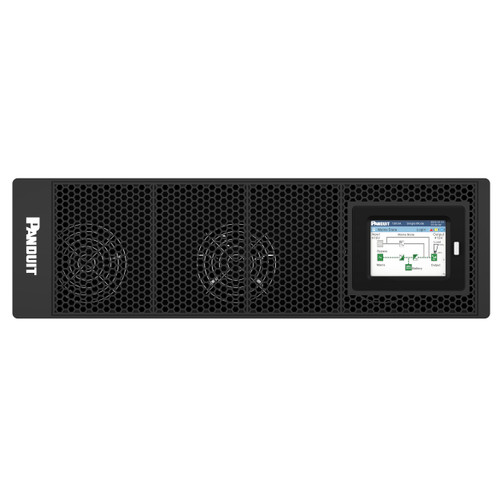
The U10N32V occupies 3U of rack space, with a height of 12 inches (306 mm) and a width of 17.3 inches (440 mm). At 3U, this unit requires more vertical rack real estate but remains within a standard rack column.
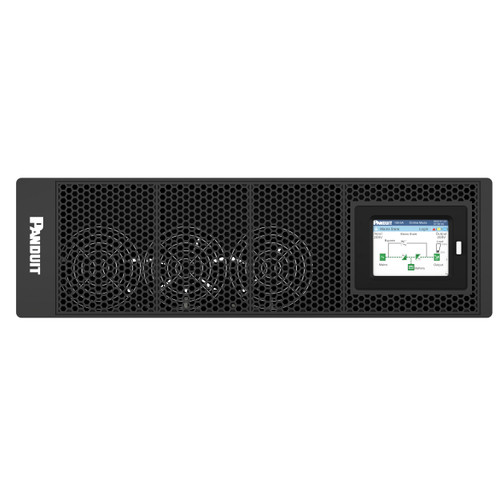
The U10N12V is a 2U unit, measuring 10.3 inches (262 mm) in height and 17.3 inches (440 mm) in width — identical in width to the U10N32V. The 1U height savings translates to 44 mm less vertical space consumed per deployment, which matters in dense multi-tenant or colocation racks where rack units are a cost center.
Both units specify hot-swappable battery modules, preserving serviceability without powering down. The U10N12V additionally specifies front-accessible battery modules and components, which the U10N32V spec does not explicitly call out. For environments where 2U versus 3U is the deciding factor — common in edge deployments or shared racks — the U10N12V holds a clear advantage. Neither unit's depth or weight is provided in the supplied specifications.
What management and monitoring capabilities does each unit provide for enterprise integration?
The U10N32V lists a management suite of LCD display, SNMP, Modbus, and Web Interface. The inclusion of Modbus is notable for integration into building management systems (BMS), industrial SCADA platforms, and data center infrastructure management (DCIM) tools that rely on this protocol in addition to or instead of SNMP.
The U10N12V specifies an LCD front panel status monitor, SNMP v1/v2c/v3, and HTTP. The explicit SNMP version listing (v1/v2c/v3) confirms support for SNMPv3's authenticated and encrypted communication — a security requirement in many enterprise environments. The HTTP interface provides browser-based local management. Modbus is not listed for the U10N12V in the provided specifications.
For pure IP-network management in a standard enterprise or data center context, both units offer SNMP and web-based interfaces, with the U10N12V specifying SNMPv3 explicitly. The U10N32V's Modbus support extends integration reach to BMS and industrial monitoring layers not covered by SNMP. Buyers integrating into DCIM or BMS platforms that require Modbus should note it is only confirmed on the U10N32V from the data provided.
Which should you choose: the U10N32V or the U10N12V?
Our take: The U10N32V is the stronger choice when energy efficiency, Modbus integration, and regulatory compliance certification are priorities, while the U10N12V is the stronger choice when true online double-conversion protection and 2U rack density are required. Three concrete spec deltas drive this: topology — the U10N32V is line-interactive (up to 98% ECO Mode efficiency, Energy Star/Title 20 certified) versus the U10N12V's double-conversion (no efficiency figure available in provided specs); form factor — the U10N12V saves 1U (2U/262 mm versus 3U/306 mm) at identical 440 mm width; and protocol coverage — the U10N32V adds Modbus to SNMP/Web, while the U10N12V explicitly confirms SNMPv3. Specify the U10N32V for cost-sensitive data center rows or BMS-integrated edge deployments on stable utility power; specify the U10N12V for dense racks or loads requiring continuous double-conversion isolation regardless of grid conditions.
Side-by-Side Comparison
Spec-for-spec, from manufacturer data.
| Specification | Panduit U10N32V | Panduit U10N12V |
|---|---|---|
| MPN | U10N32V | U10N12V |
| Sub-Brand | SteadySine™ | SteadySine™ |
| Output Capacity | 10kVA / 10kW | 10kVA / 10,000VA |
| Topology | Line-Interactive with AVR | True Online Double-Conversion |
| Form Factor | 3U Rack-Mount | 2U Rack-Mount |
| Height | 12 in (306 mm) | 10.3 in (262 mm) |
| Width | 17.3 in (440 mm) | 17.3 in (440 mm) |
| Input Voltage Range | 160–280V AC (with AVR) | 160–280V AC (wide tolerance) |
| Output Voltage | — | 120V AC ±2% |
| Transfer Time | <4ms | — |
| Efficiency | Up to 98% (ECO Mode) | — |
| Battery Type | Hot-Swappable Modules | Hot-Swappable Sealed Lead-Acid Modules |
| Front-Accessible Service | — | Yes |
| Management Protocols | LCD, SNMP, Modbus, Web Interface | LCD, SNMP v1/v2c/v3, HTTP |
| Compliance | Energy Star, California Title 20 | — |
| UPC | 061305682541 | 061305682540 |
Frequently Asked Questions
Which should you choose: the U10N32V or the U10N12V?
The U10N32V is the stronger choice when energy efficiency, Modbus integration, and regulatory compliance certification are priorities, while the U10N12V is the stronger choice when true online double-conversion protection and 2U rack density are required. Three concrete spec deltas drive this: topology — the U10N32V is line-interactive (up to 98% ECO Mode efficiency, Energy Star/Title 20 certified) versus the U10N12V's double-conversion (no efficiency figure available in provided specs); form factor — the U10N12V saves 1U (2U/262 mm versus 3U/306 mm) at identical 440 mm width; and protocol coverage — the U10N32V adds Modbus to SNMP/Web, while the U10N12V explicitly confirms SNMPv3. Specify the U10N32V for cost-sensitive data center rows or BMS-integrated edge deployments on stable utility power; specify the U10N12V for dense racks or loads requiring continuous double-conversion isolation regardless of grid conditions.
Is the U10N32V or U10N12V better for a colocation rack where every rack unit counts?
The U10N12V is the better fit for space-constrained colo racks. It occupies 2U (10.3 in / 262 mm height) versus the U10N32V's 3U (12 in / 306 mm), saving one rack unit at identical 17.3-inch width. Both support hot-swappable batteries; the U10N12V additionally specifies front-accessible components, which can simplify servicing in tight rack environments.
Which unit provides better protection against dirty power or chronic grid instability?
The U10N12V's True Online Double-Conversion topology provides stronger protection in this scenario. Double-conversion continuously regenerates output from the DC bus, electrically isolating connected loads from all input anomalies — voltage sags, swells, frequency deviations, and harmonics — with zero transfer time. The U10N32V's Line-Interactive design with AVR corrects voltage within its 160–280V AC range but does switch to battery for out-of-range events, with a specified transfer time of less than 4ms.
Can either unit integrate with a building management system using Modbus?
Only the U10N32V lists Modbus in its provided specifications, alongside SNMP and Web Interface. Modbus is a common protocol for BMS and industrial SCADA integration. The U10N12V's provided specifications list SNMP v1/v2c/v3 and HTTP but do not include Modbus. If BMS or Modbus-based DCIM integration is a requirement, the U10N32V is the only option confirmed to support it from the data provided.
More UPS Comparisons
- APC by Schneider Electric SRTL10KRM4UT-5KTF2 vs Panduit U10N32V
- APC by Schneider Electric SRTL10KRM4UT-5KTF2 vs Panduit U10N11V
- APC by Schneider Electric SRTL10KRM4UT-5KTF2 vs Panduit U10N12V
- APC by Schneider Electric SRTL10KRM4UT-5KTF2 vs Vertiv GXT5-10KHVRT5UXLN
- APC by Schneider Electric SRTL10KRM4UT-5KTF2 vs APC by Schneider Electric E3SUPS10KFBS
- APC by Schneider Electric SRTL10KRM4UT-5KTF2 vs APC by Schneider Electric SRT10KRMXLT-10KTF
UPS Buying Guides
Get a Second Opinion on Your Camera Choice
Share your site layout, coverage goals, and budget. Our team will validate the camera selection, flag anything we would change, and recommend products that match the use case.