
Panduit U10N32V vs Panduit U10N11V: Specification Comparison
Both units belong to Panduit's SteadySine™ rack-mount UPS line at the same 10 kVA power class, making them direct cross-shop candidates for data center, edge, and enterprise MTDC deployments. The core differentiator is topology: the U10N32V uses a line-interactive architecture with AVR, while the U10N11V uses double-conversion online topology. Buyers evaluating these two are trading off protection depth, efficiency, rack space, and management readiness—all of which carry meaningful operational and infrastructure cost implications at the 10 kVA tier.
In This Guide
Which topology delivers the right level of power protection for your load?
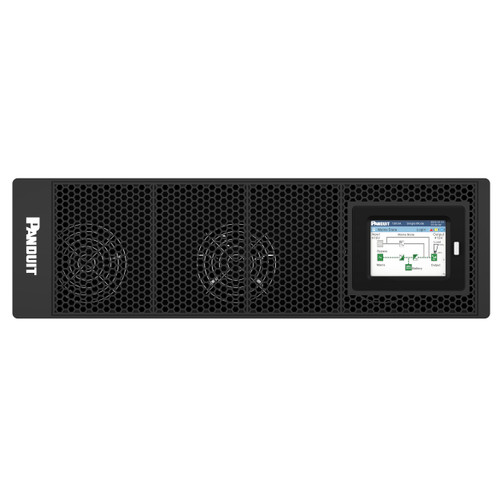
The U10N32V is a line-interactive UPS with automatic voltage regulation (AVR) and a transfer time of less than 4 ms. In normal operation the utility feeds the load directly through an AVR stage; the inverter engages only on outage. This is a proven, cost-effective architecture for loads that can tolerate sub-4 ms micro-interruptions and where utility power quality is generally acceptable.
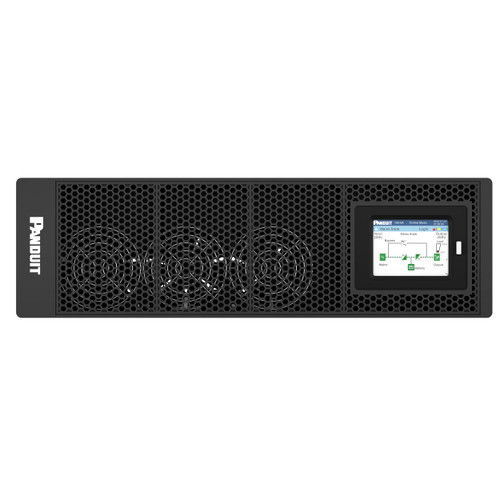
The U10N11V is a double-conversion online UPS. In this topology the load is continuously powered through a rectifier-inverter chain, meaning utility AC is never directly connected to the output. Transfer time is effectively zero because the inverter is always active. This provides complete isolation from sags, swells, frequency variations, and harmonic distortion—requirements common in sensitive medical, financial, or high-density compute environments.
For loads requiring zero transfer time and full galvanic isolation from utility disturbances, the U10N11V's double-conversion design is the stronger fit. For cost-sensitive edge or enterprise deployments where sub-4 ms transfer is acceptable, the U10N32V's line-interactive design is a defensible choice. No output kW derating figures are provided in the supplied specs for either unit, so buyers should verify that 10 kW is the usable output under full load for their chosen topology.
How do efficiency and rack footprint compare between the two models?
The U10N32V is specified at up to 98% efficiency in ECO Mode and occupies 3U of rack space (12" H × 17.3" W). ECO Mode is a bypass-biased operating state that approaches the efficiency of a simple transfer switch; actual efficiency in standard line-interactive mode is not stated in the provided specs. The 3U form factor is notably compact for a 10 kVA unit.
The U10N11V is specified at approximately 6U rack height (10.3" H × 17.3" W). No efficiency figure is provided in the supplied specifications. Double-conversion topology inherently carries higher conversion losses than line-interactive, typically in the 92–96% range industry-wide, but no specific number for this model can be cited from the provided data.
On footprint, the U10N32V has a measurable advantage: 3U versus approximately 6U for the U10N11V—a difference of roughly 3 rack units that may matter in dense deployments. On efficiency, the U10N32V's 98% ECO Mode figure is documented; no equivalent figure exists in the provided U10N11V specs, so a direct numeric comparison cannot be made.
Which unit offers broader out-of-box management and integration capabilities?
The U10N32V ships with an integrated LCD display, SNMP, Modbus, and a web interface listed as standard features. SNMP and Modbus together support both IT-centric network monitoring platforms and OT/BMS environments without requiring additional hardware. Web interface access enables browser-based management without a dedicated NMS. The unit also carries Energy Star and California Title 20 compliance certifications.
The U10N11V includes a network card slot described as supporting SNMP, but the network adapter is sold separately. Out of the box, the management interface tier is not fully specified beyond the card slot notation. No Modbus capability, no integrated web interface, and no LCD display are mentioned in the provided specifications for this model.
For deployments requiring immediate, out-of-box SNMP/Modbus/web visibility—particularly in co-lo or managed MTDC environments—the U10N32V offers a more complete management stack as shipped. The U10N11V's card-slot approach provides flexibility in adapter selection but adds procurement complexity and cost. Compliance certifications (Energy Star, California Title 20) are documented only for the U10N32V; no equivalent certifications are listed for the U10N11V in the provided specs.
Which should you choose: the U10N32V or the U10N11V?
Our take: The U10N32V is the stronger choice when rack density, out-of-box management completeness, and documented efficiency matter—and when sub-4 ms transfer time is acceptable for the load. It occupies 3U versus approximately 6U for the U10N11V, ships with SNMP, Modbus, web interface, and an LCD display as standard (no add-on card required), and carries an up-to-98% ECO Mode efficiency rating backed by Energy Star and California Title 20 certifications—none of which are documented for the U10N11V in the provided specs. The U10N11V is the stronger choice when the load demands zero transfer time and full galvanic isolation from utility-side disturbances, which is the defining advantage of double-conversion online topology. Buyers running sensitive compute, financial transaction systems, or mixed-load racks with no tolerance for any micro-interruption should specify the U10N11V despite its larger footprint and unspecified management baseline.
Side-by-Side Comparison
Spec-for-spec, from manufacturer data.
| Specification | Panduit U10N32V | Panduit U10N11V |
|---|---|---|
| MPN | U10N32V | U10N11V |
| Sub-Brand | SteadySine™ | SteadySine™ |
| Topology | Line-Interactive with AVR | Double-Conversion Online |
| Output Capacity | 10 kVA / 10 kW | 10 kVA (kW not specified) |
| Form Factor | 3U Rack-Mount | Rack-mountable (~6U) |
| Height | 12" (306 mm) | 10.3" (262 mm) |
| Width | 17.3" (440 mm) | 17.3" (440 mm) |
| Transfer Time | <4 ms | — (not specified; online = 0 ms) |
| Output Waveform | Pure Sine Wave | Pure Sine Wave |
| Battery | Hot-Swappable Modules | Hot-Swappable Modules |
| Input Voltage Range | 160–280V AC (AVR) | — (not specified) |
| Input Connection | — (not specified) | Hardwire terminals |
| Management (std.) | LCD, SNMP, Modbus, Web Interface | SNMP card slot (adapter sold separately) |
| Efficiency | Up to 98% (ECO Mode) | — (not specified) |
| Compliance | Energy Star, California Title 20 | — (not specified) |
| UPC | 061305682541 | 061305682529 |
Frequently Asked Questions
Which should you choose: the U10N32V or the U10N11V?
The U10N32V is the stronger choice when rack density, out-of-box management completeness, and documented efficiency matter—and when sub-4 ms transfer time is acceptable for the load. It occupies 3U versus approximately 6U for the U10N11V, ships with SNMP, Modbus, web interface, and an LCD display as standard (no add-on card required), and carries an up-to-98% ECO Mode efficiency rating backed by Energy Star and California Title 20 certifications—none of which are documented for the U10N11V in the provided specs. The U10N11V is the stronger choice when the load demands zero transfer time and full galvanic isolation from utility-side disturbances, which is the defining advantage of double-conversion online topology. Buyers running sensitive compute, financial transaction systems, or mixed-load racks with no tolerance for any micro-interruption should specify the U10N11V despite its larger footprint and unspecified management baseline.
Can either unit swap batteries without shutting down the load?
Yes. Both the U10N32V and the U10N11V specify hot-swappable battery modules, meaning battery replacement can be performed while the UPS continues to power the connected load. Neither spec sheet provides battery runtime curves or Ah ratings, so buyers should request those separately to validate runtime at actual load levels.
Does the U10N11V include a network management card, or do I need to buy one separately?
Based on the provided specifications, the U10N11V includes a network card slot but the adapter itself is sold separately. The U10N32V, by contrast, lists SNMP, Modbus, and a web interface as integrated standard features with no mention of a separately purchased card.
Is the U10N32V or U10N11V better for a high-density edge or MTDC deployment where rack space is constrained?
The U10N32V has a documented 3U form factor (12" H × 17.3" W). The U10N11V is specified at approximately 6U (10.3" H × 17.3" W). At the same 10 kVA rating, the U10N32V consumes roughly half the rack units, giving it a clear advantage in space-constrained edge cabinets or densely populated MTDC rows—provided the line-interactive topology meets the load's protection requirements.
More UPS Comparisons
- APC by Schneider Electric SRTL10KRM4UT-5KTF2 vs Panduit U10N32V
- APC by Schneider Electric SRTL10KRM4UT-5KTF2 vs Panduit U10N11V
- APC by Schneider Electric SRTL10KRM4UT-5KTF2 vs Panduit U10N12V
- APC by Schneider Electric SRTL10KRM4UT-5KTF2 vs Vertiv GXT5-10KHVRT5UXLN
- APC by Schneider Electric SRTL10KRM4UT-5KTF2 vs APC by Schneider Electric E3SUPS10KFBS
- APC by Schneider Electric SRTL10KRM4UT-5KTF2 vs APC by Schneider Electric SRT10KRMXLT-10KTF
UPS Buying Guides
Get a Second Opinion on Your Camera Choice
Share your site layout, coverage goals, and budget. Our team will validate the camera selection, flag anything we would change, and recommend products that match the use case.