
Panduit U10N11V vs APC by Schneider Electric E3SUPS10KFBS: Specification Comparison
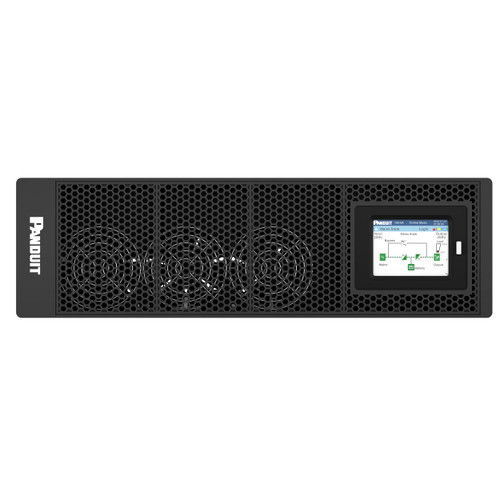
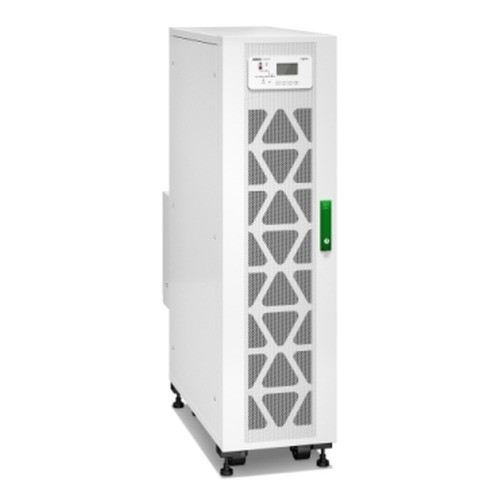
Both the Panduit U10N11V SteadySine and the APC Easy UPS 3S E3SUPS10KFBS are 10 kVA commercial-grade uninterruptible power supplies using double-conversion online topology, placing them squarely in the same procurement tier. However, they diverge sharply on form factor, installation method, and intended deployment context — the Panduit is a 6U rack-mount unit targeting structured data center or edge rack environments, while the APC is a floor-standing tower targeting room-based or open-floor deployments. A buyer choosing between them is fundamentally choosing between rack-integrated and freestanding physical architectures at equivalent power capacity.
In This Guide
Do both units deliver equivalent power capacity and output quality?
Both products share the same 10 kVA nameplate capacity and double-conversion online topology, which regenerates output power continuously from the inverter and provides zero transfer time to battery. This is the highest-tier UPS topology for protecting sensitive loads.
The APC E3SUPS10KFBS provides explicit output power figures: 10 kVA / 10,000 W, yielding a unity (1.0) power factor — a notable specification, as many UPS units in this class operate at 0.8–0.9 power factor, reducing usable wattage. The Panduit U10N11V specifies output waveform as pure sine wave but does not publish a wattage or power factor figure in the provided specifications, so a direct watt-for-watt comparison cannot be confirmed from available data.
The APC unit also documents input voltage range (208–220 V), output voltage range (208–220 V), input/output frequency (50/60 Hz), and maximum input current (31 A). None of these electrical operating parameters are provided for the Panduit U10N11V in the supplied specifications, which limits quantitative electrical comparison to capacity class only.
Which unit fits the target physical installation environment?
The Panduit U10N11V is explicitly rack-mountable, sized at 10.3" H × 17.3" W (262 mm × 440 mm), and occupies approximately 6U in a standard 19" EIA rack (compatible with both 2-post and 4-post configurations). Input connection is via hardwire terminals rather than a plug, which is consistent with dedicated circuit installation in structured rack environments. Battery modules are hot-swappable, meaning replacement can occur without powering down the protected load.
The APC E3SUPS10KFBS is a tower form factor in a metal white enclosure. It is not a rack-mountable unit per the provided specifications. This positions it for floor or shelf placement in server rooms, wiring closets, or operational areas where a rack enclosure is not present. The APC unit carries an IP20 rating, indicating protection against solid objects greater than 12.5 mm but no moisture protection — standard for indoor conditioned environments.
Environmental operating ranges are documented only for the APC: 0–40 °C operating temperature, –15–40 °C storage, and 0–95% relative humidity (operating and storage). The Panduit U10N11V provides no environmental operating range in the supplied specifications.
How do the units compare on remote management and ongoing serviceability?
The Panduit U10N11V includes a network card slot for an optional SNMP/network management adapter (sold separately), enabling integration into DCIM, NMS, or SNMP-based monitoring platforms once the card is installed. The hot-swappable battery module design allows battery replacement under load, reducing planned downtime risk in 24/7 rack environments.
The APC E3SUPS10KFBS is designated 'for Internal Batteries' in its product name (the 'BS' suffix), indicating it is the base unit without an external battery cabinet. No management interface specification — network card, SNMP support, or communication port type — is present in the provided specifications for the APC unit.
For buyers with requirements for out-of-band UPS monitoring, the Panduit's documented card slot is a concrete differentiator. For the APC, management capability cannot be confirmed or denied from the available spec data, and buyers should consult APC's product documentation directly before assuming SNMP or network management support.
Which should you choose: the U10N11V or the E3SUPS10KFBS?
Our take: The U10N11V is the stronger choice when the deployment target is a structured 19" rack environment requiring hot-swap battery serviceability and SNMP-ready remote monitoring. The Panduit's rack-mount form factor (6U, 19" EIA, 2/4-post compatible), hot-swappable battery modules, and network management card slot address the core operational requirements of data center and edge rack deployments directly. By contrast, the APC E3SUPS10KFBS is a tower unit — not rack-mountable per its specifications — making it unsuitable as a drop-in rack solution regardless of matched kVA. The APC does provide more complete electrical documentation: unity power factor (10 kVA / 10,000 W), confirmed input/output voltage range (208–220 V), and a 31 A maximum current figure, none of which are available in the Panduit's supplied specs. Buyers requiring a floor-standing 10 kVA unit in a non-rack environment, or those needing documented electrical parameters before procurement, should evaluate the APC further. Rack-first deployments should default to the U10N11V.
Side-by-Side Comparison
Spec-for-spec, from manufacturer data.
| Specification | Panduit U10N11V | APC by Schneider Electric E3SUPS10KFBS |
|---|---|---|
| Product Class | Online Double-Conversion UPS | Online Double-Conversion UPS |
| Capacity (kVA) | 10 kVA | 10 kVA |
| Output Power (W) | — | 10,000 W |
| Output Power Factor | — | 1.0 (unity) |
| Form Factor | Rack-mount | Tower |
| Rack Height | 6U (approx) | — |
| Rack Compatibility | 19" EIA, 2-post/4-post | — |
| Input Connection | Hardwire terminals | — |
| Input Voltage Range | — | 208–220 V |
| Output Voltage Range | — | 208–220 V |
| Input/Output Frequency | — | 50/60 Hz |
| Maximum Input Current | — | 31 A |
| Battery Type | Hot-swappable modules | Internal (base unit, no ext. cabinet) |
| Network Management | Card slot (adapter sold separately) | — |
| Housing Material | — | Metal |
| Operating Temperature | — | 0–40 °C |
| Operating Humidity | — | 0–95% |
| IP Rating | — | IP20 |
Frequently Asked Questions
Which should you choose: the U10N11V or the E3SUPS10KFBS?
The U10N11V is the stronger choice when the deployment target is a structured 19" rack environment requiring hot-swap battery serviceability and SNMP-ready remote monitoring. The Panduit's rack-mount form factor (6U, 19" EIA, 2/4-post compatible), hot-swappable battery modules, and network management card slot address the core operational requirements of data center and edge rack deployments directly. By contrast, the APC E3SUPS10KFBS is a tower unit — not rack-mountable per its specifications — making it unsuitable as a drop-in rack solution regardless of matched kVA. The APC does provide more complete electrical documentation: unity power factor (10 kVA / 10,000 W), confirmed input/output voltage range (208–220 V), and a 31 A maximum current figure, none of which are available in the Panduit's supplied specs. Buyers requiring a floor-standing 10 kVA unit in a non-rack environment, or those needing documented electrical parameters before procurement, should evaluate the APC further. Rack-first deployments should default to the U10N11V.
Can either the U10N11V or E3SUPS10KFBS be mounted in a standard server rack?
Only the Panduit U10N11V is specified as rack-mountable. It occupies approximately 6U in a standard 19" EIA rack and is compatible with 2-post and 4-post configurations. The APC E3SUPS10KFBS is specified as a tower form factor and is not described as rack-mountable in the provided specifications.
Which unit supports remote network monitoring or SNMP management?
The Panduit U10N11V includes a network card slot that accepts an optional SNMP/network management adapter (sold separately), providing a documented path to SNMP integration. No management interface or network card support is specified in the APC E3SUPS10KFBS's provided specifications; buyers should verify this directly with APC before assuming management capability.
What are the actual usable watts delivered by each unit?
The APC E3SUPS10KFBS explicitly specifies 10,000 W output at 10 kVA, indicating a unity (1.0) power factor. The Panduit U10N11V specifies 10 kVA capacity but does not provide an output wattage or power factor figure in the supplied specifications, so usable wattage cannot be confirmed from available data and should be obtained from Panduit's datasheet before finalizing load calculations.
More UPS Comparisons
- APC by Schneider Electric SRTL10KRM4UT-5KTF2 vs Panduit U10N32V
- APC by Schneider Electric SRTL10KRM4UT-5KTF2 vs Panduit U10N11V
- APC by Schneider Electric SRTL10KRM4UT-5KTF2 vs Panduit U10N12V
- APC by Schneider Electric SRTL10KRM4UT-5KTF2 vs Vertiv GXT5-10KHVRT5UXLN
- APC by Schneider Electric SRTL10KRM4UT-5KTF2 vs APC by Schneider Electric E3SUPS10KFBS
- APC by Schneider Electric SRTL10KRM4UT-5KTF2 vs APC by Schneider Electric SRT10KRMXLT-10KTF
UPS Buying Guides
Get a Second Opinion on Your Camera Choice
Share your site layout, coverage goals, and budget. Our team will validate the camera selection, flag anything we would change, and recommend products that match the use case.